Skip to product information
1 of 5

VIRIAR

Jubaea chilensis (Chilean Wine Palm) - 5 x seeds fresh | VIRIAR.COM

Jubaea chilensis (Chilean Wine Palm) - 5 x seeds fresh | VIRIAR.COM

Regular price €8,99 EUR
Regular price Sale price €8,99 EUR
Sale Sold out
Taxes included. Shipping calculated at checkout.
Jubaea chilensis - Chilean Wine Palm

Jubaea chilensis

Chilean Wine Palm

The world's most impressive temperate palm with extraordinary dimensions and remarkable cold tolerance

About Jubaea chilensis

Jubaea chilensis, commonly known as the Chilean Wine Palm or Coquito Palm, is a remarkable monotypic species—the sole member of the genus Jubaea in the Arecaceae family. Native to central Chile, this palm represents one of the most impressive temperate palm species globally, particularly notable for its extraordinary trunk dimensions and significant cold tolerance.

Despite its splendid ornamental qualities and cultural importance, wild populations have declined dramatically over the past centuries, making conservation efforts increasingly critical for this iconic species. Its massive trunk—one of the thickest in the palm family—measures 1–1.5 meters (3–5 feet) in diameter, creating a distinctive columnar silhouette that can reach extraordinary heights of 25–30 meters (80–100 feet) at maturity.

🏛️ Monumental Heritage Palm: Jubaea chilensis stands as one of the world's most impressive palm species, combining monumental proportions with remarkable cold tolerance and ornamental elegance. Its massive trunk, graceful crown, and extraordinary longevity create landscape presence unmatched by virtually any other palm suitable for temperate cultivation.

Botanical Description

Growth Habit and Size

Jubaea chilensis develops as a solitary, massive palm that can reach extraordinary heights of 25–30 meters (80–100 feet) at maturity, with some exceptional specimens reportedly exceeding these dimensions. The palm exhibits a slow growth rate, typically adding only 20–30 cm (8–12 inches) in height annually under optimal conditions.

Trunk Characteristics

The most distinctive feature is its remarkable trunk—one of the most massive in the palm family. Solitary and columnar, the trunk measures 1–1.5 meters (3–5 feet) in diameter with light gray to grayish-brown coloration and a pattern of horizontal rings formed by leaf scars. This imposing girth remains consistent throughout most of the palm's height.

Foliage and Crown

The crown consists of 40–50 pinnate (feather-like) fronds at maturity, each measuring 3–5 meters (10–16 feet) in length with an elegant arching habit. Each frond contains 100–120 rigid leaflets with glossy, deep green coloration, creating a dense, rounded canopy that enhances the palm's ornamental value.

Flowers and Fruits

Mature specimens produce massive, branched inflorescences reaching 1–1.5 meters (3–5 feet) in length with cream to yellowish flowers. Following pollination, female flowers develop into round to ovoid fruits (coquitos) 3–5 cm (1.2–2 inches) in diameter, with edible kernels featuring a coconut-like flavor.

Cultivation Requirements

Climate and Hardiness

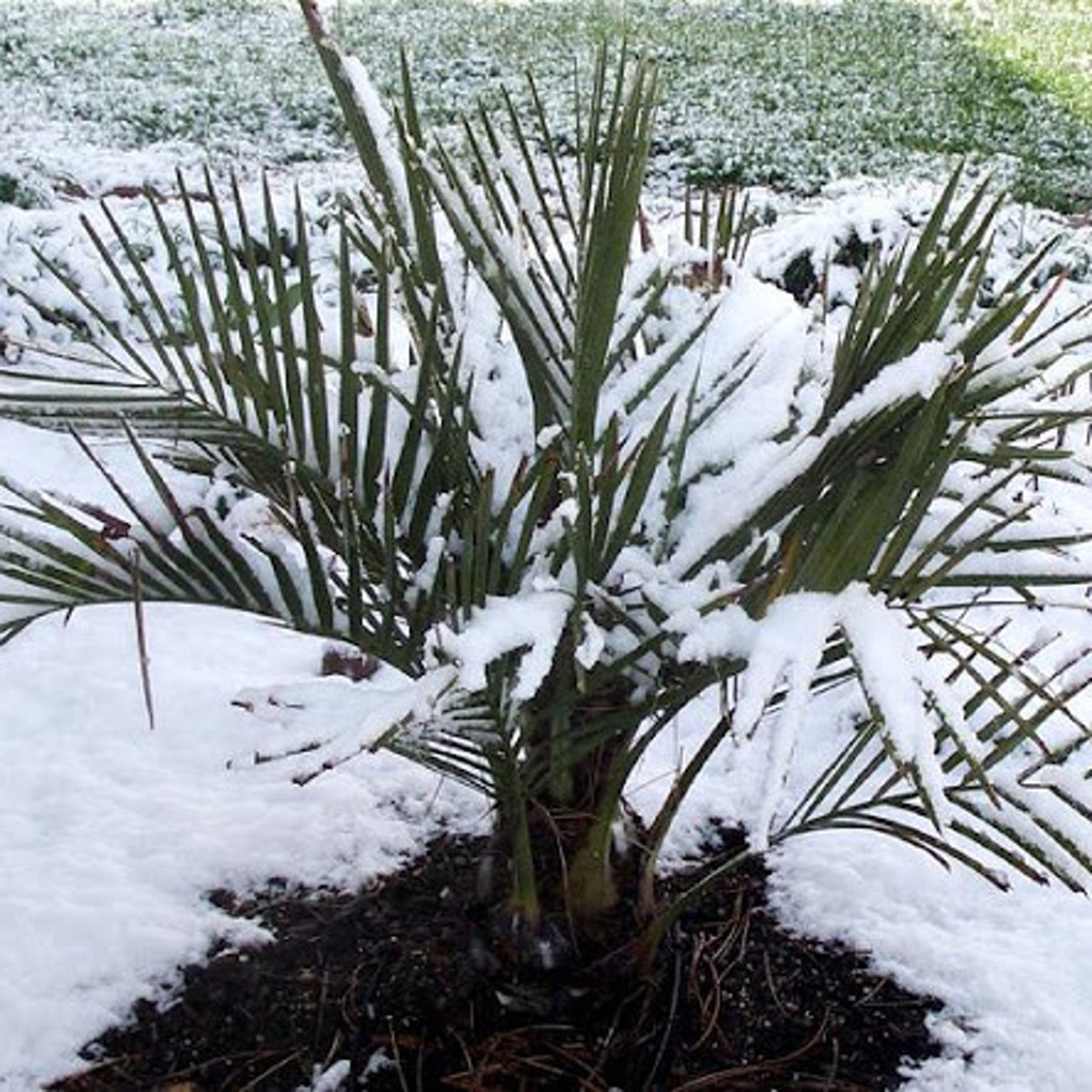
Jubaea chilensis demonstrates remarkable cold tolerance, thriving in USDA hardiness zones 8b–11. Established specimens can withstand temperatures as low as -12°C to -14°C (10–7°F) with minimal damage, making it suitable for cultivation in many temperate regions where most palms cannot survive.

Light Requirements

This palm performs best in full sun exposure, which promotes optimal growth and crown development. While young specimens can tolerate light shade, insufficient sunlight results in elongated growth and reduced vigor. Replicating abundant natural sunlight from its Chilean habitat yields the best horticultural results.

Soil Preferences

Jubaea chilensis demonstrates adaptability to various soil types but thrives in well-draining, moderately fertile soils with pH ranging from slightly acidic to slightly alkaline (6.0–8.0). Deep soils allowing extensive root development are particularly beneficial for long-term establishment and stability.

Water Management

During establishment, consistent moisture is essential for developing a robust root system. Mature specimens develop moderate drought tolerance reflecting adaptation to Mediterranean climates. Supplemental irrigation during extended dry periods improves appearance and growth, with the critical consideration being adequate drainage.

Propagation and Planting

Seed Collection and Germination

The exclusive propagation method is through seeds. Harvest seeds from fully ripe fruits, removing the fibrous outer husk to expose the hard shell. Fresh seeds demonstrate the highest viability. Sow cleaned seeds in a well-draining medium of equal parts coarse sand, perlite, and potting mix, positioning seeds horizontally and partially embedded.

Germination Timeline

Maintain soil temperatures between 25–30°C (77–86°F) using bottom heat when available. Under optimal conditions, germination initiates within 2–6 months, with some seeds requiring longer periods. The process is remote-tubular, with the embryonic shoot emerging from a connecting structure rather than directly from the seed.

Seedling Development and Planting

The first leaf is entire (undivided), with subsequent leaves gradually developing the pinnate form characteristic of adults. Initial growth is slow, focusing on root establishment. Optimal planting time is during warmer months when soil temperatures reach at least 18°C (65°F), in full sun with ample space for the palm's eventual massive size.

Site Preparation and Care

Dig a hole approximately twice the width of the root ball and of equal depth. Incorporate organic matter at a ratio of approximately 30% amendment to 70% native soil. Position the palm at the same depth it was previously growing. Apply a balanced palm fertilizer (NPK ratio of approximately 8-2-12) three times annually during the growing season for established specimens.

Landscape Uses and Conservation

Landscape Applications

Jubaea chilensis functions as an extraordinary specimen plant in large-scale landscapes where its imposing dimensions can be properly accommodated. Its massive trunk and elegant crown create a distinctive silhouette serving as a focal point visible from considerable distances. Ideal for heritage landscapes, botanical gardens, and public spaces where landmark value and sense of place are desired.

Mediterranean Gardens

In regions with Mediterranean climates similar to its native habitat, Jubaea chilensis serves as an authentic component of regionally appropriate landscape designs. When designing landscapes incorporating this species, consider understory plantings that thrive in similar conditions while providing textural contrast. Plants with silver or blue foliage complement the palm's deep green fronds effectively.

Conservation Status

The species is classified as Vulnerable (VU) on the IUCN Red List due to significant historical population decline estimated at 70% over past centuries. Primarily caused by sap harvesting for palm honey and wine production, along with habitat conversion to agriculture. Current conservation efforts focus on protecting remaining wild populations and cultivation in botanical gardens worldwide as ex-situ conservation.

Maintenance and Special Considerations

This palm requires minimal pruning, with maintenance primarily focused on removing dead or damaged fronds by cutting cleanly at the base of the leaf stalk. Avoid removing green, healthy fronds, as this depletes energy reserves. Due to the palm's eventual massive size, careful site selection is essential—consider proximity to structures, underground utilities, and overhead power lines when determining placement.

Pests and Diseases

Common Pests

Scale Insects: Various scale species may colonize fronds and stems, weakening the palm through continuous sap extraction. Treatment with horticultural oil provides effective control. Palm Weevils: In some regions, palm weevils can pose a serious threat. Preventative measures include avoiding unnecessary pruning wounds and applying systemic insecticides when risk is present.

Disease Resistance

Overall disease resistance is excellent when properly cultivated, with few significant pathological issues affecting established specimens. Pink Rot (Gliocladium): This fungal pathogen can affect stressed palms in humid conditions with poor air circulation. Root Rot: Excessive soil moisture promotes various root pathogens, emphasizing the importance of proper drainage and irrigation management.

Quick Reference Guide

Botanical Name
Jubaea chilensis
Common Name
Chilean Wine Palm
Origin
Central Chile
Hardiness
USDA Zones 8b–11
Cold Tolerance
-12°C to -14°C (10–7°F)
Mature Height
25–30 meters (80–100 feet)
Trunk Diameter
1–1.5 meters (3–5 feet)
Provider
VIRIAR.COM
VIRIAR.COM

Premier Provider of Exceptional Exotic and Rare Seeds Worldwide

Specializing in authentic, carefully curated germplasm selected with meticulous precision and unwavering commitment to quality excellence.

Shipping & Returns

View full details