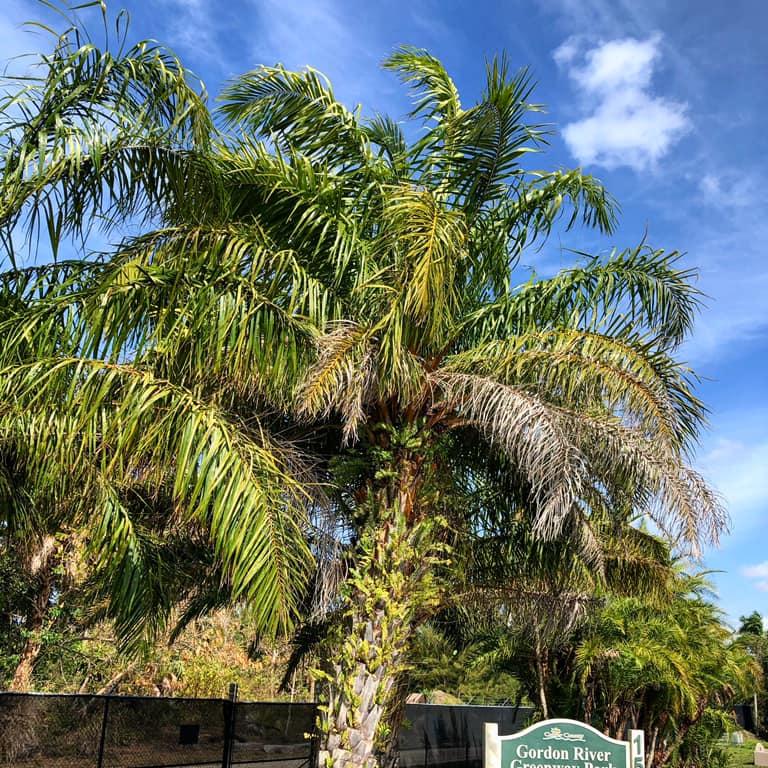
Elaeis oleifera, commonly known as the American Oil Palm or Oleifera Palm, is a species of palm native to Central and South America, including regions of Brazil, Colombia, and Venezuela. It is closely related to the more widely known Elaeis guineensis (African Oil Palm) and is noted for its valuable oil-rich fruits.
The American Oil Palm is a smaller palm compared to its African counterpart, typically reaching heights of 5-10 meters (16-33 feet). It has a solitary, slender trunk covered with leaf scars. The leaves are pinnate and arching, with a deep green color and long, narrow leaflets. The palm produces small, reddish-orange fruits that are rich in oil. These fruits grow in dense clusters and are a crucial part of the palm's economic value.
This versatile tropical palm offers applications in both ornamental and commercial contexts. Its adaptability to various soil types and resilience make it an excellent addition to tropical and warm-temperate landscapes.