Viriar
Arenga pinata – Sugar Palm (Seeds) | VIRIAR
Arenga pinata – Sugar Palm (Seeds) | VIRIAR
Couldn't load pickup availability
Arenga pinnata
Sugar Palm / Kaong Palm
Versatile tropical palm valued for sugar, fiber, starch, and sap production
About Arenga pinnata
Arenga pinnata, commonly known as the Sugar Palm, Kaong Palm, Black Sugar Palm, or Gomuti Palm, is a large, fast-growing palm native to tropical Asia, particularly in Indonesia, Malaysia, the Philippines, and Thailand. It is highly valued for its versatile uses, especially in producing sugar, sap, fibers, and starch.
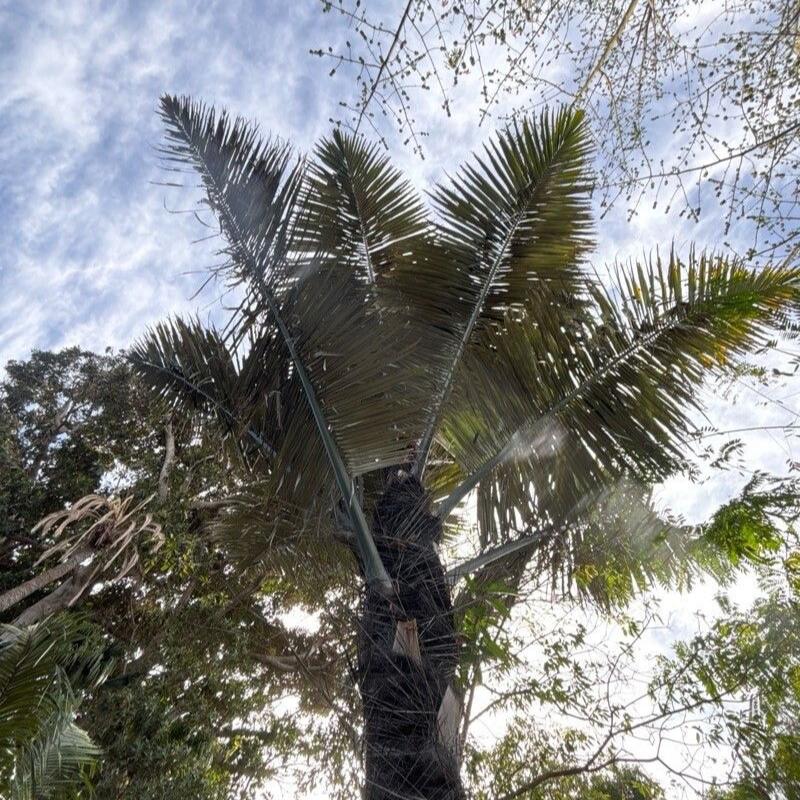
The palm has a single trunk that can reach heights of 12–20 meters (40–65 feet) with a diameter of up to 60 cm (24 inches). The trunk is covered with old leaf bases and distinctive black fibers that give the tree its characteristic appearance. The leaves are pinnate and can grow up to 6–8 meters (20–26 feet) long, with numerous leaflets that are dark green on the top surface and silvery underneath.
Arenga pinnata is monoecious, meaning it produces both male and female flowers on the same plant in large inflorescences that emerge from the trunk just below the leaf crown. The fruit is a black drupe containing a hard seed and fibrous husk. Notably, the tree is monocarpic, meaning it flowers and fruits once and then dies, although this process can take many years.
Growing Conditions
Light Requirements
Arenga pinnata thrives in full sun to partial shade. It prefers a location with some protection from intense midday sun, especially when young, to prevent leaf scorching. In its natural habitat, it often grows as an understory tree in the forest, suggesting it can tolerate varying light conditions.
Temperature Requirements
Hardiness: USDA zones 10–12. This palm prefers warm, tropical climates and is sensitive to frost. Optimal Range: 25–35°C (77–95°F). The plant does not tolerate freezing temperatures and should be protected in cooler regions.
Soil Composition
The Sugar Palm prefers well-drained, fertile soils rich in organic matter. It grows well in loamy or sandy soils with a slightly acidic to neutral pH. It can tolerate a range of soil types, from sandy loam to clay, as long as drainage is good to prevent waterlogging.
Water Management
Arenga pinnata requires regular watering, especially when young. It prefers consistently moist soil but is also somewhat drought-tolerant once established. Overwatering and waterlogged conditions should be avoided to prevent root rot and fungal diseases.
Planting & Care Guide
Planting Procedure
Plant Arenga pinnata in the spring or early summer for best establishment. Choose a location with adequate space for its mature size and good drainage. Dig a hole twice the width of the root ball and as deep as the root system. Place the palm in the hole, backfill with soil, and water thoroughly to help establish the roots.
Fertilization
Fertilize the Sugar Palm with a balanced, slow-release fertilizer during the growing season (spring to early summer). A palm-specific fertilizer containing micronutrients like magnesium and potassium helps maintain healthy growth and vibrant foliage color. Apply according to package instructions.
Pruning and Maintenance
Minimal pruning is needed for this palm. Remove dead or damaged leaves to maintain a neat appearance and improve air circulation around the base. Be cautious when handling the plant, as the trunk fibers can be sharp and may cause injury.
Pest and Disease Management
Arenga pinnata is generally hardy but can be susceptible to scale insects and mites in stressed conditions. Maintain good air circulation and appropriate watering practices to prevent fungal infections. Monitor regularly and treat infestations promptly with organic solutions.
Propagation Methods
Seed Propagation
Arenga pinnata is most commonly propagated from seeds. The seeds should be soaked in water for a few days to soften the hard outer coat. Sow in a well-draining soil mix and maintain warm, shaded conditions with consistent moisture but not soggy soil. Germination can take several months, requiring patience.
Offset Propagation
In some cases, Arenga pinnata can produce offsets or "suckers" at the base of the plant. These can be carefully separated from the parent plant and replanted. However, propagation by seeds is the more common and preferred method for this species due to higher success rates.
Germination Timeline
Expect germination to occur within 1–3 months, though this can vary depending on seed freshness, temperature, and growing conditions. Maintain temperatures of 25–30°C (77–86°F) for optimal germination. Keep detailed records to track progress and identify successful seedlings early.
Seedling Care
Once seedlings emerge, provide bright, indirect light and maintain consistently moist (but not waterlogged) soil. As they develop, gradually acclimate them to stronger light and eventually full sun. Transplant into larger containers as needed to prevent root-bound conditions.
Quick Reference Guide
Premier Provider of Exceptional Exotic and Rare Seeds Worldwide
Specializing in authentic, carefully curated germplasm selected with meticulous precision and unwavering commitment to quality excellence.
Shipping & Returns
Shipping & Returns
Share