Viriar
Dioon merolae Nimalari-Cycad 1 x graine
Impossible de charger la disponibilité du service de retrait
Dioon merolae
Nimalari Cycad
Rare Mexican cycad — a living fossil of prehistoric beauty
About Dioon merolae
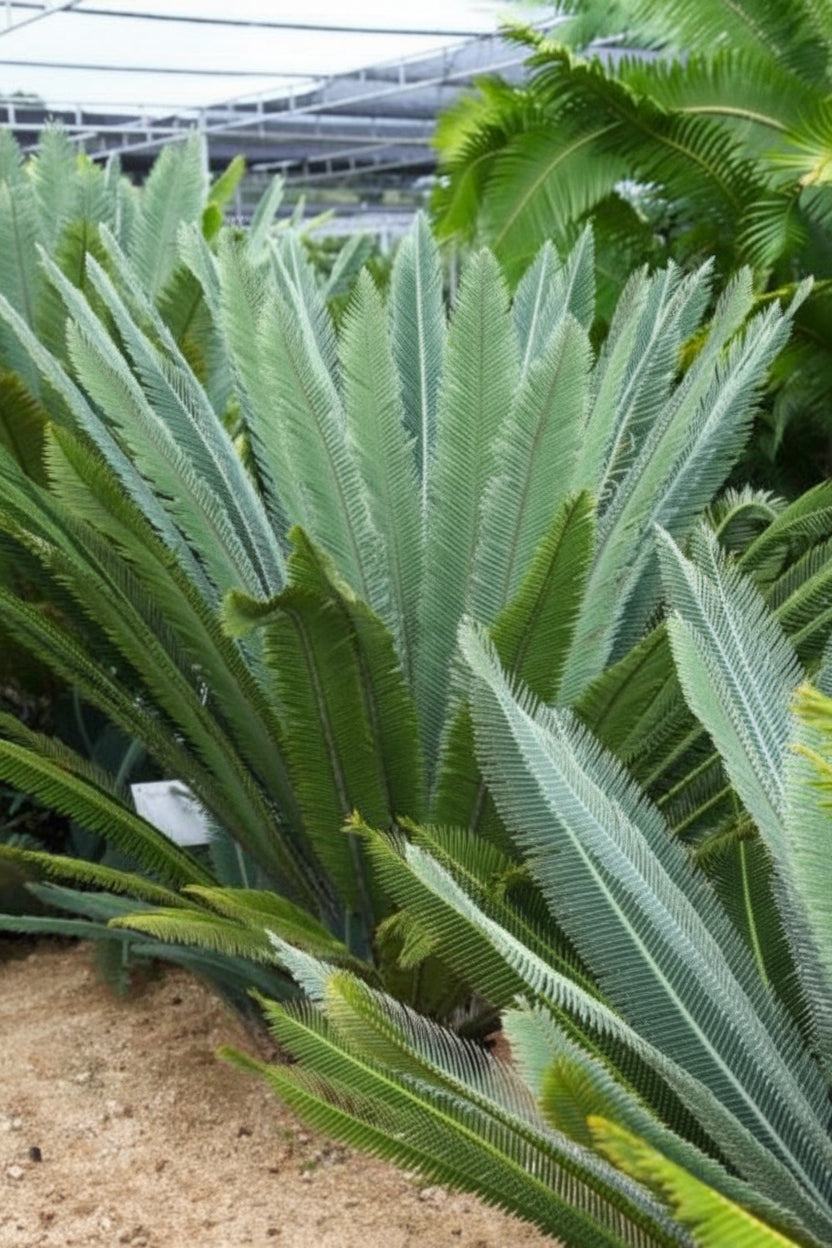
Dioon merolae, commonly known as the Nimalari Cycad, is a rare and elegant cycad species native to southern Mexico, particularly the Chiapas and Oaxaca regions. It is a member of the ancient Zamiaceae family, often referred to as "living fossils" for their prehistoric origins dating back millions of years.
This species produces a compact trunk with a symmetrical rosette of arching, blue-green to silvery leaves that create an exceptional ornamental display. Its refined appearance makes it highly desirable for collectors and botanical gardens. Dioon merolae thrives in warm, subtropical to tropical climates, excelling both outdoors and in large containers.
Germination Guide
Seed Preparation
Contents: 1 fresh, viable seed. Cleaning: Gently remove any residual fruit pulp and rinse well to prevent mold or fungus growth. Soaking: Soak in clean lukewarm water for 48–72 hours, changing the water daily to soften the seed coat and activate embryo development.
Sowing Medium
Use a sterile, free-draining seed mix of 50% perlite + 50% cocopeat or fine sand. Excellent aeration and drainage are crucial to avoid rot and fungal issues. The substrate should be loose and friable to allow easy root penetration.
Planting Depth
Place the seed horizontally and cover lightly, approximately 1–1.5 cm below the surface. Do not press too tightly; the seed needs air space to germinate properly. This shallow planting allows the emerging root and shoot to develop without excessive soil pressure.
Temperature and Humidity
Ideal temperature: 26–32°C (79–90°F). Humidity: 70–90% in the germination chamber or mini-greenhouse. Warm and consistent conditions are essential — cooler temperatures may significantly delay sprouting or cause germination failure.
Light Conditions
Keep the tray in bright, indirect light. Avoid strong sunlight until the seedling has produced its first true leaf and root system is stable. Germinating seeds benefit from moderate light without intense direct exposure that could dry out the substrate.
Watering Protocol
Keep the substrate evenly moist but never soaked. Mist lightly or bottom-water to maintain gentle, consistent moisture throughout the germination period. Avoid waterlogging, which promotes fungal growth and seed rot.
Germination Timeline
Dioon merolae is slow to germinate, typically taking 3 to 6 months. Patience and stable conditions are key to success with cycad seeds. Do not discard seeds prematurely – germination may occur even after months of apparent dormancy.
Transplanting Seedlings
Once the primary root extends to about 5 cm and a shoot appears, transfer gently into an individual deep pot with well-drained cycad soil. Handle the delicate seedling with care to avoid damaging the fragile root and shoot system.
Plant Care Instructions
Light Requirements
Young Plants: Bright, filtered light or partial shade during establishment phase. Mature Plants: Full sun for compact, strong growth and healthy leaf color. Adequate light promotes the distinctive blue-green to silvery leaf coloration.
Soil Composition
Prefers neutral to slightly alkaline soil with excellent drainage. A mix of loam, sand, and pumice is ideal for container growth. The soil must allow rapid water drainage to prevent root rot – this is the most critical aspect of care for this species.
Water Management
Dioon merolae is drought tolerant but responds well to occasional deep watering during the growing season. Allow the soil to dry between waterings. In winter, reduce watering frequency significantly. Established plants can survive extended dry periods.
Temperature Preferences
Warm, subtropical to tropical climates are ideal – optimal range 18–34°C (64–93°F). Can withstand brief drops near 0°C (32°F) when dry but prefers protection from frost. Avoid prolonged cold exposure that can damage the plant.
Fertilization Program
Use a slow-release cycad or palm fertilizer low in phosphorus every 3–4 months during the growing season (spring to early autumn). Over-fertilization can cause imbalances and weak growth. Follow product directions carefully to avoid nutrient toxicity.
Pest and Disease Management
Generally resilient, but occasionally attracts scale insects or mealybugs. Treat early with mild soap spray or neem oil. Monitor regularly for any infestations. Maintain good air circulation to prevent fungal diseases. The species is highly resistant when provided with proper conditions.
Decorative Applications
Dioon merolae makes an exceptional ornamental focal point in tropical or dry gardens, rock borders, or potted specimens. Its elegant foliage and slow growth make it a true collector's gem. The architectural form works beautifully with succulents and other drought-tolerant plants.
Quick Reference Summary
Premier Provider of Exceptional Exotic and Rare Seeds Worldwide
Specializing in authentic, carefully curated germplasm selected with meticulous precision and unwavering commitment to quality excellence.
Expédition et retours
Partager