Viriar
Palma Sola Cycad ( Dioon edule ‘Palma Sola’ ) – (Seeds) | VIRIAR
No se pudo cargar la disponibilidad de retiro
Dioon edule 'Palma Sola'
Palma Sola Cycad
Ancient cycad from Mexico — a relic from the age of dinosaurs
About Dioon edule 'Palma Sola'
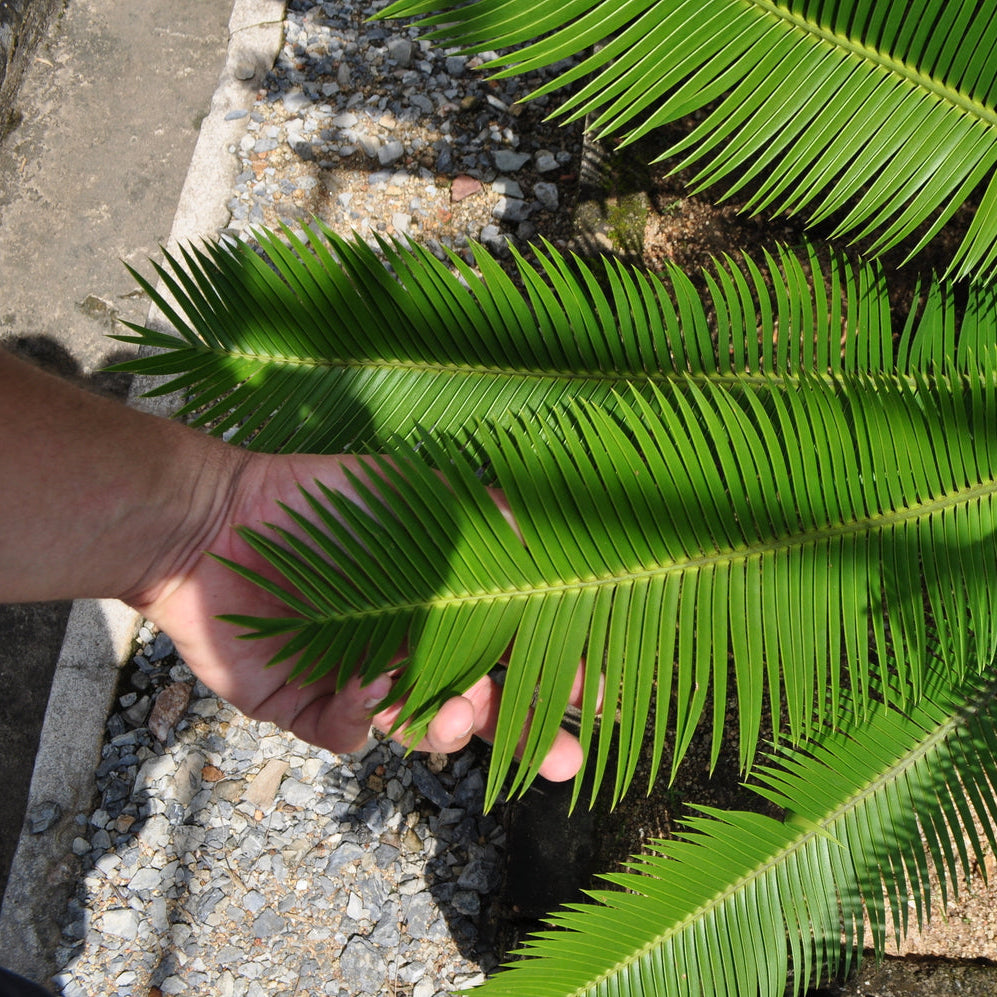
Dioon edule 'Palma Sola', commonly known as the Palma Sola Cycad, is a rare and ancient species from the mountains of Mexico — a relic from the age of dinosaurs. This particular regional form, 'Palma Sola', is highly sought after for its strong, compact appearance and beautifully symmetrical, glossy green leaves arranged in a perfect rosette atop a stout trunk.
As one of the most cold-tolerant cycads, Dioon edule thrives in both tropical and warm-temperate gardens. Slow growing and extremely long-lived, it is a collector's treasure that brings primitive elegance and sculptural form to any landscape or container setting. Each plant is a living connection to prehistoric times, representing millions of years of evolutionary success and resilience.
Germination Guide
Seed Preparation
Contents: 2 fresh seeds of Dioon edule 'Palma Sola'. Cleaning: Remove the outer coating (or soak until soft) and wash thoroughly to eliminate residues that can inhibit germination. Handle seeds carefully to avoid damaging the embryo.
Soaking Process
Soak in lukewarm water for 5–7 days, changing daily to hydrate the seed and stimulate the embryo. This pre-treatment is essential for cycad seed germination success. The seed will gradually absorb water and swell as the internal embryo awakens from dormancy.
Sowing Medium
Use a light, well-draining mix such as 50% perlite + 50% cocopeat or coarse sand + peat moss. Sterilize the substrate if possible to prevent fungal issues. The medium should be loose enough to allow the emerging root to penetrate easily without resistance.
Planting Depth
Place the seed horizontally or slightly tilted with half of it covered in substrate. Keep the "eye" (end with the micropyle) exposed slightly to avoid rot. This positioning allows oxygen access to the developing embryo while maintaining consistent moisture.
Temperature and Humidity
Ideal temperature: 28–34°C (82–93°F). Humidity: 60–80%. Use a heated propagation tray or warm area with gentle air circulation. Avoid excess humidity that can encourage fungus. Maintain consistent warmth throughout the germination period.
Light and Watering
Provide bright, indirect light or partial shade until germination. Direct sun may overheat the substrate. Keep the substrate evenly moist but never wet. Allow top surface to dry slightly between misting to promote healthy rooting and prevent fungal decay.
Germination Timeline
Cycad seeds are notoriously slow. Expect germination in approximately 2–5 months, depending on temperature and freshness. Patience is essential — each seed contains a massive embryo that develops gradually. Do not discard seeds prematurely; some may germinate after many months of apparent dormancy.
Transplanting Seedlings
Once the radicle (root) is 8–10 cm long and the cotyledonary tube emerges, carefully move to individual deep pots with well-draining soil for cycads or palms (sand, perlite, pine bark base). Handle the delicate seedling with extreme care to avoid damaging the emerging structures.
Plant Care Instructions
Light Requirements
- Young Plants: Partial shade to bright filtered light during establishment phase.
- Mature Plants: Full sun encourages strong leaf color and compact form with enhanced ornamental appeal.
Soil Composition
Requires excellent drainage — use a gritty mix with sand, pumice, and organic matter. Avoid heavy soils or standing water, which will cause fatal root rot. A good formula combines 40% sand, 30% perlite, 20% pumice, and 10% peat moss or coconut coir for optimal growth.
Watering Strategy
Moderate watering — keep the soil slightly moist during the growing season and reduce in cooler months. Tolerates drought once established. Always err on the side of underwatering rather than overwatering; this species evolved in arid mountain environments and prefers dry conditions to excessive moisture.
Temperature Tolerance
Thrives in warm to hot conditions (22–35°C) and is one of the most cold-resistant cycads, surviving brief drops to –6°C once mature. This exceptional cold hardiness makes it suitable for warm-temperate gardens where other cycads would perish. Protect young plants from frost during their first winter.
Fertilization Program
Feed with slow-release palm or cycad fertilizer every 3 months during spring and summer. Include micronutrients such as iron and magnesium. Reduce fertilization during fall and winter dormancy. Use formulations specifically designed for cycads or palms rather than general-purpose fertilizers.
Pruning and Maintenance
Remove old, brown leaves at the base using clean tools. Avoid damaging the crown where new growth emerges. The plant produces new leaves slowly — each new leaf is a significant achievement representing years of accumulated growth. Minimal intervention is recommended to preserve the plant's natural form.
Pest and Disease Management
Generally resistant, but watch for scale insects or mealybugs on leaflets. Treat with neem oil or insecticidal soap as needed. Maintain good air circulation to prevent fungal issues. Inspect plants regularly, especially on the undersides of fronds where pests often congregate.
Landscape and Container Use
Dioon edule 'Palma Sola' is excellent for rock gardens, tropical landscapes, and as a specimen in large pots. Its architectural shape pairs beautifully with palms and succulents. In containers, it can be overwintered indoors in cool, bright conditions and moved outdoors during warm months. The sculptural form makes it a focal point in any garden design.
Quick Reference Summary
Premier Provider of Exceptional Exotic and Rare Seeds Worldwide
Specializing in authentic, carefully curated germplasm selected with meticulous precision and unwavering commitment to quality excellence.
Shipping & Returns
Shipping & Returns
Share