Ir directamente a la información del producto
1 de 5

VIRIAR

Beccariophoenix madagascariensis (Madagascar Coconut Palm) - 5 seeds | VIRIAR.COM

Beccariophoenix madagascariensis (Madagascar Coconut Palm) - 5 seeds | VIRIAR.COM

Precio habitual €8,99 EUR
Precio habitual Precio de oferta €8,99 EUR
Oferta Agotado
Impuestos incluidos. Los gastos de envío se calculan en la pantalla de pago.
Beccariophoenix madagascariensis - Madagascar Coconut Palm

Beccariophoenix madagascariensis

Madagascar Coconut Palm

Critically endangered endemic species with elegant coconut-like appearance and remarkable conservation significance

About Beccariophoenix madagascariensis

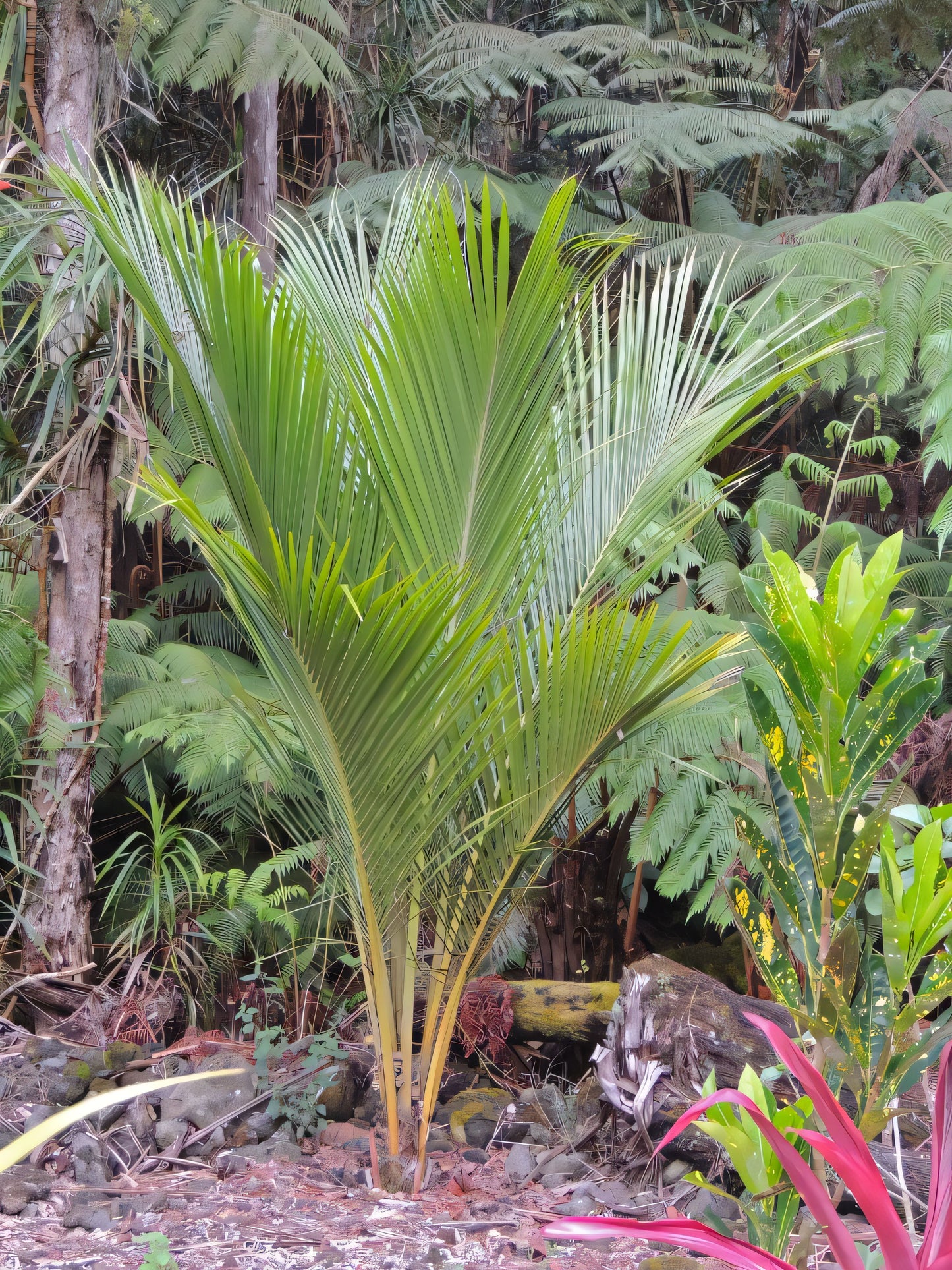
Beccariophoenix madagascariensis, commonly known as the Madagascar Coconut Palm or Marojejy Coconut Palm, is a striking palm species endemic exclusively to Madagascar. Named in honor of Italian botanist Odoardo Beccari, this remarkable member of the Arecaceae family has gained significant attention in recent decades due to both its ornamental value and its critically endangered status in the wild.

This species was believed extinct until its rediscovery in the 1980s in limited stands within Madagascar's eastern rainforests. With its distinctive coconut-like appearance and remarkable adaptability to various cultivation conditions, Beccariophoenix madagascariensis has become increasingly vital in conservation efforts and tropical landscape applications worldwide.

🌍 Conservation Priority: Classified as Critically Endangered on the IUCN Red List, Beccariophoenix madagascariensis represents a compelling intersection of botanical beauty and urgent conservation need. Thoughtful cultivation and propagation contribute significantly to species preservation while raising awareness about Madagascar's extraordinary biological heritage.

For horticulturists, landscape designers, and conservation-minded enthusiasts in tropical and subtropical regions, this remarkable palm offers a compelling opportunity to appreciate Madagascar's unique flora while contributing to species preservation through thoughtful cultivation practices. The combination of ornamental appeal and conservation significance makes this species exceptionally valuable in contemporary horticultural contexts.

Botanical Description

Growth Habit & Trunk Structure

Develops as a solitary, upright palm typically reaching heights of 12–20 meters (40–65 feet) at maturity. The trunk is straight, columnar, and relatively thick, measuring 30–45 cm (12–18 inches) in diameter. A light gray to grayish-brown surface displays prominent ring-like leaf scars forming as older fronds are shed, creating distinctive visual character.

Foliage & Crownshaft

The crown consists of numerous pinnate (feather-like) fronds forming a dense, rounded canopy. Each frond measures 3–5 meters (10–16 feet) with leaflets arranged regularly along the rachis in a single plane, creating a flat, elegant profile. Foliage presents medium to dark green coloration with glossy surfaces. Young fronds emerge with bronze to reddish tints before maturing to green. A distinctive crownshaft forms at the base of each frond—a smooth, tubular structure surrounding the growing point displaying green to blue-green coloration that enhances ornamental value.

Reproductive Structures & Fruits

Mature specimens produce inflorescences emerging from below the crownshaft, developing into large, branched structures bearing numerous small, cream-colored flowers. Following pollination, these develop into rounded fruits approximately 2–3 cm (0.8–1.2 inches) in diameter. Fruits undergo color transformation from green to brown at maturity, each containing a single seed valuable for propagation and species preservation.

Natural Habitat & Distribution

Endemic Status & Distribution

Endemic to Madagascar: Exclusively native to Madagascar's eastern regions. Rediscovery History: Believed extinct until rediscovered in 1980s in fragmented stands. Primary Location: Limited populations in Mantadia National Park and nearby rainforest regions. Wild Population: Only a few hundred mature individuals estimated to remain in fragmented habitats.

Native Rainforest Environment

Natural habitat consists of humid tropical lowland to mid-elevation forests with annual rainfall of 1,500–2,500 mm (59–98 inches). The species typically grows in areas with well-draining, humus-rich soils, often on slopes or well-drained plateaus where water does not accumulate. Temperatures in native range remain consistently warm, ranging from 20–30°C (68–86°F) throughout the year, creating ideal conditions for tropical growth.

Threats & Habitat Destruction

The critically endangered status stems from extensive habitat destruction through deforestation for agriculture, logging, and human settlement. Current wild populations are extremely limited and exist only in fragmented natural habitats. Conservation efforts focus on both in-situ protection of remaining wild stands and ex-situ preservation through botanical gardens and specialized collections.

Cultivation Requirements

Climate & Cold Tolerance

Performs best in tropical and warm subtropical climates, corresponding to USDA hardiness zones 10a–11. Shows moderate cold tolerance for a tropical palm, with established specimens capable of withstanding brief exposure to temperatures as low as 0°C (32°F) with minimal damage. Prolonged cold exposure can be fatal, so protection in marginal zones is recommended.

Light Requirements

Tolerates light conditions ranging from full sun to partial shade. Young specimens benefit from protection from intense midday sun during establishment. Mature palms often perform admirably in full sun exposure in appropriately humid climates, developing more compact growth and robust structure. In drier regions, afternoon shade prevents leaf scorching and maintains better foliage appearance.

Soil & Drainage

Prefers well-draining, fertile soil mixtures with high organic content. Ideal pH range spans from slightly acidic to neutral (5.5–7.0). While adaptable to various soil textures, the palm performs poorly in heavy clay soils that retain excessive moisture, which can lead to root rot and fungal complications. Ensure excellent drainage in all planting situations.

Water Management

Regular irrigation maintains consistent soil moisture without waterlogging. During active growth periods in warmer months, more frequent watering supports optimal development. A slight reduction during cooler seasons prevents root issues. The palm shows moderate drought tolerance once established but displays optimal growth with regular moisture and can suffer from prolonged dryness.

Propagation Methods

Seed Collection & Preparation

Fruit Maturity: Harvest seeds from fully ripe fruits displaying mature brown coloration. Pulp Removal: Soak fruits in water for 24–48 hours, then gently rub off softened material. Viability: Clean seeds demonstrate highest viability when planted fresh; germination rates decline with storage time. Conservation Impact: Seed collection from remaining wild populations enables broader cultivation and genetic diversity preservation.

Germination Process

Sow prepared seeds horizontally in well-draining medium consisting of equal parts peat moss, perlite, and fine orchid bark or coconut chunks. Position seeds with approximately one-third exposed above the medium surface. Maintain soil temperatures between 25–30°C (77–86°F) using bottom heat if necessary. Under optimal conditions, germination typically initiates within 2–3 months, though some seeds require up to 6 months.

Seedling Care & Development

Young seedlings require consistent moisture without waterlogging, high humidity, and filtered light during the establishment phase. Germination begins with root emergence followed by the first undivided leaf, with subsequent leaves gradually developing the characteristic pinnate form as the seedling matures. Growth is initially slow, with seedlings typically requiring 3–5 years to reach suitable size for landscape use.

🌱 Slow Growth Commitment: Propagation of Beccariophoenix madagascariensis represents a patience-requiring process that directly contributes to species preservation. Each successfully cultivated specimen helps secure the genetic future of this critically endangered endemic species.

Landscape Applications & Conservation

Ornamental Uses

Functions as an impressive specimen palm creating striking focal points with its distinctive coconut-like appearance and elegant structure. The symmetrical crown and distinctive crownshaft provide architectural interest in mixed planting compositions. In tropical garden designs, combines effectively with understory plantings that thrive in similar light conditions, creating multi-layered landscape compositions reminiscent of natural forest structures.

Specialized Applications

For public and commercial landscapes in suitable climates, offers a distinctive alternative to true Coconut Palms in regions where the latter might struggle or present hazards from falling fruits. The palm's moderate salt tolerance makes it suitable for near-coastal landscapes where protected from direct salt spray, expanding potential applications in tropical and subtropical regions worldwide.

Conservation Contribution

Increasing presence in ornamental horticulture has inadvertently contributed to conservation by creating widespread appreciation for the species' beauty and raising awareness about Madagascar's endemic flora. Commercial propagation reduces collection pressure on wild populations while ensuring species' survival regardless of challenges in native habitat. Several botanical gardens maintain dedicated collections focused on Madagascar's endemic palms, including this species.

Quick Reference Summary

Botanical Name
Beccariophoenix madagascariensis
Common Name
Madagascar Coconut Palm
Endemic To
Madagascar
Mature Height
12–20 meters
Hardiness Zones
10a–11
Conservation Status
Critically Endangered
Min Temperature
0°C (32°F)
Provider
VIRIAR.COM
VIRIAR.COM

Premium Provider of Exceptional Exotic and Rare Plants Worldwide

We specialize in authentic, carefully cultivated specimens selected with meticulous precision and unwavering commitment to quality excellence. All plants are professionally grown, healthy, and ready for immediate cultivation. Our commitment to conservation-minded propagation ensures sustainable practices.

Shipping & Returns

Ver todos los detalles