Viriar
Chambeyronia macrocarpa – Flame Thrower Palm (Seeds) | VIRIAR
Chambeyronia macrocarpa – Flame Thrower Palm (Seeds) | VIRIAR
No se pudo cargar la disponibilidad de retiro
Chambeyronia macrocarpa
Flame Thrower Palm
Striking ornamental palm with brilliant red new leaves and lush tropical foliage
About Chambeyronia macrocarpa
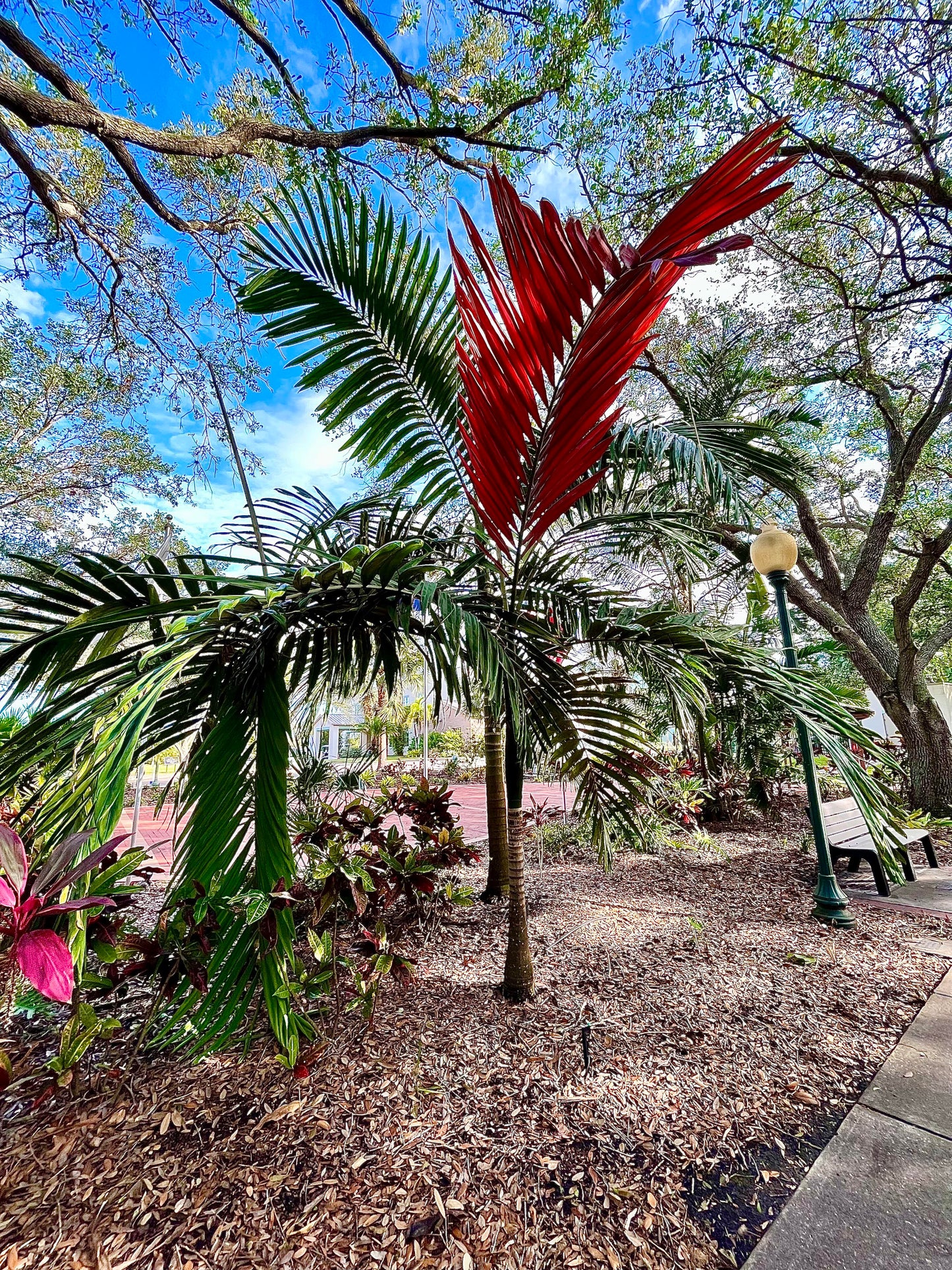
Chambeyronia macrocarpa, commonly known as the Flame Thrower Palm, is an elegant and striking palm tree native to New Caledonia. It is highly prized by collectors and gardeners for its unique and beautiful foliage—bright red new leaves that gradually turn green as they mature, along with a smooth, ringed trunk that adds architectural interest.
The large, pinnate (feather-shaped) leaves can reach up to 3 meters (10 feet) in length, adding a lush, tropical feel to any garden or landscape. In its natural habitat, Chambeyronia macrocarpa typically grows to a height of 10–20 meters, but remains smaller in cultivation. The palm also produces small white flowers that develop into striking bright red to purple fruits, enhancing its ornamental appeal.
Chambeyronia macrocarpa is also known as the Blushing Palm or Red Leaf Palm due to its distinctive coloring. This exceptional specimen is a must-have for serious tropical gardeners and plant enthusiasts seeking botanical uniqueness and visual drama.
Seed Germination & Propagation
Seed Preparation
Propagation Method: Chambeyronia macrocarpa is typically propagated from seeds. Clean the seeds thoroughly and remove any fruit residue. This preparation improves germination rates significantly.
Sowing Medium
Use a well-draining potting mix specifically designed for palm seeds. A blend of equal parts cocopeat and perlite with added orchid bark works excellently to promote drainage while maintaining moisture.
Temperature Requirements
Warm Tropical Warmth: Maintain temperatures above 75°F (24°C) for successful germination. Ideal range is 75–85°F (24–29°C). Consistent warmth significantly improves germination rates.
Humidity and Moisture
Maintain high humidity (70–85%) by covering seeds with a transparent dome or plastic wrap. Keep the soil consistently moist but never waterlogged. Excellent drainage is critical to prevent rot.
Light Conditions
Provide bright, indirect light during germination. Avoid direct intense sunlight which can overheat seeds. A heated propagation mat under bright indirect light accelerates germination.
Germination Timeline
Seeds are slow to germinate, typically taking several months (3–6 months or longer). Patience is essential. Maintain consistent warm, humid conditions throughout the germination period.
Transplanting Seedlings
Once seedlings show strong growth and develop roots, carefully transplant into individual pots with rich, well-draining potting soil. Handle delicate roots with care to avoid damage.
Container Growing
Young palms can be grown in large containers for 2–3 years before transplanting to larger pots or the ground. Choose containers with excellent drainage holes.
Plant Care Guide
Light Requirements
Chambeyronia macrocarpa thrives in partial shade to full sun. It performs best with some protection from direct afternoon sun, especially when young, as intense heat can scorch its beautiful red leaves.
Soil Requirements
Prefers rich, well-draining soil with good organic matter. Slightly acidic to neutral soil with pH 6.0–7.5 is ideal. Ensure consistent moisture without waterlogging to prevent root rot.
Watering Protocol
This palm requires regular watering to maintain consistently moist soil. During dry periods, water more frequently to prevent the soil from drying out. Avoid standing water to prevent root rot.
Fertilization Program
Feed with a balanced palm fertilizer in spring and summer. Use a slow-release formula that includes micronutrients like magnesium, manganese, and potassium to support healthy growth and vibrant leaf color.
Temperature and Hardiness
Suitable for USDA zones 10-11. Not frost-tolerant and requires temperatures above 50°F (10°C) to thrive. In cooler regions, grow in containers and move indoors during colder months.
Pruning and Maintenance
Minimal pruning is required. Remove any dead or damaged fronds as they appear. Be cautious when removing leaves as improper pruning can damage the trunk.
Pests and Diseases
Generally hardy and resistant to major pests. Monitor occasionally for scale insects or mites. Maintain good air circulation and avoid overwatering to prevent fungal issues.
Quick Reference Summary
Premier Provider of Exceptional Exotic and Rare Seeds Worldwide
Specializing in authentic, carefully curated germplasm selected with meticulous precision and unwavering commitment to quality excellence.
Shipping & Returns
Shipping & Returns
Share