Zea mays 'Glass Gem' (Glass Gem Ornamental Corn)
Zea mays 'Glass Gem' (Glass Gem Ornamental Corn)



Contents
- Introduction & History
- Botanical Description
- Varieties & Selection
- Planting & Sowing
- Climate & Hardiness
- Growing & Training
- Watering & Feeding
- Propagation & Seed Saving
- Diseases & Pests
- Companion Planting & Crop Rotation
- Container Growing
- Harvesting & Storage
- Culinary Uses & Nutrition
- Preserving & Fun Facts
- Seasonal Care Calendar
- Frequently Asked Questions
Introduction & History
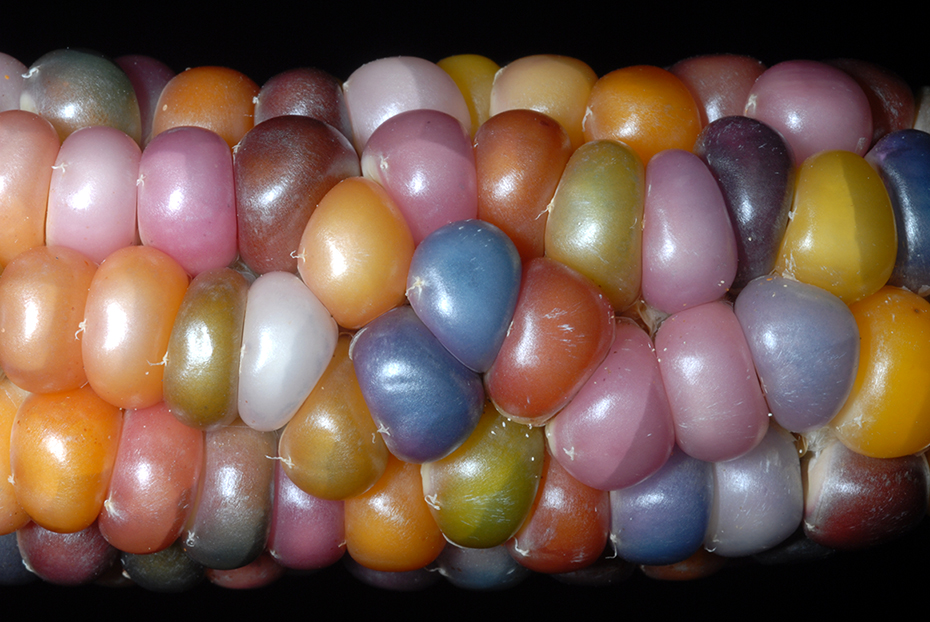
Glass Gem Ornamental Corn (Zea mays 'Glass Gem') is a annual exotic vegetable in the Poaceae family, growing to 200 cm tall with a 30 cm spread. It reaches maturity for harvest in approximately 110 days. Hardy in USDA zones 3-11, it thrives in full sun with moderate_to_high watering and prefers soil pH 6.0-7.0.
Harvested part: fruit/tuber/leaves • USDA zones: 3-11 • Sowing: indoor
Chromosome count: 2n=20 (Zea mays) • Pollination: wind-pollinated (anemophilous) • Key secondary metabolites: phenolic acids, phytosterols
Maize is a C4 plant with superior photosynthetic efficiency; each silk strand connects to a single kernel
History & Origin
These less common vegetables represent diverse agricultural traditions from tropical and subtropical regions worldwide. Many are nutritional powerhouses that are gaining recognition in global markets as interest grows in food diversity and climate-resilient crops. Glass Gem Ornamental Corn has been cultivated as a valued garden variety, selected for its translucent multicolor fruit/tuber/leavess and reliable performance across a range of growing conditions.
Botanical Description
Zea mays 'Glass Gem' is a annual member of Poaceae, forming a bushy/compact plant reaching 200 cm tall. The root system is moderately spreading with fibrous roots.
| Height | 200 cm |
| Spread | 30 cm |
| Growth habit | Annual |
| Foliage | green |
| Flowers | yellow |
| Fruit colour | translucent multicolor |
| Fruit shape | cob |
| Harvested part | fruit/tuber/leaves |
Varieties & Selection
Within the Zea genus, numerous varieties have been developed for different climates, uses, and growing conditions. Select varieties suited to your growing conditions, space, and culinary preferences. Disease-resistant varieties reduce the need for chemical intervention.
Planting & Sowing
Grow in full sun (6-8+ hours direct) in well-drained, fertile soil with pH 6.0-7.0. Start seeds indoors 6 weeks before last frost at 20-30°C. Transplant when soil reaches 18°C minimum. Space plants 30 cm apart in rows 90 cm apart.
| Sun requirement | Full Sun |
| Soil pH | 6.0-7.0 |
| Sowing method | Indoor |
| Sowing depth | 2.0 cm |
| In-row spacing | 30 cm |
| Row spacing | 90 cm |
| Germination temp | 20-30°C (optimum) |
| Days to germination | 10 days |
| Min soil temperature | 18°C |
| Water needs | Moderate To High |
Climate & Hardiness
Glass Gem Ornamental Corn grows in USDA zones 3-11 and tolerates temperatures down to 0°C. Protect from hard frosts with fleece or cloches. In mild climates, autumn sowings can overwinter for early spring harvests.
🌍 Origin Map
Origin: Tropical/Subtropical
Growing & Training
Tall-growing Glass Gem Ornamental Corn may benefit from staking or support in exposed sites. Otherwise, no specific training is required.
Group-Specific Growing Guide
Specialty vegetables often originate from tropical or subtropical climates and require adaptation techniques in temperate gardens. Many exotic crops (okra, sweet corn, yard-long beans) need consistently warm soil above 18°C and long frost-free growing seasons. Black plastic mulch, row covers, and cloches can extend effective growing seasons by 3–4 weeks. Some exotic vegetables (artichokes, cardoons) are actually Mediterranean perennials grown as annuals in cold climates through vernalisation techniques — exposing seedlings to cold (5–10°C for 2 weeks) triggers flowering in the first season.
Watering & Feeding
Watering
Water deeply once or twice per week, allowing the top 2-3 cm of soil to dry between waterings. Increase frequency during heatwaves and fruiting. Consistent moisture prevents cracking and blossom end rot.
Feeding
Moderate feeder. Apply balanced fertilizer at planting and side-dress monthly during active growth. Adjust based on soil test results.
Propagation & Seed Saving
Seed saving difficulty: moderate. Follow standard seed saving protocols for Poaceae. Ensure proper isolation distances for cross-pollinating species.
Diseases & Pests
Common Diseases
Anthracnose: Dark sunken lesions on fruit and stems. Common in warm humid conditions. Copper fungicides, good hygiene. Root-knot Nematodes: Swollen galls on roots, stunted growth. Solarize soil, grow marigolds as green manure, rotate with resistant crops. Bacterial Wilt: Rapid wilting, no leaf yellowing. Soil-borne bacterium — no cure. Remove immediately, rotate 5+ years, improve drainage. Powdery Mildew: White patches on leaves in humid conditions. Improve airflow, potassium bicarbonate spray. Aphids: Colonies on growing tips, honeydew and sooty mold. Encourage ladybirds, lacewings; use insecticidal soap.1. Cultural controls — crop rotation, resistant varieties, proper spacing, good hygiene (remove debris, sterilise tools)
2. Physical controls — insect mesh, fleece barriers, slug traps, hand-picking, companion planting
3. Biological controls — encourage natural predators (ladybirds, lacewings, hoverflies, ground beetles); use parasitic wasps, nematodes, or Bt spray
4. Chemical controls — last resort only; organic options (neem oil, pyrethrum, copper fungicide, insecticidal soap) before synthetic products
Companion Planting & Crop Rotation
Companion planting works through multiple mechanisms: aromatic plants repel pests (basil deters whitefly on tomatoes), deep-rooted plants break compaction for shallow-rooted neighbours, and nitrogen-fixing legumes enrich soil for heavy-feeding brassicas.
Antagonistic relationships include allelopathy (chemical growth inhibition), shared pest/disease vulnerability, and direct competition for the same soil nutrients or root zone space.
Crop Rotation
Glass Gem Ornamental Corn belongs to no specific rotation group. It can be fitted into most rotation schemes flexibly. Avoid planting in the same spot annually to prevent soil-borne disease buildup.
Container Growing
Glass Gem Ornamental Corn is not ideally suited for containers due to its large size. If attempted, use the largest container possible (60+ cm diameter) with support.
• Drainage: Ensure generous drainage holes; use crocks or mesh at the base to prevent compost washout
• Feeding: Container compost nutrients deplete in 6–8 weeks; begin liquid feeding fortnightly from this point
• Watering: Check moisture daily; the 'finger test' (dry to 2 cm depth = water needed) prevents both over- and under-watering
• Position: Most vegetables need 6+ hours of direct sunlight; rotate containers weekly for even growth
• Insulation: In hot weather, double-pot (pot inside a larger pot with insulating gap) to prevent root overheating
Harvesting & Storage
Harvest Glass Gem Ornamental Corn when fruit/tuber/leavess reach full size but before over-maturity. Harvest approximately 110 days after planting, when fruit/tuber/leavess reach optimal size.
Storage
Store Glass Gem Ornamental Corn in fresh conditions. Expected storage life: 2 weeks under optimal conditions.
Preservation Methods
Freezing: Blanch appropriately, cool, and freeze. Pickling: Quick pickle in vinegar brine for 3-6 month shelf life. Drying: Dehydrate at appropriate temperature for long-term storage.
Culinary Uses & Nutrition
Many exotic vegetables require specific preparation: cassava must be peeled and cooked to remove cyanogenic glycosides, taro must be boiled to destroy calcium oxalate crystals (raphides), and moringa leaves are best dried to concentrate nutrients. Glass Gem Ornamental Corn is a versatile ingredient used across multiple cuisines.
Preserving, Succession & Planning
Freezing: Blanch appropriately, cool, and freeze. Pickling: Quick pickle in vinegar brine for 3-6 month shelf life. Drying: Dehydrate at appropriate temperature for long-term storage.
Year-Round Growing Calendar
Maximise your productivity with Zea mays 'Glass Gem' by planning across the full year:
- Late winter (Feb–Mar): Order seeds, clean and repair equipment, plan crop rotations, start indoor sowings for warm-season crops
- Spring (Apr–May): Direct sow hardy crops, transplant indoor-started seedlings after hardening off, apply compost and mulch
- Summer (Jun–Aug): Main growing and harvesting season; succession sow for autumn; water consistently; monitor for pests
- Autumn (Sep–Nov): Harvest storage crops, sow overwintering varieties, clear spent plants, incorporate green manures
- Winter (Dec–Jan): Process and store harvests, plan next season, maintain tools, order seed catalogues
Frequently Asked Questions
How long does it take to grow Glass Gem Ornamental Corn?
Glass Gem Ornamental Corn typically takes approximately 110 days from planting to harvest, depending on variety, climate, and growing conditions.
What are the best growing zones for Glass Gem Ornamental Corn?
Glass Gem Ornamental Corn grows well in USDA hardiness zones 3-11. In colder zones, start seeds indoors and transplant after the last frost.
Can I grow Glass Gem Ornamental Corn in containers?
Glass Gem Ornamental Corn is better suited to open ground due to its size, but can be grown in large containers (60+ cm diameter).
When should I plant Glass Gem Ornamental Corn?
Start seeds indoors 6-8 weeks before the last frost date, then transplant outdoors when soil reaches 18°C.
What pests affect Glass Gem Ornamental Corn?
aphids, whitefly, spider mites, root-knot nematodes, thrips, mealybugs, scale insects, slugs
Seasonal Care Calendar
🌱 Spring (Mar–May)
Water: Moderate as growth begins
Feeding: Apply balanced fertiliser at transplanting
Start seeds indoors; harden off before transplanting after last frost.
☀️ Summer (Jun–Aug)
Water: Regular deep watering, especially during fruit set
Feeding: High-potash feed every 2 weeks
Peak growing season. Monitor for pests, maintain mulch, train and support as needed.
🍂 Autumn (Sep–Nov)
Water: Reduce as growth slows
Feeding: Stop feeding
Harvest remaining crops. Save seed from best plants. Clear and compost spent plants. Green manure empty beds.
❄️ Winter (Dec–Feb)
Water: None (dormant)
Feeding: None
Plan next season. Order seeds. Prepare beds with compost. Check stored produce for rot.