Nepenthes jacquelineae
Nepenthes jacquelineae


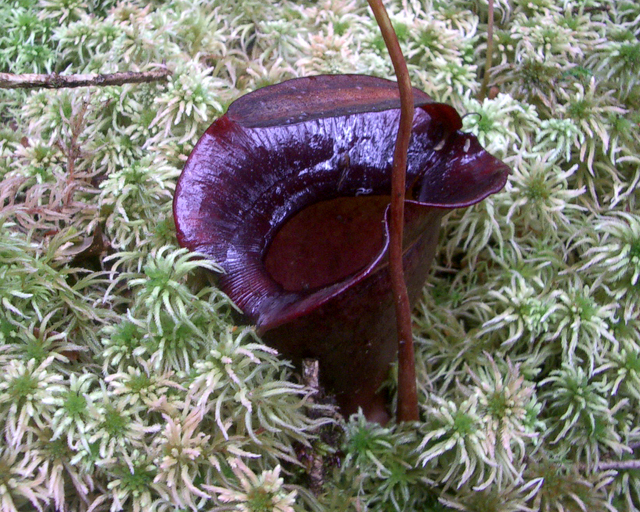

Table of Contents
Use only distilled water, reverse osmosis (RO), or rainwater — ideally under 50 ppm TDS. Tap water, bottled mineral water, and softened water contain calcium, magnesium, and sodium that accumulate in the substrate and kill carnivorous plants within weeks. This is the #1 cause of cultivation failure.
Introduction & Discovery
Nepenthes jacquelineae is the pitcher plant that looks like a flying saucer come to rest in the mossy cloud forests of Sumatra. It is named for the species' defining feature: a peristome so extraordinarily wide, so dramatically flared, so precisely horizontal, that when first photographed in 2001 by its discoverers, botanists around the world initially questioned whether the images had been digitally altered. They had not. The peristome of N. jacquelineae extends outward from the pitcher mouth like a polished mahogany dinner plate balanced atop a small ceramic vase, its surface gleaming wet and deep red-brown, its scalloped edges flexing slightly in the mountain breeze. No other Nepenthes produces a peristome with this geometry — even famous wide-lipped species like N. platychila and N. lowii look modest by comparison. The species was discovered in 1995 by carnivorous plant researcher Charles Clarke during fieldwork on the Barisan Mountains of western Sumatra and was formally described in 2001 by Clarke, Charles Nepenthes Troy Davis, and Trent Davis Tamin in the 'Blumea' botanical journal. The species epithet honors Jacqueline Clarke, Charles Clarke's wife, who accompanied him on numerous Southeast Asian field expeditions and whose contributions to Nepenthes biology are recognized throughout Clarke's publications. N. jacquelineae is endemic to a small area of western Sumatra in the Indonesian provinces of West Sumatra (Sumatera Barat), occurring at high elevations of 1,700–2,200 meters on ridge tops and cloud-wrapped mountain summits. In the wild, the species grows as an understory plant in ultra-humid moss forest where the pitchers hang from short tendrils, ready to intercept the small insects that make up the majority of its prey. In cultivation, N. jacquelineae quickly became one of the most sought-after Sumatran highlands in the collector community, commanding prices that matched its rarity and visual impact. Tissue-culture propagation by specialist nurseries has since made the species more accessible, but it remains a signature piece in any serious Nepenthes collection. This article explores the botany, discovery narrative, ultra-specialized peristome biology, and demanding highland cultivation of one of the most architecturally striking carnivorous plants ever described.
Nepenthes jacquelineae is a tropical pitcher plant endemic to the Indonesian island of Sumatra. Due to its unique pitcher morphology, it is considered to be one of the most spectacular Nepenthes species native to the island.
Discovery & Naming
Nepenthes jacquelineae was formally described in 2001 by Charles Clarke, Troy Davis, and Rismita Tamin in the paper 'A spectacular new species of Nepenthes L. (Nepenthaceae) pitcher plant from central Sumatra, Indonesia' (Blumea 46: 565–570). The discovery narrative begins in 1995, when Charles Clarke — then one of the leading active researchers on Southeast Asian Nepenthes — was conducting fieldwork in the Barisan Mountains of western Sumatra as part of his ongoing monograph project documenting Indonesian pitcher plants. Clarke had previously published his landmark 'Nepenthes of Borneo' (1997) and was working toward a similar comprehensive treatment of Sumatran species when local guides led him to a previously unknown population of pitcher plants on a high mountain ridge in the remote interior of West Sumatra province. The plants produced pitchers unlike anything Clarke had seen: the peristome was so enormously flared that mature specimens looked more like small flying saucers than conventional pitchers. Initial photographs and measurements confirmed that the population represented an undescribed species, and Clarke returned for additional collecting trips between 1995 and 2001 to document the full morphological range, ecology, and distribution. The formal description took six years to complete because of the remoteness of the type locality, the need for additional field data on flowering biology and habitat relationships, and the logistical challenges of working in the Barisan Mountains. The species epithet 'jacquelineae' honors Jacqueline Clarke, Charles Clarke's wife, who accompanied him on numerous expeditions to Sumatra, Borneo, Sulawesi, and the Philippines and who played critical support roles in the field work and logistical organization of these research trips. Clarke has repeatedly acknowledged Jacqueline's contributions in his publications and the dedication is an apt recognition of a partnership that has documented dozens of Nepenthes species across the archipelago. The type specimen was deposited in the Herbarium Bogoriense (BO) in Indonesia with duplicate material at the Royal Botanic Gardens Kew (K) and Monash University (MUCV). The publication generated immediate interest in the carnivorous plant community, and photographs of the new species' distinctive pitchers circulated widely among Nepenthes enthusiasts within months of the description's appearance. Commercial tissue-culture propagation began at specialist nurseries in the early 2000s ( at Wistuba in Germany, Borneo Exotics in Sri Lanka, and Exotica Plants in Australia), making the species available to collectors for the first time and establishing N. jacquelineae as one of the most desirable Sumatran highlands in modern Nepenthes horticulture. Additional field research since the original description has slightly expanded the known range of the species and clarified its ecological preferences, but the basic morphological and taxonomic understanding established by Clarke, Davis, and Tamin in 2001 remains the authoritative treatment.
Trapping Mechanism
The pitcher of Nepenthes jacquelineae is among the most architecturally distinctive in the genus, dominated by an extraordinarily wide and flared peristome that defines nearly every aspect of the species' trap biology and visual appearance. The pitcher body itself is relatively modest: 8–15 cm tall, narrow (3–5 cm diameter at the middle), and tube-shaped with a slightly inflated base, colored deep burgundy to brown-red with darker spots and markings. The proportional relationship between pitcher body and peristome is the species' signature feature — the peristome can extend up to 6 cm outward from the pitcher mouth, creating a total width of up to 12 cm in exceptional specimens, which is larger than the pitcher body diameter. This proportional inversion (wider mouth than pitcher tube) is unusual among Nepenthes and creates the 'flying saucer' visual effect that makes the species instantly recognizable. The peristome surface is highly glossy, colored deep mahogany red to nearly black, with prominent ribbed ridges running radially outward from the pitcher opening. Each ridge is 1–3 mm tall, spaced every 2–4 mm, and follows the standard Nepenthes peristome architecture documented by Bohn and Federle (2004) that produces the 'aquaplaning' trap mechanism. When the peristome is wet — which is nearly constant in the cloud-immersed habitat of Sumatran mountains — a thin water film forms between the ribbed surface and the tarsal pads of insects attempting to cross it, eliminating friction and sliding the prey into the pitcher below. The enormous width of N. jacquelineae's peristome maximizes the capture area relative to the pitcher volume, likely an evolutionary adaptation for efficient prey interception in an environment where individual insects are relatively scarce but cloud forest humidity keeps the trap surface permanently operational. Inside the pitcher, the standard Nepenthes trap architecture continues: an upper waxy zone with detachable epidermal wax crystals 300–800 nm tall (that coat insect feet in a lubricating dust when disturbed), and a lower digestive zone with glandular cells secreting acidic fluid (pH 2.5–4.0) containing nepenthesin proteases, chitinases, and phosphatases. The pitcher lid (operculum) is ovate to orbicular, 2–4 cm across, held at a 60–90° angle above the pitcher opening — often more steeply angled than in other Nepenthes, with some specimens appearing to hold the lid nearly vertically as a rain deflector. The inner surface of the lid produces nectar glands that attract insects, supplementing the peristome's nectar secretions. Prey composition studies of N. jacquelineae are limited due to the species' remote habitat and recent discovery, but available observations suggest a standard Nepenthes prey spectrum dominated by ants (60–75%), flies (10–20%), small beetles (5–10%), and miscellaneous other arthropods (5–10%). The species appears to be a conventional ant-capture specialist without documented vertebrate mutualisms (no tree shrew or similar associations), though the habitat is under-studied and unknown ecological interactions may remain to be discovered.
Native Range & Distribution Map
Distribution map showing the native range of Nepenthes jacquelineae.
Biology & Trapping Mechanism
Nepenthes jacquelineae is a small-to-medium climbing vine with a modest growth habit compared to larger Sumatran species like N. maxima or N. spectabilis. The stem is slender (3–8 mm diameter) and woody, eventually reaching 2–4 meters in mature specimens under favorable conditions. In its native cloud forest habitat, plants are typically smaller and more compact than potential cultivation maximums due to the demanding environmental conditions and slow growth rates at high elevations. Leaves are coriaceous (leathery), 10–20 cm long and 3–4 cm wide, lanceolate to narrowly elliptic in shape, with a prominent central midrib and acute tip. Leaf coloration is typically deep green with reddish pigmentation on sun-exposed surfaces, and the leaf veins are sometimes reddish on young growth. Pitchers develop at the terminal ends of tendrils extending from the leaf tips. The species shows the standard Nepenthes pitcher dimorphism: lower (rosette) pitchers and upper (aerial) pitchers with somewhat different morphology. Lower pitchers are held at or near the substrate, with a slightly more pronounced waist (constriction) in the middle of the pitcher tube and prominent front wings that serve as crawling guides for ants. Upper pitchers, produced after the plant transitions to its climbing growth phase, are generally more cylindrical with reduced or absent wings and a more horizontally held peristome. Both pitcher types share the diagnostic characteristics of the species: small pitcher body, extraordinarily wide flared peristome, glossy mahogany red coloration, and narrow-angled vertically held lid. Mature pitchers reach total widths of 10–12 cm including the peristome, while the pitcher body itself is only 8–15 cm tall. The peristome is the species' defining feature: 3–6 cm wide, extending outward from the pitcher opening like a plate, with prominent radial ribs 1–3 mm tall. Peristome coloration is deep red-brown to mahogany, often with darker spotting and a lighter inner rim. The lid is ovate to orbicular, 2–4 cm across, with nectar glands on the lower surface and typically held at 60–90° above the pitcher mouth. The lid coloration usually matches or is slightly darker than the peristome. Flowers are produced on erect racemose inflorescences 20–40 cm long, with small dark-red to brown tepals and reddish-brown anthers. The species is dioecious (separate male and female plants), so seed production in cultivation requires both sexes and hand-pollination for optimal results. Fruit is a four-valved capsule 1.0–2.0 cm long, releasing 30–70 tiny filiform seeds per capsule — seeds are wind-dispersed with small papery wings. Germination requires sustained humidity above 80%, cool temperatures (18–24°C day, 12–18°C night), and bright filtered light; natural germination rates appear to be low and seedling survival low under field conditions, though tissue-culture propagation is highly successful. Chromosome number has not been independently verified for N. jacquelineae, but is presumed to be 2n=80 like most Nepenthes species. Natural hybrids involving N. jacquelineae have not been documented in the wild because the species' narrow range and isolated populations do not overlap with other Nepenthes species at the same elevations. In cultivation, artificial hybrids have been produced for horticultural purposes, combining the distinctive peristome of N. jacquelineae with other species.
Prey & Feeding Ecology
Nepenthes jacquelineae's prey ecology remains incompletely documented due to the species' remote habitat and relatively recent discovery, but ecological observations and comparisons with similar Sumatran highland species provide a reasonably clear picture of its feeding strategy. The species functions as a general insect trap with a strong bias toward ants, the dominant insect group in its cloud forest habitat. Field observations by Charles Clarke and collaborators during their original fieldwork documented ants as the majority of captured prey in newly opened pitchers, with smaller contributions from flies, beetles, small wasps, and springtails. The enormous peristome creates a very large capture area relative to the pitcher volume — approximately 3–5x the surface area ratio seen in narrow-lipped Nepenthes species — which likely increases the probability of intercepting ants that happen to cross the pitcher edge during their foraging movements. The peristome ribs and nectar secretions mirror those found throughout the genus, attracting ants to the pitcher rim via sweet reward; biochemical analysis of Nepenthes pitcher nectar typically shows sucrose concentrations of 10–30% with small amounts of amino acids (particularly proline, alanine, and asparagine) and trace alkaloids that may have mild behavioral effects on insect foragers. The glossy dark red peristome coloration of N. jacquelineae may contribute to prey attraction through visual cues, though this hypothesis has not been experimentally tested for the species. UV photography of pitchers from related Nepenthes species has shown that red and purple pigments fluoresce in the UV range visible to insects, potentially creating visual targets that guide prey to the pitcher opening. In N. jacquelineae's cloud forest habitat, the most abundant ant genera are likely Crematogaster, Camponotus, Polyrhachis, and Pheidole, with smaller proportions of flying ants (winged queens and males during colony reproductive phases) that contribute to pitcher prey during swarming events. Springtails (Collembola), abundant in the moist leaf litter of cloud forest, are commonly captured on lower pitchers that sit close to the ground. Flies in the families Drosophilidae, Muscidae, and Phoridae are attracted by the pitcher scent and contribute to prey in both lower and upper pitchers. The species does NOT have any documented mammalian or reptilian mutualism — unlike the famous cases of N. lowii (tree shrew mutualism), N. rafflesiana (bat mutualism), N. ampullaria (detritivore mode), or even N. ventricosa (complex ant associations). This likely reflects both the species' conventional anatomy (the peristome shape is not adapted for vertebrate visitors) and the limited research attention that N. jacquelineae has received compared to more famous Nepenthes species. The nutritional importance of prey capture for the species is presumed to be significant, consistent with other Sumatran and Bornean highland Nepenthes that derive 55–75% of their foliar nitrogen from insect prey according to stable isotope studies (Moran et al. 2010). Without effective insect trapping, N. jacquelineae could not survive in the nitrogen-poor cloud forest soils of its native habitat.
Comparison with Similar Species
Nepenthes jacquelineae stands out from other Nepenthes species primarily due to its extraordinarily wide peristome geometry — a feature so distinctive that direct comparison with other species requires focusing on peristome morphology rather than overall pitcher shape or size. VS. NEPENTHES PLATYCHILA: this is perhaps the closest comparison because N. platychila ('flat-lipped Nepenthes') is also famous for an exceptionally wide flared peristome, described by Jebb and Cheek in the late 1990s from Sarawak, Borneo. Both species produce similarly wide, plate-like peristomes, but the pitcher shapes differ: N. platychila has a more ventricose (swollen) pitcher body with a distinct hip, while N. jacquelineae has a narrower, more cylindrical pitcher tube that accentuates the peristome width by contrast. N. platychila is also more widely distributed across Borneo, grows at slightly lower elevations, and is somewhat more tolerant of cultivation conditions. Choose platychila for slightly easier growing and availability; choose jacquelineae for the more dramatic peristome-to-body contrast. VS. NEPENTHES LOWII: Borneo's famous 'hourglass' pitcher plant produces a radically different pitcher shape — constricted in the middle with an expanded base and upper portion, featuring the documented tree shrew mutualism. While N. lowii's upper pitchers have a fairly wide peristome, it is nothing like N. jacquelineae's flying-saucer geometry. These species are often grown together by highland Nepenthes specialists for contrasting forms. VS. NEPENTHES VEITCHII: another species famous for a wide ribbed peristome, N. veitchii (Borneo) has a more conventional pitcher body shape but exceptionally wide horizontal peristomes in the Bario and Murud highland forms. The key difference is ribbing — N. veitchii's peristome has prominent vertical ribs 3–6 mm high, while N. jacquelineae's is smoother with less dramatic ribbing. N. veitchii is more widely available and easier to grow. VS. NEPENTHES ARISTOLOCHIOIDES: Sumatra's 'parachute pitcher plant' produces the famous bulbous pitcher with a forward-tilted opening that resembles an aristolochia flower. The architecture is completely different from N. jacquelineae but the two species share the Sumatran highland origin and recent discovery timeline (aristolochioides described 1988). Growing conditions are very similar — both require strict highland conditions and high humidity. Collectors often grow both for contrasting Sumatran endemics. VS. NEPENTHES IZUMIAE, N. LINGULATA, N. NAGA: these are all recently described Sumatran endemics from similar highland habitats, each with distinctive morphological features (filiform lid appendages, colored peristomes, etc.). They share the cultivation requirements of N. jacquelineae (strict highland, high humidity, specific substrate) and often appear together in the same specialist collections. None match N. jacquelineae's peristome geometry but the entire Sumatran highland Nepenthes assemblage is a coherent collection theme for advanced growers. VS. NEPENTHES BURBIDGEI (another rare Bornean highland): while N. burbidgei is famous for its painted coloration, its peristome is conventionally sized and not particularly flared. The two species represent different aesthetic approaches to Nepenthes beauty — coloration vs geometry. Both are difficult highland species requiring similar cultivation conditions. FOR EXPERIENCED GROWERS: N. jacquelineae is a 'crown jewel' species for advanced Nepenthes collectors who already grow multiple highland species successfully. It is not appropriate for beginners or for growers still learning general Nepenthes cultivation. Gain experience with easier highland species (N. ventricosa, N. khasiana, N. sanguinea, N. maxima) before attempting N. jacquelineae, and ensure you have all necessary equipment and experience before investing in the species.
Reproduction & Propagation
Nepenthes jacquelineae is propagated in cultivation primarily by tissue culture, with limited success via stem cuttings. The species' recent discovery (2001), narrow geographic range, and slow growth rate have kept propagation almost exclusively within specialist commercial nurseries. TISSUE CULTURE is the dominant propagation method, used by Wistuba (Germany), Borneo Exotics (Sri Lanka), and Exotica Plants (Australia). Meristem cultures are initiated on Murashige-Skoog medium with adjusted hormone concentrations (typically 1–2 mg/L BAP with 0.1 mg/L NAA for shoot multiplication) producing clonal plantlets that are then acclimated to standard cultivation. Tissue-cultured material dominates the commercial trade — essentially all plants offered by reputable sources are TC propagated, which is positive for conservation as it reduces pressure on wild populations. The technique allows unlimited multiplication of selected accessions, though genetic diversity in cultivation is limited to the relatively small number of original source plants that were brought into tissue culture. STEM CUTTINGS are possible but challenging for this species. In spring, when the mother plant is in active growth, cut a section of mature stem 12–20 cm long containing 3–5 leaves with a sterilized razor blade. Cut just below a node and remove the lower 2 leaves, leaving 1–3 leaves at the top. Trim remaining leaves in half to reduce transpiration. Dip the cut base in rooting hormone (IBA 0.3% or Clonex gel) and insert into a sterile rooting medium of 50% long-fiber sphagnum + 50% perlite, burying 2 nodes below the surface. Enclose in a humidity chamber at 18–22°C day and 12–16°C night, with bright filtered light. Roots emerge in 12–24 weeks — significantly slower than lowland Nepenthes due to the cool growing conditions. Success rates are modest (30–50%) and lower than for easier Nepenthes species. The limited cutting material produced by slow-growing mature plants makes this propagation route impractical for most amateur growers. BASAL OFFSETS occur naturally as mature plants develop new shoots from the base or lower stem nodes, though the species' slow growth means offsets are relatively rare. When offsets do appear and have developed their own roots (typically after 4–6 leaves have matured), they can be carefully separated and potted up in fresh highland mix. Success rate: 80–95% because offsets already have functioning roots. SEED PROPAGATION is rarely attempted in cultivation. The species is dioecious (separate male and female plants), so seed production requires both sexes in flower simultaneously and hand-pollination. Flowering is uncommon in cultivated plants and seed rarely offered commercially. Even with viable seed, germination requires 6–12 weeks of specific conditions (humidity above 80%, temperature 18–22°C day / 12–16°C night, bright filtered light) and seedlings grow very slowly — typically 6–10 years from seed to first mature pitchers. For practical purposes, most collectors rely on tissue-cultured plants from specialist nurseries rather than attempting seed propagation themselves. PRESERVATION OF GENETIC DIVERSITY: because commercial tissue culture traces back to a limited number of original source plants, the genetic diversity in cultivation is narrower than in wild populations. Conservation efforts to maintain broader genetic diversity rely on coordination between specialist nurseries, botanical gardens (Kew, Singapore Botanic Gardens, Bogor), and the ICPS Seed Bank when viable seed becomes available.
Cultivation & Substrate
Nepenthes jacquelineae is a strict highland species with demanding cultivation requirements, suitable only for growers with dedicated cool-growing facilities and experience with other highland Nepenthes. The species is not appropriate for beginners or for growers without climate-controlled growing spaces — attempting to cultivate N. jacquelineae in open-room conditions or in ambient tropical-house environments will result in rapid decline and death. GROWING MEDIUM: use a chunky, airy, acidic mix that replicates the thin organic layer over volcanic substrate of the native habitat. Standard recipe: 40% long-fiber sphagnum moss, 30% perlite or pumice, 20% medium orchid bark, 10% charcoal, with pH 4.0–5.0. Some growers add 5–10% live sphagnum moss as a top dressing to mimic the mossy habitat and to provide natural pH buffering. Do not use peat-heavy mixes (too dense), garden soil (contains dissolved minerals), or standard potting soil (contains fertilizers that damage Nepenthes roots). POT AND DRAINAGE: use plastic net pots, slotted orchid pots, or standard plastic pots with multiple drainage holes. Terracotta is acceptable but dries out faster and may require more frequent watering. Shallow wide pots (8–12 cm deep × 12–18 cm wide) are preferred over deep narrow pots because the species has a relatively shallow root system adapted to the thin substrate layer of its native habitat. WATER: use only rainwater, distilled water, or high-quality RO water with TDS below 20 ppm. Tap water kills Nepenthes through gradual mineral accumulation in the substrate. Water thoroughly whenever the top 1 cm of the growing medium feels slightly dry, typically every 2–3 days in active growth. Maintain consistently moist conditions but never waterlogged — the species evolved on well-drained cloud forest substrates and is sensitive to root oxygen deprivation. Tray-watering with 1–2 cm of water in a saucer below the pot works well, provided the saucer is emptied and refilled rather than left stagnant. LIGHT: bright indirect light or 50% shade cloth during the active growing season, equivalent to dappled light under a cloud forest canopy. Direct midday sun will scorch leaves and stress pitchers, while excessive shade produces washed-out pitcher coloration and reduces pitcher size. LED grow lights at 150–200 µmol/m²/s PAR for 12–14 hours daily are ideal for indoor cultivation. The species develops its best pitcher coloration under bright cool conditions with some morning direct sun, replicating the filtered light of its ridge-top native habitat. TEMPERATURE: the critical cultivation requirement. N. jacquelineae requires strict highland conditions: day 18–24°C, night 12–16°C, year-round. The species has no tolerance for warm conditions — sustained temperatures above 26°C cause stress, leaf drop, pitcher abortion, and eventual decline. A single heat wave exceeding 28°C for several consecutive days can cause permanent damage or death. Growing spaces must be climate-controlled with air conditioning, evaporative cooling, or refrigerated environments. Basement locations with natural cooling often work well in temperate climates. HUMIDITY: 80–95% relative humidity, year-round. This is non-negotiable for pitcher production. The species does not tolerate humidity drops and will abort pitcher primordia if humidity falls below 70% for extended periods. Use terrariums, humidity tents, enclosed greenhouses, or automated misting systems to maintain the required levels. FEEDING: the species will capture available insects in the enclosed growing environment (fruit flies, small flies, fungus gnats), typically providing adequate nutrition. Supplemental feeding is rarely necessary. Avoid adding fertilizer to the growing medium — Nepenthes roots are highly sensitive to salt accumulation. Very dilute foliar feeding with Maxsea 16-16-16 at 1/8 strength every 6–8 weeks is acceptable for vigorous specimens during active growth, but not essential. REPOTTING: every 2–4 years in spring using fresh medium. The species is slow-growing and does not benefit from frequent disturbance. When repotting, disturb the root system as little as possible and replant at the same depth as the original.
Substrate: Sphagnum, perlite, orchid bark
Water: Distilled / Rainwater only — NEVER tap water
Light: Bright indirect to full sun
Humidity: 60-90%
Common Mistakes to Avoid
['Attempting to grow N. jacquelineae without dedicated cool-growing facilities: This is the single most common cause of failure with this species. Unlike intermediate or lowland Nepenthes, N. jacquelineae has zero tolerance for warm conditions — sustained temperatures above 26°C cause rapid decline, and brief heat waves above 28°C can kill the plant. Many growers are attracted by photos of the spectacular pitchers and purchase the species without realizing it requires year-round highland conditions. If you cannot provide day 18–24°C and night 12–16°C in an enclosed growing environment, do not attempt this species.', 'Insufficient humidity: The species requires 80–95% relative humidity to produce functional pitchers. Plants in typical indoor humidity (30–50%) will grow leaves normally but fail to inflate pitcher primordia, resulting in flat abortive trap structures. The problem is often misdiagnosed as nutritional or lighting issues, but the underlying cause is almost always humidity. Use enclosed terrariums, glass cabinets, or high-humidity grow chambers.', 'Using tap water or mineral-contaminated water: Nepenthes roots are extremely sensitive to dissolved minerals, and N. jacquelineae is particularly susceptible due to its adaptation to pristine cloud forest conditions. Even slightly hard water causes gradual root damage and pitcher failure. Use only rainwater, distilled water, or high-quality RO water (TDS below 20 ppm). Test your water source regularly if using RO or municipal water filters.', 'Buying plants from unverified sources: The species is recently described, relatively rare, and CITES Appendix II listed. Plants offered at unusually low prices or from unknown sources may be misidentified (possibly related Sumatran species), poorly acclimated tissue-culture material, or illegally wild-collected specimens. Always buy from reputable specialist nurseries (Wistuba, Borneo Exotics, Exotica Plants) with documented tissue-culture propagation.', 'Overwatering during transplant shock: Recently repotted or newly arrived plants often enter a temporary shock period where root function is reduced and normal watering can cause root rot. Reduce watering frequency for 2–3 weeks after transplanting or shipping, maintain high humidity, and resume normal watering only after new growth confirms the plant has recovered.']
Seasonal Considerations
Like all Nepenthes species, N. jacquelineae has NO dormancy requirement — the species comes from a cloud-forest environment with stable temperatures and humidity year-round, and any attempt to impose dormancy through cooling or drying will harm or kill the plant. However, some seasonal growth variation is natural and expected in cultivation due to changes in photoperiod, ambient temperatures, and light intensity. SPRING (March–May): gradually resume more active care as photoperiod increases. This is the ideal repotting window if the plant needs fresh medium — choose cloudy humid days and handle the plant minimally during transplanting. Begin very dilute foliar feeding (Maxsea 16-16-16 at 1/8 strength) every 6 weeks if desired, though not essential. Monitor for pest outbreaks (aphids, mealybugs) that often emerge on new growth. Verify all cooling and environmental systems are functioning properly before summer heat arrives. SUMMER (June–August): CRITICAL monitoring period for temperature management. Summer heat waves pose the greatest risk to N. jacquelineae in most climates — a single day above 28°C can damage the plant. Monitor temperatures multiple times daily during hot periods, ensure cooling equipment is running at maximum capacity, have backup plans for power failures, and consider temporary relocation to cooler locations (basement, refrigerated chamber) during extreme heat events. Maintain consistent watering and 80–95% humidity. Despite the cooling challenges, this is the peak growing season under proper conditions — expect maximum pitcher production and vigorous leaf development when environmental parameters are maintained. AUTUMN (September–November): as photoperiod decreases and outdoor temperatures cool, growth rates naturally slow. Maintain normal care routines but monitor for fungal issues (Botrytis, leaf spot, root rot) that can develop in the cool moist conditions. Ensure good airflow via small internal fans to prevent stagnant air. Reduce fertilization frequency to every 8 weeks or discontinue for the season. Watch for pests that may emerge as plants transition between seasonal conditions. WINTER (December–February): the slowest growth period but the plant remains active with small new leaves emerging regularly. Do NOT attempt to force dormancy — N. jacquelineae has no dormancy cycle and cold treatment will harm it. Maintain temperatures above 12°C at all times (night temperatures should not drop below this threshold even briefly). Continue full LED lighting to compensate for shorter natural daylight and prevent etiolation. Discontinue fertilization from November through January. Water slightly less frequently as evaporation rates decrease, but maintain consistent moisture. Watch humidity carefully as indoor heating systems can dry out the air — compensate with increased misting or humidifier operation. Winter is actually the easiest season for temperature management in most climates because ambient conditions are cooler, reducing the load on cooling equipment.
Seasonal Care Calendar
🌱 Spring (Mar-May)
Water: Heavy
Feeding: Light feeding
Active growth resumption as photoperiod increases. Ideal repotting window — choose cloudy humid days and handle plant minimally. Verify cooling systems are functioning properly before summer heat arrives. Begin very dilute foliar feeding (Maxsea 16-16-16 at 1/8 strength every 6 weeks) if desired. Monitor new growth for aphids and other pests.
☀️ Summer (Jun-Aug)
Water: Heavy
Feeding: Light feeding
CRITICAL temperature management period. Monitor temperatures multiple times daily during hot periods. Ensure cooling equipment runs at maximum capacity. Have backup cooling plans for power failures. Maintain 80–95% humidity and consistent watering. This is peak growing season — expect maximum pitcher production when conditions are optimal.
🍂 Autumn (Sep-Nov)
Water: Regular
Feeding: Light feeding
Growth slows as photoperiod decreases. Monitor for fungal issues (Botrytis, leaf spot) that favor cool moist conditions. Ensure internal airflow via small fans. Reduce fertilization to every 8 weeks or discontinue for the season. Watch for pest outbreaks during seasonal transitions.
❄️ Winter (Dec-Feb)
Water: Regular
Feeding: No feeding
Slowest growth period but continued vegetative activity. Maintain temperatures above 12°C at all times — NEVER cold treat this species. Continue full LED lighting to compensate for reduced natural daylight. Discontinue fertilization November-January. Monitor humidity as heating systems dry indoor air — compensate with increased misting.
Diseases & Pests
Nepenthes jacquelineae shares the general disease susceptibility of other cool-growing Nepenthes species, with several specific conditions worth monitoring. ROOT ROT caused by Pythium and Phytophthora species is the most common cause of cultivation failure, typically triggered by stagnant water in dense or poorly drained substrate, or by temperature stress that reduces root function. Symptoms: wilting despite moist substrate, progressive leaf yellowing from the base upward, eventual plant collapse, and black mushy roots when excavated. Treatment: unpot immediately, trim black or brown roots back to healthy white tissue, drench with systemic fungicide (metalaxyl-based products like Subdue MAXX), and repot in sterile fresh medium. Prevention: use chunky well-draining mix, maintain proper temperature, avoid overwatering, ensure pots have adequate drainage. BOTRYTIS CINEREA (gray mold) is particularly problematic for cool-growing Nepenthes because the low-temperature high-humidity conditions favor fungal growth. Attacks young leaves, developing pitcher primordia, and stem nodes, appearing as fuzzy gray patches that turn tissue brown and mushy. Treatment: prune affected tissue with sterile scissors, improve air circulation with an internal fan running several hours daily, apply copper-based fungicide (Kocide 3000 or similar) to prevent spread. Prevention: ensure regular airflow in terrariums, avoid leaving water on leaves after misting, slightly raise day temperatures to 22–24°C during humid periods. CERCOSPORA and COLLETOTRICHUM LEAF SPOT diseases cause circular brown spots with yellow halos on leaves, typically in stressed plants or in conditions with prolonged leaf wetness. Treatment: remove affected leaves, reduce leaf wetness, apply chlorothalonil or mancozeb fungicide at manufacturer rates. APHIDS (typically Myzus persicae and Aphis gossypii) are the most common insect pest, attacking new growth and developing pitcher primordia. They cause distortion, reduce vigor, and can spread viruses. Treatment: insecticidal soap at half manufacturer concentration (some Nepenthes clones are sensitive to standard soap), neem oil for moderate infestations, imidacloprid systemic drench for severe cases. Always rinse the plant with rainwater after soap or oil treatment. MEALYBUGS (Pseudococcus spp. and Planococcus citri) establish in leaf axils and the pitcher/tendril junction, appearing as white cottony masses. These are particularly difficult to eradicate and often require repeated treatments. Treatment: 70% isopropyl alcohol on cotton swabs for localized infestations, manual removal with tweezers, systemic insecticide for severe cases, predatory insects (Cryptolaemus beetles) for long-term biological control in large collections. SCALE INSECTS (soft and armored scales) attach to stems and leaf undersides, feeding on sap and producing honeydew that attracts sooty mold. Treatment: scrape off manually for light infestations, horticultural oil or systemic imidacloprid for heavier populations. SPIDER MITES can develop if humidity drops below 60%. Because the species requires 80%+ humidity, spider mites are uncommon in well-maintained setups, but any equipment failure that reduces humidity can quickly lead to mite infestations. Treatment: restore humidity, rinse plant with rainwater, apply miticide if needed. HEAT STRESS is not a disease per se but produces similar symptoms — leaf yellowing, pitcher abortion, stunted growth. Any N. jacquelineae showing unexpected decline should first have its temperature monitored carefully to rule out heat stress before pursuing pathological diagnoses. CHILLING INJURY from temperatures below 10°C produces leaf blackening and stem damage. The species should never experience sustained temperatures below 12°C even briefly.
Indoor Growing & Terrariums
Growing Nepenthes jacquelineae indoors is possible but requires dedicated equipment and commitment that exceeds typical houseplant care. This is not a casual indoor plant — it's a specialist carnivorous plant that must be treated as a climate-controlled exhibit rather than a conventional room specimen. LOCATION AND SETUP: the plant must be housed in an enclosed environment — terrarium, glass cabinet, grow tent, or refrigerated grow chamber. Open-room placement in typical indoor conditions (20–25°C, 30–50% humidity) will kill the plant within weeks due to heat and dehydration stress. Suitable locations include: (1) dedicated terrarium on a desk or stand in a cool room, (2) glass cabinet with internal cooling and lighting, (3) converted mini-fridge grow chamber for serious specialists, (4) climate-controlled space such as a basement grow room or unheated garage (in cool climates). LIGHTING: high-output full-spectrum LED grow lights are essential, providing 150–200 µmol/m²/s PAR for 12–14 hours daily. Place lights 25–40 cm above the plant canopy. Inadequate lighting results in stretched growth, poor pitcher coloration, and reduced pitcher production. Avoid cheap aquarium-style LEDs — invest in proper horticultural lighting. TEMPERATURE: the single most important factor for indoor success. Day 18–24°C, night 12–16°C, year-round. Methods to achieve these temperatures indoors include: (1) DEDICATED AIR CONDITIONING for the growing space (expensive but reliable), (2) BASEMENT LOCATION with natural cooling supplemented by small AC unit during summer, (3) REFRIGERATED GROW CHAMBER (modified mini-fridge with interior lighting and controllers) — highly effective for specialist single-plant setups, (4) THERMOELECTRIC PELTIER COOLING built into a terrarium wall — works for small containers. Monitor with digital thermometer and temperature alarm to detect excursions outside acceptable range. Summer heat management is the ongoing challenge in most indoor setups. HUMIDITY: maintain 80–95% using (1) live sphagnum moss ground cover in the terrarium, (2) automated misting system with timer, (3) ultrasonic fogger with humidistat controller, (4) sealed enclosure with minimal ventilation. Check humidity daily and adjust equipment as needed. Dry winter air from heating systems can be particularly challenging. SOIL AND POT: standard highland Nepenthes mix (40% sphagnum + 30% perlite + 20% orchid bark + 10% charcoal) in a plastic net pot. Replace medium every 2–4 years. WATER: use only rainwater, distilled water, or high-quality RO water. Test water source quality regularly. Water thoroughly whenever the top 1 cm of substrate feels slightly dry — typically every 2–3 days in active growth. Never allow the pot to sit in standing water. FEEDING: the plant will capture available insects in the enclosed terrarium environment. Supplemental feeding with dilute foliar Maxsea (1/8 strength every 6–8 weeks) is optional for vigorous specimens. Avoid fertilizing the substrate. PHOTOGRAPHY AND DISPLAY: the species' dramatic flared peristome is highly photogenic — position the plant to display the pitchers at eye level or slightly above, and photograph during peak coloration (typically 4–8 weeks after pitcher opening). Many collectors document their specimens on blogs, Instagram, and carnivorous plant forums. REALISTIC EXPECTATIONS: a successful indoor N. jacquelineae specimen is a long-term project requiring patience, investment in equipment, and consistent maintenance. Expect 4–8 new pitchers per year in optimal conditions, gradual stem elongation over several years, and increasingly impressive pitcher displays as the plant matures. The species rewards skilled cultivation with one of the most distinctive visual experiences in carnivorous plant collecting — the otherworldly 'flying saucer' pitchers that few other plants can match.
Terrarium Setup
Nepenthes jacquelineae is essentially a terrarium-only species for growers outside of naturally cool cloud-forest climates. An enclosed, climate-controlled growing environment is not an optional luxury for this species — it is a mandatory requirement for successful cultivation. Recommended setup: a glass or acrylic terrarium minimum 60 × 45 × 60 cm (W × D × H), with vertical space for the climbing growth habit. Larger terrariums accommodate mature specimens better but require proportionally more powerful cooling equipment. The tank should have a sealable top with controlled ventilation via a small internal fan (not wide-open airflow which dries the environment). CRITICAL EQUIPMENT: active cooling is essential. Options include: (1) DEDICATED CHILLER UNIT with recirculating cold water through coils inside the tank — expensive but most effective for large setups, (2) THERMOELECTRIC PELTIER COOLER mounted in the tank wall — works well for small to medium terrariums, (3) REFRIGERATED GROW CHAMBER (modified mini-fridge with interior grow lights and timer controls) — excellent solution for single-plant specialist setups, (4) DEDICATED COOLING SPACE (cool basement, unheated garage in summer, cold cellar) with supplemental temperature monitoring. Day temperatures 18–24°C, night temperatures 12–16°C. Passive cooling methods (frozen water bottles, cold packs) do not work reliably for this species and lead to temperature instability that stresses the plant. LIGHTING: full-spectrum LED grow lights mounted 25–40 cm above the plant canopy, providing 150–200 µmol/m²/s PAR for 12–14 hours daily. Full-spectrum 6500K LEDs are ideal, with some 3000K warm white for color development. Brand matters: invest in proven horticultural LED manufacturers rather than inexpensive aquarium-style lights. HUMIDITY: 80–95% maintained by (1) continuous live sphagnum moss ground cover, (2) automated misting system (twice daily 30-second bursts with ultrasonic fogger or high-pressure nozzles), or (3) ultrasonic fogger with humidistat controller. A small internal fan running 4 hours daily prevents stagnant air that causes fungal problems. SUBSTRATE: a 3 cm drainage layer of expanded clay pebbles, fiberglass mesh barrier, then 8–12 cm of the standard highland mix (40% long-fiber sphagnum + 30% perlite + 20% orchid bark + 10% charcoal). Plant the Nepenthes in a plastic net pot buried in the substrate rather than directly into the terrarium soil — this allows easy removal for repotting and prevents root rot from excess moisture. COMPANION PLANTS: other Sumatran or Bornean highland Nepenthes species with identical requirements (N. spathulata, N. spectabilis, N. densiflora), highland orchids (Masdevallia, Restrepia, Dracula), filmy ferns (Hymenophyllum, Trichomanes), and cloud forest mosses. Do NOT mix with lowland or intermediate Nepenthes, tropical sundews, Sarracenia, or any plants with different temperature requirements — the resulting compromise conditions will not suit any of the plants properly. MONITORING: digital thermometer/hygrometer with alarm function, data logger for temperature tracking, backup cooling plan for power failures or equipment malfunctions. The investment in a proper N. jacquelineae setup is substantial — typically $300–1500+ in equipment plus ongoing electricity costs for cooling — but the reward is the ability to successfully grow one of the most spectacular carnivorous plants ever discovered.
Landscape & Bog Garden Use
In tropical climates (USDA zones 10–12), Nepenthes jacquelineae can be grown outdoors in a shaded, humid garden setting. Mount on trees, grow in hanging baskets, or plant in a raised bed with excellent drainage.
Conservation & Collector Notes
Nepenthes jacquelineae is considered VULNERABLE or potentially Endangered due to its extremely narrow geographic range, small population sizes, and ongoing habitat threats. The species has not been formally assessed by the IUCN Red List at the time of most recent updates, but ecological and distributional data suggest a conservation status comparable to other narrowly endemic Sumatran highland species. POPULATION AND DISTRIBUTION: N. jacquelineae is known from only a few localities in the Barisan Mountains of West Sumatra province, Indonesia, at elevations of 1,700–2,200 meters. The species' total area of occupancy is estimated at less than 100 km² and possibly much smaller, with populations restricted to a few remote mountain ridges accessible only by multi-day hiking expeditions. Population sizes have not been rigorously censused but are estimated at a few thousand mature individuals distributed across scattered subpopulations. Exact localities are not published in the scientific literature to protect the species from illegal collection. PRIMARY THREATS: (1) ILLEGAL PLANT COLLECTION — the species' commercial value in the international carnivorous plant market creates strong incentives for illegal wild collection by poachers targeting specialist collectors and nursery operations. The species is listed on CITES Appendix II, which regulates international trade, but enforcement in remote Indonesian highlands is limited. Historical collection pressure was particularly intense in the early 2000s immediately after the species' description, when demand from European and North American collectors was highest. (2) HABITAT LOSS — Sumatran lowland and mid-elevation forests have been heavily impacted by agriculture (particularly oil palm and coffee), logging, and mining. While N. jacquelineae grows at higher elevations less vulnerable to these pressures, indirect effects from surrounding deforestation can affect the species' habitat quality through climate change, edge effects, and altered hydrology. (3) CLIMATE CHANGE — as a strict highland endemic adapted to cool cloud forest conditions, the species has limited capacity to respond to warming trends. Climate projections for Sumatran highlands suggest significant warming over the 21st century, potentially pushing the species' climate envelope upslope beyond the available habitat. The narrow elevation range (1,700–2,200 m) provides limited room for altitudinal range adjustment. (4) ROAD AND INFRASTRUCTURE DEVELOPMENT — new roads, telecommunications towers, and hiking trails in Sumatran mountain areas can fragment populations, facilitate illegal access, and disturb sensitive habitat. (5) VOLCANIC AND GEOLOGICAL EVENTS — the Barisan Mountains are volcanically active, and major eruption events could destroy individual populations. This is a natural but potentially catastrophic threat for a species with such narrow geographic distribution. PROTECTED AREAS: portions of N. jacquelineae's known range may fall within Indonesian national parks and conservation areas, including possibly the Kerinci Seblat National Park and smaller protected zones. However, the exact overlap between the species' distribution and formally protected areas is unclear due to the sensitivity of locality information. The species' remote habitat provides some de facto protection through inaccessibility, but this is not a substitute for formal conservation management. EX-SITU CONSERVATION: living collections are maintained at several botanical gardens (Bogor Botanic Gardens, Singapore Botanic Gardens, Royal Botanic Gardens Kew, Atlanta Botanical Garden) and at specialist commercial nurseries (Wistuba, Borneo Exotics, Exotica Plants) that tissue-culture propagate the species. Commercial propagation has produced thousands of plants for the collector trade, ensuring the species is well-represented in ex-situ conservation and reducing pressure on wild populations. The ICPS Seed Bank and the Millennium Seed Bank provide additional backup for genetic diversity preservation. The tissue-culture genetic base, however, is limited — most commercial material traces back to a small number of original source plants, so broader genetic diversity sampling remains a conservation priority. CONSERVATION RECOMMENDATIONS: ongoing priorities include (1) formal IUCN Red List assessment to establish official conservation status, (2) improved protection and monitoring of known populations, (3) detailed ecological and population studies to understand the species' biology and threats, (4) enforcement of anti-poaching regulations, (5) expansion of ex-situ conservation collections with genetic diversity sampling, and (6) public education about the species' importance and vulnerability. The species' combination of scientific novelty, charismatic appearance, and vulnerability makes it an effective ambassador for Sumatran highland conservation more broadly.
Collector Notes
Nepenthes jacquelineae occupies a special niche in the carnivorous plant collecting community — it is one of the most visually distinctive Nepenthes discovered in the modern era (post-1990), combining the exotic appeal of a recent discovery with the dramatic geometry of its extraordinarily wide peristome. The species has become a 'must-have' for serious highland Nepenthes collectors and commands consistently strong demand in the specialist trade. TAXONOMIC AND MORPHOLOGICAL UNIQUENESS: unlike many Nepenthes species with multiple recognized regional forms, N. jacquelineae is morphologically relatively uniform across its known range — the few wild populations in western Sumatra show minor variations in pitcher size, peristome width, and coloration intensity but no dramatically distinct regional variants. This reflects the species' narrow geographic distribution and possibly recent divergence from its nearest relatives. The species' defining feature — the extraordinarily wide flared peristome — is consistent across all known accessions, though individual pitchers vary somewhat in the absolute dimensions and coloration depth. NAMED CLONES AND CULTIVARS: several distinct tissue-culture clones are available from specialist nurseries, typically designated by accession number (e.g., 'Wistuba clone 1', 'BE jacquelineae A') or by the original collection provenance. Notable clones include those derived from Charles Clarke's original 1995 collections, which are considered the 'ur-clones' of the species in cultivation and tend to command premium prices. No formally registered cultivars exist yet, typical for recently introduced species still in early commercial propagation stages. HYBRIDS: Nepenthes jacquelineae has been used as a parent in artificial horticultural hybrids, though wild natural hybrids are unknown due to the species' geographic isolation. Notable cultivated hybrids include crosses with N. spathulata, N. densiflora, N. spectabilis, and other Sumatran highland species, producing offspring that combine the wide peristome of N. jacquelineae with the growth characteristics and coloration of the other parent. These hybrids are often more vigorous and slightly more tolerant of temperature variation than pure N. jacquelineae, making them potentially better choices for growers with less-than-ideal highland conditions. Commercial examples include N. × 'Jacqueline Hybrid' (jacquelineae × spathulata) and similar crosses from specialist breeders. RARITY AND PRICING: tissue-culture N. jacquelineae from Wistuba, Borneo Exotics, and Exotica Plants retails for 80–200 euros for young plants (4–8 cm rosettes), with larger established specimens and exceptional clones commanding 300–500+ euros. Mature specimens with well-developed upper pitchers showing the full peristome geometry are highly prized and rarely offered commercially — these tend to be held by advanced collectors and occasionally traded or sold at enthusiast auctions. Prices have remained relatively stable over the past decade despite increased tissue-culture production, indicating sustained collector demand. AVAILABILITY: the species is consistently available from specialist carnivorous plant nurseries but waiting lists of 6–18 months are common for desirable clones. Small plants are more readily available than mature specimens. Seasonal availability fluctuates based on tissue-culture production cycles and acclimation schedules. COMMUNITY KNOWLEDGE: extensive documentation of N. jacquelineae cultivation exists in the International Carnivorous Plant Society journal, on specialist forums (CarnivorousPlants.org, International Carnivorous Plant Society forum, various national CPS groups), and in published Nepenthes monographs by Charles Clarke, Stewart McPherson, and others. The 2001 original description remains the foundational taxonomic treatment, but many cultivation-focused articles and photographs document the species' behavior in cultivation. PHOTOGRAPHY: the species is particularly photogenic due to its distinctive peristome geometry, which photographs dramatically against dark backgrounds. Many collectors maintain extensive photographic records of their specimens as they develop over years. The best lighting for photography is indirect diffused light that emphasizes the peristome ribs and coloration without creating harsh shadows.
Ethnobotany & Cultural Significance
Nepenthes jacquelineae was only discovered by Western science in 1995 and formally described in 2001, so its ethnobotanical documentation is limited compared to long-known species used in traditional medicine and cultural practices. However, several aspects of local knowledge and regional context are worth noting: (1) MINANGKABAU INDIGENOUS KNOWLEDGE — the Minangkabau people, the dominant ethnic group in West Sumatra province where N. jacquelineae was discovered, have traditionally known the region's Nepenthes species under the general Indonesian name 'kantong semar' (monkey's bag). Specific traditional uses of N. jacquelineae have not been documented in published ethnobotanical literature, likely because the species' remote high-elevation habitat meant it was rarely encountered by lowland communities and thus not incorporated into traditional medicinal or craft practices. The Minangkabau do have a rich traditional botanical knowledge system that includes medicinal plants, sacred trees, and ceremonial flora, but N. jacquelineae does not appear in published accounts. (2) LOCAL GUIDES AND DISCOVERY — the species' discovery by Charles Clarke in 1995 involved local Sumatran guides who led Clarke's expedition to the remote mountain localities where the plants grew. These guides, likely Minangkabau or related ethnic groups, had some knowledge of the area's plant life and recognized the pitcher plants as 'kantong semar' but did not distinguish this specific species from other Nepenthes they had encountered. The discovery narrative highlights the essential role of local knowledge in enabling Western scientific documentation of remote flora. (3) CONTEMPORARY CONSERVATION INTEREST — since its description, N. jacquelineae has become a focus of interest for Indonesian conservation organizations and botanical researchers at institutions including the Indonesian Institute of Sciences (LIPI) and Bogor Botanic Gardens. The species represents an example of Indonesia's extraordinary biodiversity and the ongoing discovery of new species in remote corners of the archipelago. (4) INTERNATIONAL BOTANICAL TOURISM — the species is occasionally referenced in travel writing and botanical tourism literature about West Sumatra, often in the context of the region's rich biodiversity and potential for ecotourism. However, specific population localities are not publicized to prevent illegal collection. (5) HORTICULTURAL SIGNIFICANCE — within the international carnivorous plant community, N. jacquelineae has become one of the iconic 'modern discoveries' of Southeast Asian Nepenthes exploration, representing the ongoing scientific investigation of Indonesia's remote mountain flora. The species' name honoring Jacqueline Clarke also emphasizes the often-underrecognized role of expedition partners and spouses in botanical research — a cultural aspect of modern plant science that contrasts with the historical tendency to attribute discoveries solely to male botanists. (6) RESEARCH VALUE — the species has been studied for its ecophysiology, substrate preferences, and pitcher development, contributing to broader understanding of Nepenthes evolution and adaptation to cloud forest environments. Published research by Charles Clarke and collaborators has used N. jacquelineae as a representative species for discussions of carnivorous plant evolution, ecological niches, and conservation priorities in Indonesian highlands. (7) PHOTOGRAPHIC AND ARTISTIC INSPIRATION — the species' distinctive pitcher geometry has inspired botanical artwork, photography, and natural history documentation. The 'flying saucer' appearance of the pitchers has been featured in international nature photography publications, plant-themed art exhibitions, and documentary films about Southeast Asian biodiversity. In this sense, N. jacquelineae contributes to a form of contemporary ethnobotanical documentation — connecting modern human appreciation of natural beauty with the scientific and conservation value of a recently discovered species.
Frequently Asked Questions
How did this species get its distinctive flared peristome? Is it unique in Nepenthes?
The extraordinarily wide flared peristome is the result of evolutionary selection pressure for maximum prey-capture area in an environment with relatively scarce insect prey. In N. jacquelineae's cloud forest habitat, ants and other crawling insects are the primary prey, and expanding the peristome's radial width increases the probability of interception — an ant walking through the forest is more likely to cross a wider 'plate' than a narrow rim. The species is not unique in having a very wide peristome — N. platychila from Borneo has a similarly dramatic flared peristome, and both species are hypothesized to have evolved this feature independently in response to similar ecological pressures. However, the combination of narrow pitcher body and wide peristome is particularly pronounced in N. jacquelineae, creating the distinctive 'flying saucer' proportions that make it instantly recognizable.
Is N. jacquelineae more difficult to grow than other highland Nepenthes?
It is comparable in difficulty to other strict Sumatran and Bornean highland species — not more difficult than N. lowii, N. villosa, N. rajah, or N. burbidgei. All of these species require the same basic conditions: cool year-round temperatures (18–24°C day, 12–16°C night), high humidity (80–95%), bright filtered light, pure water, and specific substrate. The perceived difficulty of N. jacquelineae comes partly from its relative rarity and expense — growers who invest in premium specimens are often more attentive to conditions and more visible when failures occur. With proper highland infrastructure (terrarium, cooling, humidity control), the species grows as reliably as any other highland Nepenthes. The key factor is commitment to maintaining the required conditions consistently over years.
How long does it take for N. jacquelineae to develop the characteristic wide peristome?
Juvenile plants and early rosette pitchers typically have much more modest peristomes — sometimes only slightly wider than a 'normal' Nepenthes. The dramatic flared peristome develops gradually as the plant matures and transitions to upper pitcher production, typically over 2–4 years of good growing conditions. Mature upper pitchers show the full peristome geometry that the species is famous for, while lower pitchers on the same plant may look more conventional. This gradual development is normal — be patient and don't expect your tissue-cultured juvenile plant to immediately produce the 'flying saucer' pitchers visible in published photographs of mature specimens. Focus on providing consistent optimal conditions, and the characteristic pitchers will develop as the plant matures.
Can I acclimate N. jacquelineae to slightly warmer conditions?
No, this is a strict highland species with zero tolerance for warm conditions. Unlike some 'intermediate' Nepenthes species (N. maxima, N. spectabilis) that can gradually acclimate to warmer temperatures, N. jacquelineae has no physiological flexibility for heat tolerance. The species has never been documented to survive long-term at temperatures above 28°C, and attempts to grow it in intermediate conditions consistently result in decline and death. If you cannot provide true highland conditions year-round, do not attempt this species — there is no 'acclimating' your way around the requirement.
Where can I legally buy N. jacquelineae?
Legitimate sources include specialist carnivorous plant nurseries that tissue-culture propagate the species: Wistuba (Germany), Borneo Exotics (Sri Lanka), Exotica Plants (Australia), California Carnivores (USA), Karnivores (Czech Republic), and a small number of other specialist suppliers. Expect to pay 80–200+ euros for a young tissue-culture plant, with mature specimens or desirable clones commanding higher prices. Waiting lists of 6–18 months are common for desirable accessions. NEVER buy from unverified sources, at prices significantly below market rate, or from sellers who cannot document tissue-culture propagation — the species is CITES Appendix II listed and illegal wild collection is both unethical and legally problematic. All legitimate commercial material is tissue-culture propagated from original source plants.
My N. jacquelineae pitcher has turned brown and stopped producing fluid — is it dead?
Individual Nepenthes pitchers have a natural lifespan of 3–6 months, after which they gradually darken, dry, and die — this is normal and does not indicate a problem with the plant. Cut off the dead pitcher at the tendril base with sharp scissors to keep the plant tidy. The plant itself is fine as long as it continues to produce new leaves and new pitchers at a steady rate. If new pitcher production has also stopped, then there may be a problem — check temperature, humidity, water quality, and potential pest infestation. Healthy mature plants should produce a new pitcher every 6–12 weeks, with 3–8 active pitchers at any given time. Individual pitcher death is a normal part of the plant's biology.
Is this a good first highland Nepenthes for someone starting in highland species?
No, N. jacquelineae is not recommended as a first highland Nepenthes. The species is expensive (80–200+ euros), rare, demanding in its care requirements, and unforgiving of cultivation errors. A failed N. jacquelineae is an expensive mistake that discourages further investment in highland species. Better first highland Nepenthes options include: N. ventricosa (the easiest highland species, tolerates slightly warmer conditions and lower humidity), N. khasiana (the only Indian Nepenthes, relatively hardy), N. sanguinea (beautiful red-pitchered Thai species), and N. maxima (adaptable intermediate-to-highland species with large colorful pitchers). Gain experience with 2–3 of these easier species, build up your cool-growing infrastructure, and develop familiarity with highland Nepenthes care before attempting N. jacquelineae. The patience and investment will pay off in higher success rates when you do attempt the more demanding species.
What's the best way to display N. jacquelineae to show off the pitchers?
The dramatic flared peristome is best viewed from above and slightly to the side, so orient your plant within the terrarium so that mature pitchers are visible from these angles. Position taller pitchers near the front of the enclosure where they are most visible, and use dark backgrounds (black terrarium walls, dark moss substrate) to emphasize the pitcher coloration. For photography, soft diffused lighting (LED panels at 6500K color temperature) brings out the peristome ribs and mahogany red coloration without creating harsh shadows. Capture the characteristic 'flying saucer' geometry with a slight downward angle showing the peristome as a flat horizontal plate above the narrower pitcher body. Many collectors dedicate specific terrariums or display areas to particularly impressive specimens, creating mini-exhibits that highlight the plant's distinctive morphology.
Explore Our Other Encyclopedias
12,000+ expert articles on tropical & exotic plants
Quick Reference Summary: Nepenthes jacquelineae
Golden Rule: Pure water, poor soil, maximum light. If you remember nothing else, remember this.
Nepenthes jacquelineae is the spectacular 'flying saucer pitcher plant' of western Sumatra, famous for its extraordinarily wide flared peristome that extends horizontally from a narrow pitcher tube. Discovered by Charles Clarke in 1995 and described in 2001, this narrow highland endemic honors Jacqueline Clarke. This complete cultivation guide covers the demanding highland requirements, ultra-wide peristome biology, discovery history, common growing mistakes, and conservation status.