Euonymus japonicus (Japanese Spindle)
Euonymus japonicus (Japanese Spindle)


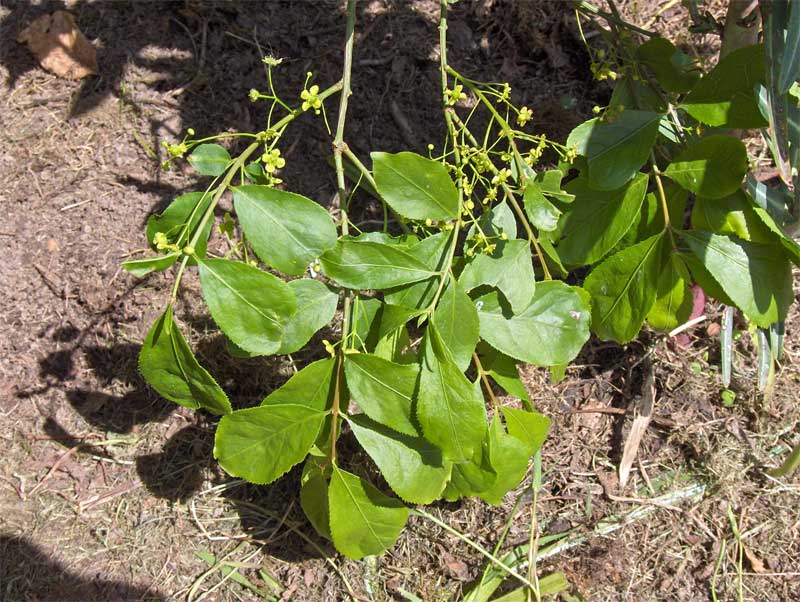


Introduction
Euonymus japonicus, the Japanese spindle tree, is a broadleaf evergreen bonsai subject valued for its thick, glossy, dark-green leaves, dense compact growth, and notable tolerance of urban conditions including pollution, salt spray, and heavy pruning. Native to Japan, Korea, and China, the species develops an attractive rounded canopy with minimal training, and the bright, leathery foliage maintains its deep color year-round. Pink-red fruit capsules splitting to reveal orange seeds in autumn add seasonal interest. The species lacks the winged bark of E. alatus but compensates with its evergreen habit and the refined, formal character that dense, glossy foliage creates.
Euonymus japonicus Thunb. is a dense, upright evergreen shrub or small tree reaching 3-8 m, native to coastal areas of Japan, Korea, and China. The leaves are opposite, broadly elliptic to obovate, 3-7 cm long, thick and leathery, very glossy dark green above, slightly paler below, with finely serrate margins. Flowers are small, greenish-white, produced in axillary cymes in early summer — individually inconspicuous but collectively visible. Fruit capsules are pink to red, 8-10 mm diameter, splitting in autumn to reveal four orange-red seeds suspended by thin threads. The bark is grey-green on young stems, becoming grey-brown and lightly fissured on old trunks. The species is highly salt-tolerant and wind-resistant, growing naturally on coastal cliffs.
| Common Name | Japanese Spindle | Family | Celastraceae |
| Origin | Japan | Indoor/Outdoor | Outdoor |
| Bonsai Tradition | Classical | Japanese Name | Masaki |
| Difficulty | Beginner | Group | Specialty & Unusual |
| Recommended Styles | Moyogi (Informal Upright), Hokidachi (Broom), Sokan (Twin Trunk) | ||
| Size Categories | Shohin (15–20 cm), Chuhin (25–46 cm), Omono (46–76 cm) | ||
History & Tradition
Euonymus japonicus has been cultivated in Japanese gardens for centuries as a hedge and specimen shrub. Its use in bonsai is documented in Japanese bonsai literature, though it is not among the most prestigious species. In the West, the species' widespread availability as a landscape plant and its tolerance of urban conditions made it accessible to bonsai practitioners from the mid-twentieth century onward. Mediterranean bonsai practitioners value the species for its drought and salt tolerance in their climate.
About Specialty & Unusual Bonsai
Specialty bonsai encompass unusual and exotic species that push the boundaries of traditional bonsai art. Ginkgo biloba, the sole surviving member of its ancient plant family, creates distinctive fan-shaped golden displays in autumn. Baobab bonsai (Adansonia) bring the unmistakable silhouette of the African savanna to miniature scale. Jade plant (Crassula) and other succulents offer a gateway to bonsai principles in arid climates. Dawn redwood (Metasequoia) represents a living fossil, once thought extinct before its rediscovery in 1944. Willow-leaf ficus and other unusual cultivars challenge conventional bonsai aesthetics. These species often require research into specialized care protocols, as general bonsai guidelines may not apply.
Botanical Profile
| Family | Celastraceae | Genus | Euonymus |
| Species | japonicus | Plant Type | evergreen shrub |
| Origin | Japan | Growth Rate | moderate |
| Foliage Type | evergreen | Bark Character | grey-green, smooth |
| Autumn Color | Height Range | 15-60 |
Euonymus japonicus Thunb., family Celastraceae. Chromosome number 2n=32. The thick, glossy, cuticle-heavy leaves are adaptations to the coastal environment — the waxy surface reduces water loss and salt damage. The species is widely cultivated as an ornamental hedge and topiary subject worldwide. Numerous variegated cultivars exist, some of which produce occasional reversion shoots of pure green. All parts are toxic if ingested, containing the same alkaloids and cardiac glycosides as E. alatus.
Bonsai Styles
| Style | Japanese Name |
|---|---|
| Moyogi | Informal Upright |
| Hokidachi | Broom |
| Sokan | Twin Trunk |
Informal upright and broom styles are most natural, exploiting the dense, rounded growth habit to create a convincing mature tree silhouette. Formal upright is achievable with patient apical dominance management. The thick, glossy leaves suit medium to large scale where their texture and lustre can be appreciated. Multi-trunk and clump styles work well. Root-over-rock compositions are effective given the species' coastal cliff habitat origin. The dense, evergreen character creates a refined, formal impression at exhibition.
Group Style Guide
Ginkgo bonsai are most often styled as informal upright or fan-shaped, reflecting their unique leaf form. Baobab bonsai follow the naturalistic thick-trunk style of their wild counterparts, often in formal upright. Succulent bonsai like jade plant use modified informal upright with thick, fleshy trunks. Dawn redwood suits formal upright and forest plantings, displaying its ancient lineage. Willow-style weeping forms work well for specialized weeping cultivars. The diversity of specialty species means each requires individual study rather than following standard group guidelines.
Trunk & Nebari
| Nebari Development | easy | Deadwood Suitability | not_suitable |
| Bark Scarring Risk | moderate | Bark Character | grey-green, smooth |
Trunk development is moderate to fast — the species grows vigorously in good conditions and adds 4-6 mm of trunk diameter per year in ground culture. The bark on old trunks is grey-brown with shallow fissuring. Nebari develops readily through standard root-combing at each repotting. The species produces adventitious roots from buried trunk sections, useful for improving nebari by temporarily burying the lower trunk. Trunk chops heal cleanly with good callus formation.
Deadwood Techniques
Deadwood on Euonymus japonicus is used sparingly — the moderately soft wood decays at a moderate rate. Small jin on branch stubs provide subtle age character. The design emphasis is on the glossy, dense living foliage rather than deadwood features. Where deadwood is created, treat with wood hardener and lime sulfur to extend its life.
Wiring & Shaping
Wire with aluminum during the growing season when branches are flexible. The dense, compact growth responds well to clip-and-grow training, and wiring is typically needed only for setting major structural branch positions. Remove wire within eight weeks to prevent bite. The opposite leaf arrangement means branches develop in pairs — remove one of each pair at nodes where bidirectional growth is not desired. Guy wires are effective for repositioning heavy primary branches.
| Wire Type | Bark Scarring Risk | Best Season |
|---|---|---|
| Aluminum | Lower (softer wire) | Late autumn / early spring |
| Annealed copper | Higher (holds shape better) | Late autumn / early spring |
🌍 Distribution Map
Native origin: Japan
Pruning & Pinching
| Ramification Quality | fine | Leaf/Needle Reduction | good |
Shear or clip the foliage surface regularly throughout the growing season — the species responds to shearing with dense regrowth, similar to its response in hedge and topiary culture. Prune back to two leaves once shoots have extended four to six leaves. The species back-buds reliably from old wood, making hard structural pruning safe and effective. Structural pruning in late winter. Remove flower clusters if fruit display is not desired to redirect energy into vegetative growth.
Watering
Water thoroughly when the substrate surface dries. The thick, waxy leaves provide good drought resistance, but the species performs best with consistent moisture. Salt-tolerant — hard tap water and even occasional coastal salt spray cause no damage. In winter, reduce watering but maintain slight moisture for the evergreen foliage. The dense canopy can shed water away from the pot — check substrate moisture directly rather than assuming overhead watering has been effective.
Soil & Repotting
| Substrate Type | Standard Akadama Mix |
| Repotting Frequency | Every 2 years |
| Root Pruning Tolerance | moderate |
Repot every two to three years in spring. A standard mix of 60% akadama and 40% pumice suits the species well. Tolerant of both slightly acidic and alkaline conditions. Root pruning of up to one-third is well tolerated. The vigorous root system benefits from annual inspection even between repotting years. Recovery after repotting is rapid — new growth appears within three to four weeks.
Group Soil Recipes
Substrate requirements vary dramatically among specialty species. Ginkgo tolerates standard deciduous mix. Succulent bonsai (jade, adenium) need extremely fast-draining mixes: 30% akadama, 40% pumice, 30% perlite with no organic matter. Baobab requires similar succulent-type substrate. Dawn redwood prefers moisture-retentive mix with higher akadama content (70%). Research individual species requirements carefully, as generic bonsai mix may be inappropriate. Tropical specialty species follow ficus-type substrate guidelines. Always err on the side of better drainage when uncertain.
Fertilizing
| Season | NPK Ratio | Frequency | Notes |
|---|---|---|---|
| Spring | Balanced | Every 2 weeks | Support new growth |
| Summer | Balanced | Every 2 weeks | Sustain vigor |
| Autumn | Low N | Every 3–4 weeks | Harden off for winter |
| Winter | None | — | No feeding during dormancy |
Feed with balanced organic fertilizer every three weeks during the growing season. The species is a moderate to heavy feeder that responds to consistent nutrition with dense, glossy growth. A potassium-rich late-summer application hardens growth for winter and supports fruit development. Excessive nitrogen produces soft, elongated growth susceptible to powdery mildew. Withhold fertilizer for four weeks after repotting.
Light & Placement
Full sun to partial shade — the species is highly adaptable. Full sun produces the most compact growth and best fruit production. The thick, glossy leaves tolerate direct sun without scorch. Partial shade is well tolerated. Hardy to USDA zone 6 (minus 20°C), though the evergreen foliage may suffer marginal browning below minus 15°C. In cold-winter areas, winter protection in a bright, frost-free position is advisable for best appearance.
Seasonal Placement Guide
Spring: Growth resumes for most species; succulent species begin active growth as temperatures warm; feed appropriately for each species type. Summer: Peak growing season; ginkgo is a heavy feeder; succulents need careful watering to avoid rot; dawn redwood needs consistent moisture. Autumn: Ginkgo turns brilliant gold; succulents may begin dormancy; reduce feeding for all species. Winter: Species-specific care is critical — ginkgo is fully hardy, succulents need frost-free storage, dawn redwood tolerates moderate cold. Research individual winter requirements.
Seasonal Care
| Season | Watering | Feeding | Key Tasks |
|---|---|---|---|
| Spring | Increasing | Resume / increase | Repotting, structural pruning, wiring |
| Summer | Maximum | Regular biweekly | Maintenance pruning, pinching, pest watch |
| Autumn | Decreasing | Reduce / stop | Wiring, structural work, winter preparation |
| Winter | Minimal | None (dormancy) | Protect roots, plan next season |
Spring: Resume feeding, repot if due, prune for shape as growth accelerates. Summer: Regular shearing for ramification, enjoy the glossy evergreen canopy, maintain consistent moisture. Autumn: Enjoy the pink-red fruit capsules with orange seeds, reduce feeding. Winter: Protect from hard frost in colder zones, reduce watering, maintain in a bright position.
Group Seasonal Guide
Spring: Growth resumes for most species; succulent species begin active growth as temperatures warm; feed appropriately for each species type. Summer: Peak growing season; ginkgo is a heavy feeder; succulents need careful watering to avoid rot; dawn redwood needs consistent moisture. Autumn: Ginkgo turns brilliant gold; succulents may begin dormancy; reduce feeding for all species. Winter: Species-specific care is critical — ginkgo is fully hardy, succulents need frost-free storage, dawn redwood tolerates moderate cold. Research individual winter requirements.
Pests & Diseases
Euonymus scale is the most serious pest — identical to E. alatus, requiring dormant oil spray and growing-season systemic treatment. Powdery mildew is common on new growth in humid conditions — improve air circulation and treat with fungicide. Crown gall occasionally affects the root zone. Spider mites in hot, dry conditions. The species' tolerance of urban pollution and salt makes it generally robust in cultivation, with scale and mildew the primary concerns.
Group Pest Guide
Ginkgo is remarkably pest-resistant; few insects or diseases affect it. Succulent bonsai are susceptible to mealybugs and root mealybugs; inspect roots during repotting. Adenium and succulent species are vulnerable to root rot in cool, wet conditions; maintain fast drainage and warm temperatures. Dawn redwood has few serious pests; occasional aphids on new growth are the main concern. Baobab is susceptible to root rot in cool climates; ensure warm, well-drained conditions. Research pest profiles for individual specialty species, as they vary dramatically.
| Pest/Disease | Identification | Treatment |
|---|---|---|
| Scale Insects | Brown or white bumps on stems/branches | Horticultural oil, systemic insecticide, manual removal |
| Aphids | Clusters on new growth, sticky honeydew | Insecticidal soap, water spray, ladybugs |
| Powdery Mildew | Check foliage and stems | Consult specialist resources |
Propagation
Semi-hardwood cuttings in summer root readily at 70-90% success rate with IBA treatment — one of the easier broadleaf evergreens to propagate from cuttings. Hardwood cuttings in winter root in cold frames. Air layering in spring on branches 1-2 cm diameter. Seed requires cold stratification and germinates reliably. The numerous variegated cultivars are propagated exclusively by cuttings to maintain leaf coloring.
Group Propagation Guide
Ginkgo propagates easily from seed (harvest from female trees in autumn) or semi-hardwood cuttings. Succulent bonsai like jade plant propagate from leaf or stem cuttings with minimal effort. Adenium propagates from seed (producing the desirable caudex) or cuttings (lacking the swollen base). Baobab is best from seed soaked in warm water for 24 hours before sowing. Dawn redwood propagates from softwood cuttings in summer or from seed with brief cold stratification. Research specific methods for unusual species, as standard techniques may not apply.
| Method | Timeline | Notes |
|---|---|---|
| Cuttings | Variable | Consult species-specific guides |
| Seeds | Variable | Consult species-specific guides |
Size Classification
Medium scale (30-60 cm) is optimal, where the leaf size (3-5 cm in cultivation) remains proportional. The thick, glossy leaves can appear slightly large at shohin scale. Large specimens over 60 cm with substantial trunks and dense, rounded canopies create formal, stately bonsai. Leaf reduction through partial defoliation in midsummer can improve proportions on smaller specimens.
| Keshitsubo (3–8 cm) |
| Shito (5–10 cm) |
| Mame (5–15 cm) |
| Shohin (15–20 cm) ✅ |
| Komono (15–25 cm) |
| Chuhin (25–46 cm) ✅ |
| Omono (46–76 cm) ✅ |
| Dai (76–122 cm) |
| Imperial (122+ cm) |
Varieties & Cultivars
Euonymus japonicus 'Microphyllus' has very small leaves (1-2 cm) and compact growth — outstanding for bonsai, especially shohin. 'Aureomarginatus' has golden-yellow leaf margins. 'Albomarginatus' has white leaf margins. 'Green Spire' has upright, columnar growth. For bonsai, 'Microphyllus' is the preferred selection due to the dramatically reduced leaf size. The straight species is used for medium to large bonsai where the larger leaves remain proportional.
Group Varieties
Ginkgo biloba offers fan-shaped golden autumn foliage and living-fossil heritage. Adansonia (baobab) brings African savanna character with its swollen trunk. Crassula ovata (jade plant) is the entry-level succulent bonsai. Adenium obesum (desert rose) has a dramatic swollen caudex and tropical flowers. Metasequoia glyptostroboides (dawn redwood) is a deciduous conifer once thought extinct. Operculicarya decaryi from Madagascar has tiny leaves and gnarled character. Portulacaria afra (dwarf jade) develops excellent miniature tree form. Bursera fagaroides offers Mexican desert character with peeling bark.
Buying Guide & Display
Widely available at garden centers as a hedge and ornamental shrub. For bonsai, specifically seek the 'Microphyllus' cultivar for its dramatically reduced leaf size. Old garden specimens with trunk caliper being removed during landscaping provide excellent free material. Select for low branching and trunk character rather than tall, leggy growth. The species is inexpensive and readily available.
| Check | What to Look For |
|---|---|
| Trunk | Good taper, interesting movement, no reverse taper at graft union |
| Nebari | Even radial root spread, no circling or crossing roots |
| Roots | Healthy white root tips visible, no root rot smell |
| Branches | Well-placed primary branches, no large scars or stubs |
| Health | Vibrant foliage color, no pests, firm bark, strong buds |
Troubleshooting
White scales on leaves and bark indicate euonymus scale — treat aggressively as infestations spread rapidly. Powdery white coating on new leaves is powdery mildew — improve air circulation and treat with fungicide. Leaf yellowing despite adequate feeding may indicate root-bound conditions or poor drainage. Variegated cultivars producing pure-green reversion shoots should have these removed immediately — the green shoots grow more vigorously and will dominate the canopy.
Common Problems
Display & Exhibition
Display in a refined, clean-lined pot that complements the formal character of the glossy foliage. Glazed pots in deep green, cream, or blue tones suit the dark, lustrous leaves. The autumn fruit display — pink capsules with orange seeds — provides a seasonal highlight worth timing for exhibition. The evergreen foliage ensures the tree presents well at any time of year, making it a reliable exhibition subject regardless of season.
Group Display Guide
Specialty bonsai are displayed to emphasize their unique characteristics. Ginkgo is displayed in autumn when fan-shaped leaves turn brilliant gold. Succulent bonsai are displayed on stone slabs or unglazed pottery that reflects their arid origins. Baobab specimens are displayed to emphasize their distinctive swollen trunks. Dawn redwood forest plantings make effective seasonal displays. Unusual species benefit from informational companion cards that educate viewers about the species. Display stands and pots should be selected to complement each species' individual character.
Frequently Asked Questions
How often should I water my Japanese Spindle bonsai?
Water your Japanese Spindle bonsai when the top layer of soil begins to dry. During summer this may be daily or even twice daily for outdoor trees; in winter, reduce frequency significantly. Always water thoroughly until water runs from the drainage holes, then allow the soil to partially dry before the next watering.
Can I keep Japanese Spindle bonsai indoors?
No. Japanese Spindle is an outdoor species that requires natural sunlight, air circulation, and seasonal temperature changes including winter dormancy. Growing it permanently indoors will weaken and eventually kill the tree.
What bonsai styles suit Japanese Spindle?
Japanese Spindle is particularly well-suited to Moyogi, Hokidachi, Sokan. Choose a style that complements the existing trunk movement and natural growth habit of your individual tree.
When should I repot my Japanese Spindle bonsai?
Repot Japanese Spindle every 2 years in early spring, just before the buds begin to swell. Signs that repotting is needed include water sitting on the surface without soaking in, roots circling inside the pot, or reduced vigor despite proper care.
How do I wire Japanese Spindle bonsai?
Use aluminum wire for Japanese Spindle. Apply wire at a 45-degree angle, with wire thickness approximately one-third of the branch diameter. Wire during the dormant season when possible, and check wires every 2–4 weeks during the growing season to prevent them cutting into the bark.
Is Japanese Spindle good for beginners?
Yes, Japanese Spindle is an excellent choice for beginners. It is forgiving of occasional care mistakes and responds well to basic bonsai techniques.
What soil mix should I use for Japanese Spindle?
Use a well-draining bonsai mix for Japanese Spindle. The key principle is excellent drainage combined with adequate moisture retention. Never use standard garden soil or purely organic potting mix for bonsai, as these compact over time and suffocate roots.
How do I promote ramification on Japanese Spindle?
Ramification on Japanese Spindle is rated as fine. Promote finer branching through repeated cycles of growing and cutting back. Allow shoots to extend 4–6 nodes, then prune back to 1–2 nodes. Over multiple growing seasons, this creates increasingly dense and refined branch structure.
When is the best time to prune Japanese Spindle?
Perform structural pruning on Japanese Spindle during the dormant season (late autumn to late winter) when the tree's energy reserves are in the roots. Maintenance pruning and pinching of new growth can be done throughout the growing season to maintain shape and promote density.
How cold-hardy is Japanese Spindle?
Japanese Spindle requires winter dormancy and tolerates cold well, but container-grown bonsai need root protection from sustained hard freezes below -5°C. Hardy in USDA zones 6-9. Protect container roots by placing in an unheated garage, cold frame, or burying the pot in ground soil during extreme cold.
Quick Reference Summary
| Scientific Name | Euonymus japonicus |
|---|---|
| Common Name | Japanese Spindle |
| Family | Celastraceae |
| Origin | Japan |
| Group | Specialty & Unusual |
| Indoor/Outdoor | Outdoor |
| Difficulty | Beginner |
| Bonsai Tradition | Classical |
| Wiring Suitability | good |
| Wire Type | aluminum |
| Ramification | fine |
| Leaf/Needle Reduction | good |
| Nebari Development | easy |
| Deadwood Suitability | not_suitable |
| Substrate | — |
| Repotting Frequency | Every 2 years |
| USDA Zones | 6-9 |


