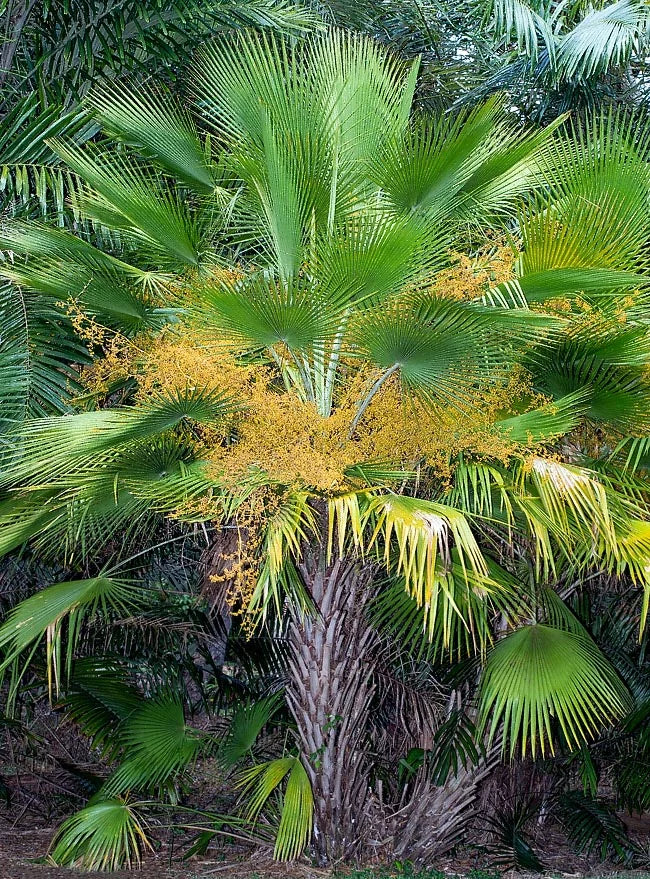
Copernicia curtissii: A comprehensive Growing Guide for Enthusiasts & Collectors.
Copernicia curtissii
This guide provides a detailed examination of the palm Copernicia curtissii, designed to be a valuable resource for novice enthusiasts, experienced cultivators, and botanical researchers alike. It covers the palm's origins, biology, cultivation, and care, offering a complete overview of this unique and desirable species.


1. Introduction
Copernicia curtissii is a striking and highly sought-after palm, prized for its unique architectural form, manageable size, and resilient nature. It stands out within its genus for being one of the smaller and more adaptable species, making it a jewel for collectors and landscapers in appropriate climates.
-
Habitat and Distribution, Native Continent:
-
Copernicia curtissii is native to the island of Cuba, which is part of the North American continent. Its natural habitat is primarily the savannas and open, dry woodlands of central Cuba. It is particularly well-adapted to grow in serpentine soils—a challenging, nutrient-poor, and often toxic soil type that supports a unique and specialized flora. This adaptation speaks to its toughness and ability to thrive where many other plants cannot.
-
-
Taxonomic Classification and Scientific Classification:
-
The species belongs to the Arecaceae family, the palm family, which is one of the most well-known and economically important plant families.
-
Kingdom: Plantae
-
Clade: Tracheophytes (vascular plants)
-
Clade: Angiosperms (flowering plants)
-
Clade: Monocots
-
Order: Arecales
-
Family: Arecaceae (Palm family)
-
Genus: Copernicia
-
Species: C. curtissii
-
Full Scientific Name: Copernicia curtissii Becc.
-
-
Synonyms:
-
The species is well-established, and while some historical classifications or regional variations may exist, Copernicia curtissii is the universally accepted scientific name. It has few, if any, widely recognized synonyms in modern botanical literature. One historical synonym is Copernicia yarey var. robusta.
-
-
Common Names:
-
Due to its origin and appearance, it has several common names:
-
Jata de Guanabacoa (a local Cuban name)
-
Curtiss's Palm
-
Small-leaved Cuban Wax Palm
-
Dwarf Jarey Palm
-
-
-
Expansion of this Palm Tree in the World:
-
Copernicia curtissii is not a widespread commercial palm like the Coconut or Date Palm. Its expansion globally has been driven almost entirely by palm enthusiasts, collectors, and botanical gardens. It is cultivated in subtropical and tropical regions worldwide, from Florida and California in the USA to Australia and Southeast Asia. Its slow growth rate and difficult germination have prevented it from becoming a common nursery plant, ensuring it remains a rare and coveted specimen.
-
2. Biology and Physiology
-
Morphology (Trunk, Leaves, Flower Systems):
-
Trunk (Stem): C. curtissii is a solitary palm, meaning it grows a single, unbranching trunk. The trunk is relatively slender, typically reaching heights of 10 to 20 feet (3-6 meters) in cultivation, though it can remain much smaller for decades. It is smoothish-gray and often retains a skirt of old, dead leaves (marcescent leaves) unless manually removed, which can offer protection to the trunk.
-
Leaves: The leaves are the most distinctive feature. They are costapalmate—a hybrid between a fan (palmate) and feather (pinnate) leaf, where the petiole (leaf stalk) extends slightly into the leaf blade, giving it a gentle fold. The leaves are incredibly rigid, almost plastic-like in texture, and form a dense, spherical crown. Each leaf is nearly circular, about 2-3 feet (60-90 cm) in diameter, and deeply segmented. The upper surface is typically a dull green, while the underside is coated in a beautiful silvery-white wax (cuticle), an adaptation to reduce water loss. The petioles are armed with sharp, curved teeth along their margins.
-
Flower Systems (Inflorescence): The inflorescence is a branched structure that emerges from among the leaves. A key identifying feature is that its arching stalks typically extend well beyond the leaf crown, a dramatic and elegant display. It bears small, yellowish flowers. As a member of the Copernicia genus, it is hermaphroditic, meaning its flowers have both male and female parts, allowing a single palm to produce viable seeds.
-
Fruit: After pollination, the flowers develop into small, round, black fruits, each about half an inch in diameter, containing a single seed.
-
-
Life Cycle of Palm Trees:
-
The life cycle begins with a seed, which undergoes a slow and often erratic germination process. The seedling stage is characterized by the emergence of a single, simple leaf (eoleaf). Growth is notoriously slow, especially in the juvenile years. It can take a decade or more for the palm to develop a noticeable trunk. Once it reaches maturity, it will begin to flower and produce fruit annually, a cycle that can continue for many decades. Copernicia curtissii is a long-lived palm, potentially living for over a century in ideal conditions.
-
-
Specific Adaptation to Different Climate Conditions:
-
Its primary adaptations are for a hot, seasonally dry climate with intense sun.
-
Waxy Cuticle: The silver-white wax on the leaf undersides reflects sunlight and creates a barrier against desiccation.
-
Stiff, Compact Leaves: The rigid structure of the leaves minimizes damage from wind and reduces the surface area exposed to the hottest midday sun.
-
Deep Root System: It develops a deep taproot to seek out moisture far below the soil surface during dry periods.
-
Serpentine Soil Tolerance: Its ability to grow in nutrient-poor, high-metal-content serpentine soils demonstrates a highly specialized nutrient uptake mechanism.
-
3. Reproduction and Propagation
Propagation of Copernicia curtissii is almost exclusively done by seed, as it is a solitary palm that does not produce offshoots or suckers. This process is known to be challenging.
Seed Reproduction
-
Seed Morphology and Diversity:
-
Seeds are small, spherical, and encased within a thin layer of black flesh when ripe. They are relatively uniform in size and shape.
-
-
Detailed Seed Collection and Viability Testing:
-
Collect seeds only from fully ripe (black) fruit. The pulp contains germination inhibitors and must be thoroughly cleaned off. Macerate the fruit in water and scrub the seeds clean.
-
Viability is highest in fresh seeds. To test, place cleaned seeds in a container of water. Viable, dense seeds will typically sink, while old or undeveloped seeds may float. This is not a foolproof test but is a good indicator.
-
-
Pre-germination Treatments (Scarification, Heat Treatments):
-
Scarification: Mechanical scarification (nicking the seed coat) is generally not recommended or necessary for Copernicia seeds.
-
Soaking: A mandatory step is to soak the cleaned seeds in warm water for 24-48 hours, changing the water daily to remove any remaining inhibitors.
-
Heat Treatments: This is the most critical factor. Copernicia seeds require consistently high temperatures to germinate. A bottom heat source (like a heat mat) is essential.
-
-
Step-by-step Germination Techniques with Humidity and Temperature Controls:
-
Medium: Prepare a sterile, well-draining germination medium. A 50/50 mix of peat moss and perlite or vermiculite is ideal. It should be damp but not waterlogged.
-
Sowing: Sow seeds about half an inch deep in a community pot or use the "baggie method" (placing seeds and moist medium in a sealed plastic bag).
-
Temperature: Place the pot or bag on a heat mat set to maintain a constant temperature between 85-95°F (30-35°C). This high heat is non-negotiable for success.
-
Humidity: The sealed bag or a lid on the pot will maintain 100% humidity.
-
Patience: Check for germination periodically but avoid disturbing the seeds.
-
-
Germination Difficulty:
-
High. Germination is famously slow, erratic, and has a low success rate even under ideal conditions. It is a true test of a grower's patience.
-
-
Germination Time:
-
Germination can begin in as little as 2-3 months, but it is common for seeds to take 6 months to well over a year to sprout. Some seeds may even germinate in the second year.
-
-
Seedling Care and Early Development Stages:
-
Once a seed germinates, it sends down a long root (remotive germination) before a leaf spear appears.
-
Carefully transplant the germinated seed into a deep, narrow pot that can accommodate the long root.
-
Use a well-draining soil mix. Keep the seedling warm, humid, and in bright, indirect light. Gradually introduce it to more direct sun over several months. Growth will be extremely slow.
-
Advanced Germination Techniques
-
Hormonal Treatments for Germination Enhancement:
-
Some advanced growers experiment with a soak in a weak solution of Gibberellic Acid (GA3) to help break dormancy. This can sometimes speed up and even out germination rates but can also lead to elongated, weak seedlings if the concentration is too high. This is an experimental technique not required for success.
-
4. Cultivation Requirements
-
Light Requirements:
-
Full sun. Copernicia curtissii demands high light levels to thrive and develop its characteristic compact, stiff-leaved form. In shady conditions, it will grow much slower and etiolate (stretch), with weaker, larger leaves.
-
Young seedlings benefit from some protection from harsh afternoon sun, but they should be acclimated to full sun as soon as they are established.
-
For indoor cultivation, it must be placed in the sunniest south-facing window or supplemented with powerful artificial grow lights.
-
-
Temperature and Humidity Management:
-
Optimal Temperature: It thrives in hot weather, with ideal daytime temperatures between 80-95°F (27-35°C).
-
Cold Tolerance: It is cold-hardy down to approximately 25°F (-4°C) for very brief periods, but this will cause significant leaf damage. It is best suited for USDA Hardiness Zone 10a and warmer. In Zone 9b, it requires a protected microclimate and winter protection during freezes.
-
Humidity: It is tolerant of a wide range of humidity levels but appreciates moderate to high humidity. It is not prone to issues in low-humidity climates as long as it is adequately watered.
-
-
Soil and Nutrition:
-
Ideal Soil Composition: The single most important soil requirement is excellent drainage. It cannot tolerate soggy, waterlogged conditions. A sandy, gritty mix is ideal. A good recipe is equal parts potting soil, coarse sand, and perlite or pumice. It is tolerant of poor soils and various pH values but does best in a slightly acidic to neutral range (pH 6.0-7.5).
-
Nutrient Requirements: As a slow grower, its fertilizer needs are modest. Use a balanced, slow-release palm fertilizer that includes micronutrients, especially Magnesium (Mg) and Manganese (Mn).
-
Fertilization Approaches: Apply fertilizer 2-3 times during the warm growing season. Avoid fertilizing in winter. Both organic (e.g., compost, palm-specific organic blends) and synthetic slow-release fertilizers are effective.
-
Micronutrient Deficiencies: It can be prone to "frizzle top," a condition caused by Manganese deficiency where new leaves emerge small and distorted. This is corrected with manganese sulfate application. Yellowing of older leaves can indicate a Magnesium or Potassium deficiency.
-
-
Water Management:
-
Irrigation Frequency: Water deeply but infrequently. Allow the top few inches of soil to dry out completely between waterings. In hot summer weather, this may be once or twice a week. In winter, reduce watering dramatically to once every few weeks.
-
Drought Tolerance: Once established in the landscape, it is highly drought-tolerant. However, it will look its best with occasional deep watering during prolonged dry spells.
-
Water Quality: It is generally not sensitive to water quality.
-
Drainage: Re-emphasizing: poor drainage will lead to root rot and is the most common cause of death for this palm in cultivation.
-
5. Diseases and Pests
-
Common Problems in Growing:
-
Root Rot: Caused by overwatering or poor drainage. This is the primary killer.
-
Cold Damage: Leaf burn, discoloration, or death of the spear leaf from frost or freezing temperatures.
-
Nutrient Deficiencies: Frizzle top (Mn), yellowing older fronds (K, Mg).
-
-
Identification of Diseases and Pests:
-
Pests: It is quite pest-resistant but can be susceptible to common palm pests, especially when stressed or grown indoors. These include scale insects (small brown or white bumps on leaves), mealybugs (white, cottony masses), and spider mites (fine webbing on leaf undersides).
-
Diseases: The main disease threat is Phytophthora root rot or bud rot, which occurs in overly wet, poorly aerated conditions.
-
-
Environmental and Chemical Protection Methods:
-
Environmental (Best Practice): The best defense is a healthy plant. Provide full sun, excellent drainage, and proper watering. Good air circulation helps prevent fungal issues.
-
Chemical: For pests, treat with horticultural oil or insecticidal soap. For severe infestations, systemic insecticides may be necessary. Fungal problems are best prevented, but copper-based fungicides can be used as a drench for root rot or spray for bud rot, though recovery is unlikely if the infection is severe.
-
6. Indoor Palm Growing
-
Specific Care in Housing Conditions:
-
Due to its slow growth and manageable ultimate size, C. curtissii can be grown as a long-term container plant.
-
Light: Provide the maximum possible direct sunlight, such as a south-facing window. A powerful grow light is a great supplement.
-
Container: Use a deep pot to accommodate its root system. Ensure it has large drainage holes.
-
Watering: Be extremely careful not to overwater. The soil will dry out much slower indoors. Water only when the top 2-3 inches of soil are dry.
-
Pest Monitoring: Regularly inspect the leaves for pests, which are more common indoors.
-
-
Replanting and Wintering:
-
Replanting: Repot only when the palm is severely root-bound (e.g., every 3-5 years). Palms resent root disturbance. When repotting, move to a pot that is only slightly larger and try to keep the root ball intact.
-
Wintering: In winter, reduce watering and cease fertilization. Keep the palm in its bright location but be mindful of cold drafts from windows.
-
7. Landscape and Outdoor Cultivation & 8. Cold Climate Cultivation Strategies
-
Cold Hardiness & Hardiness Zone:
-
Copernicia curtissii is suitable for in-ground planting in USDA Zones 10a to 11. It can be attempted in Zone 9b but is considered marginal and will require significant winter protection and a favorable microclimate (e.g., planted on the south side of a building or near a body of water). It will likely suffer leaf damage in most Zone 9b winters but can recover if the freeze is not too prolonged or severe.
-
-
Winter Protection Systems and Materials:
-
In marginal zones, when a hard freeze is predicted:
-
Mulch: Apply a thick layer of mulch around the base to insulate the roots.
-
Wrap: Wrap the trunk with burlap or frost blankets.
-
Cover: For smaller specimens, cover the entire palm with a frost cloth or blanket, extending it to the ground to trap radiant heat. Christmas lights (the old incandescent C7/C9 type) can be wrapped around the trunk/bud area under the blanket to provide a small amount of heat.
-
Spear Protection: Protect the central spear leaf from collecting water and freezing by tying the leaves up together or applying a copper fungicide before a wet freeze.
-
-
Establishment and Maintenance in Landscapes
-
Planting Techniques for Success:
-
Plant in the sunniest location available.
-
Amend heavy soils with sand and gravel to ensure sharp drainage. Planting on a slight mound or berm can also significantly improve drainage.
-
Plant during the late spring or early summer to give the palm the entire warm season to establish its roots before its first winter.
-
Water regularly during the first year to help it establish.
-
-
Long-term Maintenance Schedules:
-
Once established, C. curtissii is a very low-maintenance palm.
-
Watering: Requires little to no supplemental water except in periods of extreme drought.
-
Fertilizing: A single application of a slow-release palm fertilizer in the spring is usually sufficient.
-
Pruning: Pruning is purely for aesthetics. The palm will naturally hold its dead leaves, forming a "skirt." These can be left for a natural look or carefully pruned off close to the trunk for a "clean" look. Never prune green, healthy leaves.
-
Final Short Summary
Copernicia curtissii is a small, slow-growing, solitary palm native to the savannas of Cuba. It is highly prized for its rigid, sculptural, costapalmate leaves that form a dense, spherical crown, often with a silvery-waxy underside. Its defining cultivation requirements are full sun, excellent drainage, and high heat, making it very drought-tolerant once established. Propagation is by seed and is notoriously difficult, slow, and requires constant high heat (85-95°F). It is cold hardy to about 25°F (-4°C) and best suited for USDA Zones 10a and above, where it makes a stunning, low-maintenance specimen palm for collectors and landscape designers seeking a unique architectural element. Its main vulnerability is root rot from overwatering.