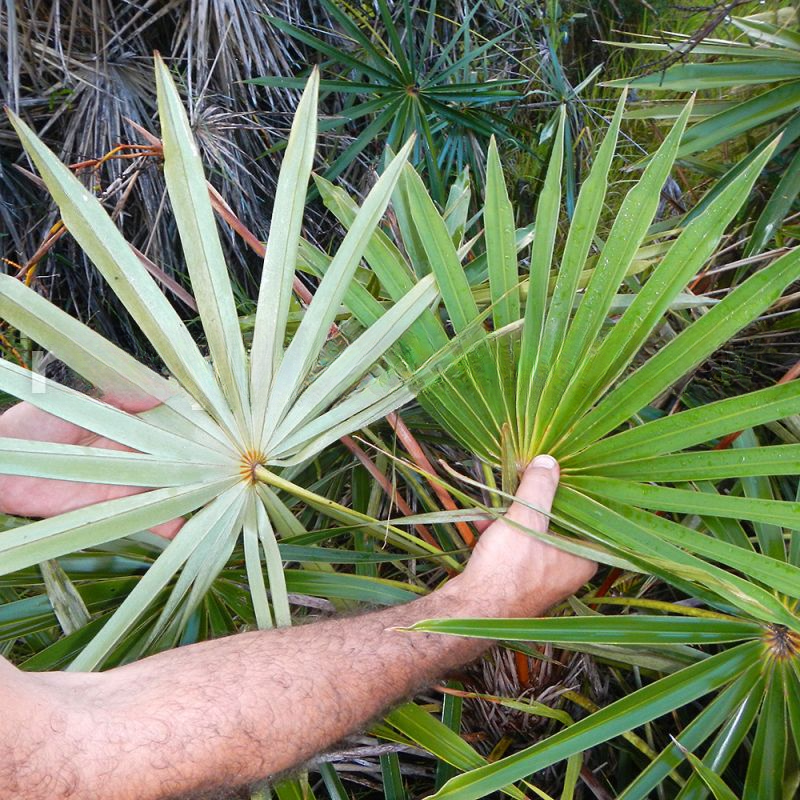
Coccothrinax pseudorigida: A comprehensive Growing Guide for Enthusiasts & Collectors.
Coccothrinax pseudorigida
This study provides a detailed guide to the Cuban Belly Palm, Coccothrinax pseudorigida, designed to be a valuable resource for both novice enthusiasts and seasoned palm growers. It covers the palm's origins, biology, and the specific, often challenging, requirements for its successful cultivation.
1. Introduction
-
Habitat and Distribution, Native Continent: Coccothrinax pseudorigida is endemic to a very specific region of eastern Cuba. Its native habitat consists of serpentine savannas, which are characterized by nutrient-poor, rocky, and well-draining soils. This unique origin is fundamental to understanding its cultivation needs. Its native continent is North America (specifically, the Caribbean islands).
BESTSELLER High Quality Tropical PlantLeucocasia Gigantea 'Thailand Giant'€25.59Get 10% OFF with code BLOG10Start Growing NowCOLD HARDY
 Fresh Seeds & High GerminationRhapidophyllum hystrix (Needle Palm)€9.99Get 10% OFF with code BLOG10Start Growing NowEXOTIC
 Elite Palm SelectionHyophorbe lagenicaulis (Bottle Palm)€24.90Get 10% OFF with code BLOG10Start Growing Now
 -
Taxonomic Classification and Scientific Classification:
-
Kingdom: Plantae
-
Clade: Tracheophytes
-
Clade: Angiosperms
-
Clade: Monocots
-
Order: Arecales
-
Family: Arecaceae
-
Genus: Coccothrinax
-
Species: C. pseudorigida
-
-
Synonyms: This species is well-established, and while it may have been confused with Coccothrinax rigida in the past (hence the name pseudo-rigida), it is a distinct and recognized species with no common synonyms in modern horticulture.
-
Common Names: The most frequent common names are "Cuban Belly Palm" and "Guano barrigón." Both names refer to the palm's most distinctive feature: a swollen, often ventricose trunk that resembles a belly or barrel.
-
Expansion of this Palm in the World: The expansion of Coccothrinax pseudorigida is extremely limited. Due to its exceptionally slow growth rate, difficult germination, and specific soil requirements, it is not a commercial landscape palm. It remains a rare collector's item, found almost exclusively in botanical gardens and the collections of dedicated palm enthusiasts who appreciate its unique form and rarity.
2. Biology and Physiology
-
Morphology:
-
Trunk (Stem): The trunk is solitary, stout, and famously ventricose (swollen in the middle), though this feature can be variable. It is covered in a dense, woven mat of light brown or grey fibers from the old leaf bases, which persists for many years. It typically grows to a height of 3-6 meters (10-20 feet).
-
Leaves: The leaves are costapalmate (a hybrid between a fan and pinnate leaf), very rigid, and stiff. They are deeply split into numerous narrow segments, often giving them a spiky, star-like appearance. The color can range from deep green to a stunning silvery-blue, often coated in a waxy layer (pruinose) that helps conserve water.
-
Flower Systems: The inflorescence is branched and appears among the leaves (interfoliar). It bears small, bisexual, whitish to yellow flowers, which are followed by small, spherical, black fruits when ripe.
-
-
Life Cycle: The life cycle of this palm is characterized by being extremely slow. From seed, it may take several years to form even a few true leaves, and decades to develop its signature swollen trunk and reach maturity. This slow pace is an adaptation to its nutrient-poor native environment.
-
Specific Adaptation to Different Climate Conditions: C. pseudorigida is highly adapted to its native habitat. Its deep root system seeks moisture in rocky soil, the waxy coating on its leaves reduces transpiration under intense sun, and its fibrous trunk offers protection. It is adapted for high heat, full sun exposure, and periods of drought.
3. Reproduction and Propagation
Seed Reproduction
-
Seed Morphology and Diversity: Seeds are small, spherical, and about 5-7 mm in diameter. When the fleshy fruit is removed, the seed is hard and black. There is little diversity within the species.
-
Detailed Seed Collection and Viability Testing: Seeds must be collected when the fruit is fully ripe (dark purple to black) and soft. Freshness is absolutely critical, as viability drops rapidly after harvesting. A simple viability test is to place cleaned seeds in water; viable, dense seeds will typically sink, while non-viable ones may float.
-
Pre-germination Treatments: The most important treatment is to meticulously clean all fruit pulp from the seed, as the pulp contains germination inhibitors. Soaking the cleaned seeds in warm water for 24-48 hours can help with hydration. Scarification is generally not necessary or recommended.
-
Step-by-step Germination Techniques:
-
Prepare a sterile, moist (not wet) germination medium like a 50/50 mix of perlite and peat moss or coco coir.
-
Place the medium and seeds in a plastic "baggie" or a sealed container.
-
Crucially, provide consistent high heat. The optimal temperature range is 30-35°C (86-95°F). A seedling heat mat is essential.
-
Maintain high humidity within the container and be patient.
-
-
Germination Difficulty: Germination is notoriously difficult, slow, and erratic. This is a major challenge for growers.
-
Germination Time: Expect a long wait. Germination can begin in as little as 3 months but more commonly takes 6-12 months, with some seeds taking up to 2 years to sprout.
-
Seedling Care and Early Development Stages: Once a seed germinates, it sends down a long root (radicle) before a leaf shoot appears. Transfer the seedling to a deep pot to accommodate this root. Use an extremely well-draining soil mix. Keep the seedling warm and in bright, indirect light. Protect from harsh sun. Water sparingly, allowing the soil to dry out between waterings to prevent rot, which is the primary threat to young seedlings. Growth will remain very slow.
Advanced Germination Techniques
-
Hormonal Treatments: Some advanced growers experiment with a soak in Gibberellic Acid (GA3) solution to help break dormancy. However, for Coccothrinax, consistent high heat is proven to be the most critical factor, and hormonal treatments often yield inconsistent results.
4. Cultivation Requirements
-
Light Requirements: Once established, C. pseudorigida thrives in full, direct sun. Seedlings and recently transplanted palms should be acclimated gradually to prevent scorching. For indoor growing, it requires the brightest possible location.
-
Temperature and Humidity Management: This palm loves heat. The optimal growing temperature is above 25°C (77°F). It has moderate cold tolerance, generally suitable for USDA Hardiness Zone 10a and warmer. It can survive brief, non-prolonged frosts down to about -3°C (26°F) but will sustain leaf damage. It tolerates low humidity well but dislikes cool, damp conditions, which can promote rot.
-
Soil and Nutrition: This is a critical requirement. The soil must be exceptionally well-draining. A mix heavy in sand, gravel, perlite, or pumice is ideal. A slightly alkaline to neutral pH is preferred. Avoid rich, organic, water-retentive soils. It is adapted to nutrient-poor conditions and requires minimal fertilization. If you fertilize, use a balanced, slow-release palm fertilizer low in phosphorus once or twice during the growing season.
-
Water Management: It is highly drought-tolerant once established. The key is to water deeply and then allow the soil to dry out significantly before watering again. Overwatering and poor drainage are the most common reasons for failure.
5. Diseases and Pests
-
Common Problems in Growing: The number one problem is root rot caused by poor drainage and overwatering. Nutrient deficiencies like potassium frizzle can occur, but over-fertilizing is a greater risk.
-
Identification of Diseases and Pests: Look for scale insects and spider mites, especially when grown indoors or in dry conditions. Fungal spots on leaves can appear in overly humid or cool, wet weather.
-
Environmental and Chemical Protection Methods: The best protection is prevention through proper culture: excellent drainage, correct watering, and good air circulation. Pests can be managed with horticultural soaps or oils. Fungicides are a last resort for rot, which is often fatal by the time it is noticed.
6. Indoor Palm Growing
-
Specific Care in Housing Conditions: Growing indoors is challenging due to light requirements. Place it in a south-facing window or supplement with strong grow lights. Use a gritty, fast-draining potting mix. Do not overwater, especially in winter when growth slows.
-
Replanting and Wintering: Repot only when the palm is completely root-bound, as it resents root disturbance. Use a deep pot to accommodate its root system. For wintering in colder climates, bring it indoors well before the first frost and reduce watering frequency.
7. Landscape and Outdoor Cultivation
Establishment and Maintenance in Landscapes
-
Planting Techniques for Success: Choose a location in full sun with excellent drainage. If you have heavy soil, plant the palm on a raised mound or berm amended with large amounts of sand and gravel. Acclimate the palm to the site's sun exposure over several weeks before planting.
-
Long-term Maintenance Schedules: This is a very low-maintenance palm. Once established, it requires little more than occasional deep watering during prolonged droughts. Pruning should be limited to removing only fully dead leaves. No regular fertilization is needed in most ground situations.
8. Cold Climate Cultivation Strategies
-
Cold Hardiness: Limited hardiness. It is a subtropical palm best suited for USDA Zone 10a or warmer.
-
Winter Protection: In marginal zones (e.g., 9b), planting in a protected microclimate against a south-facing wall can help. During predicted hard freezes, the trunk and crown should be wrapped with frost cloth or blankets. Using non-LED Christmas lights wrapped around the trunk and crown can provide a few degrees of critical warmth.
-
Hardiness Zone: Primarily Zone 10a-11.
-
Winter Protection Systems and Materials: For palms in the ground in marginal zones, a temporary frame covered in frost cloth is effective. Heavy mulching at the base can protect the roots. In any zone colder than 9b, it must be grown as a container specimen and moved to a protected, frost-free location for the winter.
Final Short Summary
Coccothrinax pseudorigida, the Cuban Belly Palm, is a rare and highly sought-after collector's palm, prized for its unique swollen trunk and rigid, star-like leaves. Its cultivation is challenging, defined by an extremely slow growth rate and difficult germination that requires consistent high heat. Success hinges on mimicking its native Cuban savanna habitat: it demands full sun, exceptionally fast-draining, alkaline soil, and careful water management to prevent root rot. While moderately cold-tolerant to Zone 10a, it is a true subtropical palm that is rewarding for the patient and dedicated grower but unforgiving of improper care.