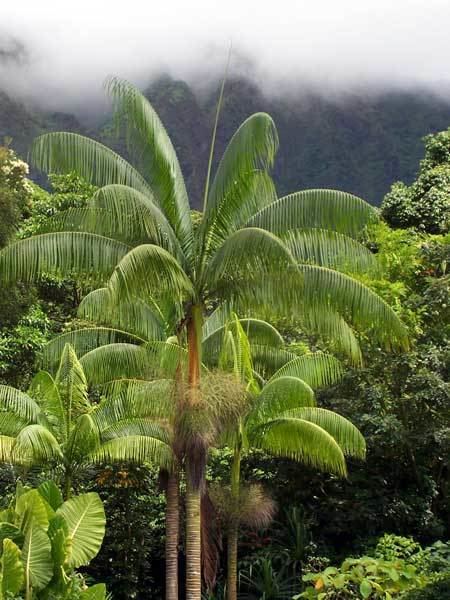
Clinostigma haerestigma: A comprehensive Growing Guide for Enthusiasts & Collectors.
Clinostigma haerestigma
This guide provides a detailed study of the palm Clinostigma haerestigma, designed to be a valuable resource for both novice enthusiasts and experienced palm growers. It covers the palm's origins, biology, cultivation, and care, emphasizing the specific requirements of this rare and beautiful species.
1. Introduction
-
Habitat and Distribution, Native Continent: Clinostigma haerestigma is native to the Oceania continent, specifically to the Solomon Islands and Vanuatu. It grows in humid, tropical rainforests, often on mountain slopes and in valleys, typically as an understory or emergent palm in high-rainfall areas. This habitat indicates its preference for rich, well-drained soils, high humidity, and protection from harsh, direct sun, especially when young.
BESTSELLER High Quality Tropical PlantLeucocasia Gigantea 'Thailand Giant'€25.59Get 10% OFF with code BLOG10Start Growing NowCOLD HARDY
 Fresh Seeds & High GerminationRhapidophyllum hystrix (Needle Palm)€9.99Get 10% OFF with code BLOG10Start Growing NowEXOTIC
 Elite Palm SelectionHyophorbe lagenicaulis (Bottle Palm)€24.90Get 10% OFF with code BLOG10Start Growing Now
 -
Taxonomic Classification and Species: The genus Clinostigma belongs to the Arecaceae family and is known for its elegant, fast-growing, and often colorful crownshafted palms.
-
Scientific Classification:
-
Kingdom: Plantae
-
Clade: Tracheophytes
-
Clade: Angiosperms
-
Clade: Monocots
-
Clade: Commelinids
-
Order: Arecales
-
Family: Arecaceae
-
Genus: Clinostigma
-
Species: C. haerestigma
-
-
-
Synonyms: This species has been previously known by other scientific names, the most common synonym being Cyphokentia haerestigma.
-
Common Names: Due to its rarity in cultivation and specific native range, Clinostigma haerestigma does not have widely recognized common names. It is most often referred to by its scientific name or occasionally as the "Haerestigma Palm."
-
Expansion of this Palm in the World: The expansion of Clinostigma haerestigma is extremely limited. It is not a commercial landscape palm. Its presence outside its native habitat is almost exclusively confined to botanical gardens, university collections, and the properties of dedicated rare palm collectors and enthusiasts in tropical and warm subtropical climates. Its strict cultivation requirements prevent it from becoming a mainstream ornamental.
2. Biology and Physiology
-
Morphology:
-
Trunk (Strain): The palm has a solitary, slender trunk that is relatively smooth and ringed with prominent leaf scars. It can grow to a significant height in its natural environment, often reaching over 15 meters (50 feet).
-
Leaves: The foliage consists of a crown of large, pinnate (feather-like) leaves that are gracefully arching. A key feature is its prominent, long, and often colorful crownshaft (the smooth sheath at the top of the trunk formed by the leaf bases), which can be green to yellowish and sometimes covered in a waxy coating.
-
Flower Systems: The inflorescence is infrafoliar, meaning it emerges from the trunk below the crownshaft. It is branched and bears both male and female flowers on the same plant (monoecious). The species name haerestigma is derived from Latin, meaning "sticking stigma," which refers to the prominent stigma remnants that persist on the surface of the fruit, a key diagnostic feature. The fruit is small, spherical, and turns black when ripe.
-
-
Life Cycle: The life cycle begins with a seed, which germinates into a seedling. Under optimal conditions, it is a relatively fast-growing palm, progressing from a juvenile stage to a mature, fruit-bearing tree. Its speed of growth is highly dependent on consistent warmth, moisture, and nutrition.
-
Specific Adaptation: Clinostigma haerestigma is highly adapted to a stable, wet, tropical climate. Its physiology is not equipped to handle frost, prolonged drought, or low humidity. The large leaves are efficient at capturing dappled light in the forest canopy, and its root system is adapted for anchorage in sloped, moist soils.
3. Reproduction and Propagation
Seed Reproduction
-
Seed Morphology and Diversity: The seed is contained within a small, round fruit. The seed itself is small and generally spherical. There is little diversity within the species. The most important factor is freshness.
-
Detailed Seed Collection and Viability Testing: Seeds must be collected from fully ripe (black) fruit. The viability of Clinostigma seeds is notoriously short. They should be cleaned and planted as soon as possible. To clean, remove all fruit pulp, as it contains germination inhibitors. A simple viability test is the "float test" after cleaning; viable, dense seeds will often sink in water, while non-viable or undeveloped seeds tend to float.
-
Pre-germination Treatments:
-
Pulp Removal: This is the most critical step. Macerate the fruit in water and thoroughly scrub the seeds clean.
-
Soaking: After cleaning, soak the seeds in warm, clean water for 24-48 hours, changing the water daily.
-
Scarification/Heat Treatments: These methods are not recommended for this species. Its seed coat is not overly hard, and it does not come from a fire-adapted ecosystem. Such treatments are likely to damage the embryo.
-
-
Step-by-step Germination Techniques:
-
Prepare a sterile, moisture-retentive, but well-draining medium (e.g., a 50/50 mix of peat moss and perlite or vermiculite).
-
Use the "baggie method" or community pots. Place the moist medium and clean seeds in a ziplock bag or a pot with drainage holes.
-
Sow seeds so they are just barely covered by the medium.
-
Maintain very high humidity (100% in a baggie) and consistent high temperature. The optimal temperature is 28-32°C (82-90°F). Bottom heat from a germination mat is highly effective.
-
Ensure the medium stays moist but not waterlogged.
-
-
Germination Difficulty: High. Germination is considered difficult primarily due to the short viability of the seed and the strict requirement for high heat and humidity.
-
Germination Time: With fresh seed and ideal conditions, germination can occur in 2 to 6 months, but it can be erratic and sometimes take longer.
-
Seedling Care and Early Development: Once a root and the first leaf spike emerge, carefully transfer the seedling to a deep pot to accommodate its long taproot. Use a rich, well-draining potting mix. Keep seedlings in a warm, humid environment with bright, indirect light—never direct sun.
Advanced Germination Techniques
-
Hormonal Treatments: While not typically necessary for fresh seed, a dilute solution of Gibberellic Acid (GA3) could potentially be used to try and break the dormancy of older or more stubborn seeds. This is an advanced technique and should be used with caution, as incorrect concentrations can damage the embryo.
4. Cultivation Requirements
-
Light Requirements: Young palms require shade or bright, indirect light, mimicking the forest understory. As the palm matures and grows taller, it can tolerate more direct sun, especially if high humidity and ample water are provided. In cultivation, dappled sunlight or morning sun is ideal. Hot, direct afternoon sun will scorch the leaves.
-
Temperature and Humidity Management:
-
Optimal Temperature: Thrives in a range of 20-32°C (68-90°F). Growth slows significantly below 18°C (65°F).
-
Cold Tolerance: Extremely low. This palm is not frost-tolerant. It will be damaged or killed by temperatures approaching freezing (0°C / 32°F). It is suitable only for USDA Hardiness Zones 11 and warmer.
-
Humidity: High humidity (>70%) is essential for healthy growth. Low humidity leads to brown leaf tips and makes the plant susceptible to pests like spider mites.
-
-
Soil and Nutrition:
-
Ideal Soil: A rich, loamy, and exceptionally well-draining soil is required. A mix of high-quality potting soil, peat moss or coir, compost, and a generous amount of perlite or pumice is suitable. The ideal pH is slightly acidic, between 6.0 and 6.5.
-
Nutrient Requirements: It is a relatively heavy feeder during the growing season. Use a balanced, slow-release palm fertilizer that includes micronutrients, especially magnesium (Mg) and potassium (K).
-
Fertilization: Apply fertilizer 2-3 times during the spring and summer. Avoid fertilizing in winter. Organic options like compost teas and fish emulsion are also effective.
-
Micronutrient Deficiencies: Prone to potassium deficiency (yellowing/necrosis on the oldest leaves) and magnesium deficiency (broad yellow banding on leaf margins).
-
-
Water Management:
-
Irrigation: Keep the soil consistently moist but never saturated or waterlogged. Water thoroughly when the top 1-2 inches of soil feel dry.
-
Drought Tolerance: Very low. The palm will quickly show signs of stress, such as wilting and browning, if the soil dries out completely.
-
Water Quality: It can be sensitive to high levels of salts and chlorine in tap water. Rainwater or filtered water is preferable.
-
Drainage: Excellent drainage is non-negotiable. The pot must have drainage holes, and the soil mix must allow excess water to flow through freely to prevent root rot.
-
5. Diseases and Pests
-
Common Problems: The most common problems are cultural: root rot from overwatering or poor drainage, and leaf tip burn from low humidity or salt buildup in the soil.
-
Identification of Diseases and Pests:
-
Pests: Indoors or in dry conditions, it is highly susceptible to spider mites. Look for fine webbing on the undersides of leaves. Mealybugs (small, white, cottony insects) and scale can also be an issue.
-
Diseases: The primary disease risk is root rot (a fungal issue caused by soggy soil) and leaf spot fungi, which thrive in stagnant, humid conditions.
-
-
Environmental and Chemical Protection:
-
Environmental: The best defense is a healthy environment. Maintain high humidity and good air circulation. Regularly wipe leaves to remove dust and pests.
-
Chemical: For pests, use horticultural oil or insecticidal soap. For severe fungal issues, a copper-based or broad-spectrum fungicide can be used, but improving cultural conditions is the primary solution.
-
6. Indoor Palm Growing
-
Specific Care in Housing Conditions: Clinostigma haerestigma is a challenging indoor palm. It requires a location with bright, indirect light, such as near an east-facing window. It must be kept away from drafts from heaters or air conditioners. A humidifier is almost essential to meet its high humidity needs.
-
Replanting and Wintering: Repot every 2-3 years or when it becomes root-bound, moving to a pot only one size larger. Be very gentle with the root ball. Wintering simply means providing stable indoor conditions, as it cannot survive winter outdoors in any but the most tropical of climates. Reduce watering and cease fertilization during the low-light months of winter.
7. Landscape and Outdoor Cultivation
Establishment and Maintenance in Landscapes
-
Planting Techniques: This palm should only be attempted outdoors in USDA Zone 11+ or a highly protected microclimate in Zone 10b. Plant it in a location sheltered from strong winds and the harshest afternoon sun. Amend the soil heavily with organic matter and drainage material. Plant the palm at the same depth it was in its container.
-
Long-term Maintenance: Mulch heavily around the base (but not touching the trunk) to conserve moisture and regulate soil temperature. Provide regular, deep irrigation, especially during dry periods. Fertilize consistently throughout the warm growing season.
8. Cold Climate Cultivation Strategies
-
Cold Hardiness: Extremely low. This is a true tropical palm with no significant frost tolerance.
-
Hardiness Zone: USDA Zone 11+. It will not survive freezes.
-
Winter Protection: In marginal zones (e.g., a warm 10b), extensive winter protection is required for any chance of survival. This includes wrapping the trunk, using frost cloths over the entire plant, and potentially providing a supplementary heat source (like heat cables or incandescent lights) during frost events. For all other cold climates, this is not a viable outdoor plant and must be grown in a heated greenhouse or conservatory.
Final Short Summary
Clinostigma haerestigma is a rare and stunningly beautiful tropical palm from the Solomon Islands and Vanuatu. Its successful cultivation is a challenge reserved for dedicated enthusiasts. Key requirements include consistently high temperatures, very high humidity, rich and extremely well-draining soil, and bright, indirect light. Propagation is difficult due to the short viability of its seeds, which require high heat to germinate. It has virtually no cold tolerance, restricting its outdoor cultivation to true tropical climates (USDA Zone 11+). Indoors, it demands specialized care, particularly with humidity, making it a demanding but highly rewarding specimen palm.