Cheilanthes alabamensis (Alabama Lip Fern)
Cheilanthes alabamensis
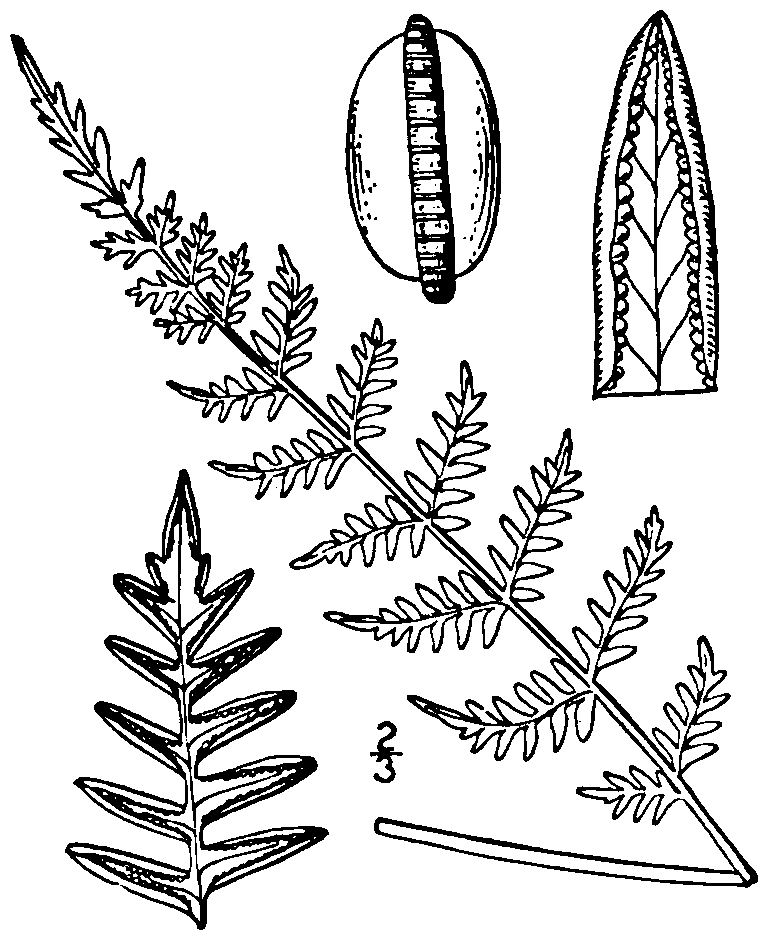
Table of Contents
Introduction & Discovery
The Alabama Lip Fern stands as one of North America's most notable xerophytic ferns, a true survivor that contradicts everything we typically associate with fern ecology. While most ferns demand constant moisture and humid microclimates, Cheilanthes alabamensis thrives on sun-baked limestone cliffs from the Appalachian highlands to the arid borderlands of Texas and northern Mexico. First described by Samuel Botsford Buckley in 1843 as Pteris alabamensis, this diminutive species has fascinated botanists for nearly two centuries with its resurrection-plant capabilities and unusual reproductive strategy. The common name 'lip fern' derives from the distinctive curled pinnae margins that fold protectively over the sporangia like tiny green lips, creating a microclimate that shields developing spores from desiccation. Unlike the graceful unfurling fiddleheads of woodland ferns, C. alabamensis fronds emerge already expanded, clustered tightly around a compact creeping rhizome that anchors into limestone crevices where soil barely exists. This adaptation to extreme environments has made it both a challenge and a delight for cultivation—demanding precise conditions yet rewarding growers with an evergreen presence that persists through winter cold and summer drought. Recent molecular work has reshuffled its taxonomy, with some authorities transferring it to Myriopteris or even Hemionitis, but to collectors and native plant enthusiasts, it remains forever the Alabama Lip Fern, a jewel of North American rock gardens and evidence of the evolutionary ingenuity of pteridophytes.
Discovery & Naming
The formal botanical description of Cheilanthes alabamensis emerged from the golden age of North American floristic exploration in the mid-19th century. Samuel Botsford Buckley, a naturalist and botanist who conducted extensive field work across the southern Appalachians between 1839 and 1843, first collected specimens of this distinctive lip fern during his surveys in Alabama. His description appeared in 1843 in the American Journal of Science and Arts under the name Pteris alabamensis, reflecting the taxonomic conventions of that era when many ferns were broadly classified within Pteris. The specific epithet 'alabamensis' honors the state where Buckley's type specimens were collected, though the exact locality has been subject to some historical debate. By the 1850s, the species was transferred to Pellaea, and later to Cheilanthes by the German botanist Carl Ernst Otto Kuntze in his 1891 revision of pteridophyte classification. Throughout the late 19th and early 20th centuries, botanists documented the species' surprisingly broad distribution, finding populations from Virginia to Mexico, leading to questions about whether disjunct southwestern populations represented the same taxon. Cytological studies in the 1960s revealed the triploid chromosome number and apogamous reproduction, prompting new investigations into the species' evolutionary origins. Research published in the 1970s and 1980s established that North American plants likely derived from Mexican diploid ancestors through autopolyploidy. Most recently, molecular phylogenetic work in the 2010s has prompted some systematists to transfer the species to Myriopteris alabamensis or even Hemionitis alabamensis, though nomenclatural consensus remains elusive and many references still employ the classical Cheilanthes designation that has served for over a century.
Frond Morphology
The fronds of Cheilanthes alabamensis exhibit a precise architectural economy born from millennia of selection pressure in water-limited environments. Measuring 6 to 50 centimeters in length depending on growing conditions, each frond emerges from a compact rhizome system that creeps just below the soil surface, forming slowly expanding clumps over years rather than seasons. The stipe and rachis are shiny black, almost enameled in appearance, providing both structural rigidity and visual contrast against the green-gray pinnae. This dark coloration likely aids in heat absorption during cooler months while the waxy coating prevents excessive moisture loss. The blade itself is lanceolate to linear-oblong, measuring 1 to 7 centimeters wide, with a 2-pinnate to 2-pinnate-pinnatifid division at the base that creates a delicate, lacy texture without sacrificing structural integrity. Ultimate segments are narrowly elliptic to elongate-deltate, measuring 3 to 7 millimeters at their largest, distinctly not beadlike as in some related Cheilanthes species. Both abaxial and adaxial surfaces are sparsely hirsute to glabrescent—covered with fine hairs that trap humidity near the leaf surface and reflect excessive solar radiation. These trichomes are not merely protective ornaments; they create a boundary layer of still air that dramatically reduces transpiration rates. The waxy cuticle on upper surfaces is thickened compared to mesophytic ferns, sometimes giving the fronds a slightly glaucous appearance when backlit. During extreme drought, fronds curl tightly inward, exposing only the heavily protected abaxial surfaces to desiccating winds, and the entire plant can enter a poikilohydric dormant state where cellular water content drops below 10 percent without causing permanent damage—a true resurrection capability rare among pteridophytes.
Native Range & Distribution Map
Distribution map showing the native range of Cheilanthes alabamensis.
Biology & Frond Morphology
Cheilanthes alabamensis operates through a biological strategy fundamentally different from the moisture-dependent paradigm of most ferns. All plants occurring in North America are apogamous triploids (3n), meaning they reproduce without sexual fusion of gametes—the gametophyte generation develops directly into a sporophyte without fertilization. This apogamous reproduction likely evolved from a Mexican diploid cytotype through autopolyploidy, a chromosomal doubling event that produced triploid offspring capable of colonizing harsher environments. The advantage of apogamy in xeric habitats is profound: sexual reproduction in ferns requires free water for flagellated sperm to swim to archegonia, but apogamous species bypass this requirement entirely, enabling reproduction in environments where standing water may not exist for months or years. The plant's poikilohydric physiology represents another extraordinary adaptation—cells can desiccate to less than 10 percent water content and enter a reversible dormancy lasting weeks or months. During this dormant phase, metabolic processes nearly cease, photosynthetic machinery is disassembled and safely stored, and cell membranes are stabilized by accumulation of specialized sugars and protective proteins. When moisture returns—whether from rain, fog, or even heavy dew—fronds rehydrate within 24 to 72 hours, chlorophyll synthesis resumes, and photosynthesis restarts at 80 to 90 percent of pre-drought efficiency. This resurrection capability has been documented through 15 to 20 desiccation cycles in laboratory conditions without apparent cellular damage. The evergreen nature of the fronds means that even during winter dormancy in northern populations (Virginia, North Carolina), the plant maintains photosynthetic capacity and can capitalize on warm winter days when deciduous species remain inactive.
Spore Dispersal
The reproductive strategy of Cheilanthes alabamensis centers on maximizing spore production while protecting developing sporangia from the hostile microclimate of sun-exposed limestone cliffs. Sporulation occurs primarily from summer through fall, typically July through October across most of its range, though southern populations may produce spores episodically following significant rainfall events. Each sporangium contains exactly 32 spores—a number determined by the precise sequence of meiotic and mitotic divisions during sporangial development. These sporangia are arranged in continuous sori beneath the curled-under margins of pinnae, creating the characteristic 'lip' morphology that gives the species its common name. This false indusium, formed by the recurved pinnae margin, provides crucial protection from desiccation and UV radiation during spore maturation. The sporangia themselves are equipped with a specialized annulus—a ring of thick-walled cells that acts as a catapult mechanism. As sporangia mature and lose water, differential drying of annulus cells creates mechanical tension. When critical threshold is reached, the sporangium ruptures explosively, flinging spores distances of 1 to 2 centimeters—substantial for structures measuring only 0.2 to 0.3 millimeters. Wind dispersal then carries these minute propagules potentially kilometers from parent plants, though most successful germination occurs within 10 to 50 meters of source populations. Spore viability is relatively short compared to seed plants, typically 6 to 18 months under ambient conditions, though refrigerated storage can extend this to 3 to 5 years. Germination requires specific conditions: calcareous substrate, consistent moisture for 2 to 4 weeks, moderate light levels, and temperatures between 16 to 24°C. The resulting gametophyte is a small, heart-shaped green structure measuring 2 to 5 millimeters, capable of photosynthesis and independent existence while developing the reproductive structures that, in apogamous individuals, will directly produce sporophytes without fertilization.
Reproduction & Propagation
Propagation of Cheilanthes alabamensis succeeds most reliably through spore cultivation, though division is possible with mature specimens. Spore propagation begins with collection: in late summer or early fall (August through October), select fronds with mature sori visible as continuous brown lines beneath curled pinnae margins. Harvest by cutting fronds and placing them in paper envelopes (never plastic, which traps moisture and kills spores); within 3 to 5 days, spores will release naturally from sporangia. Sowing requires sterilized equipment to prevent contamination by competing mosses or fungi. Prepare substrate by mixing equal parts finely milled peat and vermiculite, moistening thoroughly, then microwaving for 4 minutes or baking at 180 degrees Celsius for 30 minutes. Allow to cool completely. Fill shallow containers (8 to 10 centimeters diameter) with sterilized substrate, firm gently, then sprinkle spores evenly across surface—they appear as fine brown dust barely visible to naked eye. Do not cover spores with additional substrate. Place containers in clear plastic bags or under glass to maintain high humidity (80 to 95 percent) and position in bright indirect light at 18 to 24 degrees Celsius. Germination occurs within 2 to 6 weeks, visible as green film of tiny gametophytes. Add a few drops of water amended with crushed limestone (1 gram per liter) monthly to maintain alkalinity crucial for this calciphile species. After 8 to 16 weeks, small sporophytes will emerge—these are the baby ferns. Allow sporophytes to reach 1 to 2 centimeters height (4 to 6 months from sowing) before attempting transplantation. Use tweezers to gently lift individual sporophytes with attached substrate and place into individual small pots with the standard alkaline mix. Division of established plants succeeds best in early spring. Select clumps with at least 12 to 15 fronds, carefully remove from pot, and gently tease apart rhizomes, ensuring each division retains 4 to 6 fronds and adequate roots. Pot immediately into appropriately alkaline, well-draining substrate and water sparingly. Expect divisions to sulk for 3 to 6 months with potential frond loss before recovery begins.
Cultivation & Substrate
Successfully cultivating Cheilanthes alabamensis requires abandoning conventional fern care wisdom and embracing a xerophytic mindset more appropriate for cacti or Mediterranean alpines. The critical success factor is drainage: use containers with multiple drainage holes, never saucers that retain water, and a substrate that dries within 3 to 5 days of watering. A proven mix combines equal parts standard potting soil, perlite or pumice, and crushed limestone chips (2 to 5 millimeter diameter), yielding pH between 7.2 and 8.0. Terra cotta pots excel because their porosity accelerates drying, discouraging the root rot that kills most cultivation attempts. Position plants in bright indirect light—an east-facing window provides ideal morning sun and afternoon shade. Water only when substrate is dry 2 to 3 centimeters down; in typical indoor conditions this means once per 7 to 10 days in summer, extending to 14 to 21 days in winter. The fern tolerates underwatering far better than overwatering—fronds may curl and brown during drought but will resurrect within days of rehydration, while saturated roots die permanently. Fertilization should be minimal: dilute liquid fertilizer to quarter strength and apply only during active growth in spring and early summer, perhaps 3 to 4 times annually. Outdoor cultivation in USDA zones 5 through 9 succeeds best in rock gardens where plants can be wedged into crevices between limestone boulders. Choose sites with excellent air circulation to prevent fungal issues and position on north or east-facing slopes if possible. In humid climates like the southeastern United States, growing C. alabamensis under the eaves of buildings or beneath deciduous tree canopies helps shed excessive rainfall. Plants grown outdoors remain evergreen through winter in zones 7 to 9, semi-evergreen in zone 6, and fully dormant with brown fronds in zone 5—all reviving readily in spring.
Substrate: Alkaline, well-draining mix of garden soil, sand, and limestone chips. In cultivation, use equal parts peat moss, perlite, and crushed limestone with pH 7.0-8.5. Tolerates very poor, rocky substrates in nature.
Water: Tap or rainwater, dry between
Light: Bright indirect light to partial shade; medium-high light indoors
Humidity: 20-50% (tolerant)
Common Mistakes to Avoid
The overwhelming majority of Cheilanthes alabamensis cultivation failures stem from one fundamental error: treating it like a typical fern. Growers accustomed to maintaining Boston ferns or maidenhairs instinctively provide constant moisture, high humidity, and low light—precisely the conditions that doom Alabama Lip Fern. Overwatering is the single greatest killer, manifesting initially as yellowing fronds that darken to brown-black as root rot progresses. Once rhizomes become waterlogged, recovery is essentially impossible; prevention through proper watering discipline is the only strategy. Using standard potting soil without drainage amendments creates another common failure mode—even weekly watering can be too frequent if substrate remains saturated for 5 to 7 days. Many growers panic when fronds curl and brown during dry periods, assuming the plant is dying and flooding it with water; in reality, this dormancy is normal adaptive behavior and the plant would resurrect naturally with modest rehydration. Placing C. alabamensis in bathrooms or other high-humidity environments encourages fungal infections and reduces the transpirational draw that helps transport nutrients from roots to fronds. Acidic substrates represent another frequent mistake—growers using peat-heavy mixes or acidic fertilizers may see chronic yellowing despite adequate watering, because the calciphile biology cannot function below pH 6.5. Division attempts often fail because the compact rhizome system resents disturbance; plants sulk for 6 to 18 months post-division and many never recover. Insufficient light is surprisingly common—north-facing windows or spots more than 2 meters from windows do not provide adequate photosynthetic photon flux, resulting in etiolated growth and eventual decline. Finally, some growers expect rapid growth and become discouraged when plants expand by only 2 to 4 fronds annually; this slow pace is normal for the species and attempting to accelerate growth through heavy fertilization typically causes salt accumulation and root damage.
Seasonal Considerations
Cheilanthes alabamensis exhibits distinct seasonal rhythms that, when properly understood, guide optimal cultivation practices throughout the year. Spring (March through May) marks the primary active growth period when rhizomes produce 1 to 3 new fronds and existing fronds recover from any winter dormancy. Increase watering frequency slightly during these months—perhaps every 5 to 7 days rather than weekly—and apply dilute fertilizer (quarter-strength balanced formula) monthly to support new growth. Monitor for emergence of new fronds, which appear already expanded rather than as coiled fiddleheads; this signals robust plant health. Summer (June through August) brings heat stress in many cultivation environments. If temperatures exceed 32 degrees Celsius consistently, fronds may curl and enter partial dormancy even with available moisture; this is normal adaptive behavior, not a watering problem. Maintain regular watering schedule and ensure excellent air circulation to prevent fungal issues in humid climates. Outdoor plants in full summer sun may benefit from light afternoon shade during peak heat. Sporulation typically begins in July or August; watch for browning along pinnae margins as sori mature. Fall (September through November) represents a transition period when growth slows and plants prepare for winter dormancy in colder zones. Gradually reduce watering frequency to every 10 to 14 days, cease all fertilization, and allow cooler nighttime temperatures to trigger natural metabolic slowdown. Collect spores in September or October if propagation is desired—tap mature fronds over white paper to harvest the fine brown powder. Winter (December through February) care varies dramatically by climate zone. In USDA zones 7 to 9, plants remain evergreen and require minimal attention: water only when substrate is thoroughly dry (every 14 to 21 days), provide bright winter light, and protect from freezing temperatures below -9 degrees Celsius. In zones 5 to 6, outdoor plants go fully dormant with brown fronds; these can be left in place or trimmed in late winter just before new growth emerges. Indoor cultivation continues year-round with reduced watering and no fertilization until spring returns.
Diseases & Pests
Cheilanthes alabamensis demonstrates considerable disease resistance when cultural conditions match its xerophytic requirements, but deviations from proper care invite specific pathological issues. Root rot caused by Pythium or Phytophthora species represents the most serious threat, typically resulting from chronic overwatering or poorly draining substrates. Early symptoms include yellowing of outer fronds progressing inward, followed by browning and collapse; by the time above-ground symptoms appear, rhizome damage is usually extensive and irreversible. Prevention through proper watering discipline is the only effective management strategy, as fungicidal treatments rarely save plants once rot has established. Foliar fungal infections are less common but can occur in high-humidity environments. Botrytis cinerea (gray mold) may colonize fronds in conditions above 70 percent relative humidity, appearing as fuzzy gray-brown patches on pinnae; improve air circulation immediately and reduce humidity to halt progression. Rust fungi occasionally attack Cheilanthes species, manifesting as orange-brown pustules on frond undersides; remove affected fronds and isolate plant to prevent spread. Bacterial soft rot is rare but devastating when it occurs, typically entering through wounds or damaged tissue and causing rapid blackening and collapse of affected areas; there is no cure, and affected plants should be destroyed to prevent spread. Insect pests are generally minimal due to the plant's tough, hairy fronds. Spider mites (Tetranychus species) can establish during prolonged drought stress, visible as fine webbing and stippling on fronds; increase humidity temporarily and spray with water or insecticidal soap. Scale insects occasionally infest the shiny black stipes, appearing as brown bumps; scrape off manually or treat with horticultural oil. Aphids rarely attack but may colonize new fronds in spring; remove with forceful water spray or insecticidal soap. Fungus gnats indicate overly moist substrate; allow substrate to dry more thoroughly between waterings to eliminate breeding sites. Overall, the best disease and pest management strategy is cultural: provide bright light, excellent drainage, minimal watering, alkaline pH, and good air circulation, and pathological problems will rarely develop.
Indoor Growing & Terrariums
Cheilanthes alabamensis adapts surprisingly well to indoor cultivation provided growers embrace its unconventional requirements and resist the temptation to coddle it like typical houseplants. Begin by selecting an appropriate location: east-facing windows provide ideal conditions with bright morning sun and afternoon shade, while south-facing windows work well if plants are positioned 50 to 100 centimeters back from the glass to avoid scorching. West-facing windows receive too much intense afternoon heat in most climates, and north-facing exposures rarely provide adequate light intensity. Artificial lighting can supplement or replace natural light; full-spectrum LED panels positioned 20 to 30 centimeters above fronds and operating 12 to 14 hours daily provide sufficient photosynthetic photon flux. Container selection is critical: choose terra cotta pots with drainage holes measuring 10 to 15 centimeters diameter for single divisions, avoiding plastic containers that retain excessive moisture. Never use saucers or cache pots that hold water. The substrate recipe—equal parts potting soil, perlite, and crushed limestone—creates the drainage and alkalinity essential for success. Water only when substrate is dry 2 to 3 centimeters down, checking by inserting a finger or wooden skewer; in typical indoor conditions with moderate humidity, this translates to every 7 to 12 days. Water thoroughly until drainage occurs, then do not water again until substrate dries. Indoor humidity between 30 and 50 percent is ideal—typical household conditions rather than the elevated humidity most ferns require. Avoid misting fronds, which serves no purpose and may encourage fungal issues. Temperatures between 18 and 24 degrees Celsius suit year-round growth, though winter cooling to 12 to 15 degrees for 6 to 8 weeks can enhance vigor. Fertilize sparingly: quarter-strength balanced liquid fertilizer applied monthly during spring and summer provides adequate nutrition without causing salt accumulation. Rotate pots quarterly to ensure even light exposure and symmetric growth. Monitor fronds for the healthy blue-green color and slightly waxy texture that indicates proper care; yellowing suggests overwatering or acidic substrate, while excessive browning during active growth (not normal summer dormancy) indicates insufficient light or extreme drought. With these practices, Alabama Lip Fern can thrive indoors for decades, slowly expanding into architectural specimens that challenge visitors' assumptions about what ferns require.
Terrarium Setup
Incorporating Cheilanthes alabamensis into terrarium culture represents an advanced challenge that contradicts typical terrarium design principles. Standard closed or semi-closed terrariums maintain humidity levels of 70 to 95 percent—far too high for this xerophytic species and virtually guaranteeing fungal issues. Success requires constructing a specialized dry terrarium or Mediterranean vivarium with fundamentally different environmental parameters. Use a wide, shallow container with minimal depth (8 to 12 centimeters substrate maximum) to discourage moisture retention, and avoid any lid or covering that would trap humidity. The substrate layer should comprise 60 percent coarse sand, 30 percent crushed limestone or limestone gravel, and only 10 percent actual soil, creating drainage characteristics similar to natural cliff habitats. Position chunks of limestone rock (fist-sized or larger) to create vertical or angled faces, then wedge C. alabamensis divisions into crevices as they would naturally colonize. Companion plants must share similar cultural requirements: consider Sedum species (S. rupestre, S. album), Sempervivum cultivars, miniature Opuntia cacti, or other Cheilanthes species like C. tomentosa. Lighting is critical—place the terrarium within 30 to 50 centimeters of a south or east-facing window, or use full-spectrum LED grow lights providing minimum 200 micromoles per square meter per second. Watering should occur by directed spray or careful pouring only when substrate is completely dry throughout, typically every 10 to 18 days. Monitor for condensation on container walls; any sustained fogging indicates excess moisture that must be corrected by increasing ventilation or reducing watering frequency. Temperature fluctuations are beneficial rather than problematic—allow natural day-night variation and cooler winter temperatures (10 to 15 degrees Celsius) to encourage dormancy. This approach creates what might better be termed a xeric display rather than a conventional terrarium, but it provides the only viable framework for long-term Alabama Lip Fern cultivation in contained environments.
Landscape & Garden Use
Cheilanthes alabamensis can be used in the garden wherever its hardiness and habitat preferences are matched. Ferns are classic choices for shaded borders, woodland gardens, stumperies, rockeries, stream-side plantings, and ground-cover under trees.
Landscape Tips
- Companions: Hostas, Astilbe, Heuchera, Tiarella, Epimedium, hellebores, snowdrops and other shade-tolerant perennials are classic partners.
- Soil preparation: Incorporate leaf mould or composted bark to improve moisture retention and mimic a forest floor.
- Mulching: A 3–5 cm mulch of chipped bark or leaf litter protects the rhizomes, conserves moisture, and slowly releases nutrients.
- Watering: Establish new plantings with regular deep watering during the first growing season; most hardy ferns need only occasional supplemental irrigation once established.
Conservation & Collector Notes
Cheilanthes alabamensis presents a complex conservation picture that varies dramatically across its extensive but fragmented range. At the federal level in the United States, the species holds no Endangered Species Act listing, and globally it has not been assessed by the IUCN Red List—a common oversight for small, inconspicuous ferns that lack the charismatic appeal driving conservation attention toward showy flowering plants or large vertebrates. However, state-level assessments reveal significant concern at range margins. In Virginia, the species is listed as S1 (critically imperiled) with fewer than five known extant populations clinging to limestone outcrops in the southwestern counties. North Carolina similarly ranks it as S1, with populations restricted to a handful of sites in the mountain region. Maryland lists the species as endangered, and Pennsylvania considers it extirpated. These peripheral populations represent the northernmost extent of the species' range and are particularly vulnerable to habitat loss because they occupy small, isolated limestone outcrops surrounded by otherwise unsuitable acidic terrain. The primary conservation threats are habitat destruction through quarrying operations that target the same limestone formations the fern requires, residential and commercial development on ridge-top sites, and invasive plant species—particularly Lonicera japonica (Japanese honeysuckle) and Ligustrum sinense (Chinese privet)—that smother cliff-face habitats by shading and outcompeting native calciphiles. Climate change poses an emerging but uncertain threat: while increased drought frequency might seem to favor a xerophytic species, altered precipitation patterns could extend wet periods that promote fatal root rot, and warming winter temperatures in northern populations may disrupt the dormancy cycles that protect against mid-winter freeze-thaw damage. Within the species' core range in Alabama, Tennessee, and the Ozarks, populations remain more robust and face less immediate threat, though cumulative habitat degradation from road construction, logging, and recreational rock climbing continues to erode individual colony sizes. Conservation strategies should prioritize protection of peripheral populations that represent unique genetic diversity, habitat management to control invasive species on limestone outcrops, and ex situ cultivation in botanical gardens to maintain insurance populations against catastrophic site loss.
Explore Our Other Encyclopedias
12,000+ expert articles on tropical & exotic plants
Quick Reference Summary: Cheilanthes alabamensis
Golden Rule: Match moisture, light and humidity to each fern’s natural habitat — woodland ferns need shade and humus, rock ferns need drainage, filmy ferns need constant humidity.