Tuber melanosporum (Périgord Black Truffle)
Tuber melanosporum (Périgord Black Truffle)


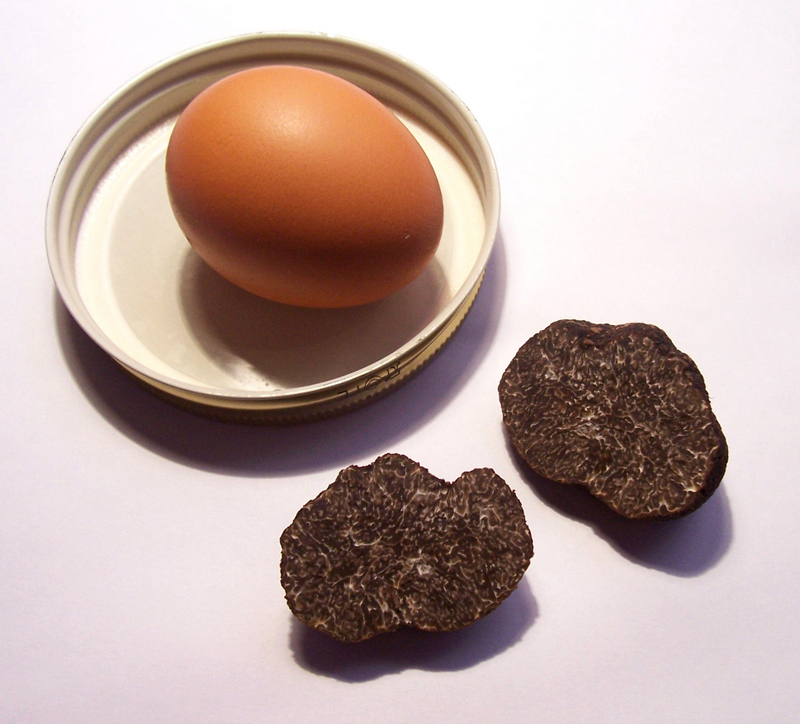
Table of Contents
- Introduction
- Identification Guide
- Taxonomy & Classification
- Edibility & Safety
- Look-Alikes & Confusions
- Habitat & Ecology
- Foraging Guide
- Cultivation
- Culinary Uses
- Preservation & Storage
- Medicinal Properties
- Seasonal Fruiting
- Spore Print & Microscopy
- Varieties & Forms
- History & Ethnomycology
- Beginner's Guide
- FAQ
🍄 Introduction
Tuber melanosporum, the Perigord black truffle or black winter truffle, is the second most valuable culinary truffle after T. magnatum and the most successfully cultivated truffle species in the world. It produces dark-brown to black ascocarps with a warty peridium and a dark gleba marbled with fine white veins, emitting a complex earthy-musky aroma with chocolate and dried fruit notes. Native to calcareous oak forests of southern Europe, it has been established in commercial truffières (truffle orchards) across France, Spain, Italy, Australia, and other suitable regions.
Ascocarps are irregularly rounded, 3-10 cm across, occasionally larger, with a thick peridium covered in 4-6 sided polygonal warts 2-4 mm across. The surface colour is dark reddish-brown to coal-black at maturity, with a rusty reddish tint when young. The gleba is initially pale, becoming dark purple-black at maturity with conspicuous narrow white veins that turn reddish-brown on exposure to air. Texture is firm and dense. The aroma develops progressively with maturation, reaching full intensity when the gleba is uniformly dark and the spores are mature.
Quick Facts
| Common Names | Périgord Black Truffle |
| Family | Tuberaceae |
| Order | Pezizales |
| Origin | Southern France, Spain, Italy |
| Edibility | Choice Edible |
| Ecology | Ectomycorrhizal |
| Spore Print | N/A — Subterranean Ascomycete |
🔍 Identification Guide
The combination of black polygonal-warted peridium, dark purple-black gleba with white veins that redden on exposure, spiny spore ornamentation, and intense earthy-musky aroma is diagnostic. Dig carefully when the dog indicates, typically 5-20 cm below the surface near oak roots. Young truffles with reddish-brown surfaces and pale gleba are not yet mature; the gleba must be dark throughout for peak flavour. The brule — a zone of bare or sparse vegetation around the host tree — is a useful habitat indicator.
Morphological Features
| Feature | Description |
|---|---|
| Cap Shape | Irregular globose, warty exterior |
| Cap Diameter | 2-10 |
| Cap Color | Black with reddish-brown warts (pyramidal) |
| Cap Surface | Rough, wartily faceted, black |
| Gill/Pore Type | internal gleba (asci) |
| Gill/Pore Color | Black-violet with fine white veins inside |
| Stipe Height | N/A |
| Stipe Diameter | N/A |
| Stipe Features | No stipe; hypogeous fruiting body |
| Flesh Color | Black-violet to dark brown with white veins |
| Bruising | Does not bruise |
| Odor | Intense, musky, chocolate-earthy, complex |
| Taste | Intense, earthy, chocolate-musk, complex |
| Spore Print | N/A — subterranean ascomycete |
Field Identification Checklist
- Cap shape: Irregular globose, warty exterior
- Cap color: Black with reddish-brown warts (pyramidal)
- Gill/pore type: internal gleba (asci)
- Gill/pore color: Black-violet with fine white veins inside
- Spore print: N/A — subterranean ascomycete
- Odor: Intense, musky, chocolate-earthy, complex
- Bruising: Does not bruise
- Stipe: No stipe; hypogeous fruiting body
Detailed Morphology
The pyramidal polygonal warts on the peridium distinguish T. melanosporum from the smooth-surfaced T. magnatum. The white veins in the gleba turn reddish when the truffle is cut and exposed to air, which is diagnostic — T. brumale veins remain white. Spores are broadly ellipsoid, 25-35 x 20-28 micrometres, dark brown, with spine-like ornamentation 3-5 micrometres long (distinctly spiny rather than reticulate). Asci contain 1-5 spores, typically 4. The peridium consists of a pseudoparenchyma with darkly pigmented outer cells.
🧬 Taxonomy & Classification
Described by Vittadini in 1831 from Italian material. It belongs to the Melanosporum clade of Tuber, which also includes T. brumale and T. indicum. The genome was fully sequenced in 2010, revealing a large 125 Mb genome with extensive transposable element expansion. The species is heterothallic with a single mating-type locus (MAT), meaning fruiting requires the encounter of two compatible mating types in the soil — a factor critical for truffière management. Molecular barcoding using ITS sequences reliably separates it from the morphologically similar T. indicum.
⚕️ Edibility & Safety
A premier culinary truffle with no toxicity concerns. Unlike T. magnatum, T. melanosporum tolerates gentle heat, and its flavour actually benefits from brief warming — it is classically used in cooked dishes. No dangerous look-alikes exist among Tuber species, though lower-value truffles (T. brumale, T. indicum) are sometimes fraudulently substituted. Chinese T. indicum is visually very similar but lacks the aromatic complexity and commands a fraction of the price.
⚠️ Look-Alikes & Confusions
Tuber brumale has a similar black warted peridium but with smaller, more rounded warts, a grey-black gleba with veins that remain white (not reddening), and a musky-rubbery aroma rather than the complex earth-chocolate scent of T. melanosporum. Tuber indicum (Chinese black truffle) is morphologically almost identical but has subtly different spore ornamentation and a much weaker aroma — molecular testing (ITS sequencing) is the only reliable way to distinguish them. Tuber aestivum has a beige-brown gleba rather than dark purple-black.
Known Look-Alikes
| Species | Edibility | Key Difference |
|---|---|---|
| Tuber brumale | Unknown | Check all identifying features carefully |
| Tuber aestivum | Choice Edible | Cap: Black with prominent pyramid-shaped warts; Odor: Nutty, earthy, mild compared to winter truffles; Habitat: Calcareous soils in deciduous woodlands |
🌲 Habitat & Ecology
Ectomycorrhizal primarily with Quercus ilex, Q. pubescens, Q. robur, and Corylus avellana on well-drained calcareous soils with pH 7.5-8.5 and low organic matter content. The species creates a distinctive brule or burnt ground effect around colonised trees, where competing vegetation is suppressed by allelopathic compounds from the mycelium. Native range extends across Mediterranean and sub-Mediterranean Europe from Spain to Turkey. Requires cold winters (below 5 degrees Celsius for several weeks) and warm summers for proper ascocarp development.
| Habitat | Limestone soils in calcareous oak scrubland |
| Substrate | Alkaline limestone soil, hypogeous |
| Ecology | Ectomycorrhizal |
| Host Trees | Quercus pubescens, Quercus ilex, Corylus |
| Altitude | 100-1000 m |
| Climate Zones | Mediterranean, warm temperate |
| Distribution | France (Périgord, Provence), Spain, Italy |
Ecological Role
T. melanosporum is an aggressive ectomycorrhizal competitor that suppresses other fungi in the soil around its host trees through allelopathic compounds, creating the characteristic brule. This competitive dominance simplifies the belowground fungal community but enhances host tree nutrition on poor calcareous soils. The hypogeous fruiting bodies are dispersed by mammals (wild boar, squirrels, badgers, voles) that dig up and consume them. The species plays a significant role in calcium and phosphorus cycling in Mediterranean calcareous woodland ecosystems.
🗺 Distribution Map
Known distribution of Périgord Black Truffle: France (Périgord, Provence), Spain, Italy. This species is mycorrhizal (Ectomycorrhizal).
🧺 Foraging Guide
The season runs from December through March, with peak quality in January and February. Trained dogs locate truffles by scent; search near mature oaks and hazels on calcareous hillsides, particularly around trees showing a visible brule. Dig carefully with a small curved spade or truffle knife, extract the truffle, and refill the hole immediately. Inspect the gleba colour by making a small scratch — fully mature specimens should show dark purple-black flesh. Collecting immature truffles damages future yields and produces inferior flavour.
🌱 Cultivation
T. melanosporum is the most successfully cultivated truffle, with established truffières in France, Spain, Italy, Australia, New Zealand, Chile, and the United States. Seedlings of Quercus ilex, Q. pubescens, or Corylus avellana are inoculated with truffle spores in nurseries, confirmed by root-tip examination, and planted on prepared calcareous sites with appropriate drainage and pH. First fruiting typically occurs 5-10 years after planting. Success depends on soil chemistry, irrigation management, and control of competing ectomycorrhizal fungi. Global production from planted truffières now exceeds wild harvest.
| Difficulty | Very Difficult |
| Substrate | Inoculated limestone-soil orchards with host oaks |
| Spawn Type | Mycorrhizal inoculated tree seedlings |
| Days to Fruit | 1825 |
🍳 Culinary Uses
Unlike white truffles, T. melanosporum benefits from gentle warming that releases its aromatic compounds. Classic preparations include truffle slipped under the skin of roast chicken, truffle-studded foie gras terrine, black truffle omelette, and truffled Brie de Meaux. Shave or grate over hot pasta, risotto, or scrambled eggs immediately before serving. The truffle's flavour infuses into fats — truffle butter and truffle-infused cream are traditional Perigordine preparations. Pair with mild, fat-rich foods that showcase rather than compete with the truffle's complexity.
| Culinary Uses | Sauces, Pâtés, En croûte preparations, Scrambled eggs, Shaved over dishes |
| Preservation | Freezing, Oil infusion, Preserved in Armagnac, Jarred |
📦 Preservation & Storage
Refrigerate at 2-4 degrees Celsius wrapped in paper towels inside a sealed container; change paper daily. Fresh truffles maintain quality for 7-10 days, longer than white truffles. Sterilised in jars (truffle conserve) is a traditional French preservation method that retains good flavour for months. Truffle-infused oils and butters effectively capture the aroma for extended use. Flash-freezing whole truffles preserves reasonable quality for several months, unlike T. magnatum. Drying is not recommended as it concentrates earthy notes at the expense of aromatic complexity.
Preservation Methods
- Freezing
- Oil infusion
- Preserved in Armagnac
- Jarred
🩹 Medicinal Properties
No validated medicinal applications exist for T. melanosporum, though its bioactive compounds have attracted pharmaceutical interest. The truffle contains anandamide (an endocannabinoid) at measurable levels, which may contribute to its hedonic appeal but has no therapeutic significance at dietary doses. Ergothioneine and various antioxidant compounds are present at levels comparable to other edible fungi. In French folk medicine, truffles were traditionally considered aphrodisiacs and tonics, without pharmacological substantiation.
Known Properties
🍂 Seasonal Fruiting
Fruiting bodies develop underground from summer onward, reaching aromatic maturity between December and March. Peak quality occurs in January-February when winter cold concentrates the volatile compounds. Early-season truffles (November-December) may still have partially immature gleba. Late-season specimens (March) risk waterlogging and deterioration. Summer rainfall is critical for initiating ascocarp formation; drought years produce poor winter harvests. Irrigation of truffières during summer dry periods has become standard practice to ensure consistent yields.
🔬 Spore Print & Microscopy
Spores are broadly ellipsoid, 25-35 x 20-28 micrometres, dark brown at maturity, ornamented with dense curved spines 3-5 micrometres long — the spiny ornamentation distinguishes T. melanosporum from the reticulate T. magnatum and the shorter-spined T. brumale. Asci are subglobose, 70-100 micrometres, containing 1-5 spores (usually 4). The peridium shows a pseudoparenchyma of angular cells with dark brown walls. No clamp connections are present. The hymenium lacks paraphyses.
🌀 Varieties & Forms
No formally recognised infraspecific taxa exist, but regional terroir differences in aroma profile are widely acknowledged in the trade. Truffles from Perigord, Provence, Umbria, and Aragon are considered premium origins. Some mycologists recognise ecological forms associated with different host trees — the hazel form allegedly producing more aromatic truffles than the holm oak form — but this has not been substantiated genetically. Australian and Chilean plantation truffles are indistinguishable from European specimens in blind tastings.
📜 History & Ethnomycology
Black truffles have been consumed in Europe since antiquity, with Theophrastus and Pliny both describing hypogeous fungi from calcareous soils. The Perigord region of France became synonymous with the species from the 18th century onward, and the gastronomic reputation peaked in the 19th century when Brillat-Savarin called truffles the diamond of the kitchen. French truffle production has declined dramatically from an estimated 1,000 tonnes annually in the early 1900s to 30-50 tonnes today, largely due to rural depopulation, deforestation, and climate change. The rise of trufficulture since the 1970s has partially compensated for wild harvest declines.
🎓 Beginner's Guide
If entering trufficulture, invest in professionally inoculated seedlings from certified nurseries and have your soil tested for pH, calcium carbonate content, and drainage before planting. Expect 5-10 years before first harvest. For purchasing, buy from reputable dealers who allow you to inspect, smell, and feel the truffle — the gleba should be uniformly dark with white veins, firm to the touch, and intensely aromatic. Avoid any truffle that smells of ammonia (overripe) or has a pale interior (immature).
Photography Tips
The warty black peridium is best photographed against a neutral background with side lighting that highlights the pyramidal texture. A cross-section reveals the stunning dark gleba with white marbling — photograph immediately after cutting, as the veins redden within minutes. Document the brule around host trees as habitat context. For truffle market scenes, the mounds of dark truffles on white cloths under artificial light create atmospheric images. A macro shot of the peridium warts at high magnification reveals their geometric beauty.
Common Mistakes
Every mushroom must be individually identified; toxic species often grow alongside edible ones
Always take a spore print on white and dark paper to confirm identification
Most wild mushrooms should be thoroughly cooked to break down toxins and improve digestibility
Use multiple features: cap, gills/pores, stipe, spore print, odor, habitat, and season
Troubleshooting
Immature truffles with pale gleba will not develop further aroma after harvest — always check interior colour before collecting. Ammonia or fermented odours indicate overripeness or bacterial decomposition. Soft, spongy texture means waterlogging, common in late-season or poorly drained sites. If truffière trees show declining brule or no fruiting after 10+ years, soil pH may have shifted, competing fungi may have invaded, or mating-type incompatibility may be the issue — consult a truffle agronomist for diagnostic soil and root analysis.
❓ Frequently Asked Questions
Is Périgord Black Truffle edible?
Yes, Tuber melanosporum is considered a choice edible mushroom, prized for its excellent flavor and texture. Always ensure positive identification before consuming any wild mushroom.
What mushrooms look similar to Périgord Black Truffle?
Known look-alikes include Tuber brumale, Tuber aestivum. Careful identification using multiple features (cap, gills/pores, stipe, spore print, habitat) is essential to avoid confusion.
Where does Périgord Black Truffle grow?
Tuber melanosporum is found France (Périgord, Provence), Spain, Italy. It typically grows in Limestone soils in calcareous oak scrubland during Winter.
Can you grow Périgord Black Truffle at home?
Yes, Tuber melanosporum can be cultivated. It is typically grown on Inoculated limestone-soil orchards with host oaks. Home cultivation kits are available for beginners.
What color is the spore print of Périgord Black Truffle?
The spore print of Tuber melanosporum is N/A — subterranean ascomycete. Taking a spore print is an important step in mushroom identification.
Does Périgord Black Truffle have medicinal properties?
Tuber melanosporum has been studied for potential Antioxidant, Anti-inflammatory, Anandamide compounds properties. However, medicinal claims should be evaluated critically and discussed with a healthcare provider.
When is the best time to find Périgord Black Truffle?
Tuber melanosporum typically fruits during Winter. Fruiting is often triggered by rainfall followed by appropriate temperatures for the species.
📋 Summary — Tuber melanosporum (Périgord Black Truffle)
Tuber melanosporum, the Perigord black truffle or black winter truffle, is the second most valuable culinary truffle after T. magnatum and the most successfully cultivated truffle species in the world. It produces dark-brown to black ascocarps with a warty peridium and a dark gleba marbled with fine white veins, emitting a complex earthy-musky aroma with chocolate and dried fruit notes. Native to calcareous oak forests of southern Europe, it has been established in commercial truffières (truffle orchards) across France, Spain, Italy, Australia, and other suitable regions.
Related Species
Tuber brumale (winter truffle) has smaller rounded warts, grey gleba, non-reddening veins, and a musky aroma — far less valuable. Tuber indicum (Chinese truffle) is nearly identical visually but aromatically inferior and genetically distinct. Tuber aestivum has a beige interior and milder aroma. Tuber mesentericum has a phenolic-tarry odour and irregular lobed shape. All black Tuber species can be reliably separated by spore ornamentation under the microscope and by molecular sequencing.