Clitocybe dealbata (Ivory Funnel)
Clitocybe dealbata (Ivory Funnel)


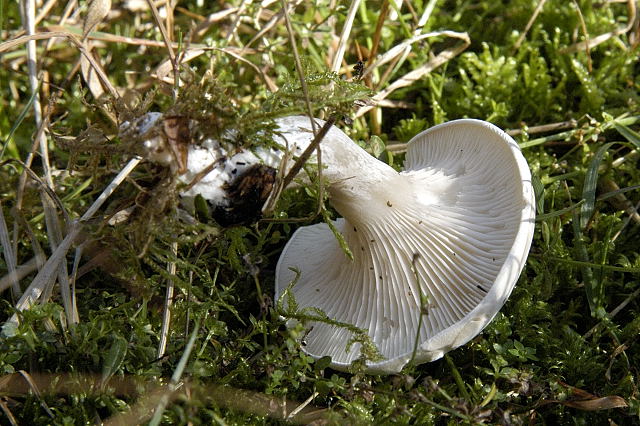


Table of Contents
- Introduction
- Identification Guide
- Taxonomy & Classification
- Edibility & Safety
- Look-Alikes & Confusions
- Habitat & Ecology
- Foraging Guide
- Cultivation
- Culinary Uses
- Preservation & Storage
- Medicinal Properties
- Seasonal Fruiting
- Spore Print & Microscopy
- Varieties & Forms
- History & Ethnomycology
- Beginner's Guide
- FAQ
🍄 Introduction
Clitocybe dealbata, the ivory funnel, is a small white grassland mushroom containing muscarine at concentrations sufficient to cause clinically significant cholinergic poisoning. Found in lawns, meadows, parklands, and garden edges throughout temperate regions, it is particularly hazardous because it grows alongside the edible Marasmius oreades (fairy ring champignon) in the same fairy rings and grassy habitats. The white colour, small size, and grassland occurrence make it one of the most frequently implicated Clitocybe species in muscarine poisoning cases.
The cap is 2-5 cm across, convex to slightly depressed with a wavy margin, dry, smooth to finely pruinose, white to ivory when fresh, developing greyish-buff or pinkish tones with age, often with a faint greyish bloom or frosted appearance. The gills are adnate to slightly decurrent, crowded, whitish to pale cream. The stipe is 2-4 cm tall, 4-8 mm thick, cylindrical, solid to stuffed, white, finely fibrillose, without a ring or volva. Basidiomata typically grow in small clusters or scattered groups in grass, often forming partial rings or arcs.
Quick Facts
| Common Names | Ivory Funnel |
| Family | Tricholomataceae |
| Order | Agaricales |
| Origin | Northern Hemisphere |
| Edibility | Deadly Poisonous |
| Ecology | Saprobic |
| Spore Print | White |
🔍 Identification Guide
The combination of small white cap, crowded adnate to slightly decurrent gills, white spore print, absence of ring and volva, grassland habitat, and faintly mealy odour characterises C. dealbata. The frosted or pruinose cap surface when dry is a useful but not always reliable feature. Separation from Marasmius oreades (which has wider-spaced gills, a tougher stipe, and revives when re-wetted) is critical. Molecular identification may be necessary for definitive determination within the C. dealbata complex.
Morphological Features
| Feature | Description |
|---|---|
| Cap Shape | convex to flat to funnel-shaped |
| Cap Diameter | 2-5 |
| Cap Color | white to pale gray, chalky bloom |
| Cap Surface | smooth, dry, chalky |
| Gill/Pore Type | gills |
| Gill/Pore Color | white to pale cream, decurrent |
| Stipe Height | 2-4 |
| Stipe Diameter | 0.4-0.8 |
| Stipe Features | white, fibrous, solid |
| Flesh Color | white |
| Odor | mealy, unpleasant |
| Taste | mealy |
| Spore Print | white |
Field Identification Checklist
- Cap shape: convex to flat to funnel-shaped
- Cap color: white to pale gray, chalky bloom
- Gill/pore type: gills
- Gill/pore color: white to pale cream, decurrent
- Spore print: white
- Odor: mealy, unpleasant
- Stipe: white, fibrous, solid
Detailed Morphology
The flesh is thin, white, with a faintly sweet to mealy odour that is not strongly distinctive. Muscarine concentration ranges from 0.01-0.04% dry weight, lower than Inocybe erubescens but sufficient to cause clinical toxicity in adults. The spore print is white to very pale pinkish-cream. The cap surface may appear slightly translucent-striate when wet and opaque-frosted when dry. The overall gestalt is of a nondescript small white mushroom easily overlooked or dismissed.
🧬 Taxonomy & Classification
Clitocybe dealbata was described by Sowerby in 1799, making it one of the older species names in the genus. The relationship between C. dealbata and C. rivulosa is contentious: some molecular studies suggest they are conspecific while others maintain them as distinct lineages. Modern phylogenetic revisions have transferred many traditional Clitocybe species to other genera, but C. dealbata sensu stricto remains within the core Clitocybe clade. The species concept is narrow in some treatments and broader in others, reflecting genuine taxonomic uncertainty.
⚕️ Edibility & Safety
Poisonous, containing muscarine that produces the full muscarinic cholinergic syndrome within 15-60 minutes of ingestion: profuse salivation, lacrimation, perspiration, nausea, vomiting, diarrhoea, abdominal cramps, miosis, blurred vision, bradycardia, and in severe cases bronchospasm and hypotension. The symptoms are usually not life-threatening in healthy adults but can be dangerous for children, elderly people, and those with cardiovascular or respiratory conditions. Intravenous atropine sulfate is the specific antidote.
⚠️ Look-Alikes & Confusions
Marasmius oreades (fairy ring champignon) is the most dangerous confusion species because it grows in the same grassland fairy rings. M. oreades has widely spaced, free to adnexed gills (versus crowded, adnate-decurrent in C. dealbata), a tough pliant stipe that bends without snapping, and the ability to revive from desiccation. Calocybe gambosa (St George's mushroom) is larger and more robust with a mealy odour. Leucopaxillus species are larger and fleshier. Clitocybe rivulosa is so similar that some mycologists consider them conspecific.
Known Look-Alikes
| Species | Edibility | Key Difference |
|---|---|---|
| Marasmius oreades | Choice | Cap: buff to tan, paler when dry; Odor: pleasant, almond-like; Habitat: lawns, meadows, pastures, grassy areas |
| Camarophyllus pratensis | Unknown | Check all identifying features carefully |
🌲 Habitat & Ecology
Saprotrophic in short grassland, favouring well-managed lawns, parkland, playing fields, pastures, churchyards, and garden borders throughout temperate Europe, North America, and Australasia. The species often co-occurs with Marasmius oreades in fairy rings, growing in the same grass circles or immediately adjacent to them. Fruiting occurs from June through November, with peak production in autumn. It is most common on neutral to alkaline soils with regular mowing or grazing that maintains short sward height.
| Habitat | lawns, pastures, woodland edges |
| Substrate | soil |
| Ecology | Saprobic |
| Altitude | 0-1500 m |
| Climate Zones | temperate |
| Distribution | Europe, North America |
Ecological Role
Clitocybe dealbata functions as a litter-decomposing saprotroph in grassland ecosystems, breaking down dead grass roots and thatch. The fairy ring growth pattern reflects the outward expansion of the mycelial front through the grass sward, decomposing organic matter as it advances. The species may interact competitively or mutualistically with Marasmius oreades mycelium within shared fairy rings. The nitrogen released during decomposition can produce visible rings of stimulated grass growth.
🗺 Distribution Map
Known distribution of Ivory Funnel: Europe, North America. This species is saprotrophic (saprobic).
🧺 Foraging Guide
Extreme caution is required when collecting Marasmius oreades from grassland, as C. dealbata grows in the same habitat and may be gathered inadvertently alongside the edible species. Always check each specimen individually: M. oreades has tough, pliant stipes and widely spaced gills, while C. dealbata has brittle stipes and crowded gills. Never collect any white mushroom with crowded gills from grassland for food. The fairy ring habit means both species may literally be touching in the field.
🌱 Cultivation
Clitocybe dealbata is a grassland saprotroph that has not been the subject of deliberate cultivation. Mycelium can be isolated on malt extract agar, where it grows as a white colony with a faint mealy odour. No fruiting has been achieved in laboratory conditions. The species has been studied in experimental grassland ecology plots examining fairy ring dynamics and competitive interactions with Marasmius oreades.
🍳 Culinary Uses
Not edible. Muscarine is thermostable and persists through all cooking methods. The small size means that multiple fruitbodies are typically collected, and several C. dealbata specimens mixed among M. oreades can deliver a clinically significant muscarine dose. The faintly mealy taste provides no deterrent. Ensure that every specimen in a grassland mushroom collection is individually verified before any are consumed.
📦 Preservation & Storage
Dried specimens become paler and lose the frosted cap appearance, making identification from herbarium material alone difficult. Dry at 45°C and photograph fresh specimens from multiple angles before processing. The white spore print should be taken on dark paper for visibility. Store dried material in clearly labelled containers separated from edible species. Molecular vouchers (tissue in silica gel) are recommended given the taxonomic complexity of small white Clitocybe species.
🩹 Medicinal Properties
No medicinal applications exist. The muscarine content, while pharmacologically significant, is too low relative to I. erubescens to make C. dealbata a practical source for muscarine isolation. The species has been included in comparative surveys of muscarine distribution across white-spored agaric genera, helping to map the biosynthetic pathway of this toxin in taxonomically diverse fungi. No other bioactive metabolites of medical interest have been reported from this species.
🍂 Seasonal Fruiting
Fruiting occurs from June through November in temperate regions, with the main season in September and October. Early summer fruitings may appear in June-July following warm rain, particularly in well-irrigated lawns. The species responds rapidly to rain events, producing fruitbodies within 3-5 days of adequate moisture. Multiple flushes occur throughout the season. Fairy ring formation results in predictable fruiting locations that can be monitored annually.
🔬 Spore Print & Microscopy
Spores are ellipsoid, 3.5-5 x 2-3 um, smooth, hyaline, inamyloid, non-cyanophilous. The small spore size is characteristic and helps distinguish from larger-spored white Clitocybe species. Basidia are clavate, four-spored, 18-25 x 4-6 um. Cystidia are absent. The gill trama is regular, of parallel, thin-walled hyphae. The cap cuticle is a cutis of repent hyphae with slightly gelatinised walls, producing the frosted appearance when dry.
🌀 Varieties & Forms
The species complex may include multiple cryptic taxa currently lumped under C. dealbata. Cap colour varies from pure white through ivory to pale greyish-buff depending on moisture and age. Some collections show more strongly decurrent gills, approaching C. rivulosa in morphology. The frosted cap surface varies in prominence. Molecular studies from multiple continents suggest that grassland populations attributed to C. dealbata may represent a complex of closely related species.
📜 History & Ethnomycology
Sowerby's original illustration in Coloured Figures of English Fungi clearly depicts the species in its grassland habitat alongside other fairy ring fungi. The muscarine content was confirmed by chemical analysis in the mid-20th century, though the species had long been suspected of toxicity from clinical case reports. French and British poison centres have documented numerous C. dealbata ingestion cases, most involving confusion with M. oreades during lawn mushroom collecting. The species is featured in virtually every European mushroom poisoning prevention guide.
🎓 Beginner's Guide
If collecting fairy ring champignons from lawns, learn to distinguish crowded gills (Clitocybe, dangerous) from widely spaced gills (Marasmius, edible). Test the stipe: M. oreades has a tough, flexible stipe that bends without breaking, while C. dealbata has a brittle stipe that snaps cleanly. Check every single specimen individually before cooking, as both species can grow in the same fairy ring. When in doubt, photograph and consult an expert rather than risk muscarine poisoning.
Photography Tips
Photograph specimens in the grassland context, ideally showing the fairy ring or arc pattern to document the growth habit. The frosted white cap surface is most photogenic in overcast conditions that avoid harsh reflections. Include a side-by-side comparison with Marasmius oreades showing the difference in gill spacing, as this is the most important teaching image for forager safety. A low camera angle captures the grassland habitat effectively.
Common Mistakes
No folk test (silver spoon, garlic, parboiling) reliably detects mushroom toxins
Amatoxins, orellanine, and many other mushroom toxins are completely heat-stable
With suspected amatoxin poisoning, seek emergency care immediately; do not wait for symptoms to worsen
Troubleshooting
Muscarinic syndrome from C. dealbata responds promptly to intravenous atropine sulfate, with initial doses of 0.5-1 mg repeated every 10-15 minutes until secretions dry and heart rate normalises. Most patients recover fully within 6-12 hours with treatment. Monitor for rebound cholinergic symptoms as atropine wears off, particularly in severe cases. Activated charcoal may be given if the patient presents within one hour. Children require weight-based atropine dosing and closer monitoring due to higher vulnerability.
❓ Frequently Asked Questions
Is Ivory Funnel poisonous?
Yes, Clitocybe dealbata is highly toxic and potentially fatal. It should never be consumed under any circumstances. If ingestion is suspected, seek emergency medical attention immediately.
What mushrooms look similar to Ivory Funnel?
Known look-alikes include Marasmius oreades, Camarophyllus pratensis. Careful identification using multiple features (cap, gills/pores, stipe, spore print, habitat) is essential to avoid confusion.
Where does Ivory Funnel grow?
Clitocybe dealbata is found Europe, North America. It typically grows in lawns, pastures, woodland edges during summer-autumn.
What color is the spore print of Ivory Funnel?
The spore print of Clitocybe dealbata is white. Taking a spore print is an important step in mushroom identification.
When is the best time to find Ivory Funnel?
Clitocybe dealbata typically fruits during summer-autumn. Fruiting is often triggered by rainfall followed by appropriate temperatures for the species.
📋 Summary — Clitocybe dealbata (Ivory Funnel)
Clitocybe dealbata, the ivory funnel, is a small white grassland mushroom containing muscarine at concentrations sufficient to cause clinically significant cholinergic poisoning. Found in lawns, meadows, parklands, and garden edges throughout temperate regions, it is particularly hazardous because it grows alongside the edible Marasmius oreades (fairy ring champignon) in the same fairy rings and grassy habitats. The white colour, small size, and grassland occurrence make it one of the most frequently implicated Clitocybe species in muscarine poisoning cases.
Related Species
Clitocybe rivulosa is so similar that many mycologists consider it conspecific or at best a variety of C. dealbata. Clitocybe phyllophila (C. cerussata) is a woodland species with a similar white frosted cap but occurs in leaf litter rather than grassland. Marasmius oreades differs in its tough stipe and widely spaced gills. Leucopaxillus candidus is much larger and more robust. Hygrocybe virginea has waxy gills and a more translucent cap. Cuphophyllus pratensis is stocky with thick decurrent waxy gills.