Heliconia reticulata: Complete Care & Growing Guide for Heliconia Enthusiasts & Collectors.
Heliconia reticulata
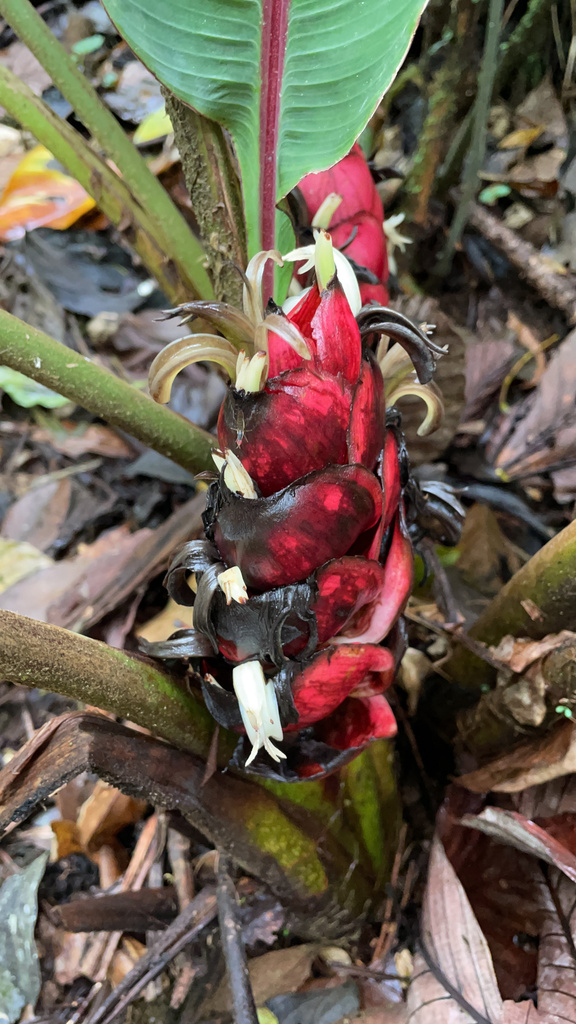
Heliconia reticulata (Source: inaturalist)
1. Introduction & Taxonomy
Heliconia reticulata stands as one of the most architecturally refined species in its genus, distinguished by inflorescences that rise vertically like botanical sculptures. Native to the humid forests spanning from southern Mexico through Central America to northern South America, this medium-sized heliconia typically reaches 1.2 to 2 meters in height, creating an ideal scale for both naturalistic plantings and carefully composed tropical gardens. The species epithet 'reticulata' references the reticulated or net-like vein patterns visible on certain plant tissues, though it is the distinctive bowl-shaped bracts—holding water like natural chalices—that capture immediate attention.
The inflorescence architecture of H. reticulata represents an evolutionary masterwork of pollination strategy. Each flowering structure bears 10 to 18 individual bracts arranged in an upright spiral, with each bract forming a deep bowl or cup rather than the flattened or boat-shaped structures common in many heliconia relatives. These bracts display colors ranging from vivid coral-red to softer rose-pink, often with subtle color gradations within a single inflorescence. The bract interiors frequently show contrasting yellow or green tones where hummingbird bills probe for nectar. What makes this species particularly striking in the landscape is the deep purple coloration of the leaf midribs, creating dramatic contrast against the bright green lamina and forming strong vertical lines even when plants are not in flower.
In its natural habitat, H. reticulata colonizes forest edges, stream banks, and areas of partial canopy disturbance where dappled sunlight creates the ideal luminosity gradient. The species demonstrates remarkable adaptability to varying moisture regimes, thriving in consistently humid environments while showing tolerance to brief dry periods more characteristic of seasonally dry tropical forests. This ecological flexibility, combined with its compact growth habit and extended blooming period, has made H. reticulata increasingly popular in cultivation, though it remains less common in the horticultural trade than larger-flowered species like H. rostrata or H. psittacorum.
A smallish Heliconia native to Central and northern South America with beautiful upright inflorescences that hold 10 to 18 bowl-shaped, red to pink bracts. The leaves have attractive, deep purple midribs and veins. The seeds are unusually large for a Heliconia.
Taxonomic Classification
Habitat and Distribution
Heliconia reticulata is native to Central and northern South America. This species inhabits diverse environments typical of tropical Heliconiaceae, from lowland rainforest gaps and riverbanks to montane cloud forests.
Botanical Note: The family Heliconiaceae contains a single genus, Heliconia, with approximately 200 species. Native primarily to the tropical Americas, with a few species in the western Pacific, heliconias are closely related to bananas (Musaceae) and gingers (Zingiberaceae) within the order Zingiberales. They are characterized by their musoid (banana-like) growth habit, large paddle-shaped leaves, and spectacular inflorescences with colourful waxy bracts that attract hummingbird pollinators. The bracts — not the small true flowers hidden within — are the showy part that makes heliconias among the most striking tropical ornamentals and cut flowers in the world.
Native Range & Distribution Map
The map below shows the native range and notable cultivation regions for Heliconia reticulata.
2. Biology & Morphology
<\!-- SIZE_COMPARISON_SVG -->Growth Form & Architecture
Heliconia reticulata is a large, musoid (banana-like) herbaceous perennial that grows from a robust underground rhizome. Like its close relatives the bananas (Musaceae), it forms pseudostems from tightly rolled leaf sheaths. Each pseudostem produces a single inflorescence before dying back, while new shoots continuously emerge from the rhizome to replace it. The large, paddle-shaped leaves are arranged in a single plane (distichous), giving the plant its characteristic banana-like silhouette.
Leaf Morphology
The leaves of Heliconia reticulata are large and paddle-shaped, arranged in two ranks (distichous) along the pseudostem. Unlike bananas, heliconia leaves typically have long petioles that twist at the base, orienting the blade in a characteristic pattern. The midrib is prominent, and leaves can range from 30 cm to over 3 m long depending on species.
Inflorescence & Bract Structure
The spectacular "flowers" of heliconias are actually colourful, waxy bracts — modified leaves that enclose the small, tubular true flowers within. These bracts can be erect (pointing upward), pendant (hanging downward), or spiralling, and come in vivid reds, oranges, yellows, pinks, and greens. The true flowers emerge one at a time from within each bract and produce nectar that attracts hummingbird pollinators — heliconias and hummingbirds have co-evolved in a remarkable mutualistic relationship.
Key Characteristics
- Height: 1-5m
- Growth Habit: Musoid / Rhizomatous
- Growth Rate: Fast under optimal conditions
Anatomical Insight: Heliconias have five fertile stamens (unlike gingers which have just one). The fruit is a drupe containing 1-3 seeds with a hard, stony endocarp — often bright blue or purple when ripe, attracting birds that disperse the seeds. The waxy coating on many heliconia bracts (pruinosity) serves as protection against water and UV radiation, and gives species like H. chartacea their distinctive frosted appearance.
Notable Adaptations
The morphological architecture of Heliconia reticulata reflects precise adaptations to hummingbird pollination in understory environments. The upright inflorescence orientation—unusual in a genus where many species produce pendulous flower structures—positions nectar rewards at optimal heights for territorial hummingbirds that defend vertical feeding corridors. Each bowl-shaped bract measures 6 to 10 centimeters in length and opens to form a receptacle approximately 4 to 5 centimeters deep, capable of holding 8 to 15 milliliters of rainwater mixed with floral secretions. This water accumulation creates microhabitats for mosquito larvae and small aquatic invertebrates, forming complex ecological relationships that extend beyond the primary pollination mutualism.
The flowers themselves emerge sequentially from within each bract, with 5 to 8 tubular florets per bract opening over a period of several days. Individual flowers measure 4 to 5 centimeters in length, with the perianth forming a curved tube that matches the bill morphology of medium-sized hummingbirds in the genera Amazilia and Chlorostilbon. Nectar production peaks in early morning hours, with sugar concentrations typically ranging from 18 to 24 percent—an optimal range for hummingbird energetics. The deep purple midrib coloration results from high concentrations of anthocyanin pigments, which may serve multiple functions including UV protection in high-light microsites and visual signaling to pollinators that can perceive this coloration as distinct from background foliage.
Root system architecture in H. reticulata consists of a shallow rhizomatous network rarely extending deeper than 20 centimeters, with dense fibrous feeding roots concentrated in the upper soil horizons rich in decomposing organic matter. This growth pattern makes the species particularly effective at nutrient capture in forest soils where mineralization occurs primarily in surface litter layers. The rhizomes produce new shoots at intervals of 8 to 15 centimeters, creating gradually expanding clumps that can reach 2 meters in diameter over 5 to 7 years when grown in optimal conditions without division.
3. Reproduction & Propagation
<\!-- PROPAGATION_METHODS_SVG -->The primary propagation methods for Heliconia reticulata: Rhizome division or seed.
Propagating Heliconia reticulata
Sexual reproduction in Heliconia reticulata follows the typical heliconia pattern of hummingbird-mediated outcrossing, with individual plants exhibiting strong self-incompatibility mechanisms that prevent inbreeding in small populations. Following successful pollination, fruits develop over 8 to 12 weeks, initially green and hardening to deep blue-black when mature. Each fruit contains 1 to 3 seeds surrounded by a lipid-rich aril that attracts frugivorous birds, particularly in the families Trogonidae and Cotingidae. Seeds measure 4 to 6 millimeters in diameter with a hard endocarp requiring both scarification and specific moisture conditions for successful germination.
Fresh seed germination rates can reach 60 to 75 percent when seeds are cleaned immediately after fruit ripening and sown within 2 to 3 weeks. The aril must be thoroughly removed through fermentation (48 hours in water) or mechanical cleaning, as residual aril compounds contain germination inhibitors. Optimal germination occurs at temperatures between 24 and 28 degrees Celsius with consistently moist but not waterlogged media. Germination is hypogeal and relatively slow, with first shoots emerging 6 to 10 weeks after sowing under ideal conditions. Seedlings require 18 to 24 months to reach flowering size, making vegetative propagation far more practical for most cultivation purposes.
Rhizome division represents the primary propagation method for H. reticulata in horticultural settings. Optimal division timing occurs at the beginning of the growing season when new shoot emergence is initiated by increasing temperatures and day length. Each division should contain at least 2 to 3 vigorous shoots with attached rhizome sections measuring 10 to 15 centimeters in length. Divisions establish most successfully when planted at the same depth as original growth, with the rhizome positioned horizontally 5 to 8 centimeters below the soil surface. Under favorable conditions, divided plants typically resume active growth within 3 to 4 weeks and may produce inflorescences within 8 to 12 months, depending on division size and cultural conditions.
Heliconia seeds have a hard, stony endocarp and can be slow to germinate — typically 2-6 months, sometimes up to a year. Soak seeds in warm water for 48-72 hours before sowing, and scarify if possible. Maintain warmth (28-32°C) and consistent moisture. Rhizome division is much faster and more reliable for established plants.
Vegetative Propagation
- Rhizome Division: The most reliable method for heliconias. Divide established clumps at the start of the growing season, ensuring each division has at least 2-3 pseudostems and a section of rhizome with healthy roots
- Timing: Best done in early spring (or start of wet season in the tropics) just as new growth begins
Heliconia Pollination Biology: Heliconias are almost exclusively pollinated by hummingbirds — one of the best examples of ornithophily (bird pollination) in the plant kingdom. The tubular flowers produce copious nectar, and the curved bract shapes often match the bill curvature of specific hummingbird species. In the Neotropics, hermit hummingbirds (Phaethornithinae) are the primary pollinators, following regular routes ("traplines") between heliconia plants. The Pacific species are pollinated by bats and some by insects.
Propagation Tips: (1) Heliconia seeds have very hard seed coats — soak for 48-72 hours in warm water and scarify if possible. (2) Use a warm, moist substrate (peat/coir and perlite) at 28-32°C. (3) Germination is slow (2-12 months) — be patient and keep the substrate moist. (4) Rhizome divisions flower in 1-2 years; seed-grown plants may take 3-5 years. (5) When dividing, ensure each piece has at least 2-3 growth buds and trim leaves by half to reduce transpiration stress.
4. Cultivation Requirements
<\!-- CULTIVATION_SVG -->Successful cultivation of Heliconia reticulata requires replication of the understory forest edge environment where the species thrives naturally. Light conditions prove critical—plants require bright indirect light or filtered sun providing 3,000 to 5,000 foot-candles for optimal growth and flowering. In tropical and subtropical gardens, this translates to positions receiving morning sun with afternoon shade, or locations beneath high tree canopy providing 40 to 60 percent light transmission. Insufficient light results in elongated growth, reduced bract coloration, and failure to initiate inflorescences, while excessive direct sun causes leaf margin burn and faded bract colors lacking the characteristic intensity.
Soil preparation should emphasize both fertility and drainage, with ideal growing media containing 40 to 50 percent organic matter in the form of composted bark, leaf mold, or aged manure. The soil pH should range from 5.5 to 6.5—slightly acidic conditions that optimize nutrient availability, particularly for iron and other micronutrients essential for the deep purple midrib coloration. Monthly fertilization during active growth periods (typically 9 to 10 months annually in tropical climates) using complete formulations with a 3-1-2 or 4-1-2 NPK ratio supports robust vegetative growth and abundant flowering. Organic fertilizers such as fish emulsion or composted chicken manure provide both macronutrients and beneficial soil microorganisms that enhance rhizome health and disease resistance.
Water management must balance the species' preference for consistent moisture with its intolerance of waterlogged conditions that promote rhizome rot. Drip irrigation or soaker hose systems work particularly well, maintaining even soil moisture at 60 to 70 percent of field capacity without creating surface wetness that encourages fungal pathogens. During flowering periods, overhead irrigation should be minimized as water accumulation in the bowl-shaped bracts can dilute nectar and reduce pollinator visitation, while also creating breeding sites for mosquitoes. In regions with distinct dry seasons, mulching with 5 to 8 centimeters of organic material helps maintain soil moisture and provides slow-release nutrients as the mulch decomposes.
Soil / Substrate
Rich, well-draining soil with abundant organic matter. A mix of compost (40%), peat or coir (30%), perlite (20%), and bark (10%) works well. Heliconias are heavy feeders that thrive in fertile, humus-rich soil.
Watering
Maintain consistent moisture during active growth. Heliconias are tropical plants that prefer evenly moist soil and do not tolerate prolonged drought. Water deeply and regularly during the growing season, reducing frequency in cooler months.
Light Requirements
Most heliconias perform best in full sun to bright, filtered light. Some species (particularly Hedychium and Alpinia) tolerate full sun in humid climates, while forest-floor species prefer dappled shade. Strong afternoon sun in dry climates can scorch leaves.
Temperature
- Optimal Growth: 20–30°C (68–86°F)
- Minimum Tolerance: 2°C (36°F)
- USDA Hardiness: Zones 10-12
Humidity
Most heliconias thrive at 60–80% relative humidity. Low humidity causes brown leaf edges, reduced flowering, and increased pest susceptibility. In dry climates, mist foliage regularly, use humidifiers, or group plants together to create a favourable microclimate.
Fertilization
Heliconias are heavy feeders during active growth. Apply a balanced fertilizer (NPK 10-10-10 or 20-20-20) every 2–3 weeks during the growing season. Supplemental potassium promotes flowering, while nitrogen drives leafy growth. Organic mulch and compost provide slow-release nutrition. Reduce or stop feeding during dormancy or winter.
Common Cultivation Mistake: Rhizome rot from waterlogged soil is the most common cause of heliconia losses. During the resting period, keep dormant rhizomes nearly dry. In active growth, heliconias are thirsty plants, but even then, ensure containers have adequate drainage holes and never allow pots to sit in standing water for extended periods.
Seasonal Care Calendar
Follow this season-by-season guide for optimal care timing throughout the year.
🌱 Spring (March–May)
Resume active fertilization as new shoots emerge and temperatures warm above 20 degrees Celsius. Divide overgrown clumps at the beginning of the growing season for best establishment. Increase irrigation frequency as day length extends and evapotranspiration rates rise. Apply fresh organic mulch layer and inspect for emerging pest populations.
☀️ Summer (June–August)
Maintain consistent soil moisture through peak growing season, with irrigation every 2 to 3 days during hot weather. Continue monthly fertilization to support rapid vegetative growth and inflorescence development. Monitor for fungal leaf spots and provide adequate spacing for air circulation. First inflorescences typically appear 60 to 90 days after spring growth initiation in established plants.
🍂 Fall (September–November)
Reduce fertilization frequency to every 6 to 8 weeks as day length shortens and growth naturally slows. Continue regular irrigation but adjust frequency based on cooler temperatures and reduced evaporation. Remove spent inflorescences to maintain aesthetic appearance and prevent seed formation that diverts plant energy. In subtropical regions, begin preparing cold protection materials for potential temperature drops.
❄️ Winter (December–February)
In tropical climates, maintain moderate watering and minimal fertilization during the coolest months. In subtropical areas, protect plants from cold damage using mulch, frost blankets, or relocation of containers to sheltered areas. Reduce watering frequency as plant growth slows. Use this dormant period for planning spring divisions and landscape redesign without disturbing active growth cycles.
5. Diseases & Pests
Heliconia reticulata shows moderate resistance to common heliconia pathogens but remains susceptible to several fungal and bacterial diseases, particularly under conditions of poor air circulation or excessive moisture. Leaf spot diseases caused by Cercospora and Phyllosticta species appear as irregular brown lesions with yellow halos, typically initiating on older leaves before progressing to younger foliage. These fungal pathogens thrive in humid conditions with poor air movement, making greenhouse-grown plants particularly vulnerable. Management involves removing affected leaves promptly, improving spacing between plants to enhance air circulation, and applying copper-based fungicides or biological controls such as Bacillus subtilis strains at first symptom appearance.
Root and rhizome rot diseases present more serious challenges, with Pythium and Phytophthora species causing rapid decline in poorly drained soils or following periods of excessive irrigation. Affected plants display yellowing leaves, stunted growth, and eventual collapse as the rhizome tissue becomes soft and necrotic. The bowl-shaped bracts' water-holding capacity can inadvertently contribute to crown rot when plants are grown too densely and water splashes onto growing points. Prevention requires proper site selection with well-draining soils, raised planting beds in heavy soils, and irrigation timing that allows foliage to dry before nightfall. Once rot diseases establish, affected rhizome sections must be removed surgically, cut surfaces treated with fungicidal dusts, and plants grown in fresh, sterilized media.
Insect pests include heliconia beetle larvae (Chelobasis bicolor) that tunnel through pseudostems and developing inflorescences, causing mechanical damage and providing entry points for secondary infections. Scale insects, particularly soft scales in the family Coccidae, colonize leaf undersides and along midribs where the purple coloration may mask early infestations. Heavy scale populations excrete honeydew that supports sooty mold growth, reducing photosynthetic efficiency and aesthetic value. Monitoring for early pest detection combined with horticultural oil applications or systemic insecticides containing imidacloprid effectively manages pest populations while preserving beneficial hummingbird pollinators that feed at the flowers.
Major Diseases
Heliconia Rust (Puccinia heliconiae)
The most common fungal disease of heliconias. Causes reddish-brown pustules on leaf undersides, leading to yellowing and premature leaf drop. Remove affected leaves promptly and improve air circulation. Fungicides containing mancozeb or chlorothalonil can help prevent spread.
Rhizome Rot (Pythium, Fusarium)
Fungi attack the rhizome in waterlogged conditions, causing soft, mushy, discoloured tissue. Prevention: ensure excellent drainage, avoid overwatering, and sterilize tools. In containers, use well-draining media and never let pots sit in standing water.
Bacterial Wilt (Ralstonia solanacearum)
Causes rapid wilting and collapse of pseudostems with watersoaked, foul-smelling rhizome rot. There is no cure; remove and destroy infected plants immediately. Use disease-free planting material and avoid replanting in contaminated soil.
Common Pests
- Spider Mites — Thrive in dry conditions; cause stippled, bronzed foliage. Increase humidity and apply miticides.
- Shoot Borers — Larvae tunnel into pseudostems, causing wilting of individual shoots. Remove and destroy affected stems.
- Mealybugs — White, cottony masses in leaf sheaths and at the base of pseudostems. Treat with isopropyl alcohol or systemic insecticide.
- Scale Insects — Brown or white bumps on stems and leaf undersides. Scrape off manually or treat with horticultural oil.
- Rhizome Scale — Tiny scales on stored or dormant rhizomes. Inspect rhizomes before planting and treat with insecticidal soap.
- Slugs & Snails — Feed on tender new shoots emerging from rhizomes. Use barriers, traps, or baits.
Integrated Pest Management: (1) Quarantine all new plants for 2-4 weeks. (2) Inspect rhizomes before planting for signs of rot or pests. (3) Maintain optimal humidity (60-80%) to deter mites. (4) Use sterile, well-draining potting media. (5) Sterilize cutting tools between plants with 70% isopropyl alcohol. (6) Neem oil is effective as both preventive and treatment for most soft-bodied pests on heliconias.
6. Indoor Growing Guide
Heliconia reticulata adapts reasonably well to container cultivation and greenhouse environments, making it accessible to growers in temperate climates or those with limited garden space. Container selection should prioritize width over depth, with pots measuring at least 45 to 60 centimeters in diameter to accommodate the spreading rhizomatous growth habit. Drainage proves absolutely critical—containers must have multiple drainage holes, and the growing medium should consist of equal parts quality potting soil, perlite or coarse sand, and composted bark or coconut coir to ensure both moisture retention and excess water evacuation. Plastic containers retain moisture more effectively than terracotta but may require less frequent watering adjustments as plants establish.
Indoor light requirements challenge many growers, as H. reticulata requires significantly brighter conditions than most tropical foliage plants. South or west-facing windows in northern hemisphere locations, or supplemental lighting providing 12 to 14 hours of illumination daily, become necessary for flower production. LED grow lights with balanced spectrum output (combining blue and red wavelengths) positioned 30 to 45 centimeters above foliage can successfully stimulate blooming in interior environments. Humidity requirements of 60 to 75 percent often necessitate grouping plants, using pebble trays filled with water beneath containers, or operating room humidifiers, particularly during winter months when indoor heating systems reduce atmospheric moisture. Container-grown plants typically remain smaller than garden specimens, reaching 80 to 120 centimeters in height, with correspondingly smaller but equally colorful inflorescences that provide dramatic vertical accents in conservatories or large interior spaces.
Container Selection
Use a wide container that allows the rhizome to spread horizontally. Heliconias produce vigorous lateral rhizome growth, so wider pots are better than deep narrow ones. Use containers at least 45-60 cm in diameter for mature plants. Ensure adequate drainage holes to prevent rhizome rot.
Indoor Light
Most heliconias need bright, indirect light for best growth and flowering indoors. A south- or west-facing window works well. Supplement with grow lights during winter — full-spectrum LEDs for 12-14 hours daily make a dramatic difference in growth quality and flower production. Many heliconias need very high light levels (10,000+ lux) to flower indoors.
Humidity & Air Circulation
Indoor humidity of 50-70% is adequate for most species; 70-80% is optimal for lush growth and flowering. Central heating and air conditioning can drop humidity below 30%, causing brown leaf edges, reduced growth, and pest vulnerability. Use humidifiers, group tropical plants together, or grow in a bathroom with natural light.
Seasonal Indoor Care
- Spring: Resume regular feeding and increase watering as new growth emerges. Repot or divide if rhizomes are crowded.
- Summer: Peak growth — water consistently, feed every 2 weeks, consider moving outdoors to a shaded spot for the summer months
- Autumn: Reduce feeding. Growth slows; reduce watering frequency.
- Winter: Minimal growth — water sparingly, stop fertilizing. Watch for spider mites in dry heated rooms.
Indoor Success Key: The combination of bright indirect light, consistent humidity above 55%, and a wide container with well-draining substrate covers 90% of indoor heliconia success. If your plant is struggling, address these three factors before anything else.
7. Landscape Use & Design
In tropical and subtropical landscape design, Heliconia reticulata functions as both specimen accent and massed border plant, with its compact growth habit providing versatility unavailable with larger heliconia species. The vertical inflorescences create strong architectural statements when planted in groups of 3 to 5 individuals, positioned 80 to 100 centimeters apart to allow for gradual clump expansion. The deep purple leaf midribs contribute year-round color interest even during non-flowering periods, contrasting effectively with silver-foliaged plants like Senecio or fine-textured ferns that echo the forest understory communities where H. reticulata naturally occurs. The bowl-shaped bracts' water-holding capacity makes this species ideal for bird-friendly gardens, as the accumulated water attracts both hummingbirds and small passerines seeking drinking and bathing opportunities.
In mixed tropical borders, H. reticulata combines effectively with other shade-tolerant flowering species including gingers (Alpinia, Hedychium), calatheas, and compact bromeliads that share similar cultural requirements. The species works particularly well as a transition plant between formal lawn areas and naturalistic forest plantings, where its moderate size provides scale-appropriate interest without overwhelming smaller companion plants. Pathway borders benefit from the plant's non-invasive growth habit and lack of sharp edges or toxic sap, making it suitable for high-traffic areas in botanical gardens and resort landscapes. The relatively extended flowering season—often 6 to 8 months in equatorial regions with consistent moisture—provides reliable seasonal color when coordinated with the blooming cycles of other tropical ornamentals.
Design Applications
- Tropical Border: Combine with bananas, gingers, aroids, and tree ferns for layered jungle texture
- Focal Point: Heliconias command attention — use as bold architectural specimens in garden beds or along paths where the inflorescences can be admired up close
- Partial Shade: Most heliconias thrive in dappled shade or filtered light, perfect for underplanting beneath palms or large trees
- Container Feature: Large decorative pots on patios and terraces allow flexible placement and easy winter protection
- Cut Flowers: Heliconia inflorescences are among the most spectacular and long-lasting tropical cut flowers, prized worldwide in floristry
Companion Planting
Create stunning tropical compositions by pairing with:
- Banana species (Musa, Ensete) — dramatic height and complementary bold foliage
- Heliconias — bold, colourful inflorescences and similar cultural needs
- Tree Ferns (Dicksonia, Cyathea) — structural understory contrast
- Aroids (Alocasia, Colocasia) — bold foliage at the middle and lower layers
- Cannas — similar rhizomatous habit with vibrant flowers
- Begonias — shade-loving foliage contrast at ground level
Design Principle: Heliconias provide both lush tropical foliage and spectacular inflorescences. Use tall species (H. caribaea, H. bihai) as backdrop, mid-sized species (H. psittacorum, H. stricta) in the middle ground, and compact cultivars as ground-level accents. Group plants of different inflorescence types (pendant, erect, spiral) for year-round visual interest and diverse hummingbird attraction.
8. Cold Climate Strategies
Heliconia reticulata demonstrates limited cold tolerance, with foliage damage occurring at temperatures below 10 degrees Celsius and complete above-ground dieback when exposed to frost. In subtropical regions where occasional cold snaps occur (USDA zones 9b to 10a), strategic planting near south-facing walls or beneath evergreen canopy provides microclimate buffering that may prevent lethal cold damage. The thermal mass of adjacent structures radiates stored heat during cold nights, potentially maintaining temperatures 2 to 4 degrees Celsius warmer than open garden areas. Protected courtyards or atrium gardens similarly trap warm air and reduce convective heat loss that causes frost damage in exposed locations.
When cold weather is forecasted, proactive protection measures significantly improve survival rates. Covering plants with frost blankets, burlap, or even cardboard boxes before temperature drops provides crucial insulation, with the most effective protection coming from structures that trap air space around foliage without directly contacting leaves. Soil mulching with 10 to 15 centimeters of organic material insulates rhizomes, allowing plants to regenerate from underground tissues even if above-ground portions are killed by cold. Irrigation on the afternoon before a predicted freeze can provide some cold protection through latent heat release as soil moisture moderates temperature fluctuations.
For container-grown specimens, mobility offers the best cold protection strategy. Plants can be moved to unheated garages, covered porches, or cool indoor spaces during cold periods, then returned to outdoor locations when temperatures stabilize above 15 degrees Celsius. This strategy proves particularly practical for smaller container specimens that remain manageable for a single person to relocate. In regions where sustained cold periods occur annually, treating H. reticulata as a container plant that overwinters indoors provides the most reliable path to long-term success, with plants spending 8 to 9 months outdoors during warm seasons and retreating to protected locations during winter months when growth naturally slows due to shorter day lengths and reduced light intensity.
Hardiness Thresholds
- USDA Zones: 10-12
- Minimum Survival Temperature: 2°C (36°F)
Overwintering Options
- Rhizome Storage: Lift rhizomes after foliage dies back, dry for 1-2 days, then store in slightly damp peat, vermiculite, or wood shavings at 5-10°C. Check monthly for rot or desiccation.
- Heavy Mulch (borderline zones): Apply 15-30 cm of dry mulch (straw, leaves, bark) over the rhizome zone after the first frost. Cover with waterproof material to prevent moisture saturation. This works well for hardier species like H. schiedeana.
- Container Culture: Move potted plants indoors to a bright, cool location (10-15°C). Reduce watering significantly for dormant species.
- Greenhouse: An unheated or minimally heated glasshouse provides ideal winter protection for tender heliconias.
Winter Survival Rule: Cold + wet = death. Heliconia rhizomes are sensitive to both frost and waterlogging. Rhizomes that sit in cold, waterlogged soil rot rapidly. Ensure excellent drainage above all else when overwintering heliconias outdoors. Raised beds and gritty soil amendments dramatically improve winter survival rates.
9. Ethnobotany & Cultural Significance
While Heliconia reticulata has not achieved the prominent ethnobotanical significance of some economically important heliconia relatives used extensively in ceremonial practices or traditional medicine, indigenous communities within its native range have developed localized uses reflecting the plant's distinctive characteristics. The large, durable leaves serve as temporary wrapping material for foods prepared in earth ovens, imparting subtle flavor compounds during the cooking process while protecting delicate foods from direct contact with hot stones or coals. The water-impermeable leaf surfaces and strong midrib structure make the foliage particularly effective for this purpose, though the relatively smaller leaf size of H. reticulata compared to species like H. bihai limits its utility for large-scale food preparation.
The bowl-shaped bracts' water-collecting properties have inspired creative applications in traditional practices. Some indigenous groups use the naturally accumulated water in bracts—often containing dissolved plant compounds and organic matter—as a mild astringent wash for minor skin irritations, though no scientific studies have validated these traditional applications or identified specific bioactive compounds responsible for reported effects. The colorful inflorescences feature in local festivals and ceremonial decorations, with the upright flower structures lending themselves to arrangements that celebrate vertical design elements echoing forest architecture.
In contemporary contexts, H. reticulata's primary ethnobotanical significance lies in its contribution to tropical cut flower industries in Central and South American countries, where small-scale farmers cultivate the species alongside more commercially prominent heliconias. The inflorescences demonstrate good vase life of 10 to 14 days when properly conditioned, providing income opportunities for rural communities while preserving genetic diversity of wild populations by reducing harvest pressure on natural stands. This economic role, though modest compared to major cut flower species, represents an important intersection of traditional botanical knowledge with modern sustainable agriculture practices that value both cultural heritage and ecological conservation.
Conservation Note: Many heliconia species face increasing pressure from tropical deforestation and habitat fragmentation. As keystone species for hummingbird pollinators and other wildlife, their conservation is critical for maintaining tropical ecosystem health. Cultivating diverse heliconia species in gardens and collections contributes to ex-situ conservation. By growing Heliconia reticulata, you help maintain the genetic diversity of this spectacular plant family.
Frequently Asked Questions
Why do the bowl-shaped bracts of my Heliconia reticulata fill with water, and should I drain them?
The bowl or cup shape of H. reticulata bracts is a natural evolutionary feature that collects rainwater, creating small aquatic ecosystems. This water accumulation serves multiple ecological functions including providing drinking water for hummingbirds and habitat for beneficial insects. In garden settings, you generally don't need to drain the bracts unless mosquitoes become problematic—in that case, gentle tipping to empty excess water every few days prevents mosquito breeding while maintaining the structural integrity and visual appeal of the inflorescence.
How long does it take for Heliconia reticulata to flower after planting a rhizome division?
Well-established rhizome divisions with 2 to 3 vigorous shoots typically produce their first inflorescences 8 to 12 months after planting, provided they receive optimal growing conditions including bright filtered light, consistent moisture, and regular fertilization. Smaller divisions or plants experiencing stress from suboptimal conditions may require 18 to 24 months before flowering. Once established, mature clumps often produce flowers continuously for 6 to 8 months during the growing season in tropical climates.
Can Heliconia reticulata survive in full sun or does it require shade?
H. reticulata performs best in bright indirect light or partial shade—approximately 40 to 60 percent sun exposure. In tropical regions, this means morning sun with afternoon shade protection. Full all-day sun typically causes leaf margin burn, faded bract colors, and heat stress, while deep shade results in weak, elongated growth and failure to flower. The ideal location mimics the forest edge environment where the species naturally thrives, with filtered light through high tree canopy or strategically positioned shade structures.
What causes the purple leaf midribs to turn green, and how can I restore the deep color?
Loss of the characteristic deep purple midrib coloration typically results from insufficient light, nutrient deficiencies (particularly iron), or excessively alkaline soil pH that locks up micronutrients. To restore color, ensure plants receive adequate bright filtered light (3,000 to 5,000 foot-candles), maintain soil pH between 5.5 and 6.5, and apply a complete fertilizer containing chelated micronutrients. Foliar applications of iron chelate can provide rapid improvement in coloration, though addressing underlying cultural conditions provides long-term solutions.
Is Heliconia reticulata cold hardy, and can it survive outdoors in subtropical climates?
H. reticulata has limited cold tolerance, with foliage damage beginning at 10 degrees Celsius and complete above-ground dieback at frost temperatures. In warm subtropical areas (USDA zones 9b to 10a), plants may survive outdoors in protected microclimates near buildings or under evergreen canopy, though they will die back to the ground during cold snaps and re-emerge from rhizomes in spring. In cooler regions, container culture with winter protection indoors provides the most reliable cultivation method.
Summary & Key Takeaways
Heliconia reticulata is a compact Central and South American species distinguished by upright inflorescences bearing 10 to 18 distinctive bowl-shaped bracts in coral-red to rose-pink tones, complemented by striking deep purple leaf midribs. Thriving in bright filtered light with consistent moisture, this forest-edge specialist adapts well to tropical gardens and container cultivation, offering extended flowering periods and exceptional architectural form for hummingbird-friendly landscapes.
Key Points to Remember:
- Propagation: Division/seed
- Light: Bright indirect to filtered light (partial shade preferred)
- Substrate: Rich, well-draining, high in organic matter
- Humidity: 60-80% for optimal growth and flowering
- Hardiness: USDA Zones 10-12, minimum 2°C (36°F)
- Key Threat: Rhizome rot during dormancy — drainage and dry rest are paramount