Rhodocoma foliosa: Complete Grass Growing Guide
Rhodocoma foliosa
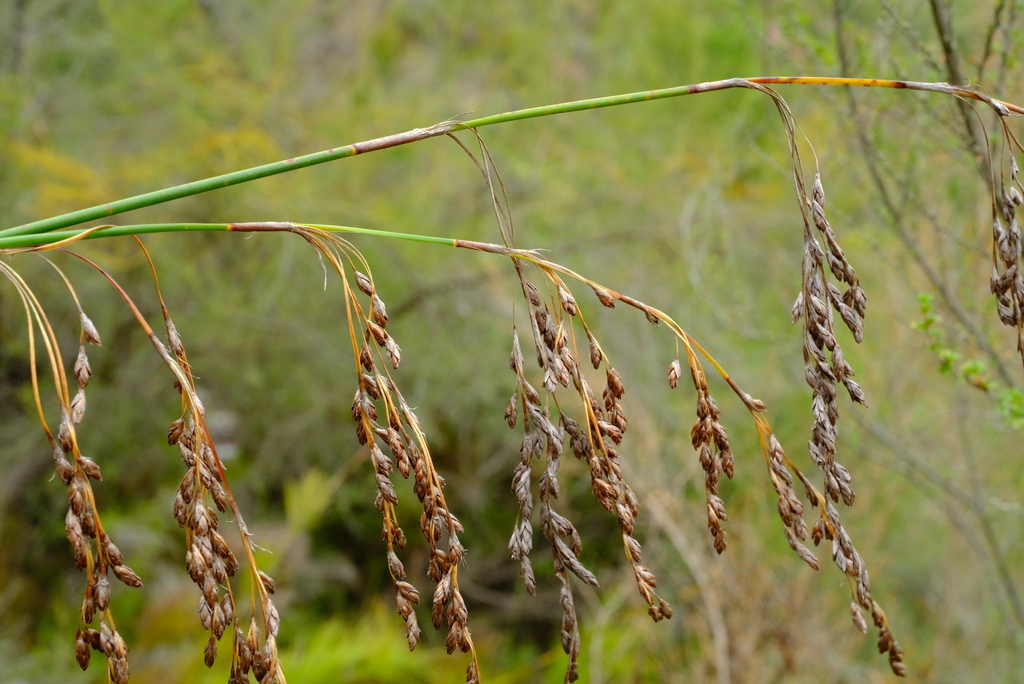
Rhodocoma foliosa (Source: inaturalist)
1. Introduction & Taxonomy
Rhodocoma foliosa is a beautiful restio from the mountains of South Africa's Western Cape that stands out from its relatives with its unusually leafy appearance, as its culms bear more persistent and prominent sheaths than most restios. This gives it a fuller, more lush character that bridges the visual gap between the typically bare-stemmed restios and conventional foliage plants. For gardeners seeking the unique aesthetic of fynbos plants with a slightly softer look, R. foliosa is an outstanding choice.
Rhodocoma foliosa is a clump-forming restio growing 100-180 cm tall, with erect to slightly arching culms that are notable for retaining their papery sheaths longer than many other restio species, giving the plant a more 'leafy' or clothed appearance. The culms are slender and green, branching in the upper portions to create a feathery canopy. The persistent sheaths, while not true leaves, add a warmer, russet-brown tone to the green culms, creating an attractive two-toned effect. Like all restios, it is dioecious, with separate male and female plants. Male inflorescences are pendulous and catkin-like, while female flowers develop into small, nut-like fruits. The overall habit is graceful and airy, with the culms swaying attractively in the wind.
Taxonomic Classification
Habitat and Distribution
Rhodocoma foliosa is endemic to the mountains of the Western Cape, South Africa, where it grows in fynbos vegetation on acidic, sandy, nutrient-poor soils. It typically occurs along mountain streams, in seepage areas, and on moist, south-facing slopes at moderate to high elevations.
Botanical Note: Restionaceae (the restio family) contains about 500 species, concentrated in the Cape Floristic Region of South Africa and southwestern Australia. Restios are rush-like plants with photosynthetic stems (culms) and reduced or absent leaves. They are adapted to nutrient-poor, acidic, sandy soils and Mediterranean climates with dry summers. Their architectural, bamboo-like appearance makes them increasingly popular in water-wise and contemporary garden design.
Native Range & Distribution Map
The map below shows the native range and notable cultivation regions for Rhodocoma foliosa.
2. Biology & Morphology
<\!-- SIZE_COMPARISON_SVG -->Growth Form & Architecture
Rhodocoma foliosa belongs to the restio family (Restionaceae), a group of rush-like plants with photosynthetic stems and reduced or absent leaves, adapted to nutrient-poor, acidic soils.
Species-Specific Morphology
Rhodocoma foliosa is a clump-forming restio growing 100-180 cm tall, with erect to slightly arching culms that are notable for retaining their papery sheaths longer than many other restio species, giving the plant a more 'leafy' or clothed appearance. The culms are slender and green, branching in the upper portions to create a feathery canopy. The persistent sheaths, while not true leaves, add a warmer, russet-brown tone to the green culms, creating an attractive two-toned effect. Like all restios, it is dioecious, with separate male and female plants. Male inflorescences are pendulous and catkin-like, while female flowers develop into small, nut-like fruits. The overall habit is graceful and airy, with the culms swaying attractively in the wind.
Inflorescence & Flower Structure
The inflorescence structure varies across grass-related families.
Key Characteristics
- Height: 0.5-2m
- Growth Habit: Clumping / Caespitose
- Growth Rate: Slow to moderate under optimal conditions
- Life Cycle: Perennial
- Toxicity: Non-toxic. No known toxicity to humans, animals, or livestock. Restio culms have been used for centuries in craft work without reported adverse effects.
- Conservation Status: Least Concern, but like all fynbos endemics, potentially vulnerable to habitat loss from invasive alien plants, altered fire regimes, and climate change. Protected within several nature reserves in its native range.
3. Reproduction & Propagation
<\!-- PROPAGATION_METHODS_SVG -->Primary propagation methods for Rhodocoma foliosa: Seed or vegetative division.
Propagating Rhodocoma foliosa
Seed propagation follows the standard protocol for fynbos restios: sow fresh seed on acidic, sandy, well-drained medium in autumn and treat with smoke primer or smoke water to trigger germination. Germination is slow and erratic, typically taking 6-12 weeks. Maintain even moisture but avoid waterlogging. Division is possible for established clumps in spring but should be done carefully, as restios are sensitive to root disturbance. Each division should have a substantial root mass and multiple culm bases.
Vegetative Propagation
Propagated by clump division in spring or early summer.
Propagation Tip: For restio species, smoke treatment is essential for germination.
4. Cultivation Requirements
<\!-- CULTIVATION_SVG -->Soil / Substrate
Acidic, sandy, nutrient-poor soil with excellent drainage. Use coarse sand (60%), peat (30%), perlite (10%). Avoid phosphorus-rich fertilizers.
Watering
Moderate. Requires consistent moisture during the growing season but demands excellent drainage at all times. In its native habitat, it grows in seepage areas with a constant but not stagnant water supply. Avoid waterlogging, which can promote Phytophthora root rot.
Light Requirements
Full sun to partial shade. Most ornamental grasses perform best in full sun with at least 6 hours of direct light daily.
Temperature
- Optimal Growth: 18-30°C (65-86°F)
- Minimum Tolerance: -23°C (-10°F)
- USDA Hardiness: Zones 6-10
Fertilization
Restios are adapted to nutrient-poor soils. Apply only low-phosphorus native plant fertilizer sparingly.
Common Cultivation Mistake: For restios: avoid phosphorus-rich fertilizers which can be lethal.
Seasonal Care Calendar
Follow this season-by-season guide for optimal care timing throughout the year.
🌱 Spring (March–May)
New culms emerge from the base. Provide regular water to support growth. Apply low-phosphorus fertilizer very sparingly if at all.
☀️ Summer (June–August)
In its native winter-rainfall climate, this would be the dry season. In summer-rainfall areas, ensure excellent drainage. Remove old, dead culms.
🍂 Fall (September–November)
Flowering season for mature plants. Reduce supplemental watering in winter-rainfall climates. Good time to assess plant health and remove dead material.
❄️ Winter (December–February)
Native growth season in the Western Cape. In cultivation elsewhere, protect from hard frosts below -5C. Maintain moderate moisture in well-drained soil.
5. Diseases & Pests
Below are the most common pests and diseases affecting Rhodocoma foliosa and how to manage them.
Phytophthora cinnamomi
This devastating root rot pathogen is a major threat to fynbos plants. Ensure excellent drainage and avoid contaminated soil. Do not overwater.
Scale insects
Small, brown, waxy bumps on culms indicate scale infestation. Treat with horticultural oil or a systemic insecticide.
Mealybugs
May shelter in the persistent sheaths that characterize this species. Monitor regularly and treat with appropriate insecticide if detected.
IPM: (1) Choose the right species for your conditions. (2) Maintain good air circulation. (3) Cut back dead foliage in late winter. (4) Most ornamental grasses are remarkably pest-free when well-sited.
6. Indoor Growing Guide
Rhodocoma foliosa can be grown in containers and brought indoors during winter in cold climates.
Container Selection
Use containers with adequate drainage holes. Terra cotta pots provide good drainage and stability.
Indoor Light
Place in the brightest available location. Most grasses need at least 4-6 hours of direct or bright indirect light.
Indoor Success Key: Bright direct light is the single most important factor for growing grasses indoors.
7. Landscape Use & Design
Rhodocoma foliosa brings architectural elegance to water-wise and Mediterranean-style gardens.
Design Applications
- Fynbos-themed garden plantings
- Container specimen
- Mixed planting with other restios and fynbos plants
- Architectural accent in Mediterranean gardens
- Botanical collections and display gardens
Companion Planting
These species pair well with Rhodocoma foliosa in garden settings:
- Elegia capensis
- Protea repens
- Erica verticillata
- Restio festuciformis
- Aristea major
Design Principle: Ornamental grasses are at their most magical when backlit by low sun. Position where morning or evening light illuminates inflorescences from behind.
8. Cold Climate Strategies
Rhodocoma foliosa has limited frost tolerance. In cold climates, grow in containers that can be moved to frost-free shelter.
Hardiness Thresholds
- USDA Zones: 6-10
- Minimum Survival Temperature: -23°C (-10°F)
Overwintering Options
- Leave in Place (hardy species): Cut back dead foliage in late winter. Apply 5-10 cm of mulch around the crown.
- Container Culture: Move potted plants to a frost-free location for winter.
- Mulching: Apply thick straw or bark mulch over the crown after the first hard frost.
Winter Survival Rule: Restios tolerate cold better when kept dry. Wet cold is far more damaging.
Winter Care Tip: Native growth season in the Western Cape. In cultivation elsewhere, protect from hard frosts below -5C. Maintain moderate moisture in well-drained soil.
9. Ethnobotany & Cultural Significance
As a member of the Restionaceae, Rhodocoma foliosa shares in the cultural and ecological heritage of the Cape fynbos. Restios have been integral to the traditional culture of the Cape for centuries, used for thatching the iconic Cape Dutch homesteads, making brooms, and weaving baskets. R. foliosa itself is less commonly used for these purposes than some larger restio species but contributes to the rich biodiversity that makes the Cape Floristic Region a global conservation priority. In modern horticulture, it represents the growing international interest in South African fynbos plants as garden specimens.
Conservation Note: Many grass, sedge, and rush species play critical ecological roles as habitat providers, soil stabilizers, and water filtration agents. By growing Rhodocoma foliosa, you contribute to maintaining awareness of these often-overlooked botanical workhorses.
Did You Know?
- The Restionaceae family to which Rhodocoma belongs is found almost exclusively in the southern hemisphere, with its highest diversity in South Africa and Australia, reflecting the ancient Gondwanan connection between these landmasses.
- Restios are not grasses, sedges, or rushes, but represent a completely independent evolutionary lineage that convergently evolved a similar habit.
- The persistent sheaths of R. foliosa may serve as extra insulation for the culms in the cool, wet mountain habitats where it grows, a subtle adaptation to its specific microenvironment.
- Like many fynbos plants, R. foliosa benefits from periodic fire in the wild, which clears competing vegetation and triggers seed germination.
Frequently Asked Questions
Why is it called 'foliosa' if restios don't have true leaves?
The name refers to the persistent, prominent sheaths on the culms that give the plant a more 'leafy' or foliose appearance compared to other restio species, whose sheaths fall off early.
Can I use regular fertilizer?
No. Like most fynbos plants, Rhodocoma foliosa is extremely sensitive to phosphorus and can be killed by standard garden fertilizers. Use only low-phosphorus or phosphorus-free products.
Does it grow in a pot?
Yes, and this is an excellent option in climates colder than zone 9. Use a sandy, acidic, well-draining potting mix. A tall, narrow pot suits the upright growth habit.
How does it compare to Rhodocoma capensis?
R. foliosa is generally smaller and more compact than R. capensis, with a more 'leafy' appearance due to its persistent sheaths. R. capensis is taller and more bamboo-like.
Summary & Key Takeaways
Rhodocoma foliosa, is a clumping member of the genus Rhodocoma (Restionaceae), native to the mountains of the Western Cape.
Key Points to Remember:
- Propagation: Seed or clump division
- Light: Full sun for most species
- Substrate: Acidic, sandy, low-phosphorus
- Watering: Moderate — avoid overwatering
- Hardiness: USDA Zones 6-10, minimum -23°C (-10°F)