Muhlenbergia emersleyi (Bullgrass): Complete Grass Growing Guide
Muhlenbergia emersleyi
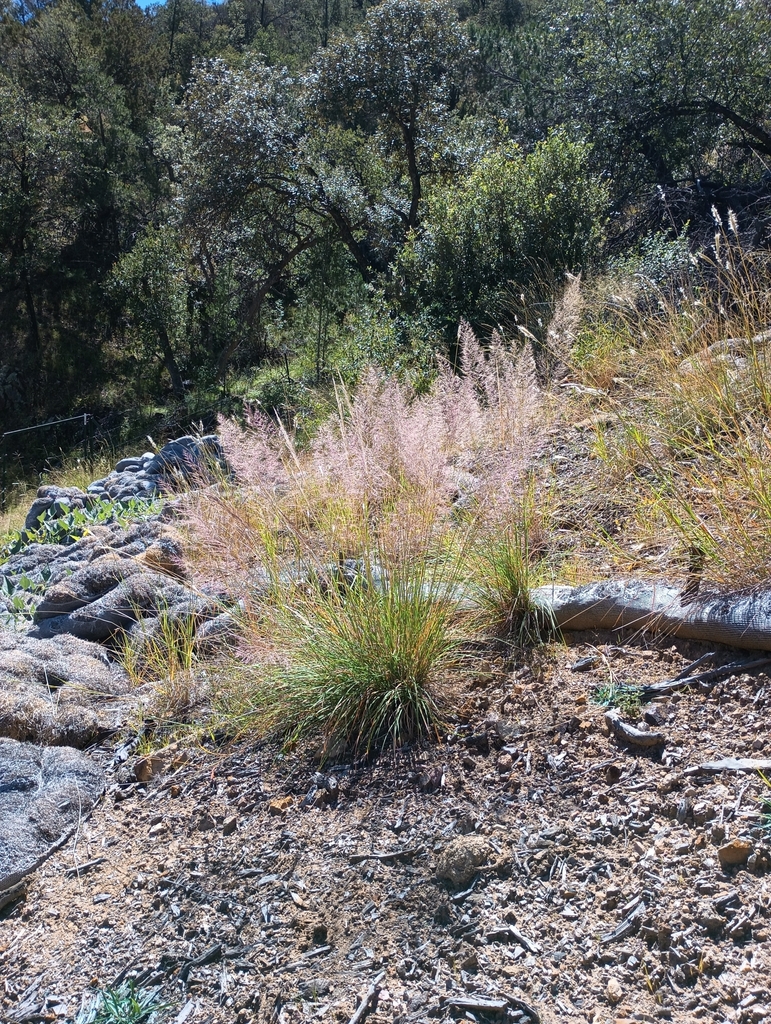
Muhlenbergia emersleyi (Bullgrass)
1. Introduction & Taxonomy
Muhlenbergia emersleyi (Poaceae, order Poales) is clumping, native to tropical and subtropical regions.
Muhlenbergia is a genus of plants. Muhlenbergia is a genus of plants in the grass family.
Taxonomic Classification
Habitat and Distribution
Muhlenbergia emersleyi is native to tropical and subtropical regions.
Botanical Note: Poaceae (the grass family) is one of the largest and most ecologically important plant families, with over 12,000 species worldwide. True grasses have hollow, jointed culms (stems), narrow leaves with parallel veins and a distinctive ligule where the blade meets the sheath, and flowers reduced to spikelets arranged in panicles, racemes, or spikes. Ornamental grasses from this family are prized for their graceful movement, feathery inflorescences, and seasonal colour changes.
Native Range & Distribution Map
The map below shows the native range and notable cultivation regions for Muhlenbergia emersleyi.
2. Biology & Morphology
Growth Form & Architecture
Muhlenbergia emersleyi is a clumping true grass (Poaceae) with hollow, jointed culms, narrow leaves with parallel veins, and a distinctive ligule.
Inflorescence & Flower Structure
Grass flowers are highly reduced and arranged in spikelets, with wind pollination as the primary reproductive strategy.
Key Characteristics
- Height: 0.5-2m
- Growth Habit: Clumping / Caespitose
- Growth Rate: Moderate to Fast under optimal conditions
- Life Cycle: Perennial
3. Reproduction & Propagation
Primary propagation methods for Muhlenbergia emersleyi: Seed or vegetative division.
Seed Propagation
Grass seeds can be sown in spring on well-draining seed-starting mix. Most germinate readily with warmth and moisture.
Vegetative Propagation
Propagated by clump division in spring or early summer.
Propagation Tip: Division of established clumps in spring gives the fastest results.
4. Cultivation Requirements
Soil / Substrate
Well-draining, moderately fertile soil. A mix of garden loam, compost, and coarse sand.
Watering
Regular watering during the growing season. Allow soil surface to dry slightly between waterings.
Light Requirements
Full sun to partial shade. Most ornamental grasses perform best in full sun with at least 6 hours of direct light daily.
Temperature
- Optimal Growth: 18-30°C (65-86°F)
- Minimum Tolerance: -12°C (10°F)
- USDA Hardiness: Zones 8-11
Fertilization
Apply a balanced slow-release fertilizer in spring. Most grasses are light feeders.
Common Cultivation Mistake: Over-watering and over-fertilizing promote weak, floppy growth. These plants prefer lean conditions.
5. Diseases & Pests
Muhlenbergia emersleyi is generally robust and pest-resistant when cultural conditions are optimal.
Major Diseases
Root Rot (Pythium, Fusarium)
Caused by overwatering or poor drainage. Ensure good drainage and avoid waterlogging.
Rust (Puccinia spp.)
Orange-brown pustules on leaves. Remove affected foliage and improve air circulation.
Common Pests
- Aphids — Cluster on new growth; spray with soapy water or neem oil
- Mealybugs — White cottony masses at leaf bases
- Grasshoppers — Can cause significant defoliation in summer
- Slugs & Snails — Feed on young growth in moist conditions
IPM: (1) Choose the right species for your conditions. (2) Maintain good air circulation. (3) Cut back dead foliage in late winter. (4) Most ornamental grasses are remarkably pest-free when well-sited.
6. Indoor Growing Guide
Muhlenbergia emersleyi can be grown in containers and brought indoors during winter in cold climates.
Container Selection
Use containers with adequate drainage holes. Terra cotta pots provide good drainage and stability.
Indoor Light
Place in the brightest available location. Most grasses need at least 4-6 hours of direct or bright indirect light.
Indoor Success Key: Bright direct light is the single most important factor for growing grasses indoors.
7. Landscape Use & Design
Muhlenbergia emersleyi provides graceful movement, fine texture, and seasonal interest in the landscape.
Design Applications
- Mass Planting: Create sweeping meadow effects or ground cover
- Specimen / Accent: Use tall grasses as focal points
- Screening: Tall species provide seasonal privacy
- Erosion Control: Grass root systems stabilize slopes
Companion Planting
- Perennials — Echinacea, Rudbeckia, Salvia for prairie/meadow style
- Shrubs — Contrast fine grass texture with broad-leaved shrubs
- Other Grasses — Mix species for varied height and texture
- Bulbs — Emerging grasses mask fading bulb foliage in spring
Design Principle: Ornamental grasses are at their most magical when backlit by low sun. Position where morning or evening light illuminates inflorescences from behind.
8. Cold Climate Strategies
Muhlenbergia emersleyi tolerates cold to USDA Zone 8. Winter protection or container culture may be needed in colder areas.
Hardiness Thresholds
- USDA Zones: 8-11
- Minimum Survival Temperature: -12°C (10°F)
Overwintering Options
- Leave in Place (hardy species): Cut back dead foliage in late winter. Apply 5-10 cm of mulch around the crown.
- Container Culture: Move potted plants to a frost-free location for winter.
- Mulching: Apply thick straw or bark mulch over the crown after the first hard frost.
Winter Survival Rule: Most grass losses occur from wet cold. Ensure excellent drainage through winter.
Summary & Key Takeaways
Muhlenbergia emersleyi, is a clumping member of the genus Muhlenbergia (Poaceae).
Key Points to Remember:
- Propagation: Seed or clump division
- Light: Full sun for most species
- Substrate: Well-draining, moderately fertile
- Watering: Moderate — avoid overwatering
- Hardiness: USDA Zones 8-11, minimum -12°C (10°F)