Machaerina deplanchei: Complete Grass Growing Guide
Machaerina deplanchei
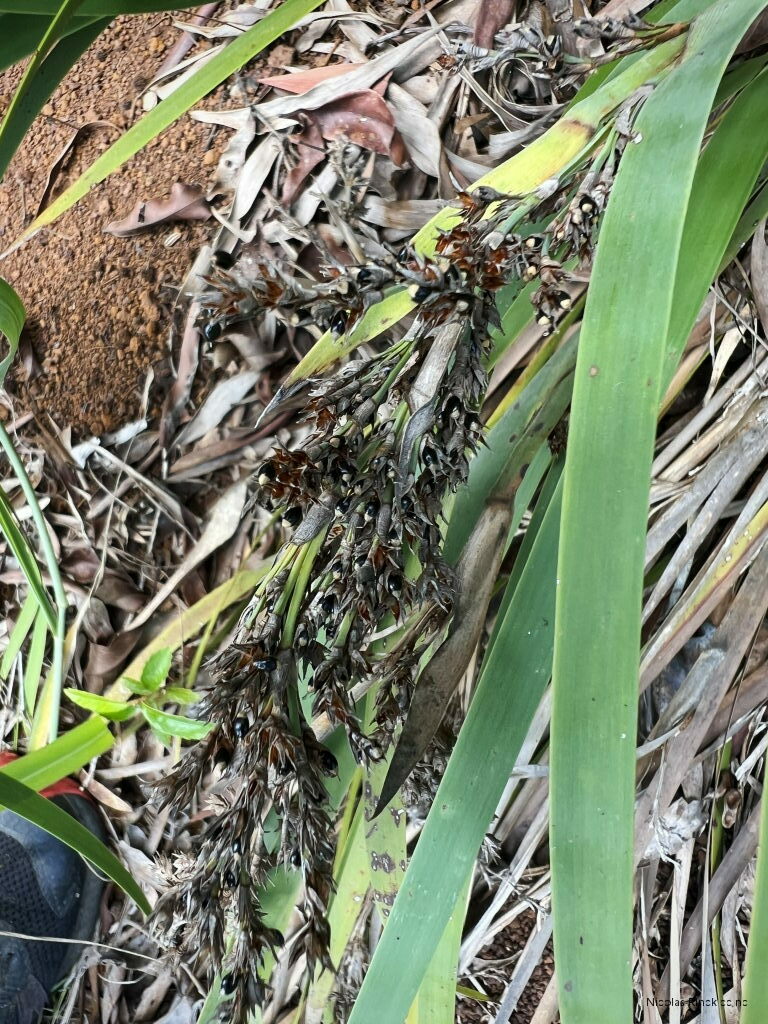
Machaerina deplanchei (Source: inaturalist)
1. Introduction & Taxonomy
Machaerina deplanchei is a handsome sedge endemic to the biodiversity hotspot of New Caledonia, where it grows on the island's distinctive ultramafic soils in a landscape unlike any other on Earth. With its stiff, bluish-green, sword-shaped leaves arranged in elegant fans, this species brings architectural beauty to the maquis scrublands and forest margins of this ancient Pacific island. As a member of New Caledonia's remarkably endemic flora, it represents a lineage that has been evolving in isolation for tens of millions of years.
Machaerina deplanchei is a tufted, rhizomatous perennial sedge that forms dense clumps 0.5 to 1 meter tall. The leaves are the most ornamental feature: stiff, erect to slightly arching, sword-shaped blades 40 to 80 centimeters long and 1 to 2 centimeters wide, with a distinctive bluish-green to glaucous color that sets this species apart from most other sedges. The leaf margins are finely serrated—hence the common name "sawsedge"—and can cut skin if handled carelessly. The leaves are arranged in a flattened, fan-like (distichous) pattern that gives the clump a formal, iris-like appearance. The inflorescence is an erect, branching panicle of small brown spikelets. The root system is fibrous and adapted to the nutrient-poor, metal-rich ultramafic soils of New Caledonia.
Taxonomic Classification
Habitat and Distribution
Machaerina deplanchei is endemic to New Caledonia in the southwestern Pacific. It grows in maquis (scrubland) and forest margins on ultramafic substrates at low to moderate elevations, in conditions characterized by poor, metal-rich soils, seasonal moisture, and high light exposure.
Botanical Note: Cyperaceae (the sedge family) comprises about 5,600 species often found in wetland habitats. Sedges are distinguished from true grasses by their typically triangular (three-sided) stems, three-ranked leaves, and solid (not hollow) culms. The mnemonic 'sedges have edges' helps distinguish them from grasses. Many sedges such as Cyperus papyrus and Carex species are valued as ornamentals for water gardens, rain gardens, and naturalistic plantings.
Native Range & Distribution Map
The map below shows the native range and notable cultivation regions for Machaerina deplanchei.
2. Biology & Morphology
<\!-- SIZE_COMPARISON_SVG -->Growth Form & Architecture
Machaerina deplanchei is a member of the sedge family (Cyperaceae), characterized by typically triangular stems (the mnemonic 'sedges have edges'), solid culms, and three-ranked leaves.
Species-Specific Morphology
Machaerina deplanchei is a tufted, rhizomatous perennial sedge that forms dense clumps 0.5 to 1 meter tall. The leaves are the most ornamental feature: stiff, erect to slightly arching, sword-shaped blades 40 to 80 centimeters long and 1 to 2 centimeters wide, with a distinctive bluish-green to glaucous color that sets this species apart from most other sedges. The leaf margins are finely serrated—hence the common name "sawsedge"—and can cut skin if handled carelessly. The leaves are arranged in a flattened, fan-like (distichous) pattern that gives the clump a formal, iris-like appearance. The inflorescence is an erect, branching panicle of small brown spikelets. The root system is fibrous and adapted to the nutrient-poor, metal-rich ultramafic soils of New Caledonia.
Inflorescence & Flower Structure
The inflorescence structure varies across grass-related families.
Key Characteristics
- Height: 0.5-2m
- Growth Habit: Clumping / Caespitose
- Growth Rate: Slow to moderate under optimal conditions
- Life Cycle: Perennial
- Toxicity: Non-toxic. Machaerina deplanchei is not known to be toxic to humans or animals. However, the finely serrated leaf margins can cause small cuts if handled without care.
- Conservation Status: Vulnerable. As an endemic species with a restricted range on New Caledonia, Machaerina deplanchei faces threats from mining (New Caledonia is a major nickel producer), fire, and invasive species. It is protected within several nature reserves on the island.
3. Reproduction & Propagation
<\!-- PROPAGATION_METHODS_SVG -->Primary propagation methods for Machaerina deplanchei: Seed or vegetative division.
Propagating Machaerina deplanchei
Machaerina deplanchei can be propagated by division of established clumps, separating outer fans of growth with attached roots in spring. Replant divisions immediately into a well-draining, acidic, low-nutrient substrate and maintain high humidity until established. Seed propagation is possible but slow; sow fresh seed on the surface of moist, sandy, acidic medium and keep at 20 to 25 degrees Celsius with bright indirect light. Germination may take several weeks to months. Given the species' adaptation to ultramafic soils, avoid phosphorus-rich fertilizers, which can be toxic to plants from these environments.
Vegetative Propagation
Propagated by clump division in spring or early summer.
Propagation Tip: Division of established clumps in spring gives the fastest results.
4. Cultivation Requirements
<\!-- CULTIVATION_SVG -->Soil / Substrate
Well-draining, moderately fertile soil. A mix of garden loam, compost, and coarse sand.
Watering
Moderate. Prefers consistently moist but extremely well-drained soil, reflecting the seasonal rainfall and free-draining ultramafic substrates of its native habitat. Do not waterlog, and avoid standing water around the roots.
Light Requirements
Full sun to partial shade. Most ornamental grasses perform best in full sun with at least 6 hours of direct light daily.
Temperature
- Optimal Growth: 18-30°C (65-86°F)
- Minimum Tolerance: -12°C (10°F)
- USDA Hardiness: Zones 8-11
Fertilization
Apply a balanced slow-release fertilizer in spring. Most grasses are light feeders.
Common Cultivation Mistake: Over-watering and over-fertilizing promote weak, floppy growth. These plants prefer lean conditions.
Seasonal Care Calendar
Follow this season-by-season guide for optimal care timing throughout the year.
🌱 Spring (March–May)
New growth emerges. Apply a very light application of slow-release, low-phosphorus fertilizer (reflecting the nutrient-poor native soils). Increase watering as temperatures rise.
☀️ Summer (June–August)
Maintain moderate moisture and bright light. Flowering panicles may develop. Protect from intense afternoon sun in hot climates.
🍂 Fall (September–November)
Growth slows. Reduce watering slightly. Remove any brown or damaged leaves to maintain the neat, architectural appearance.
❄️ Winter (December–February)
Not frost-tolerant. Maintain above 5 degrees Celsius in greenhouse cultivation. Water sparingly but do not allow the substrate to dry out completely.
5. Diseases & Pests
Below are the most common pests and diseases affecting Machaerina deplanchei and how to manage them.
Scale insects
Armored scale insects may occasionally colonize the leaf bases, feeding on plant sap. In greenhouse cultivation, inspect regularly and treat with horticultural oil if necessary.
Leaf tip dieback
In cultivation outside its native habitat, the leaf tips may brown and die back due to insufficient humidity, excessive watering, or incompatible soil chemistry. Use acidic, very well-draining substrate.
Root rot
Despite growing in moist conditions in the wild, Machaerina deplanchei requires excellent drainage in cultivation. Waterlogged, heavy soils will cause root decay.
IPM: (1) Choose the right species for your conditions. (2) Maintain good air circulation. (3) Cut back dead foliage in late winter. (4) Most ornamental grasses are remarkably pest-free when well-sited.
6. Indoor Growing Guide
Machaerina deplanchei can be grown in containers and brought indoors during winter in cold climates.
Container Selection
Use containers with adequate drainage holes. Self-watering pots work well for moisture-loving sedges and rushes.
Indoor Light
Place in the brightest available location. Most grasses need at least 4-6 hours of direct or bright indirect light.
Indoor Success Key: Bright direct light is the single most important factor for growing grasses indoors.
7. Landscape Use & Design
Machaerina deplanchei is ideal for water gardens, rain gardens, and pond margins.
Design Applications
- Specialist botanical collections of New Caledonian flora
- Tropical and subtropical rock gardens
- Architectural accent in Mediterranean-climate gardens (frost-free)
- Greenhouse and conservatory specimen
- Educational displays on ultramafic flora and adaptation
Companion Planting
These species pair well with Machaerina deplanchei in garden settings:
- Xanthostemon aurantiacus
- Araucaria columnaris
- Styphelia albicans
- Gymnostoma deplancheanum
- Costularia arundinacea
Design Principle: Ornamental grasses are at their most magical when backlit by low sun. Position where morning or evening light illuminates inflorescences from behind.
8. Cold Climate Strategies
Machaerina deplanchei tolerates cold to USDA Zone 8. Winter protection or container culture may be needed in colder areas.
Hardiness Thresholds
- USDA Zones: 8-11
- Minimum Survival Temperature: -12°C (10°F)
Overwintering Options
- Leave in Place (hardy species): Cut back dead foliage in late winter. Apply 5-10 cm of mulch around the crown.
- Container Culture: Move potted plants to a frost-free location for winter.
- Mulching: Apply thick straw or bark mulch over the crown after the first hard frost.
Winter Survival Rule: Most grass losses occur from wet cold. Ensure excellent drainage through winter.
Winter Care Tip: Not frost-tolerant. Maintain above 5 degrees Celsius in greenhouse cultivation. Water sparingly but do not allow the substrate to dry out completely.
9. Ethnobotany & Cultural Significance
Machaerina deplanchei is named after Emile Deplanche, a 19th-century French naval pharmacist and botanist who made important plant collections in New Caledonia. The species is significant as part of New Caledonia's extraordinary endemic flora, which has been shaped by the island's unique geological history, including extensive ultramafic (nickel-rich) substrates that have driven remarkable adaptive radiation. For the indigenous Kanak people, the maquis landscapes where this sedge grows are culturally important environments. In horticulture, Machaerina deplanchei is occasionally cultivated in specialist collections for its attractive blue-green foliage and architectural form.
Conservation Note: Many grass, sedge, and rush species play critical ecological roles as habitat providers, soil stabilizers, and water filtration agents. By growing Machaerina deplanchei, you contribute to maintaining awareness of these often-overlooked botanical workhorses.
Did You Know?
- New Caledonia, home to Machaerina deplanchei, has the highest concentration of endemic plant species per unit area of any place on Earth, with over 75% of its flora found nowhere else.
- The ultramafic soils where this sedge grows naturally contain high concentrations of heavy metals like nickel, chromium, and cobalt, which would be toxic to most plants—but Machaerina deplanchei has evolved tolerance to these metals.
- The genus name Machaerina comes from the Greek machaira, meaning sword or dagger, referring to the flat, blade-like leaves.
- Emile Deplanche, for whom the species is named, served as a pharmacist aboard French naval vessels and collected plants across the Pacific in the 1850s and 1860s.
Frequently Asked Questions
Why are the leaves blue-green?
The glaucous, bluish-green leaf color is due to a waxy coating (epicuticular wax) on the leaf surfaces. This adaptation helps reduce water loss and reflects excess ultraviolet radiation—useful traits on the exposed, windy, ultramafic soils of New Caledonia.
Can I grow Machaerina deplanchei in normal garden soil?
It prefers acidic, very well-draining, nutrient-poor substrate that mimics its native ultramafic soils. Standard garden soil is typically too rich and too heavy. A mix of coarse sand, perlite, and acidic peat or pine bark, low in phosphorus, is recommended.
Is Machaerina deplanchei cold hardy?
No. It is a tropical to subtropical species from a frost-free island and requires protection from temperatures below about 5 degrees Celsius. In temperate climates, it must be grown in a heated greenhouse or conservatory.
Where can I obtain this plant?
Machaerina deplanchei is rare in cultivation and not widely available commercially. Specialist nurseries focusing on New Caledonian plants, botanical gardens, or sedge/grass collectors may occasionally have stock.
Summary & Key Takeaways
Machaerina deplanchei, is a clumping member of the genus Machaerina (Cyperaceae), native to sedge family.
Key Points to Remember:
- Propagation: Seed or clump division
- Light: Full sun for most species
- Substrate: Well-draining, moderately fertile
- Watering: Keep consistently moist to wet
- Hardiness: USDA Zones 8-11, minimum -12°C (10°F)