Joinvillea borneensis: Complete Grass Growing Guide
Joinvillea borneensis
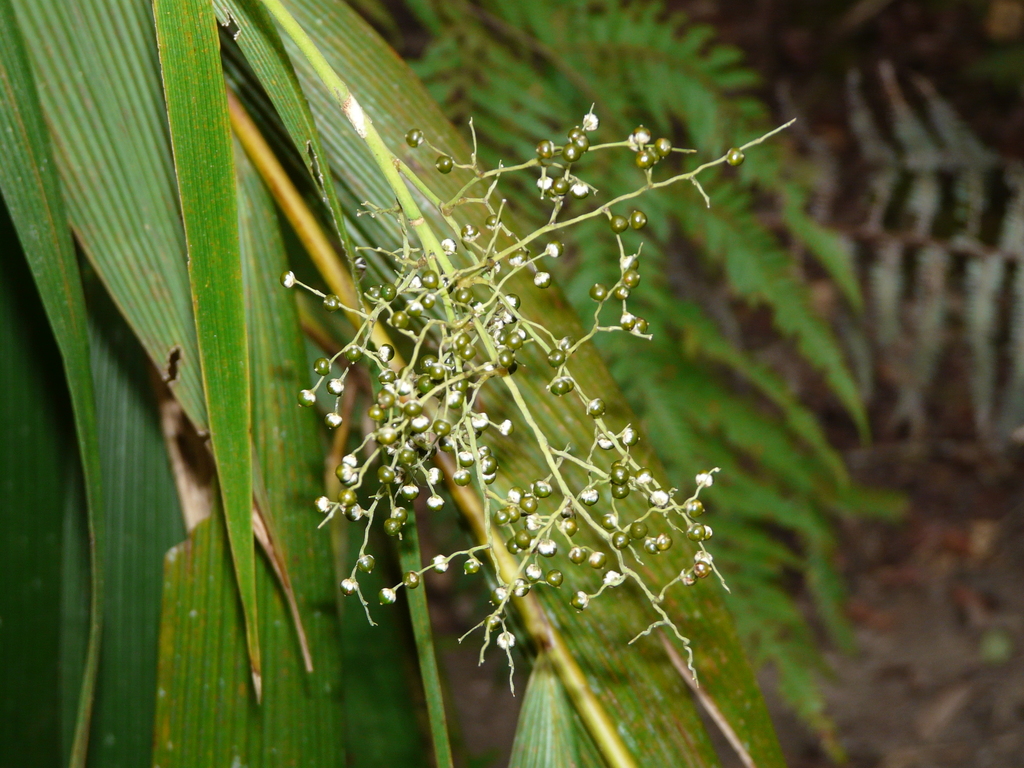
Joinvillea borneensis (Source: inaturalist)
1. Introduction & Taxonomy
Joinvillea borneensis is an exceptionally rare and enigmatic monocot found exclusively in the montane forests of Borneo, where it grows as an understory plant in some of the world's most biodiverse rainforests. Like its relatives in the tiny family Joinvilleaceae, this species bridges the evolutionary gap between grasses and their ancient forest-dwelling ancestors, bearing wide, pleated leaves and fleshy fruits that seem utterly foreign to anyone accustomed to the familiar forms of the grass family. Its extreme rarity and restricted distribution make every encounter with this plant a botanical event of significance.
Joinvillea borneensis is a perennial monocot that produces erect, unbranched, cane-like stems reaching 1 to 3 meters tall from a rhizomatous rootstock. The leaves are the plant's most striking feature: broadly lanceolate to oblong, up to 50 centimeters long and 8 to 12 centimeters wide, with a prominently plicate (pleated) texture created by numerous parallel veins and folds that give each leaf a corrugated, almost palm-like appearance. The leaf blades are dark green, somewhat glossy, and leathery in texture. The inflorescence is a terminal, branching panicle bearing small, inconspicuous flowers. Fruits are small, fleshy drupes that turn dark when ripe. The overall appearance is that of a small, cane-like palm or large-leaved ginger rather than anything resembling a typical grass.
Taxonomic Classification
Habitat and Distribution
Joinvillea borneensis is endemic to the montane forests of Borneo, primarily in the Malaysian states of Sabah and Sarawak. It grows in mossy, upper montane forest and cloud forest at elevations of approximately 1,000 to 2,500 meters, in cool, perpetually humid conditions with frequent cloud immersion.
Botanical Note: Joinvilleaceae is a small family containing a single genus, Joinvillea, with about 4 species from the Indo-Pacific region. These large, robust, grass-like plants have broad, pleated leaves and are considered among the most primitive living members of the order Poales. They grow in tropical montane forests and are rarely cultivated.
Native Range & Distribution Map
The map below shows the native range and notable cultivation regions for Joinvillea borneensis.
2. Biology & Morphology
<\!-- SIZE_COMPARISON_SVG -->Growth Form & Architecture
Joinvillea borneensis is a large, robust, grass-like plant in the family Joinvilleaceae with broad, pleated leaves, among the most primitive living Poales.
Species-Specific Morphology
Joinvillea borneensis is a perennial monocot that produces erect, unbranched, cane-like stems reaching 1 to 3 meters tall from a rhizomatous rootstock. The leaves are the plant's most striking feature: broadly lanceolate to oblong, up to 50 centimeters long and 8 to 12 centimeters wide, with a prominently plicate (pleated) texture created by numerous parallel veins and folds that give each leaf a corrugated, almost palm-like appearance. The leaf blades are dark green, somewhat glossy, and leathery in texture. The inflorescence is a terminal, branching panicle bearing small, inconspicuous flowers. Fruits are small, fleshy drupes that turn dark when ripe. The overall appearance is that of a small, cane-like palm or large-leaved ginger rather than anything resembling a typical grass.
Inflorescence & Flower Structure
The inflorescence structure varies across grass-related families.
Key Characteristics
- Height: 0.5-2m
- Growth Habit: Clumping / Caespitose
- Growth Rate: Slow under optimal conditions
- Life Cycle: Perennial
- Toxicity: No known toxicity. There are no reports of Joinvillea borneensis being toxic to humans or animals. Given its extreme rarity, however, it has not been extensively tested.
- Conservation Status: Data Deficient to Vulnerable. Joinvillea borneensis is extremely rare with few known populations. While its montane forest habitat in Borneo is relatively intact, ongoing threats from logging, climate change, and the species' inherently small population sizes make it a plant of significant conservation concern.
3. Reproduction & Propagation
<\!-- PROPAGATION_METHODS_SVG -->Primary propagation methods for Joinvillea borneensis: Seed or vegetative division.
Propagating Joinvillea borneensis
Given its extreme rarity, propagation of Joinvillea borneensis is essentially limited to specialized botanical institutions. Division of rhizomes is the most reliable method, best attempted in the warm season when the plant is actively growing. Seed propagation from the fleshy fruits may be possible by cleaning the seed of pulp and sowing fresh on warm, moist, acidic substrate under high humidity, but germination data is virtually nonexistent. Any propagation attempts should be coordinated with conservation programs and herbarium documentation.
Vegetative Propagation
Propagated by clump division in spring or early summer.
Propagation Tip: Division of established clumps in spring gives the fastest results.
4. Cultivation Requirements
<\!-- CULTIVATION_SVG -->Soil / Substrate
Well-draining, moderately fertile soil. A mix of garden loam, compost, and coarse sand.
Watering
Moderate to high. Requires consistently moist but well-drained soil and very high ambient humidity, reflecting its cloud forest habitat. Must not be waterlogged, as root rot can occur, but equally must never dry out.
Light Requirements
Full sun to partial shade. Most ornamental grasses perform best in full sun with at least 6 hours of direct light daily.
Temperature
- Optimal Growth: 18-30°C (65-86°F)
- Minimum Tolerance: -12°C (10°F)
- USDA Hardiness: Zones 8-11
Fertilization
Apply a balanced slow-release fertilizer in spring. Most grasses are light feeders.
Common Cultivation Mistake: Over-watering and over-fertilizing promote weak, floppy growth. These plants prefer lean conditions.
Seasonal Care Calendar
Follow this season-by-season guide for optimal care timing throughout the year.
🌱 Spring (March–May)
If cultivated, provide warm conditions (18-25 degrees Celsius) and increase humidity. Repot if necessary using a chunky, well-draining orchid-type medium.
☀️ Summer (June–August)
Maintain high humidity (above 75%) and consistent moisture. Provide bright indirect light but protect from direct sun. Mist foliage regularly in greenhouse settings.
🍂 Fall (September–November)
Growth may slow slightly. Continue providing warm, humid conditions. Reduce fertilization to monthly or less.
❄️ Winter (December–February)
Maintain minimum temperatures above 15 degrees Celsius. This species does not tolerate cold. Keep soil lightly moist and humidity high. Avoid cold drafts.
5. Diseases & Pests
Below are the most common pests and diseases affecting Joinvillea borneensis and how to manage them.
Fungal leaf blight
In the perpetually humid montane forest environment, various fungal pathogens can cause leaf browning and decay, though this is part of the natural ecological cycle rather than a cultivation problem.
Scale insects
Soft scales may colonize stems in greenhouse cultivation, feeding on sap and producing honeydew. Monitor regularly and treat with horticultural oil if detected.
Root rot
In cultivation, overwatering combined with poor drainage can cause root decay. Use a very well-draining, open substrate that retains moisture without becoming waterlogged.
IPM: (1) Choose the right species for your conditions. (2) Maintain good air circulation. (3) Cut back dead foliage in late winter. (4) Most ornamental grasses are remarkably pest-free when well-sited.
6. Indoor Growing Guide
Joinvillea borneensis can be grown in containers and brought indoors during winter in cold climates.
Container Selection
Use containers with adequate drainage holes. Terra cotta pots provide good drainage and stability.
Indoor Light
Place in the brightest available location. Most grasses need at least 4-6 hours of direct or bright indirect light.
Indoor Success Key: Bright direct light is the single most important factor for growing grasses indoors.
7. Landscape Use & Design
Joinvillea borneensis provides graceful movement, fine texture, and seasonal interest in the landscape.
Design Applications
- Botanical garden living collections for conservation and research
- Tropical montane greenhouse displays
- Educational exhibits on monocot evolution
- Conservation ex situ collections
Companion Planting
These species pair well with Joinvillea borneensis in garden settings:
- Nepenthes villosa
- Rhododendron lowii
- Dacrydium gibbsiae
- Schefflera spp.
- Pandanus spp.
Design Principle: Ornamental grasses are at their most magical when backlit by low sun. Position where morning or evening light illuminates inflorescences from behind.
8. Cold Climate Strategies
Joinvillea borneensis tolerates cold to USDA Zone 8. Winter protection or container culture may be needed in colder areas.
Hardiness Thresholds
- USDA Zones: 8-11
- Minimum Survival Temperature: -12°C (10°F)
Overwintering Options
- Leave in Place (hardy species): Cut back dead foliage in late winter. Apply 5-10 cm of mulch around the crown.
- Container Culture: Move potted plants to a frost-free location for winter.
- Mulching: Apply thick straw or bark mulch over the crown after the first hard frost.
Winter Survival Rule: Most grass losses occur from wet cold. Ensure excellent drainage through winter.
Winter Care Tip: Maintain minimum temperatures above 15 degrees Celsius. This species does not tolerate cold. Keep soil lightly moist and humidity high. Avoid cold drafts.
9. Ethnobotany & Cultural Significance
Joinvillea borneensis is significant primarily to the botanical and scientific community as one of the rarest members of one of the smallest plant families in the world. Its existence in the mountains of Borneo, far from its congeners in the Pacific islands, raises important biogeographic questions about how these ancient plants dispersed across the tropical Pacific and Southeast Asia. For the indigenous Dayak peoples of Borneo, the montane forests harboring this species are sacred landscapes with deep cultural connections. The plant itself is too rare to have developed significant traditional uses, but its habitat is of immense cultural and spiritual value.
Conservation Note: Many grass, sedge, and rush species play critical ecological roles as habitat providers, soil stabilizers, and water filtration agents. By growing Joinvillea borneensis, you contribute to maintaining awareness of these often-overlooked botanical workhorses.
Did You Know?
- Joinvillea borneensis is so rare that it has been collected by botanists only a handful of times since its initial discovery, and each collection represents a significant botanical event.
- The Joinvilleaceae contains only two genera and approximately four species, making it one of the smallest plant families on Earth.
- The presence of Joinvillea in both Borneo and the Pacific islands suggests that this ancient lineage was once much more widespread, possibly dating back to Gondwanan connections tens of millions of years ago.
- Joinvillea borneensis grows in some of the same montane forests as the world's largest flower, Rafflesia, and the world's largest pitcher plant, Nepenthes rajah.
Frequently Asked Questions
How is Joinvillea borneensis different from J. ascendens?
Joinvillea borneensis is distinguished by its wider, more prominently pleated leaves, its restricted distribution in Borneo (versus New Caledonia for J. ascendens), and subtle differences in floral and fruit morphology. It is generally a shorter plant with broader foliage than J. ascendens.
Is Joinvillea borneensis available in cultivation?
It is extremely rare in cultivation and essentially unavailable in the horticultural trade. Only a handful of botanical gardens worldwide may hold living specimens. It is a plant of the deepest botanical rarity.
Why is Joinvillea important for understanding grass evolution?
The Joinvilleaceae is one of the closest living relatives of the true grasses (Poaceae). Studying Joinvillea species helps botanists reconstruct the ancestral features of the grass lineage, including the transition from fleshy-fruited, forest-dwelling plants to the dry-fruited, open-habitat grasses that dominate Earth's vegetation today.
Where exactly in Borneo does this species occur?
Joinvillea borneensis is found in montane forests of Malaysian Borneo (Sabah and Sarawak), typically at elevations above 1,000 meters on Mount Kinabalu and surrounding ranges. Its exact localities are few, and populations are small.
Summary & Key Takeaways
Joinvillea borneensis, is a clumping member of the genus Joinvillea (Joinvilleaceae), native to mountain forests of Borneo.
Key Points to Remember:
- Propagation: Seed or clump division
- Light: Full sun for most species
- Substrate: Well-draining, moderately fertile
- Watering: Moderate — avoid overwatering
- Hardiness: USDA Zones 8-11, minimum -12°C (10°F)