Gahnia baniensis (Bani-Sawsedge): Complete Grass Growing Guide
Gahnia baniensis
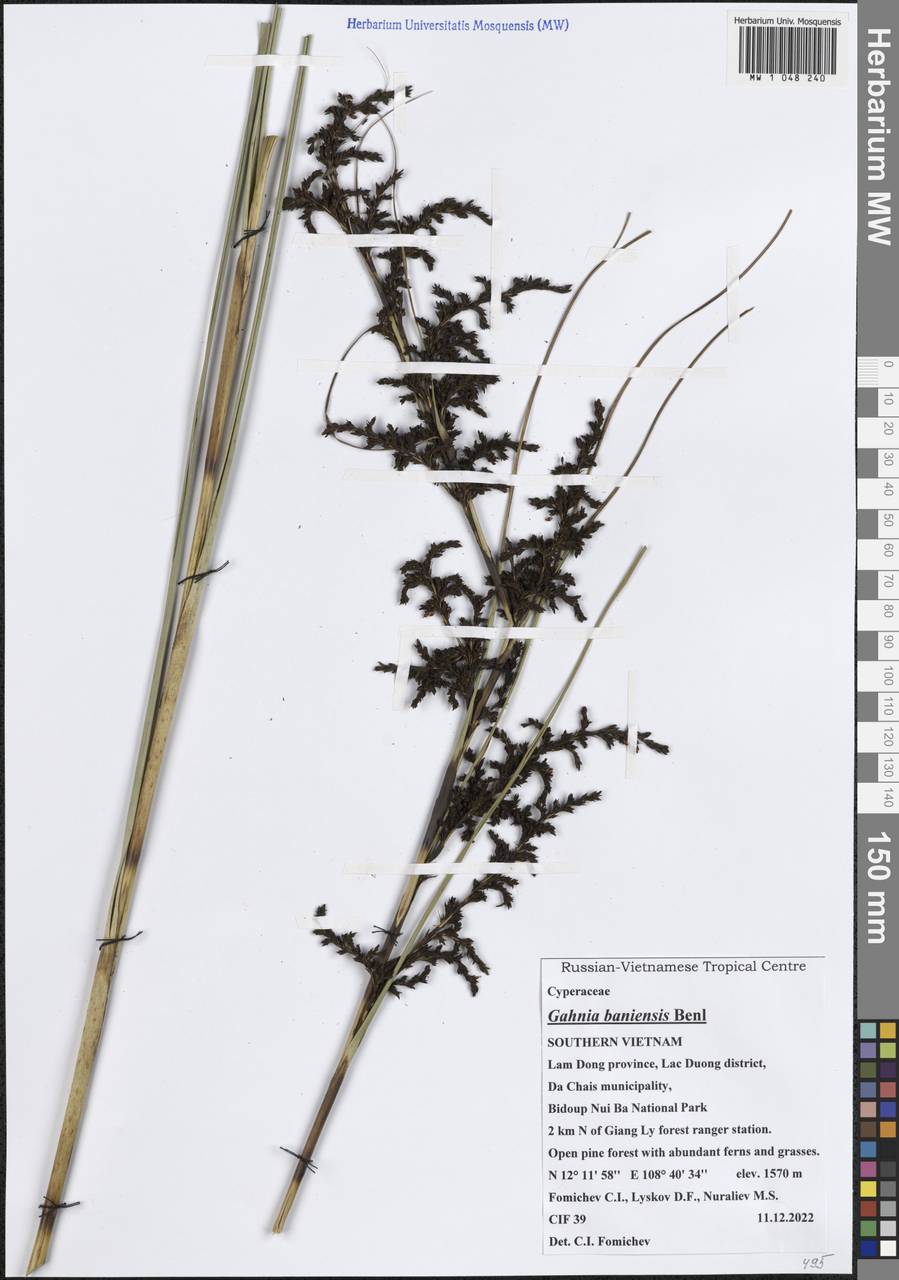
Gahnia baniensis (Bani-Sawsedge) (Source: gbif)
1. Introduction & Taxonomy
Bani Sawsedge is a graceful ornamental sedge from the forests of Southeast Asia, forming arching clumps of long, narrow, dark green leaves with finely serrated edges that gleam in dappled forest light. As a member of the distinctive Gahnia genus known for their sharp-edged foliage, this species combines tropical elegance with tough, resilient growth. Its relatively compact habit and attractive form make it a desirable understory plant for tropical and subtropical gardens.
Gahnia baniensis is a tufted perennial sedge forming graceful clumps 60-120 cm tall with arching, strap-like leaves radiating from a dense central crown. The leaves are dark green, 30-80 cm long and 5-10 mm wide, with finely serrated margins that are sharp to the touch. The inflorescence is a narrow, interrupted panicle emerging from the center of the clump on a sturdy culm, bearing clusters of dark brown to black spikelets. The seeds are small, dark, and shiny. The root system is dense and fibrous, anchoring the plant firmly in forest soils.
Taxonomic Classification
Habitat and Distribution
Native to tropical forests and forest margins of Southeast Asia, including parts of Indonesia, Papua New Guinea, and neighboring islands. It grows in the understory of lowland and lower montane forests in humid, shaded conditions on well-drained forest soils.
Botanical Note: Cyperaceae (the sedge family) comprises about 5,600 species often found in wetland habitats. Sedges are distinguished from true grasses by their typically triangular (three-sided) stems, three-ranked leaves, and solid (not hollow) culms. The mnemonic 'sedges have edges' helps distinguish them from grasses. Many sedges such as Cyperus papyrus and Carex species are valued as ornamentals for water gardens, rain gardens, and naturalistic plantings.
Native Range & Distribution Map
The map below shows the native range and notable cultivation regions for Gahnia baniensis.
2. Biology & Morphology
<\!-- SIZE_COMPARISON_SVG -->Growth Form & Architecture
Gahnia baniensis is a member of the sedge family (Cyperaceae), characterized by typically triangular stems (the mnemonic 'sedges have edges'), solid culms, and three-ranked leaves.
Species-Specific Morphology
Gahnia baniensis is a tufted perennial sedge forming graceful clumps 60-120 cm tall with arching, strap-like leaves radiating from a dense central crown. The leaves are dark green, 30-80 cm long and 5-10 mm wide, with finely serrated margins that are sharp to the touch. The inflorescence is a narrow, interrupted panicle emerging from the center of the clump on a sturdy culm, bearing clusters of dark brown to black spikelets. The seeds are small, dark, and shiny. The root system is dense and fibrous, anchoring the plant firmly in forest soils.
Inflorescence & Flower Structure
The inflorescence structure varies across grass-related families.
Key Characteristics
- Height: 0.5-2m
- Growth Habit: Clumping / Caespitose
- Growth Rate: Moderate under optimal conditions
- Life Cycle: Perennial
- Toxicity: Non-toxic, but the sharp leaf margins can cause cuts and skin irritation. Always handle with gloves. No chemical toxicity to humans or animals.
- Conservation Status: Data Deficient. Limited information is available on wild population status, though it is not thought to be immediately threatened across its range.
3. Reproduction & Propagation
<\!-- PROPAGATION_METHODS_SVG -->Primary propagation methods for Gahnia baniensis: Seed or vegetative division.
Propagating Gahnia baniensis
Gahnia baniensis is propagated by division or seed. Divide established clumps in spring by cutting through the dense root mass with a sharp spade, ensuring each division has several shoots and a good root system. Wear thick gloves to protect hands from the sharp leaf margins. Seeds can be sown fresh on moist seed-raising mix and kept warm at 22-28°C. Germination is often slow and erratic, taking 4-12 weeks. Division produces faster, more reliable results than seed.
Vegetative Propagation
Propagated by clump division in spring or early summer.
Propagation Tip: Division of established clumps in spring gives the fastest results.
4. Cultivation Requirements
<\!-- CULTIVATION_SVG -->Soil / Substrate
Well-draining, moderately fertile soil. A mix of garden loam, compost, and coarse sand.
Watering
Moderate to high. Prefers consistently moist soil in keeping with its tropical forest understory habitat. Does not tolerate prolonged drought.
Light Requirements
Full sun to partial shade. Most ornamental grasses perform best in full sun with at least 6 hours of direct light daily.
Temperature
- Optimal Growth: 18-30°C (65-86°F)
- Minimum Tolerance: -12°C (10°F)
- USDA Hardiness: Zones 8-11
Fertilization
Apply a balanced slow-release fertilizer in spring. Most grasses are light feeders.
Common Cultivation Mistake: Over-watering and over-fertilizing promote weak, floppy growth. These plants prefer lean conditions.
Seasonal Care Calendar
Follow this season-by-season guide for optimal care timing throughout the year.
🌱 Spring (March–May)
Remove old or damaged leaves with gloved hands (edges are sharp). Apply mulch around the base and provide a balanced organic fertilizer.
☀️ Summer (June–August)
Maintain consistent moisture in the root zone. Provide partial shade in hot tropical climates. Peak growth and flowering period.
🍂 Fall (September–November)
Seeds mature on flowering stems. Reduce fertilization. Clean up any dead foliage to maintain a tidy appearance.
❄️ Winter (December–February)
Protect from frost in subtropical areas. Reduce watering in cooler climates. In tropical regions, growth continues year-round with minimal care.
5. Diseases & Pests
Below are the most common pests and diseases affecting Gahnia baniensis and how to manage them.
Leaf Spot
Fungal leaf spots from Cercospora and related genera can appear during prolonged humid weather, creating brown patches on older leaves.
Mealybugs
White cottony masses may appear at the base of leaf sheaths in humid, sheltered garden positions.
Scale Insects
Armored scales can encrust older stems near the base, weakening affected culms over time.
Snails and Slugs
May feed on young emerging leaves in moist tropical garden conditions, particularly during rainy seasons.
IPM: (1) Choose the right species for your conditions. (2) Maintain good air circulation. (3) Cut back dead foliage in late winter. (4) Most ornamental grasses are remarkably pest-free when well-sited.
6. Indoor Growing Guide
Gahnia baniensis can be grown in containers and brought indoors during winter in cold climates.
Container Selection
Use containers with adequate drainage holes. Self-watering pots work well for moisture-loving sedges and rushes.
Indoor Light
Place in the brightest available location. Most grasses need at least 4-6 hours of direct or bright indirect light.
Indoor Success Key: Bright direct light is the single most important factor for growing grasses indoors.
7. Landscape Use & Design
Gahnia baniensis is ideal for water gardens, rain gardens, and pond margins.
Design Applications
- Tropical understory planting
- Shade garden structural accent
- Stream bank and waterway stabilization
- Tropical border or screen planting
- Large container specimen for patios
- Botanical garden collection
Companion Planting
These species pair well with Gahnia baniensis in garden settings:
- Alpinia zerumbet
- Calathea orbifolia
- Dianella ensifolia
- Asplenium nidus
- Heliconia psittacorum
- Costus speciosus
Design Principle: Ornamental grasses are at their most magical when backlit by low sun. Position where morning or evening light illuminates inflorescences from behind.
8. Cold Climate Strategies
Gahnia baniensis tolerates cold to USDA Zone 8. Winter protection or container culture may be needed in colder areas.
Hardiness Thresholds
- USDA Zones: 8-11
- Minimum Survival Temperature: -12°C (10°F)
Overwintering Options
- Leave in Place (hardy species): Cut back dead foliage in late winter. Apply 5-10 cm of mulch around the crown.
- Container Culture: Move potted plants to a frost-free location for winter.
- Mulching: Apply thick straw or bark mulch over the crown after the first hard frost.
Winter Survival Rule: Most grass losses occur from wet cold. Ensure excellent drainage through winter.
Winter Care Tip: Protect from frost in subtropical areas. Reduce watering in cooler climates. In tropical regions, growth continues year-round with minimal care.
9. Ethnobotany & Cultural Significance
Gahnia species have ethnobotanical significance across the Indo-Pacific, where their tough leaves have been used for thatching, cordage, and basket weaving by indigenous communities. The genus name honors Swedish botanist Henrik Gahn. In contemporary horticulture, Gahnia species including G. baniensis are gaining recognition as structural ornamental plants for tropical and subtropical gardens, valued for their architectural clumping form and low-maintenance nature.
Conservation Note: Many grass, sedge, and rush species play critical ecological roles as habitat providers, soil stabilizers, and water filtration agents. By growing Gahnia baniensis, you contribute to maintaining awareness of these often-overlooked botanical workhorses.
Did You Know?
- The name 'sawsedge' refers to the finely serrated leaf margins that can cut unwary hands like a tiny saw blade.
- Gahnia species are found from Southeast Asia to Australia and New Zealand, with their center of diversity in Australia.
- The sharp leaf edges are lined with microscopic silica teeth, the same material found in glass.
- Some Gahnia species produce fruits with bright red or orange bases that attract birds for seed dispersal.
Frequently Asked Questions
Are the leaves really sharp?
Yes, Gahnia leaves have finely serrated margins with tiny silica teeth that can cut skin. Always wear gloves when handling or pruning.
Can it grow in full sun?
It prefers partial shade to dappled light, mimicking its natural forest understory habitat. It can tolerate morning sun but may suffer leaf scorch in intense afternoon sun.
Is it cold hardy?
Marginally cold hardy, tolerating brief dips to around 0°C. Best suited for tropical and warm subtropical climates or protected garden positions.
How often should I water it?
Water regularly to maintain evenly moist soil, especially during establishment. Once mature, it tolerates brief dry periods but looks best with consistent moisture.
Summary & Key Takeaways
Gahnia baniensis, is a clumping member of the genus Gahnia (Cyperaceae), native to southeastern Asia.
Key Points to Remember:
- Propagation: Seed or clump division
- Light: Full sun for most species
- Substrate: Well-draining, moderately fertile
- Watering: Keep consistently moist to wet
- Hardiness: USDA Zones 8-11, minimum -12°C (10°F)