Utricularia endresii
Utricularia endresii
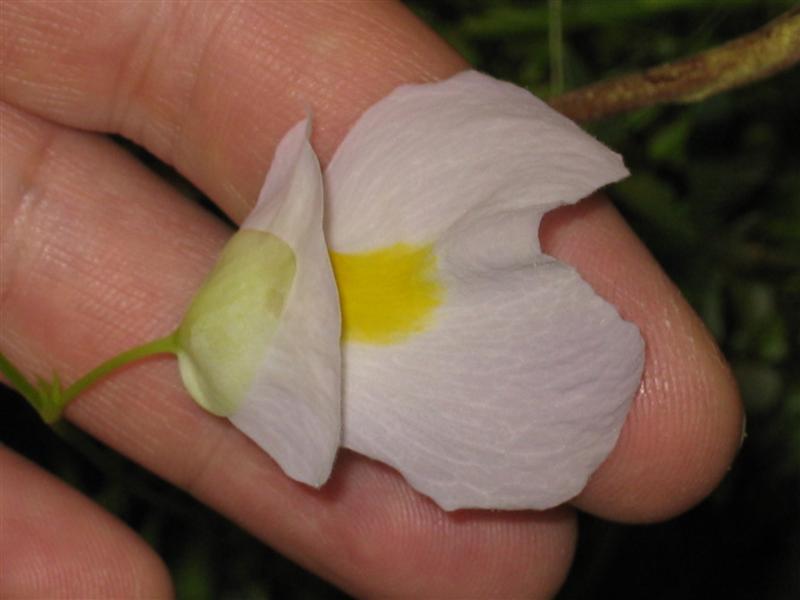
Table of Contents
Use only distilled water, reverse osmosis (RO), or rainwater — ideally under 50 ppm TDS. Tap water, bottled mineral water, and softened water contain calcium, magnesium, and sodium that accumulate in the substrate and kill carnivorous plants within weeks. This is the #1 cause of cultivation failure.
Introduction & Discovery
Utricularia endresii is a captivating epiphytic bladderwort native to the cloud forests of Central America, where it clings to mossy branches and tree trunks in the perpetual mist of mountain environments. This species is among the most ornamentally appealing members of section Orchidioides, producing flowers of notable beauty that display white to pale lavender petals adorned with violet markings, reminiscent of miniature orchids. The species was named after Augustus R. Endres, a collector of orchids and other plants in Costa Rica during the nineteenth century. In its natural habitat, U. endresii grows as an epiphyte in the thick moss mats that drape the branches of cloud forest trees, its stolons threading through the moisture-laden substrate to capture microorganisms with its tiny bladder traps. The cool, constantly humid conditions of these mountain forests provide the stable environment that this species requires. For carnivorous plant enthusiasts, U. endresii represents an achievable introduction to the epiphytic bladderworts, being somewhat less demanding than the legendary tepui species while still requiring the cool, humid conditions characteristic of the section. Its orchid-like flowers, produced on graceful scapes above the moss substrate, provide a reward that justifies the investment in appropriate growing equipment. The species demonstrates beautifully how bladderworts have transcended their aquatic origins to colonize the cloud forest canopy, hunting microscopic prey in aerial habitats far removed from the ponds and bogs typically associated with carnivorous plants.
Discovery & Naming
Utricularia endresii was described by the renowned German orchidologist Heinrich Gustav Reichenbach in 1874, based on specimens collected by Augustus R. Endres in the cloud forests of Costa Rica. Endres was a prolific collector who focused primarily on orchids but also gathered many other epiphytic plants during his explorations of the Central American highlands. Reichenbach, recognizing the distinctiveness of the bladderwort specimens, described the species in honor of its collector. Peter Taylor, in his 1989 monograph, placed U. endresii within section Orchidioides, the group of predominantly epiphytic Neotropical bladderworts characterized by their large, showy flowers and epiphytic habit. Taylor noted the species' distribution in the cloud forests of Costa Rica and Panama, where it occurs at elevations typically between one thousand and two thousand meters. Subsequent botanical explorations have confirmed its presence across a relatively restricted range in the Central American highlands, where suitable cloud forest habitat exists. The introduction of U. endresii to cultivation occurred through collections made by botanists and enthusiasts visiting the cloud forests of Costa Rica, and the species has become established in specialist collections worldwide. Its relative accessibility compared to the more remote tepui-dwelling species, combined with its beautiful flowers and somewhat more tolerant cultivation requirements, has made it one of the more commonly encountered epiphytic bladderworts in the hobby.
Trapping Mechanism
The bladder traps of Utricularia endresii are adapted to function in the moisture films associated with epiphytic moss mats in cloud forest environments. Each trap is a small bladder, typically under one millimeter in diameter, borne on stolons that thread through the sphagnum and other mosses covering tree branches and trunks. The trapping mechanism follows the universal Utricularia pattern of hydraulic suction. Specialized glands on the inner bladder wall actively pump water from the trap interior, creating a partial vacuum that stores elastic energy in the slightly concave bladder walls. The trapdoor, sealed by mucilage and mechanical fit, maintains this negative pressure until a trigger event occurs. When a microorganism contacts the sensitive trigger hairs projecting from the trapdoor, the door buckles inward with extraordinary speed, and the pressure equalization draws water and prey into the bladder in less than one millisecond. This suction event is among the fastest known biological movements, an notable fact given the microscopic scale at which it operates. The epiphytic habitat presents unique challenges for trap function, as the moisture films in moss mats may be thinner and more variable than those in waterlogged terrestrial soils. The traps must function effectively in these intermittent moisture conditions, a constraint that may have favored the evolution of heightened trigger sensitivity and rapid trap resetting in the epiphytic lineages. Following capture, the standard enzymatic digestion process degrades the prey, and the absorbed nutrients supplement the meager mineral supply available to an epiphyte growing on decaying organic matter. The importance of carnivory to epiphytic bladderworts is likely substantial, as the moss-mat substrate provides even less mineral nutrition than the poor soils occupied by terrestrial species.
Native Range & Distribution Map
Distribution map showing the native range of Utricularia endresii.
Biology & Trapping Mechanism
Utricularia endresii displays the specialized morphology of the epiphytic bladderworts, with adaptations that facilitate life in the cloud forest canopy. The stolons are somewhat robust for the genus, branching through the moss substrate and bearing both bladder traps and modified leaf-like organs. The leaves are more developed than in many bladderwort species, being ovate to reniform and several millimeters to a few centimeters in length, providing meaningful photosynthetic area in the filtered light of the cloud forest understory. True roots are absent. The flowers are the species' most striking feature, being large and showy with a bilabiate form reminiscent of small orchids. The lower lip is broad and typically white to pale lavender with violet markings, while the upper lip and spur display similar coloration. Pollination in the wild is accomplished by insects, possibly including small bees and flies attracted to the flower display. Self-pollination may also occur. The fruit is a capsule containing numerous minute seeds adapted for wind dispersal, essential for colonizing the scattered epiphytic habitats. Growth is relatively slow compared to the weedy terrestrial species, reflecting the nutrient-limited epiphytic environment and the moderate temperatures of the cloud forest. The species grows actively year-round in its equatorial cloud forest habitat, without a distinct dormancy period, though growth rates may fluctuate with seasonal variations in moisture and light availability.
Prey & Feeding Ecology
The prey captured by Utricularia endresii's bladder traps consists of the diverse community of microorganisms inhabiting the moisture films within cloud forest epiphytic moss mats. These moss communities, while appearing simple from a distance, harbor rich assemblages of protozoa, rotifers, nematodes, and other microscopic organisms that form complex food webs within the moss canopy. Protozoa including ciliates, flagellates, and amoebae are likely the primary prey, their active movement through the moisture films bringing them into regular contact with the trap triggers. Rotifers, which are particularly abundant in epiphytic moss communities where they feed on bacteria, algae, and organic particles, represent another important prey category. Nematodes, including both free-living bacterivores and fungivores, inhabit the moss substrate and are vulnerable to capture by the bladder traps. Tardigrades, those notable microscopic animals famous for their resistance to extreme conditions, also inhabit cloud forest moss mats and may occasionally be captured. The moss-mat ecosystem supporting U. endresii's prey base is maintained by the persistent cloud immersion that characterizes its habitat, with moisture deposited directly onto epiphytic surfaces through fog interception. This continuous moisture supply sustains the microfaunal communities on which the plant depends for supplementary nutrition. The nutritional contribution of carnivory is likely critical for U. endresii's survival in the nutrient-poor epiphytic environment, providing nitrogen and phosphorus that cannot be obtained from the moss substrate alone.
Comparison with Similar Species
Within section Orchidioides, Utricularia endresii can be compared to U. jamesoniana, another Central and South American epiphytic species, which typically produces smaller, more delicate flowers. U. quelchii and U. campbelliana, the red-flowered tepui species, are more distantly related within the section and occupy a dramatically different geographic and climatic niche. Compared to these tepui species, U. endresii is somewhat easier to cultivate, tolerating slightly warmer temperatures and less stringent humidity requirements. Against U. humboldtii, the giant of section Orchidioides with its enormous leaves and purple flowers, U. endresii is a more compact and manageable plant. The comparison with terrestrial bladderworts highlights the dramatic ecological shift that the section Orchidioides represents, from soil-dwelling to canopy-dwelling, with all the attendant changes in prey ecology, growth rate, and environmental requirements. U. endresii's orchid-like flowers distinguish it aesthetically from most other bladderworts, whose typically yellow or purple flowers, while attractive, lack the intricate patterning and delicate form that make U. endresii so appealing.
Reproduction & Propagation
Propagation of Utricularia endresii is accomplished through stolon division, seed, or tissue culture. Stolon division is the most commonly used method, performed by carefully separating portions of the moss substrate containing healthy stolons with visible growing tips. The divisions should be transferred to fresh live sphagnum and maintained under the standard cool, humid conditions. High humidity is critical during establishment; a sealed container with adequate light provides an ideal environment. New growth typically appears within three to six weeks. Seed propagation is possible when viable seed is available, though seed production may be unreliable without manual pollination. Sow seeds on the surface of moist sphagnum and maintain cool, humid conditions. Germination may be slow, taking several weeks to months. Seedling growth is gradual, and it may take a year or more to reach flowering size. Tissue culture propagation offers the potential for multiplying rare or particularly desirable clones, though this requires laboratory facilities and specialized knowledge. For most hobbyists, division remains the most practical propagation method. The slow growth rate of U. endresii means that propagation produces limited material compared to the weedy terrestrial species, making divisions a valued commodity in the trading and sharing networks of the bladderwort collecting community.
Cultivation & Substrate
Cultivating Utricularia endresii requires recreating the cool, humid conditions of its cloud forest habitat, though the species is somewhat more forgiving than the most demanding epiphytic bladderworts. The growing medium should consist of live sphagnum moss, which provides both a suitable substrate and a humidity-regulating environment. Some growers use a mix of chopped sphagnum, perlite, and tree fern fiber. The medium should be kept consistently moist but not waterlogged, with excellent drainage essential to prevent the anaerobic conditions that promote rot. Temperature management is critical: maintain daytime temperatures of fifteen to twenty-four degrees Celsius, with nighttime drops to twelve to eighteen degrees. The species is more temperature-tolerant than the tepui bladderworts, managing brief excursions to twenty-eight degrees if humidity and air circulation are adequate, but sustained heat above twenty-five degrees is stressful. Humidity should be maintained above sixty-five percent, ideally above seventy-five percent, using enclosed growing chambers, foggers, or frequent misting. Air circulation is essential to prevent fungal disease; a gentle, continuous airflow should be provided. Light should be moderate, equivalent to bright shade or filtered sunlight, providing approximately three thousand to five thousand lux at the plant level under LED lighting for twelve hours daily. An enclosed terrarium, highland growing chamber, or cool greenhouse provides the most suitable cultivation environment. Water quality must be pristine. With proper care, U. endresii rewards the grower with its beautiful orchid-like flowers, typically produced during the warmer months of the growing season.
Substrate: Live sphagnum, peat + sand, or aquatic
Water: Distilled / Rainwater only — NEVER tap water
Light: Bright indirect to full sun
Humidity: 60-95%
Common Mistakes to Avoid
The most critical mistakes in cultivating Utricularia endresii relate to temperature and humidity management. Excessive heat is the primary killer, as this cloud forest species cannot tolerate sustained temperatures above twenty-five degrees. Growers in warm climates must provide active cooling or select naturally cool growing locations. Insufficient humidity is the second major issue; the species requires consistently humid conditions that most indoor environments cannot provide without supplemental humidification. A sealed or semi-sealed growing chamber is usually necessary. Poor air circulation in high-humidity environments leads to fungal infections that can rapidly destroy the plant. Many growers achieve the right temperature and humidity but neglect ventilation, with devastating consequences. Overwatering the moss substrate, creating waterlogged conditions rather than the moist but aerated environment the species requires, promotes root zone pathogens. The sphagnum should feel damp but not saturated when squeezed. Using decomposed or compacted sphagnum that has lost its aeration properties is another common error; fresh, live sphagnum should be used and replaced when it begins to deteriorate. Excessive light causes scorching and bleaching of the leaves, while insufficient light produces weak growth and failure to flower. Finding the balance of bright but filtered light requires some experimentation. Finally, impatience is a significant factor, as U. endresii grows slowly and may take considerable time to establish and flower after division.
Seasonal Considerations
Utricularia endresii grows in a climate of limited seasonality, with cool, humid conditions prevailing year-round in its cloud forest habitat. In cultivation, the goal is to maintain as stable an environment as possible, minimizing temperature and humidity fluctuations. Seasonal adjustments relate primarily to managing ambient temperature changes in the growing environment. During summer, the priority is preventing temperature excursions above the species' comfort zone. Active cooling may be required, and ventilation should be maximized to prevent heat buildup. In winter, ensure temperatures do not drop below ten degrees, and provide supplemental lighting if natural day length is insufficient. The species does not require a dormancy period and should be maintained in active growing conditions throughout the year. Growth may naturally slow during periods of lower light or cooler temperatures, but this represents a seasonal fluctuation rather than a true dormancy. Watering and humidity management remain constant year-round. Repotting or refreshing the sphagnum substrate is best performed during periods of active growth when the plant can establish quickly in fresh medium.
Seasonal Care Calendar
🌱 Spring (Mar-May)
Water: Moderate
Feeding: No feeding
Monitor growth and adjust care as needed.
☀️ Summer (Jun-Aug)
Water: Moderate
Feeding: No feeding
Monitor growth and adjust care as needed.
🍂 Autumn (Sep-Nov)
Water: Moderate
Feeding: No feeding
Monitor growth and adjust care as needed.
❄️ Winter (Dec-Feb)
Water: Moderate
Feeding: No feeding
Monitor growth and adjust care as needed.
Diseases & Pests
Utricularia endresii is vulnerable to several diseases exacerbated by its high-humidity growing requirements. Botrytis gray mold is the most common pathogen, attacking flowers, scapes, and leaf surfaces in conditions of high humidity and poor air circulation. Prevention through adequate ventilation is the most effective strategy. Pythium and Phytophthora oomycete infections can attack the stolons in waterlogged sphagnum, causing progressive rot. Ensuring good drainage and avoiding substrate saturation reduces this risk. Bacterial infections may occur in warm, stagnant conditions, producing soft, malodorous tissue collapse. The sphagnum substrate itself can harbor pathogens as it decomposes, making regular replacement important. Algal growth on the moss surface is a common issue under bright light conditions, manageable through moderate lighting and good air circulation. Fungus gnats and shore flies may occasionally colonize the moist growing environment, their larvae potentially damaging the delicate stolons. Sticky traps and BTI treatments provide effective control. The key to disease prevention in U. endresii is maintaining the balance between the high humidity the species requires and the air circulation needed to suppress fungal pathogens.
Indoor Growing & Terrariums
Indoor cultivation of Utricularia endresii requires a dedicated growing chamber that provides the cool, humid conditions this cloud forest species demands. A standard indoor environment is too warm and dry for long-term success. The most practical approach is a modified terrarium or enclosed growing case equipped with humidity control, gentle ventilation, and moderate lighting. Position the chamber away from heat sources and direct sunlight. A Peltier cooler or placement in a naturally cool room such as a basement helps maintain appropriate temperatures. LED lighting at moderate intensity for twelve hours daily provides adequate illumination without contributing excessive heat. Humidity should be maintained above seventy percent using an ultrasonic humidifier. Air circulation via small computer fans prevents stagnant conditions. With this setup, U. endresii can be grown successfully in most indoor environments, producing its beautiful orchid-like flowers as a reward for the grower's investment in appropriate equipment. The species is not suited to casual windowsill culture but thrives in well-designed enclosed growing systems.
Terrarium Setup
A terrarium designed for Utricularia endresii should recreate the cool, humid atmosphere of a Central American cloud forest. The enclosure should be at least thirty by twenty by twenty-five centimeters, preferably larger for environmental stability. A substrate of live sphagnum moss, three to four centimeters deep, over a thin drainage layer of perlite or LECA provides an ideal growing medium. Water should be maintained in the drainage layer but not reach the moss surface, keeping the sphagnum moist but aerated. A small ultrasonic humidifier or fogger connected to a humidity controller maintains the required seventy to eighty percent relative humidity. Temperature control, ideally maintaining fifteen to twenty-two degrees Celsius, may require a Peltier cooler or thermoelectric device in warm climates. Gentle but continuous air circulation from a small computer fan prevents stagnant conditions that promote fungal growth. Lighting should be moderate-intensity LED at approximately four thousand lux for twelve hours daily. The terrarium can be designed as a cloud forest diorama, incorporating mosses, small ferns, miniature orchids, and other cool-growing epiphytes alongside the Utricularia. Mounting U. endresii on a piece of tree fern fiber or cork bark covered with live sphagnum mimics its natural epiphytic habit and creates an attractive display. Regular maintenance includes monitoring environmental conditions, removing spent growth, refreshing sphagnum as needed, and ensuring all equipment functions properly. The beauty of U. endresii's orchid-like flowers emerging from a bed of green moss makes it a highlight of any cloud forest terrarium display.
Landscape & Bog Garden Use
Depending on climate, Utricularia endresii may be grown outdoors in a bog garden or container water tray during the growing season.
Conservation & Collector Notes
Utricularia endresii faces conservation concerns related to the ongoing loss and degradation of cloud forest habitats in Central America. Cloud forests are among the most threatened tropical ecosystems globally, as they occupy narrow altitudinal zones that are particularly vulnerable to climate change. Rising temperatures are predicted to shift the cloud base upward, potentially reducing the area of cloud immersion and altering the moisture regime on which cloud forest ecosystems depend. Deforestation for agriculture, cattle ranching, and development has already eliminated significant areas of cloud forest in Costa Rica and Panama. Protected areas such as the Monteverde Cloud Forest Reserve and La Amistad International Park provide important refugia for U. endresii and its cloud forest associates, but many populations remain outside protected areas. The restricted geographic range of U. endresii within the Central American highlands makes it inherently more vulnerable than widespread species, as its entire global population is concentrated in a relatively small area. Conservation efforts focused on protecting and restoring cloud forest corridors, mitigating climate change impacts, and supporting sustainable land use practices in mountain regions are essential for the long-term survival of this species and its notable habitat.
Collector Notes
Utricularia endresii holds a valued position in collections as one of the more accessible members of the coveted section Orchidioides. Its beautiful orchid-like flowers make it a standout specimen in any display, and its somewhat more forgiving temperature requirements compared to the tepui species make it achievable for a wider range of growers. The species is available from specialist nurseries and through division from other collectors, though it remains less common than the popular terrestrial bladderworts. In a collection, it represents the Central American cloud forest component of section Orchidioides, complementing species from South America such as U. quelchii, U. campbelliana, and U. humboldtii. For exhibition, a mounted specimen on tree fern fiber in a bed of live sphagnum, with its graceful flower scapes emerging from the moss, creates a compelling display that showcases the epiphytic bladderwort lifestyle.
Ethnobotany & Cultural Significance
The ethnobotanical context of Utricularia endresii is connected to the rich indigenous cultural heritage of Central America, where the cloud forests it inhabits have been valued by indigenous peoples for millennia. The Bribri, Cabecar, and other indigenous groups of Costa Rica maintain deep spiritual and practical connections to the highland forests, which they regard as sacred landscapes harboring medicinal plants, spiritual entities, and essential water resources. While specific documentation of bladderwort use by these communities is not available, the cloud forest ecosystems are integral to indigenous cultural identity and land stewardship. In the modern context, U. endresii and other cloud forest epiphytes have gained significance in ecotourism, with cloud forest reserves in Costa Rica and Panama attracting visitors drawn to the extraordinary biodiversity of these habitats. The species serves as an ambassador for cloud forest conservation, its beauty and unique biology helping to engage public interest in protecting these threatened ecosystems. Scientifically, the epiphytic bladderworts continue to fascinate researchers studying the evolution of carnivory, plant-animal interactions, and the biophysics of rapid plant movements.
Frequently Asked Questions
Is Utricularia endresii easier to grow than U. quelchii?
Generally yes. U. endresii tolerates slightly warmer temperatures than the tepui species and is somewhat more forgiving of environmental fluctuations. While it still requires cool, humid conditions, it can handle brief temperature spikes to twenty-eight degrees that would stress U. quelchii. This makes it a good stepping stone for growers interested in eventually tackling the more demanding tepui species.
Can I grow Utricularia endresii in pure sphagnum?
Yes, pure live sphagnum is an excellent growing medium for U. endresii and is the most commonly used substrate. The living sphagnum provides moisture regulation, aeration, and an environment that closely mimics the natural epiphytic moss mats. Replace the sphagnum when it begins to decompose, typically every six to twelve months.
Why are my Utricularia endresii flowers called orchid-like?
The flowers of U. endresii display a form and coloring reminiscent of small orchid flowers, with delicate white to lavender petals marked with violet patterns. This resemblance is convergent rather than indicative of any close relationship to orchids. The section name Orchidioides, meaning orchid-like, reflects the general impression created by the flowers of the epiphytic bladderworts.
How do I mount Utricularia endresii like an orchid?
Wrap a portion of the stolon-bearing sphagnum in a pad of fresh live sphagnum and secure it to a piece of cork bark, tree fern fiber, or a mossy branch using nylon line or cotton thread. The mounted plant should be maintained in a humid growing chamber with regular misting to keep the sphagnum moist. Over time, the stolons will grow into the moss and anchor the plant to the mount.
What pollinates Utricularia endresii in the wild?
The specific pollinators of U. endresii in the wild are not definitively documented, but the flower morphology suggests pollination by small bees or flies. The spur produces nectar that rewards visiting insects. In cultivation, the species may self-pollinate to some degree, but hand pollination with a fine brush can improve seed set if cross-pollination between different clones is desired.
Explore Our Other Encyclopedias
12,000+ expert articles on tropical & exotic plants
Quick Reference Summary: Utricularia endresii
Golden Rule: Pure water, poor soil, maximum light. If you remember nothing else, remember this.
Utricularia endresii is a beautiful epiphytic bladderwort from the cloud forests of Costa Rica and Panama, producing orchid-like flowers in shades of white and lavender with violet markings that make it one of the most ornamentally appealing species in the genus. Requiring cool temperatures of fifteen to twenty-four degrees, high humidity, and bright filtered light, it represents an accessible entry point to the world of epiphytic bladderworts. This cloud forest gem rewards attentive cultivation with flowers of extraordinary delicacy and serves as an ambassador for the threatened Central American highland ecosystems it calls home.