Vriesea simplex: Complete Bromeliad Growing Guide for Enthusiasts & Collectors.
Vriesea simplex
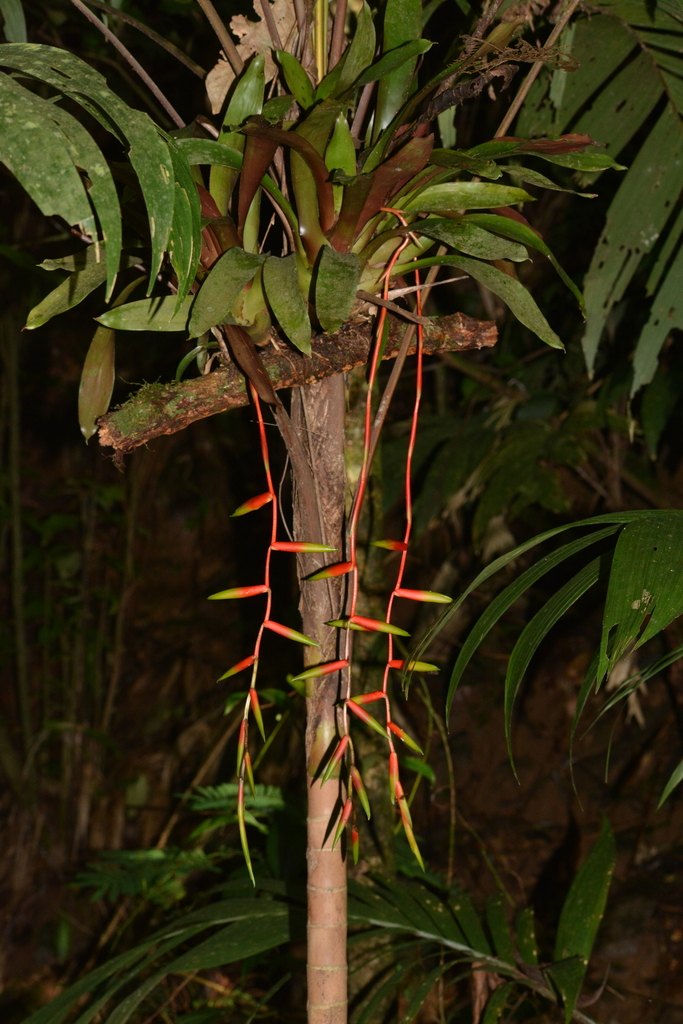
Vriesea simplex
1. Introduction & Taxonomy
Vriesea simplex (Bromeliaceae, subfamily Tillandsioideae, order Poales) is tank-forming epiphytic, native to Trinidad, Colombia, eastern Brazil and Venezuela.
Vriesea simplex is a plant species in the genus Vriesea. This species is native to Trinidad, Colombia, eastern Brazil and Venezuela.
Taxonomic Classification
Habitat and Distribution
Vriesea simplex is native to Trinidad, Colombia, eastern Brazil and Venezuela. Members of the genus Vriesea are characterised as tank-forming epiphyte bromeliads.
Botanical Note: The family Bromeliaceae contains approximately 3,700 species in 75 genera, divided into three major subfamilies: Bromelioideae (berry-fruited, often tank-forming), Tillandsioideae (capsular fruits, includes atmospheric air plants), and Pitcairnioideae (mostly terrestrial, often succulent or spiny). Native almost exclusively to the Americas (with a single species, Pitcairnia feliciana, in West Africa), bromeliads have evolved remarkable adaptations including water-holding leaf rosettes (phytotelmata), absorptive trichomes that replace root function, CAM photosynthesis for water conservation, and tank ecosystems supporting entire micro-communities of frogs, insects, and microorganisms.
Native Range & Distribution Map
The map below shows the native range and notable cultivation regions for Vriesea simplex.
2. Biology & Morphology
Growth Form & Architecture
Vriesea simplex is a tank-forming bromeliad that produces a rosette of broad, overlapping leaves arranged in a vase shape. The tightly clasping leaf bases create a central reservoir (phytotelma) that collects rainwater, fallen organic debris, and nutrients — essentially forming its own miniature ecosystem. This tank can hold substantial amounts of water and supports communities of aquatic organisms including frog tadpoles, mosquito larvae, algae, and bacteria.
Leaf Morphology
The leaves of Vriesea simplex are arranged in a spiral rosette pattern. Bromeliad leaves typically have smooth or spiny margins and may be smooth, covered in fine trichomes (absorptive scales), or waxy. The leaf colour ranges from green to grey-silver, purple, red, or variegated depending on species and light exposure.
Inflorescence & Flower Structure
The inflorescence emerges from the centre of the rosette and can take various forms: a simple spike, a branched panicle, or a compact head. Many bromeliads are prized for their colourful bracts — modified leaves that surround the often small true flowers and can persist for weeks or months.
Key Characteristics
- Height: 30-60cm
- Growth Habit: Tank-forming Rosette
- Growth Rate: Moderate under optimal conditions
Anatomical Insight: Bromeliads are monocots in the order Poales (related to grasses and sedges, not to gingers or bananas). Their most distinctive feature is the rosette growth form with specialised trichomes — multicellular scales on leaf surfaces that can absorb water and dissolved nutrients directly. In atmospheric species like many Tillandsia, trichomes completely replace root function. Many bromeliads use CAM (Crassulacean Acid Metabolism) photosynthesis, opening their stomata at night to reduce water loss — an adaptation to epiphytic or arid habitats where water is intermittent.
3. Reproduction & Propagation
The primary propagation methods for Vriesea simplex: Offsets (pups) or seed.
Seed Propagation
Bromeliad seeds should be sown fresh on moist sphagnum moss or a peat/perlite mix. Keep warm (22-28°C), humid, and in bright indirect light. Germination ranges from 2 weeks to several months depending on species. Seed-grown plants are slow to reach flowering size (3-7 years for most species).
Vegetative Propagation (Pups/Offsets)
- Offset Division: Most bromeliads produce offsets (pups) from the base of the mother plant after flowering. Wait until pups reach 1/3 to 1/2 the size of the parent before separating. Cut the pup from the mother with a sharp, sterile knife, ensuring it has some root tissue attached.
- Timing: Best done in spring or early summer when growth is most active
- Note: The mother plant typically declines after flowering and producing pups — this is normal monocarpic behaviour for many bromeliads
Bromeliad Pollination Biology: Bromeliads employ diverse pollination strategies depending on subfamily and genus. Many Bromelioideae and Tillandsioideae are hummingbird-pollinated (ornithophily), with tubular flowers and bright red/orange bracts. Some Tillandsia species with pale, fragrant, night-opening flowers are moth-pollinated. Bat pollination occurs in some Werauhia and Vriesea. The terrestrial Pitcairnioideae are often insect-pollinated. This diversity of pollination syndromes reflects the family's remarkable adaptive radiation across the Americas.
Propagation Tips: (1) Allow pup wounds to callous for a day before mounting or potting. (2) Pot pups in a well-draining bromeliad mix (bark, perlite, peat). (3) Keep humidity high for newly separated pups. (4) Seed germination requires patience — many bromeliads take 3-7 years from seed to first flower. (5) Some species produce basal offsets continuously and form impressive clumps over time.
4. Cultivation Requirements
Substrate / Mounting
Use a light, well-draining epiphytic mix: orchid bark (50%), perlite (25%), peat or coir (15%), charcoal (10%). The mix should be open and fast-draining. Tank bromeliads derive most nutrition from water and debris collected in their central cup, so the root medium primarily serves for anchorage.
Watering
Keep the central cup filled with fresh water at all times during the growing season. Flush the tank monthly to prevent stagnation. Water the potting medium sparingly — the roots mainly serve for anchorage, not water uptake. Reduce cup water in winter or in cool conditions to prevent rot.
Light Requirements
Bright indirect light is ideal for most tank-forming bromeliads. Some species develop their best leaf colouration (reds, purples) with higher light levels. Avoid intense direct sun which can scorch leaves, but too little light results in stretched, pale growth and reduced flowering.
Temperature
- Optimal Growth: 18–30°C (65–86°F)
- Minimum Tolerance: 8°C (46°F)
- USDA Hardiness: Zones 10-12
Humidity
Most bromeliads prefer 50-70% relative humidity. Tank bromeliads are more tolerant of dry air than atmospheric species since they carry their own water supply. Increase humidity with pebble trays, grouping plants, or humidifiers.
Fertilization
Mist air plants with a dilute bromeliad fertilizer (1/4 strength) every 2-4 weeks during the growing season. Never pour fertilizer into the central cup of tank bromeliads — this can burn the meristem; instead, apply dilute foliar spray or add to irrigation water.
Common Cultivation Mistake: Never use copper-containing fungicides or fertilizers on bromeliads — copper is toxic to them. Also avoid hard, alkaline water; use rainwater, distilled, or reverse-osmosis water for misting and tank-filling.
5. Diseases & Pests
Vriesea simplex, like most bromeliads, is generally resilient when cultural conditions are correct. Most problems arise from overwatering, poor drainage, or inadequate air circulation.
Major Diseases
Crown / Heart Rot (Phytophthora, Erwinia)
The most devastating bromeliad disease. Caused by overwatering or water stagnating in the central cup during cool weather. The growing point turns brown and mushy, and the central leaves pull out easily. Prevention: ensure good drainage, reduce watering in cool weather, flush tanks regularly, and maintain good air circulation. There is no cure once the meristem is destroyed.
Root Rot (Pythium, Fusarium)
Affects potted bromeliads in waterlogged substrate. Roots turn brown and mushy. Use well-draining media, avoid overwatering, and repot affected plants after trimming rotted roots and treating with fungicide.
Leaf Spot (various fungi)
Brown or black spots on leaves, often with a yellow halo. Usually caused by poor air circulation and excess moisture on foliage. Remove affected leaves, improve ventilation, and reduce overhead watering.
Common Pests
- Scale Insects — Brown or white bumps on leaves and leaf bases. The most common bromeliad pest. Treat with isopropyl alcohol on a cotton swab, neem oil, or systemic insecticide.
- Mealybugs — White, cottony masses in leaf axils and bases. Treat with isopropyl alcohol, neem oil, or insecticidal soap.
- Spider Mites — Cause stippled, bronzed foliage in dry conditions. Increase humidity and treat with miticide or neem oil.
- Fungus Gnats — Larvae feed on roots in overly moist substrate. Allow substrate to dry more between waterings, and use sticky traps for adults.
- Slugs & Snails — Feed on soft leaf tissue, especially on terrestrial species. Use barriers or baits.
- Weevils — Some weevil species bore into bromeliad stems and flower stalks. Remove and destroy affected parts.
Integrated Pest Management: (1) Quarantine all new plants for 2-4 weeks. (2) Inspect leaf axils and bases regularly — pests often hide in crevices. (3) Never use copper-based fungicides on bromeliads (copper toxicity). (4) Neem oil is effective and bromeliad-safe for most pests. (5) Good air circulation prevents most fungal diseases. (6) Use rainwater or distilled water to prevent mineral buildup on trichomes.
6. Indoor Growing Guide
Vriesea simplex makes an excellent indoor specimen with its decorative rosette and often colourful inflorescence that can persist for months. Tank bromeliads are well-suited to indoor conditions, tolerating lower light levels and dry air better than many tropical houseplants.
Container / Display
Use a well-draining container with drainage holes. Bromeliads have small root systems relative to their size, so shallow, wide pots work well. Clay pots provide better drainage and aeration than plastic. For tank bromeliads, decorative containers without drainage can work if you water the cup only and keep the roots dry.
Indoor Light
Bright indirect light from a south-, east-, or west-facing window. Many bromeliads tolerate lower light than most houseplants but will not flower without sufficient light intensity. Full-spectrum LED grow lights are excellent supplements, especially in winter.
Humidity & Air Circulation
Indoor humidity of 40-60% is adequate for most bromeliads. Tank bromeliads are more tolerant of dry air since they carry their own water supply. Central heating can drop humidity below 30%, causing brown leaf tips. Use pebble trays, grouping, or humidifiers as needed.
Seasonal Indoor Care
- Spring: Resume regular watering and feeding. Check for pups around the base of the mother plant.
- Summer: Peak growth and possible flowering. Keep tank filled (tank types), water regularly, and feed every 2-3 weeks.
- Autumn: Reduce fertiliser. Growth slows as light decreases.
- Winter: Water sparingly, stop fertilising. Empty or reduce water in tanks during cool weather to prevent rot.
Indoor Success Key: The combination of bright indirect light, well-draining substrate, and avoiding overwatering covers 90% of indoor bromeliad success. Bromeliads are surprisingly resilient houseplants that tolerate neglect better than fussing.
7. Landscape Use & Design
Vriesea simplex provides bold architectural form in tropical and subtropical landscapes. Use as understorey accent, container specimen, or mounted on trees and garden structures for a naturalistic epiphytic display.
Design Applications
- Tropical Understorey: Use tank bromeliads as colourful groundcover or understorey accents beneath palms, tree ferns, and canopy trees.
- Rock Gardens: Mount smaller bromeliads on rocks and boulders for naturalistic rockery displays.
- Container Displays: Bromeliads make outstanding patio and terrace container plants, allowing flexible placement and easy winter protection
- Living Walls: Both air plants and small tank bromeliads are ideal for vertical garden installations and green walls
- Indoor-Outdoor: Move container bromeliads outdoors for summer and back indoors for winter in temperate climates
Companion Planting
Create stunning combinations by pairing with:
- Palms — Natural canopy providers and structural contrast
- Tree Ferns (Dicksonia, Cyathea) — Dramatic trunks for mounting epiphytic bromeliads
- Aroids (Alocasia, Philodendron) — Complementary bold tropical foliage
- Orchids — Fellow epiphytes with similar cultural needs
- Succulents & Cacti — Pair with xeric bromeliads (Dyckia, Hechtia) in desert/rock garden themes
- Ferns — Delicate fronds contrast beautifully with bold bromeliad rosettes
Design Principle: Bromeliads offer incredible diversity of form, colour, and texture. Combine large terrestrial species (Puya, Alcantarea) as architectural focal points, mid-sized tank bromeliads (Aechmea, Vriesea) as colourful accents, and small air plants (Tillandsia) as textural details. The range of growth habits — from ground-hugging rosettes to tree-mounted epiphytes to towering flower spikes — allows bromeliads to fill every garden niche.
8. Cold Climate Strategies
Vriesea simplex is a tropical species requiring frost-free conditions. In temperate climates, grow as a container plant that can be brought indoors for winter.
Hardiness Thresholds
- USDA Zones: 10-12
- Minimum Survival Temperature: 8°C (46°F)
Overwintering Options
- Indoor Relocation: Move container-grown bromeliads to a bright, frost-free location (conservatory, greenhouse, bright room). Reduce watering.
- Dry Crown Protection: For borderline-hardy species outdoors, the key is keeping the crown dry. Cover with a rain shield (glass/plastic cloche, inverted pot) and mulch the root zone. Many bromeliads tolerate cold but not cold + wet.
- Frost Fleece: Wrap vulnerable plants with horticultural fleece during frost events. This provides 2-4°C of protection.
- Greenhouse: An unheated or minimally heated greenhouse provides ideal winter conditions for bromeliad collections.
Winter Survival Rule: Cold + wet = death for most bromeliads. Crown rot from water sitting in the rosette during cold weather is the primary winter killer. Ensure the crown stays dry during frost periods. Tilting potted plants or providing rain covers for outdoor specimens prevents water accumulation in the rosette. Hardy terrestrial species (Fascicularia, Puya) tolerate frost best in sharply drained, gritty soil on raised beds or slopes.
Summary & Key Takeaways
Vriesea simplex, is a tank-forming member of the genus Vriesea, native to Trinidad, Colombia, eastern Brazil and Venezuela.
Key Points to Remember:
- Propagation: Offsets (pups) / seed
- Light: Bright indirect light
- Substrate: Well-draining epiphyte mix (bark, perlite, peat)
- Humidity: 50-70% for optimal growth
- Hardiness: USDA Zones 10-12, minimum 8°C (46°F)
- Key Threat: Crown rot from waterlogging — drainage and dry crown in cold weather are paramount