Operculicarya decaryi (Jabily)
Operculicarya decaryi (Jabily)



Introduction
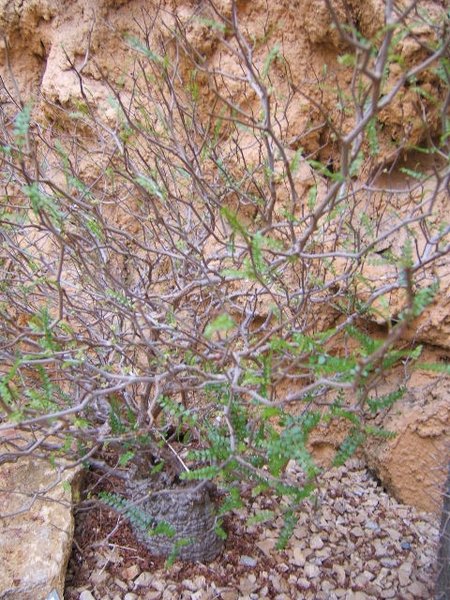
Operculicarya decaryi, the elephant tree of Madagascar, is an extraordinary caudiciform species that produces massively swollen, textured trunks covered in deeply fissured bark, combined with tiny pinnate compound leaves that create a perfectly scaled canopy at virtually any bonsai size. Native to the spiny forests of southwestern Madagascar, the species is increasingly prized in bonsai for its unique combination of dramatic trunk character, proportionally tiny foliage, and the ancient, weathered appearance that develops even on relatively young specimens. The deeply cracked, corky bark is unlike anything produced by ficus or conventional tropical bonsai species.
The trunk is the species' masterpiece: thick, irregularly swollen with deep, corky fissures that create a bark texture resembling the skin of an elephant — hence the common name. The bark is grey-brown with deep cracks that intensify with age, developing on trunks as thin as 15-20 mm. The compound leaves consist of tiny leaflets just 5-12 mm long, arranged pinnately along thin rachises — the smallest leaves of any species in this tropical bonsai collection. The species is semi-deciduous to deciduous, dropping leaves during the cool dry season. New leaves emerge reddish-bronze before maturing to dark green. Small flowers and fruits are produced on mature specimens.
| Common Name | Jabily | Family | Anacardiaceae |
| Origin | Madagascar | Indoor/Outdoor | Indoor |
| Bonsai Tradition | Emerging | Japanese Name | — |
| Difficulty | Intermediate | Group | Ficus & Tropical |
| Recommended Styles | Moyogi (Informal Upright), Shakan (Slanting), Multi Trunk | ||
| Size Categories | Shohin (15–20 cm), Chuhin (25–46 cm) | ||
History & Tradition
Operculicarya bonsai is a modern phenomenon, gaining international attention since the 2000s as Madagascar's unique succulent and caudiciform flora entered the international horticultural market. Japanese, European, and American collectors have developed impressive specimens from both seed-grown and legally collected material. The species has become a signature plant of the caudiciform bonsai movement that blends succulent cultivation with bonsai aesthetics. Conservation concerns have increased awareness of sustainable sourcing.
About Ficus & Tropical Bonsai
Ficus species are the premier indoor bonsai genus, capable of developing impressive aerial roots, buttress trunks, and banyan-style root systems that evoke ancient tropical trees in miniature. Ficus retusa, microcarpa, and benjamina respond vigorously to pruning and can be styled year-round in warm climates. The aerial root development that distinguishes ficus bonsai requires sustained high humidity; many growers use humidity chambers or bag techniques to encourage root descent. Tropical bonsai forgive more mistakes than temperate species, making them accessible to beginners while offering advanced styling potential. Ficus can fuse multiple trunks and roots, allowing artists to build massive trunks in relatively few years. These trees require protection from temperatures below 15°C and benefit from outdoor summer growing.
Botanical Profile
| Family | Anacardiaceae | Genus | Operculicarya |
| Species | decaryi | Plant Type | succulent tree |
| Origin | Madagascar | Growth Rate | slow |
| Foliage Type | deciduous | Bark Character | grey-brown, deeply textured |
| Autumn Color | Height Range | 15-50 |
Operculicarya decaryi belongs to Anacardiaceae (cashew family, same as mango and pistachio), endemic to the spiny forests (fourré) of southwestern Madagascar. The species grows as a small tree or large shrub to 5-9 m in the wild, with massive trunk swelling adapted to water storage during the extreme dry seasons of southern Madagascar. The deeply fissured bark may function as moisture retention and thermal regulation. The species is part of Madagascar's unique and highly endangered endemic flora — wild populations are threatened by habitat loss and overcollection. International trade is regulated under CITES Appendix II. The species name honors French botanist Raymond Decary.
Bonsai Styles
| Style | Japanese Name |
|---|---|
| Moyogi | Informal Upright |
| Shakan | Slanting |
| Multi Trunk |
The sculptural trunk dictates the style — every Operculicarya bonsai is fundamentally a trunk showcase. Informal upright emphasizing the swollen, textured trunk with a proportional canopy of tiny leaves is the primary form. The natural trunk movement and taper often suggest specific styling directions. Root-over-rock with the textured trunk atop stone creates dramatic compositions. Multiple-trunk compositions from naturally forked specimens. The tiny compound leaves maintain perfect proportionality from mame through large format. Formal styles are inappropriate — the species' character is ancient, weathered, and irregular.
Group Style Guide
Banyan style with exposed aerial roots is the signature form for ficus bonsai, unique to this genus. Formal and informal upright styles work well when combined with buttress root development. Root over rock (sekijoju) is spectacular with ficus, as aerial roots eventually encase the stone completely. Connected root (netsunagari) and raft (ikadabuki) styles exploit the ficus ability to fuse tissue readily. Forest plantings using fused-trunk techniques allow creation of convincing banyan groves. The tropical origin of ficus means traditional Japanese styling rules are often relaxed in favor of naturalistic tropical aesthetics.
Trunk & Nebari
| Nebari Development | moderate | Deadwood Suitability | not_suitable |
| Bark Scarring Risk | moderate | Bark Character | grey-brown, deeply textured |
Trunk development is slow to moderate — 5-8 mm caliper gain per year. The deeply fissured bark is the species' primary ornamental feature and begins developing on trunks over 15-20 mm, becoming increasingly dramatic with age. The trunk naturally swells irregularly, creating the bulging, elephant-skin texture that defines the species. Buttress roots and surface roots develop with maturity, adding to the ancient tree impression. Trunk chops produce moderate back-budding — the species responds but less vigorously than ficus. Wild-collected or nursery-grown specimens with pre-developed trunk character are the most practical starting point for impressive bonsai.
Deadwood Techniques
The deeply fissured bark provides sufficient trunk interest without deadwood features. Dead branch stubs dry naturally and can remain as minor character elements. Carved features are impractical — the corky bark texture is the species' trunk artistry, and carving would disrupt it. The bare winter trunk with its elephant-skin texture is the species' most dramatic display — deadwood features would compete with this natural sculpture.
Wiring & Shaping
Fine aluminum wire (1-2 mm) for the thin branches. Wire during the growing season on partially hardened wood. The deeply fissured trunk bark must not be wrapped with wire — any trunk shaping should use guy wires or positional growing. Branch wiring is straightforward as the thin branches accept positioning readily. Clip-and-grow manages canopy development through the growing season. The tiny compound leaves make branch structure clearly visible during wiring.
| Wire Type | Bark Scarring Risk | Best Season |
|---|---|---|
| Aluminum | Lower (softer wire) | Late autumn / early spring |
| Annealed copper | Higher (holds shape better) | Late autumn / early spring |
🌍 Distribution Map
Native origin: Madagascar
Pruning & Pinching
| Ramification Quality | fine | Leaf/Needle Reduction | good |
Trim new growth to maintain the proportional canopy — the tiny leaflets and short rachises produce naturally compact growth requiring minimal intervention. Structural pruning during the dormant leafless period reveals the trunk for assessment. The species back-buds from older wood but slowly — avoid removing more than 25% of the canopy in a single pruning session. Seal cuts over 5 mm. The small-scale growth means most pruning uses fine-tipped scissors or tweezers.
Watering
Water when the soil dries during the growing season — every 3-5 days in active growth. The succulent trunk stores water, providing moderate drought tolerance. During winter dormancy when leaves have dropped, water very sparingly — every 2-3 weeks — just enough to prevent trunk shriveling. Overwatering a dormant Operculicarya causes root rot rapidly. The transition from dormant dry to active moist should be gradual. The thick bark helps retain trunk moisture even during dry periods.
Soil & Repotting
| Substrate Type | Tropical Mix (Akadama/Bark/Perlite) |
| Repotting Frequency | Every 3 years |
| Root Pruning Tolerance | moderate |
Fast-draining mineral mix: 40% pumice, 30% akadama, 20% lava rock, 10% bark. Sharp drainage is essential — the species' Madagascar origin means it is adapted to porous limestone and sandy soils. Repot every 2-3 years in spring as new growth begins. Root pruning of 20-25% — more conservative than ficus due to slower recovery. Allow cut roots to dry for 2-3 days before resuming watering. The heavy trunk may require securing with wire through the drainage holes until new roots anchor the tree.
Group Soil Recipes
Tropical ficus substrate combines inorganic and organic components: 40% akadama, 25% pumice, 20% pine bark, 15% perlite. The organic component supports the tropical growth rate while maintaining drainage. Particle size of 2–5 mm suits most ficus sizes. Repot every 2–3 years; ficus can be repotted at any time when temperatures are above 20°C. Root pruning stimulates the vigorous new root growth that supports aerial root development. A top dressing of sphagnum moss around aerial root attachment points encourages descent.
Fertilizing
| Season | NPK Ratio | Frequency | Notes |
|---|---|---|---|
| Spring | 10-10-10 | Every 2 weeks | Support new growth |
| Summer | 10-10-10 | Every 2 weeks | Sustain vigor |
| Autumn | 10-10-10 | Every 3–4 weeks | Harden off for winter |
| Winter | 5-5-5 | — | Reduce to monthly at half strength |
Dilute balanced fertilizer every 4-5 weeks during the growing season. Half-strength applications suit the species' adaptation to nutrient-poor soils. Stop feeding during winter dormancy. Resume 3-4 weeks after spring growth begins. The moderate growth rate means moderate fertilization — the species does not need heavy feeding to develop its characteristic trunk texture.
Light & Placement
Full sun is essential for compact growth and best bark development. The species is adapted to the intense sun of southern Madagascar. Indoor cultivation requires the brightest possible position with supplemental grow lights. Outdoor growing during summer dramatically improves growth and bark character. Insufficient light produces leggy growth with elongated internodes that diminish the species' compact charm.
Seasonal Placement Guide
Spring: Increase watering and fertilizing as days lengthen; move outdoors when night temperatures consistently exceed 15°C. Summer: The primary growing season; heavy feeding, full sun outdoors, regular pruning to maintain shape; ideal time for aerial root development. Autumn: Begin transition indoors before first frost; gradually reduce fertilizer. Winter: Reduce watering; maintain temperatures above 15°C; supplement with grow lights if needed; growth slows but does not stop completely. Avoid placement near heating vents or drafty windows.
Seasonal Care
| Season | Watering | Feeding | Key Tasks |
|---|---|---|---|
| Spring | Increasing | Resume / increase | Repotting, structural pruning, wiring |
| Summer | Maximum | Regular biweekly | Maintenance pruning, pinching, pest watch |
| Autumn | Decreasing | Reduce / stop | Wiring, structural work, winter preparation |
| Winter | Reduced | Monthly at half strength | Maintain warmth, supplemental light |
Spring: New reddish-bronze growth emerges — resume watering gradually, begin feeding, repot if needed. Summer: Active growth in full sun — trim as needed, water when dry, fertilize regularly. Autumn: Growth slows, leaves may begin dropping — reduce watering, stop feeding. Winter: Semi-dormant to fully deciduous — water sparingly, no fertilizer, maintain above 10°C, appreciate the spectacular bark on the bare trunk. The deciduous period showcases the trunk sculpture that is the species' primary bonsai asset.
Group Seasonal Guide
Spring: Increase watering and fertilizing as days lengthen; move outdoors when night temperatures consistently exceed 15°C. Summer: The primary growing season; heavy feeding, full sun outdoors, regular pruning to maintain shape; ideal time for aerial root development. Autumn: Begin transition indoors before first frost; gradually reduce fertilizer. Winter: Reduce watering; maintain temperatures above 15°C; supplement with grow lights if needed; growth slows but does not stop completely. Avoid placement near heating vents or drafty windows.
Pests & Diseases
Generally pest-free. Spider mites may appear on foliage in hot dry conditions. Mealybugs hide in bark crevices — the deep fissures provide excellent hiding places. Root rot from overwatering is the primary threat, especially during dormancy. The species' thick, corky bark provides natural protection from physical damage. Cold sensitivity is significant — sustained temperatures below 5°C cause damage.
Group Pest Guide
Scale insects are the most common ficus pest, appearing as brown bumps on stems and leaf undersides; treat with horticultural oil or systemic insecticide. Mealybugs colonize leaf axils and produce white waxy masses; treat with rubbing alcohol on a cotton swab for small infestations. Thrips cause silvered, stippled leaves; treat with systemic insecticide. Leaf drop in ficus is usually environmental (cold draft, light change) rather than pest-related. Sooty mold grows on honeydew from scale or mealybugs; controlling the pest eliminates the mold. Root rot occurs in waterlogged soil; maintain good drainage.
| Pest/Disease | Identification | Treatment |
|---|---|---|
| Spider Mites | Fine webbing, stippled/bronzed foliage | Miticide spray, increase humidity, neem oil |
| Scale Insects | Brown or white bumps on stems/branches | Horticultural oil, systemic insecticide, manual removal |
| Mealybugs | White cottony masses in leaf axils | Rubbing alcohol on cotton swab, systemic insecticide |
Propagation
Seed germination is the primary propagation method — seeds germinate in 2-4 weeks in warm, moist conditions. Semi-hardwood cuttings root with moderate success (40-50%) using IBA at 3000-4000 ppm. Air layering is slow (12-16 weeks) but succeeds on branches over 10 mm. Wild-collected specimens from Madagascar require CITES documentation. Nursery-propagated plants are the ethical and legal source for international growers. Seed-grown plants develop the best natural trunk character.
Group Propagation Guide
Ficus is among the easiest bonsai genera to propagate. Cuttings root in water or moist medium within 2–4 weeks. Air layering produces large, thick-trunked bonsai starts within 8–12 weeks. Multiple cuttings can be fused together to create thick trunks rapidly. Root cuttings can generate new plants. Ficus also roots from leaf cuttings, though resulting plants lack trunk development. Approach grafting is used to add branches where needed on established bonsai. The fusion technique, where many cuttings are bound together and grown until they merge, is unique to ficus bonsai cultivation.
| Method | Timeline | Notes |
|---|---|---|
| Seeds | Variable | Consult species-specific guides |
| Cuttings | Variable | Consult species-specific guides |
Size Classification
The tiny compound leaves make O. decaryi effective at every bonsai size from mame through large format — the foliage is proportional even on trees as small as 8 cm. Shohin and chuhin sizes showcase the bark texture at viewable scale while maintaining proportional foliage. Large specimens with mature trunk fissuring are spectacular but rare and expensive. The species' slow growth means impressive specimens represent years of development or wild collection.
| Keshitsubo (3–8 cm) |
| Shito (5–10 cm) |
| Mame (5–15 cm) |
| Shohin (15–20 cm) ✅ |
| Komono (15–25 cm) |
| Chuhin (25–46 cm) ✅ |
| Omono (46–76 cm) |
| Dai (76–122 cm) |
| Imperial (122+ cm) |
Varieties & Cultivars
No named cultivars exist in common cultivation. Natural variation in bark fissuring depth and leaf size exists among seed-grown populations. Related species O. pachypus has thicker caudex and even deeper bark fissuring — rarer but also used in bonsai. The species is sometimes confused with O. hyphaenoides in the trade. Select specimens with the deepest bark fissuring and smallest leaflets for bonsai.
Group Varieties
Ficus retusa (also sold as F. microcarpa) is the most common bonsai ficus with small, dark glossy leaves. Tiger Bark ficus has distinctive striped bark that develops with age. Willow Leaf ficus (F. salicaria) has narrow, elongated leaves. Ficus benjamina develops elegant weeping forms. Ficus religiosa (Bodhi tree) has heart-shaped leaves with elongated tips. Ficus natalensis from Africa produces excellent aerial roots. Ginseng ficus (F. microcarpa) is mass-produced but can develop into quality bonsai with work. Ficus racemosa has large leaves but impressive trunk development.
Buying Guide & Display
Available from caudiciform/succulent specialists and bonsai importers for $30-100+ for seedlings and small plants with developing bark character. Mature specimens with thick, deeply fissured trunks command $200-1000+. Verify CITES documentation for imported specimens — legal compliance protects both the buyer and wild populations. Nursery-propagated plants from reputable sellers are the ethical choice. Select specimens with the most dramatic bark fissuring and smallest leaflets. Seeds from specialist suppliers cost $10-20 and allow growing from scratch.
| Check | What to Look For |
|---|---|
| Trunk | Good taper, interesting movement, no reverse taper at graft union |
| Nebari | Even radial root spread, no circling or crossing roots |
| Roots | Healthy white root tips visible, no root rot smell |
| Branches | Well-placed primary branches, no large scars or stubs |
| Health | Vibrant foliage color, no pests, firm bark, strong buds |
Troubleshooting
Trunk not developing fissured bark on a plant over 15 mm caliper likely indicates insufficient sun or the plant is a different Operculicarya species with smoother bark. Leaves not dropping in autumn may mean the tree is not receiving cool/dry dormancy cues — reduce watering and allow cooler temperatures. Soft spots on the trunk indicate rot — cut away immediately and keep dry. Very slow growth is normal for the species — patience is essential. Leaflets larger than expected suggest excessive fertilization or insufficient light.
Common Problems
Display & Exhibition
Unglazed pots in warm earth tones showcase the bark without distraction. The deeply fissured trunk is the primary exhibition focus — position for maximum bark visibility. The bare winter trunk can be exhibited as a trunk-focused composition showcasing the elephant-skin bark texture. Simple, understated stands complement the naturally dramatic trunk. Pair with a minimal accent plant (small succulent or moss) that does not compete with the trunk for attention. The species creates unique exhibition compositions that bridge succulent and bonsai aesthetics.
Group Display Guide
Ficus bonsai are displayed on medium-height stands, with banyan-style specimens showcased to emphasize aerial root cascades. Glazed or unglazed pots in earth tones suit the tropical character. Display in well-lit areas; ficus will decline in low light even during temporary exhibition. A tropical accent plant like a small fern or moss grouping complements the composition. Marble or stone slabs work well as display bases for large ficus. The viewing angle should emphasize the root spread and aerial root structure.
Frequently Asked Questions
How often should I water my Jabily bonsai?
Water your Jabily bonsai when the top layer of soil begins to dry. During summer this may be daily or even twice daily for outdoor trees; in winter, reduce frequency significantly. Always water thoroughly until water runs from the drainage holes, then allow the soil to partially dry before the next watering.
Can I keep Jabily bonsai indoors?
Yes, Jabily can be grown indoors in a bright location near a south-facing window. Supplement with grow lights in winter if needed.
What bonsai styles suit Jabily?
Jabily is particularly well-suited to Moyogi, Shakan, Multi Trunk. Choose a style that complements the existing trunk movement and natural growth habit of your individual tree.
When should I repot my Jabily bonsai?
Repot Jabily every 3 years in early spring, just before the buds begin to swell. Signs that repotting is needed include water sitting on the surface without soaking in, roots circling inside the pot, or reduced vigor despite proper care.
How do I wire Jabily bonsai?
Use aluminum wire for Jabily. Apply wire at a 45-degree angle, with wire thickness approximately one-third of the branch diameter. Wire during the dormant season when possible, and check wires every 2–4 weeks during the growing season to prevent them cutting into the bark.
Is Jabily good for beginners?
Jabily has a difficulty level of intermediate. While not the easiest species, it rewards careful attention to watering and seasonal care.
What soil mix should I use for Jabily?
Use Tropical Mix (Akadama/Bark/Perlite) for Jabily. The key principle is excellent drainage combined with adequate moisture retention. Never use standard garden soil or purely organic potting mix for bonsai, as these compact over time and suffocate roots.
How do I promote ramification on Jabily?
Ramification on Jabily is rated as fine. Promote finer branching through repeated cycles of growing and cutting back. Allow shoots to extend 4–6 nodes, then prune back to 1–2 nodes. Over multiple growing seasons, this creates increasingly dense and refined branch structure.
When is the best time to prune Jabily?
Perform structural pruning on Jabily during the dormant season (late autumn to late winter) when the tree's energy reserves are in the roots. Maintenance pruning and pinching of new growth can be done throughout the growing season to maintain shape and promote density.
How cold-hardy is Jabily?
Jabily should be protected from temperatures below 10°C. Hardy in USDA zones 10-12. Protect container roots by placing in an unheated garage, cold frame, or burying the pot in ground soil during extreme cold.
Quick Reference Summary
| Scientific Name | Operculicarya decaryi |
|---|---|
| Common Name | Jabily |
| Family | Anacardiaceae |
| Origin | Madagascar |
| Group | Ficus & Tropical |
| Indoor/Outdoor | Indoor |
| Difficulty | Intermediate |
| Bonsai Tradition | Emerging |
| Wiring Suitability | good |
| Wire Type | aluminum |
| Ramification | fine |
| Leaf/Needle Reduction | good |
| Nebari Development | moderate |
| Deadwood Suitability | not_suitable |
| Substrate | Tropical Mix (Akadama/Bark/Perlite) |
| Repotting Frequency | Every 3 years |
| USDA Zones | 10-12 |


