Bolbitis heudelotii (African Water Fern, Congo Fern, Creeping Fern)
Bolbitis heudelotii

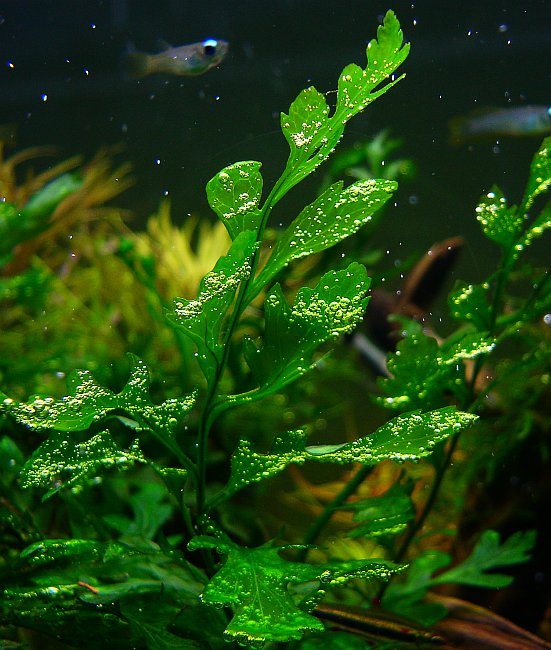
Table of Contents
Introduction & Discovery
Bolbitis heudelotii, the African Water Fern, represents one of the most elegant yet challenging aquatic ferns available to modern aquascapers and vivarium enthusiasts. Native to the fast-flowing rivers and waterfall splash zones of tropical Africa—from the legendary Congo River basin westward to Senegal and eastward to Ethiopia—this rheophytic species has evolved notable adaptations for life in perpetually moving water. Unlike terrestrial ferns that colonize forest floors, B. heudelotii anchors itself to submerged rocks and driftwood using threadlike rootlets extending from a robust horizontal rhizome measuring 0.4-1.0 cm in diameter. The species exhibits striking morphological plasticity between its submersed and emersed forms: underwater fronds develop as delicate, semi-transparent, bottle-green structures with single to double pinnate divisions reaching 15-40 cm in length, while aerial fronds grow considerably more rigid with matte green coloration and simpler single pinnate architecture extending 20-50 cm. First described scientifically by Arthur Hugh Garfit Alston in 1934 and named to honor French botanical explorer Jean-Pierre Heudelot (1802-1837) who collected extensively in Guinea and Senegal between 1828 and 1837, this fern has transitioned from obscure African riverine species to a cornerstone plant in the aquascaping hobby. Its slow, deliberate growth pattern—producing just one new frond every 1-2 months under optimal conditions—demands patience but rewards dedicated cultivators with architectural presence and textural sophistication that few aquatic plants can match. The fern's reputation as a "bullet-proof" species among experienced aquarists refers not to ease of cultivation but to its resilience once properly established, thriving for years in stable aquatic environments while remaining undemanding regarding nutrient supplementation and tolerant of a broad range of water chemistry parameters within its preferred soft, acidic spectrum.
Discovery & Naming
The formal botanical description of Bolbitis heudelotii emerged from the extensive plant collections made by French explorer and naturalist Jean-Pierre Heudelot during his expeditions to West Africa between 1828 and 1837. Heudelot, born in 1802 in Brittany, France, dedicated his short but productive career to documenting the flora of Guinea and Senegal, regions that remained botanically underexplored by European science during the early 19th century. Working under challenging conditions—tropical diseases, limited funding, and the logistical difficulties of preserving delicate plant specimens in equatorial humidity—Heudelot nevertheless assembled herbarium collections that would prove foundational to West African botany. His fern specimens, including the type material for what would become Bolbitis heudelotii, were shipped to Paris where they entered the collections of the Muséum National d'Histoire Naturelle. Heudelot's death in 1837 at age 35, likely from tropical illness contracted during his fieldwork, meant he never witnessed the formal description of the species that would carry his name. The actual taxonomic work came nearly a century later when British pteridologist Arthur Hugh Garfit Alston (1902-1958), working at the British Museum of Natural History, published the species description in 1934 as part of his comprehensive revision of African Bolbitis species. Alston, who earned his doctorate from Cambridge University and spent his career specializing in the taxonomy of tropical ferns, recognized that specimens previously identified as other Bolbitis species actually represented a distinct taxon characterized by its specific combination of rhizome morphology, frond architecture, and soral arrangement. The specific epithet 'heudelotii' honored the French collector whose specimens formed the basis for Alston's description, following the standard botanical convention of commemorating collectors in species names. For decades following its description, B. heudelotii remained known primarily to botanical specialists working on African fern taxonomy, with living material rarely cultivated outside its native range. The species' transition from botanical curiosity to aquarium mainstay began in the 1970s when European aquarium plant exporters, particularly those based in the Netherlands and Denmark, began importing aquatic plants from West Africa to supply the growing aquascaping hobby. Early imports proved challenging—collectors initially shipped plants fully submersed, not understanding that the species could tolerate emersed shipping more successfully, resulting in high mortality during transport. By the 1980s, improved collection and shipping protocols, combined with the plant's growing reputation for unique aesthetic qualities and relative hardiness once established, secured B. heudelotii's position as a cornerstone species in aquascaping, particularly in naturalistic African biotope aquaria and among aquascapers pursuing the Dutch aquascaping style that emphasized textural diversity through careful plant selection.
Frond Morphology
The pinnate frond architecture of Bolbitis heudelotii represents a masterclass in hydrodynamic efficiency combined with photosynthetic optimization. Mature submersed fronds typically measure 15-40 cm in total length, with individual plants capable of supporting 8-15 simultaneous fronds under optimal aquarium conditions, though wild specimens in high-nutrient riverine environments may display 20-30 fronds forming dense colonies spanning 60-80 cm across substrate surfaces. The rachis (central axis) extends from the rhizome attachment point as a dark green to brownish structure measuring 1.5-3.0 mm in diameter, maintaining sufficient rigidity to support the frond's weight in air during emersed growth while remaining flexible enough to oscillate with water currents when submerged—this flexibility prevents mechanical damage that would occur if fronds were completely rigid. Pinnae (the individual leaflets) attach alternately along the rachis at intervals of 1.0-2.5 cm, with each pinna measuring 3-8 cm in length and 0.8-2.0 cm in width, displaying lanceolate to narrowly ovate shapes with finely serrated margins bearing teeth spaced at 1-2 mm intervals. The double pinnate forms, which develop more commonly in established specimens receiving adequate nutrition, exhibit secondary divisions where each primary pinna subdivides into 3-7 smaller pinnules, creating an exceptionally delicate, lace-like appearance highly prized in aquascaping for creating textural contrast against broader-leaved species. Venation patterns reveal considerable taxonomic information: the netted (reticulate) venation characteristic of Bolbitis differs markedly from the free-veining patterns seen in closely related genera, with primary lateral veins branching from the costa at 45-60 degree angles and subdividing 2-3 times before anastomosing (connecting) to form irregular polygonal areoles measuring 0.5-1.5 mm across. Frond coloration shifts substantially based on light intensity and nutrient availability: specimens grown under low light (15-25 μmol/m²/s PAR) develop deeper bottle-green to nearly olive coloration with enhanced chlorophyll concentrations, while those exposed to moderate lighting (35-50 μmol/m²/s PAR) exhibit brighter, more transparent green hues that allow substrate to show through the lamina tissue. The transition from submersed to emersed morphology occurs gradually over 3-4 weeks when water levels drop, with newly emerging fronds developing the characteristic matte texture and increased rigidity of aerial fronds while existing submersed fronds typically deteriorate and senesce rather than adapting to terrestrial conditions—cultivators must remove these dying fronds to prevent decay and subsequent water quality degradation.
Native Range & Distribution Map
Distribution map showing the native range of Bolbitis heudelotii.
Biology & Frond Morphology
The biological architecture of Bolbitis heudelotii centers on its specialized rhizome system, a horizontal modified stem that serves as the plant's primary structural and storage organ while facilitating vegetative expansion across suitable substrate surfaces. This rhizome, measuring 0.4-1.0 cm in diameter and covered in dark brown to nearly black scales, functions as both anchor and nutrient reservoir, producing adventitious roots ventrally that secrete adhesive compounds enabling the fern to maintain position against powerful currents measuring 0.5-2.0 meters per second in native West African rapids. The rhizome's apical meristem exhibits deterministic growth, extending 2-5 cm annually while producing new frond primordia at intervals of 4-8 weeks depending on environmental conditions—temperature, light intensity, and dissolved nutrient concentrations being primary regulatory factors. Each frond emerges tightly coiled in classic fern crozier formation, unfurling over 10-14 days to reveal the characteristic pinnate blade architecture. Submersed fronds develop significantly thinner lamina tissue (35-65 micrometers thickness) compared to emersed fronds (120-180 micrometers), an adaptation that maximizes surface area for nutrient absorption from the water column while minimizing structural investment in regions where buoyancy reduces gravitational stress. The vascular system within each frond consists of a central costa (midrib) from which lateral veins extend in a characteristic reticulate pattern, creating the fine netted venation visible when fronds are backlit—this network facilitates efficient translocation of photosynthates to the rhizome and developing fronds while maintaining structural integrity against hydraulic forces. Chloroplast density in submersed fronds reaches approximately 40-60 chloroplasts per mesophyll cell, optimized for low-light photosynthesis in the filtered light conditions of turbid African rivers where dissolved tannins and suspended sediments can reduce light penetration to 20-40% of surface irradiance at depths of just 30-50 cm. The species exhibits notable phenotypic plasticity in response to water flow velocity: fronds grown in high-flow conditions develop narrower pinnae with more acute angles, reducing drag coefficients by up to 35% compared to fronds cultivated in still water, demonstrating adaptive morphological responses that occur within individual plants across environmental gradients.
Spore Dispersal
As a true fern operating within the classic alternation of generations lifecycle, Bolbitis heudelotii produces spores as its primary means of genetic reproduction, though this rarely occurs in aquarium cultivation where vegetative propagation dominates. Sporangia—the microscopic capsules containing spores—develop on the abaxial (lower) surfaces of mature fertile fronds in distinctive patterns called sori, which appear as small brownish dots arranged in irregular clusters along the lateral veins, typically 0.5-1.0 mm from the pinna margins. Unlike many terrestrial ferns that produce sori in highly organized linear patterns or circular clusters protected by specialized tissue called indusia, B. heudelotii develops exindusiate sori (lacking protective covering), relying instead on submersion in water to maintain appropriate humidity for sporangial development. Each sorus contains 15-40 individual sporangia, and each sporangium houses approximately 64 spores following meiotic division—this yields a theoretical spore production of 960-2,560 spores per sorus, though actual viable spore counts average 60-75% of theoretical maximum due to developmental abnormalities and environmental stressors. Mature sporangia measure 0.2-0.3 mm in diameter and possess a specialized annulus (ring of thick-walled cells) that functions as a catapult mechanism: as sporangia desiccate, differential tension in annulus cells builds until sudden rupture explosively releases spores across distances of 1-2 cm in still air, though underwater this mechanism operates ineffectively, instead relying on sporangium decay and passive spore release into water currents. Bolbitis spores measure 35-55 micrometers in diameter, appearing nearly spherical to slightly tetrahedral under microscopy, with surfaces bearing fine verrucate (warty) ornamentation that increases surface area and may facilitate adherence to suitable germination substrates. Spore viability declines rapidly after release, with germination rates dropping from 70-85% immediately after dispersal to below 20% after just 6-8 weeks of dry storage at room temperature—this short viability window explains why spore-based propagation remains uncommon in cultivation despite abundant sporangia production on mature specimens. When viable spores land on appropriate substrates (typically damp rock or wood surfaces with pH 5.5-6.8), they germinate to produce microscopic gametophytes measuring 2-5 mm across, flat green heart-shaped structures that produce both male antheridia and female archegonia. Successful fertilization requires a film of water allowing motile sperm to swim from antheridia to archegonia, after which the resulting zygote develops into a new sporophyte (the familiar fern plant), initially parasitizing the gametophyte for nutrition before establishing independent photosynthetic and absorptive capacity. This complex reproductive cycle requires 8-14 months from spore release to recognizable young fern, explaining why aquarium propagation via rhizome division remains vastly more practical and reliable.
Comparison with Similar Species
Bolbitis heudelotii invites comparison with several morphologically similar or ecologically analogous aquatic ferns, particularly Microsorum pteropus (Java fern), the most widely cultivated aquatic fern in the aquarium hobby. While both species occupy similar niches in aquascaping—attached to hardscape via rhizomes, tolerant of low light, slow-growing, and undemanding regarding nutrients—critical differences influence selection for specific applications. Java fern produces broader, more leathery fronds with entire (undivided) margins in the common form or simple pinnate divisions in varieties like 'Windelov,' contrasting with B. heudelotii's consistently pinnate to double-pinnate architecture and more delicate, semi-transparent tissue. Size comparison reveals Java fern achieving 20-30 cm height with individual fronds often broader than tall, while B. heudelotii reaches 15-40 cm with narrower fronds creating more vertical emphasis. Growth rates favor Java fern, which produces new fronds every 2-4 weeks under good conditions compared to B. heudelotii's 4-8 week intervals, making Java fern preferable for aquascapers seeking faster establishment. However, B. heudelotii offers superior textural refinement for Dutch-style aquascapes emphasizing foliage diversity and more authentic African biotope aquariums where Java fern would represent biogeographic inaccuracy. Bolbitis heteroclita (Asian water fern) represents the closest relative in cultivation, sharing identical genus-level characteristics including rhizome morphology and epiphytic growth, but differentiated by significantly smaller adult size (10-20 cm versus 15-40 cm for B. heudelotii) and extremely fine, almost filamentous pinnae that create lace-like appearance at the most extreme end of the delicacy spectrum. B. heteroclita tolerates even lower light than B. heudelotii and grows more slowly still, making it ideal for nano aquascaping in small volumes (20-40 liters) where B. heudelotii's larger size would overwhelm proportions. When compared to true terrestrial ferns occasionally used in paludariums like Nephrolepis (Boston fern) or Pteris (brake fern), B. heudelotii demonstrates far greater tolerance for submersion and lower light but requires higher consistent humidity and proves less cold-hardy, limiting its use in unheated spaces where temperate terrestrial ferns would thrive. Among aquatic plants beyond ferns, Anubias species represent the most similar ecological analogs—epiphytic, rheophytic, slow-growing, low-light tolerant plants from tropical Africa. The primary distinction lies in leaf morphology (simple, broad, leathery leaves in Anubias versus compound, delicate, pinnate fronds in Bolbitis) and flowering behavior (Anubias readily produces white spadix inflorescences while Bolbitis never flowers, reproducing via spores). Anubias generally tolerates harder water and higher pH than Bolbitis, which shows stronger preference for soft, acidic conditions, though both accept wide parameter ranges. For aquascapers choosing between these options, Anubias suits bold architectural statements with strong leaf shapes reading clearly from distance, while Bolbitis provides textural complexity rewarding close viewing and photographic documentation.
Reproduction & Propagation
Vegetative propagation via rhizome division represents the only practical method for multiplying Bolbitis heudelotii in cultivation, as sexual reproduction through spores requires specialized conditions rarely achieved in typical aquarium or terrarium environments. The process begins with identifying suitable division points on established rhizomes showing vigorous growth—ideal candidates possess 8-12 mature fronds spanning 12-18 cm of rhizome length with healthy root development along the ventral surface. Timing significantly impacts success rates: attempt division during spring (March-May) or early autumn (September-October) when moderate temperatures and active growth phases maximize recovery potential, avoiding winter dormancy or summer heat stress periods. Preparation requires sterilized tools—use sharp scissors, razor blades, or pruning shears cleaned with 70% isopropyl alcohol and allowed to air dry to prevent introducing bacterial or fungal pathogens to cut surfaces. Before cutting, study the rhizome to identify natural division points: look for sections where 3-4 weeks have elapsed since the last frond emerged (indicated by spacing between frond attachment scars), as these regions show lower metabolic activity and heal more successfully than actively growing apical zones. Execute the cut decisively with a single clean motion perpendicular to the rhizome axis, avoiding sawing motions that crush tissue and create irregular wound surfaces prone to infection. Each division must retain a minimum of 3-4 healthy fronds to maintain adequate photosynthetic capacity—divisions with fewer fronds frequently fail as they cannot generate sufficient carbohydrates to support both maintenance metabolism and new growth. The ideal division produces two sections each possessing 4-6 fronds, maximizing survival probability for both parent and division. Immediately after cutting, some cultivators apply antifungal powder (sulfur-based products formulated for aquarium use) to cut surfaces, though this remains optional in clean systems with good water quality—in my experience, divisions heal successfully without treatment when water parameters remain stable. Attach divisions to new hardscape using the same methods applied to newly acquired specimens: cotton thread, fishing line, or cyanoacrylate gel, ensuring the rhizome contacts porous surfaces where roots can establish. Position divisions in areas receiving moderate flow and low to moderate lighting (20-35 μmol/m²/s PAR), reducing light stress during the critical 3-4 week establishment period. During this recovery phase, expect minimal visible growth and possible yellowing of 1-2 older fronds as the division reallocates resources toward wound healing and root development—this represents normal physiological response rather than cultivation failure. Maintain impeccable water quality during establishment: perform twice-weekly water changes of 25% using aged, temperature-matched water, avoid fertilizer supplementation for the first 2 weeks (allowing the plant to adjust without additional metabolic demands), then resume normal fertilization at 50% strength for weeks 3-4 before returning to full dosing. The appearance of new frond primordia emerging as tightly coiled croziers from the rhizome apex signals successful establishment, typically occurring 4-8 weeks post-division depending on seasonal timing and environmental conditions. Growth rates for divisions lag behind undivided specimens for 2-4 months as energy allocation prioritizes root establishment over frond production, but by 6 months post-division, most specimens achieve growth rates matching non-divided plants. Advanced propagators occasionally attempt inducing adventitious plantlet formation by deliberately wounding old fronds near the rachis-pinna junction, a technique that sometimes triggers development of small plantlets from wound sites, though success rates remain inconsistent (below 30% in my trials) and the resulting plantlets require 6-12 months to develop sufficient size for independent cultivation.
Cultivation & Substrate
Successful cultivation of Bolbitis heudelotii begins with understanding that this species operates on a fundamentally different timeline than most aquarium plants—patience becomes the primary virtue, as rushing establishment leads to failure more consistently than any other factor. Initial setup requires selecting appropriate hardscape: choose porous materials like lava rock, dragonstone, or Malaysian driftwood that provide texture for root attachment, avoiding smooth river stones or highly polished wood where rhizomes struggle to adhere. The attachment process demands careful technique: position the rhizome horizontally against the chosen surface, ensuring the ventral (bottom) side contacts the substrate where roots will emerge, then secure using dark cotton thread, fishing line (4-6 lb test weight), or cyanoacrylate gel specifically formulated for aquarium use. Thread attachment proves most forgiving for beginners—wrap loosely in a figure-eight pattern around both rhizome and hardscape at 2-3 cm intervals, tight enough to prevent movement but loose enough to avoid constricting the rhizome, which continues expanding in diameter as it matures. The thread will decompose naturally over 6-10 weeks, by which time roots should have established secure attachment. Water parameters require careful management: maintain pH between 5.0-7.0 with 6.0-6.5 providing optimal conditions, keep general hardness below 8 dGH (preferably 2-4 dGH), and temperature stable at 22-25°C, avoiding fluctuations exceeding 2°C per day. Water movement proves critical—position the plant near filter outflow or powerhead discharge to ensure constant gentle current across fronds, which prevents sediment accumulation, inhibits algae colonization, and mimics the flowing water of native habitats. Lighting should measure 20-40 μmol/m²/s PAR at plant level with 6-8 hour photoperiods; excess lighting (above 50 μmol/m²/s) correlates strongly with algae problems, brown spotting on fronds, and overall plant stress. Nutrient requirements remain modest—the species absorbs nutrients primarily through fronds rather than roots, making water column fertilization more effective than substrate fertilization. A complete liquid fertilizer providing nitrogen (5-10 ppm NO3), phosphorus (1-2 ppm PO4), potassium (10-20 ppm K), and micronutrients including iron (0.5-1.0 ppm Fe) should be dosed weekly, though the species tolerates lower nutrient levels better than excess. CO2 supplementation remains optional but beneficial, with levels of 15-25 ppm enhancing growth rates by approximately 30-40% compared to non-injected systems, though excessive CO2 (above 30 ppm) may cause pH swings that stress the plant. The critical acclimation period spans the first 4-8 weeks after introduction: expect minimal visible growth and possible yellowing of 1-3 older fronds as the plant adjusts to new water chemistry, a normal response that does not indicate cultivation failure. New frond production signals successful establishment, though full maturity—developing the dense, lush appearance characteristic of well-grown specimens—requires 6-12 months of stable conditions. Maintenance involves removing dead or dying fronds promptly by cutting at the rhizome junction using sharp scissors sterilized with alcohol, performing weekly water changes of 25-30% to maintain stable parameters, and monitoring for the sediment accumulation on fronds that indicates insufficient water flow. The species proves incompatible with herbivorous fish (goldfish, silver dollars) that consume fronds, but coexists peacefully with most tropical community species and actually benefits from the presence of algae-eating shrimp (Neocaridina, Caridina species) that clean frond surfaces without damaging tissue.
Substrate: Bolbitis heudelotii requires no traditional substrate as it is strictly epiphytic and attaches to hardscape rather than rooting in soil or gravel. The rhizome must be secured to porous surfaces including lava rock, dragonstone, Malaysian driftwood, or Mopani wood using dark cotton thread wrapped in figure-eight patterns at 2-3 cm intervals, 4-6 lb test fishing line, or aquarium-safe cyanoacrylate gel applied sparingly to avoid covering excessive rhizome surface area. Choose materials with textured surfaces (avoid smooth polished stones) that provide purchase for the fine attachment roots developing from the rhizome's ventral surface. The rhizome itself must remain fully exposed to water flow—never bury it in gravel or sand, as anaerobic conditions cause rapid rot. In aquarium contexts, substrate (sand, gravel, aquasoil) serves only aesthetic and practical functions for rooted companion plants and beneficial bacteria colonization, not for Bolbitis cultivation. For paludarium and terrarium applications, use a false bottom drainage layer of 3-5 cm expanded clay pellets overlaid with sphagnum moss or a mix of coco coir, orchid bark, and perlite (2:1:1 ratio) beneath the water feature where Bolbitis attaches to emergent hardscape—this substrate maintains humidity and supports companion plants while the fern itself grows attached above. Position attached specimens near filter outflows, powerhead discharge, or waterfall splash zones ensuring constant gentle current and avoiding stagnant pockets where sediment accumulates on fronds.
Water: Soft to moderate
Light: Low to moderate
Humidity: 90-100% (aquarium)
Common Mistakes to Avoid
The single most prevalent error in Bolbitis heudelotii cultivation involves burying the rhizome in substrate, a mistake that causes rhizome rot with near certainty within 3-6 weeks as anaerobic bacteria proliferate in the oxygen-depleted substrate environment surrounding buried tissue. This error stems from misapplied experience with rooted aquatic plants where substrate burial promotes growth, but B. heudelotii's epiphytic nature requires the opposite approach—the rhizome must remain fully exposed to water flow with only the ventral roots making substrate contact. A second critical mistake involves attempting to relocate established plants after initial positioning, as B. heudelotii demonstrates extreme sensitivity to disturbance once roots have attached to hardscape. Moving an established specimen, even carefully, ruptures the delicate attachment roots and typically triggers a stress response lasting 4-8 weeks during which growth ceases and 30-50% of existing fronds may yellow and die—plan positioning carefully during initial setup to avoid this costly error. Lighting mistakes manifest in two forms: excessive intensity and excessive duration. Beginners frequently assume that more light accelerates growth, but B. heudelotii evolved in filtered forest light and responds to high PAR levels (above 50 μmol/m²/s) with brown spotting, frond tip necrosis, and explosive algae growth on leaf surfaces that can smother photosynthetic tissue. Similarly, photoperiods exceeding 10 hours per day increase algae risk without meaningfully enhancing fern growth. Water parameter instability causes pervasive problems often misdiagnosed as nutrient deficiency or disease. Rapid pH swings (changes exceeding 0.5 units over 24 hours), temperature fluctuations during water changes (adding water more than 2°C different from tank temperature), or dramatic shifts in hardness from inconsistent water change practices all trigger stress responses including the characteristic "melting" where fronds deteriorate from tips toward the rachis over 7-14 days. Inadequate water flow represents another frequent oversight—tanks relying solely on gentle sponge filter circulation cannot provide the current B. heudelotii requires, leading to sediment accumulation on fronds that blocks stomata and provides substrate for algae colonization. Conversely, excessive direct current from powerheads aimed at the plant can physically damage delicate pinnae, creating torn margins and disrupted photosynthetic tissue. Premature propagation attempts frequently fail when cultivators divide rhizomes before sufficient growth has occurred. Divisions with fewer than 3-4 established fronds lack adequate photosynthetic capacity to support new growth while simultaneously maintaining existing tissue and developing new roots, resulting in slow decline over months as the division depletes stored carbohydrates without generating replacement reserves. The species requires divisions with 4-6 fronds for reliable success. Fertilization errors skew toward excess rather than deficiency—many aquarists accustomed to high-nutrient-demand species like Rotala or Ludwigia maintain nitrogen levels of 20-30 ppm or higher, but B. heudelotii performs optimally at 5-10 ppm NO3, and elevated nutrients primarily benefit algae competing for frond space. Finally, the mistake of removing brown-tipped fronds prematurely causes unnecessary stress, as fronds retain functionality for nutrient translocation even when older tips brown naturally during senescence—only remove fronds when more than 60% of tissue has deteriorated, allowing the plant to reclaim nutrients from aging tissue before removal.
Seasonal Considerations
While Bolbitis heudelotii originates from equatorial regions experiencing minimal seasonal temperature variation, aquarium specimens in temperate climates encounter subtle seasonal challenges requiring adjusted care protocols. Winter months (December-February in Northern Hemisphere) present the primary challenge: reduced ambient room temperatures, especially in unheated spaces or during nighttime when heating systems cycle off, can cause tank temperatures to drop below the optimal 22-25°C range, slowing metabolic processes and growth rates by 30-50% when temperatures fall to 18-20°C. Monitor temperatures carefully during cold periods and consider upgrading aquarium heaters or adding secondary units to maintain stable conditions—temperature drops below 18°C for extended periods (more than 48 hours) can trigger dormancy-like responses where new frond production ceases entirely for 4-8 weeks even after temperatures normalize. Winter also brings reduced natural daylight in temperate regions, which paradoxically benefits B. heudelotii in tanks near windows, as reduced ambient light means less algae competition and better growth, though dedicated aquarium lighting schedules should remain consistent year-round at 6-8 hours regardless of natural photoperiod. Spring (March-May) often correlates with peak growth in established specimens as increasing room temperatures stabilize tank conditions and seasonal increases in water change frequency—aquarists tend to perform more maintenance during spring months—provide fresh mineral inputs that stimulate frond production. This period offers ideal timing for propagation attempts via rhizome division, as the plant's accelerated metabolism and growth during spring means divisions establish more quickly than those attempted during winter dormancy or summer heat stress. Summer months (June-August) introduce the opposite challenge: excessive heat. Tank temperatures exceeding 28°C for sustained periods stress B. heudelotii, causing frond tips to brown and growth rates to slow as respiration costs exceed photosynthetic gains. Aquariums in warm climates or those exposed to air conditioning fluctuations require careful management—consider using cooling fans directed across water surfaces (which can lower temperatures by 1-2°C through evaporative cooling), reducing lighting duration by 1-2 hours to minimize heat from fixtures, or adding frozen water bottles in sealed bags during extreme heat events. Summer also brings increased algae pressure as higher temperatures and longer photoperiods favor algal growth, necessitating increased vigilance regarding water changes (consider increasing frequency to twice weekly at 20% each during summer versus once weekly at 30% during other seasons) and potential reduction in fertilizer dosing by 25-30% to limit nutrients available to competing algae. Autumn (September-November) typically provides the most stable conditions for B. heudelotii cultivation as temperatures moderate and photoperiods decrease, reducing algae competition. This season offers a second window for propagation, though slightly less ideal than spring, and represents an excellent time to perform major aquascape renovations or repositioning if absolutely necessary, as moderate temperatures minimize stress during the recovery period following disturbance. Throughout all seasons, maintain rigorous water change schedules—seasonal variation should affect minor adjustments to frequency and volume but never eliminate consistent partial water changes, which remain the single most important maintenance factor regardless of time of year.
Diseases & Pests
Bolbitis heudelotii demonstrates notable disease resistance when cultivated under appropriate conditions, though several pathological conditions emerge under suboptimal management. Rhizome rot, caused by opportunistic bacterial pathogens including Pseudomonas and Aeromonas species, represents the most serious disease threat, typically resulting from rhizome burial in anaerobic substrate or sustained exposure to stagnant water with inadequate flow. Affected rhizomes develop soft, dark brown to black regions with mushy texture and characteristic foul odor; infection spreads from the initial site along the rhizome axis at rates of 0.5-1.5 cm per week if untreated, eventually killing the entire specimen. Treatment requires immediate intervention: remove the plant from the aquarium, use sterilized tools to excise all affected tissue plus an additional 1-2 cm of apparently healthy rhizome beyond visible damage (pathogens infiltrate further than discoloration indicates), apply antifungal powder to cut surfaces, and reattach the salvaged portion to fresh hardscape in clean water with excellent flow. Success rates for intervention decline sharply once more than 50% of rhizome length shows symptoms. Frond necrosis manifests as progressive browning starting from frond tips and advancing toward the rachis, presenting two distinct etiologies requiring different responses. Environmental necrosis results from excessive light intensity, temperature stress, or rapid parameter shifts and affects multiple fronds simultaneously across the plant; it progresses slowly over 2-3 weeks and ceases when conditions stabilize. Pathogenic necrosis, caused by fungal species including Pythium and Phytophthora in high-humidity terrarium environments or aquariums with poor circulation, typically affects individual fronds in irregular patches rather than uniform tip-to-base progression, advances rapidly over 3-7 days, and continues spreading to new fronds if untreated. Remove affected fronds entirely and improve air/water circulation while reducing humidity slightly (for terrarium specimens) or increasing water flow (for aquarium cultivation). Algal infestations, while not true diseases, cause significant cultivation problems by coating frond surfaces and blocking light penetration to photosynthetic tissue. Green spot algae (likely Coleochaete species) appears as hard, circular spots 1-3 mm in diameter adhering tenaciously to frond surfaces, usually indicating phosphate limitation; increase phosphate dosing to 1-2 ppm PO4 and manually remove spots using soft toothbrushes. Brush algae (Audouinella/Rhodochorton species) forms dark red-brown tufts on frond margins and older leaves, typically correlating with high organic loads and indicates need for increased water changes and reduced feeding in aquariums with fish. Green hair algae proliferation on fronds signals excess nutrients (nitrate above 15 ppm or phosphate above 3 ppm) combined with high light; reduce photoperiod by 1-2 hours, decrease fertilizer dosing by 30-40%, and introduce algae-eating fauna. Chlorosis, presenting as generalized yellowing of fronds while veins remain green, indicates iron deficiency and responds to increased chelated iron dosing (target 0.8-1.2 ppm Fe). Stunted growth without visible pathology suggests nutrient limitation (nitrogen below 3 ppm) or unfavorable water chemistry (pH above 7.5 or GH above 10 dGH); test parameters and adjust accordingly. Mechanical damage from herbivorous fish (plecos, silver dollars) or overly vigorous cleaning creates entry points for secondary infections; remove causative factors and trim damaged tissue cleanly at the rachis junction to promote healing.
Indoor Growing & Terrariums
Bolbitis heudelotii achieves its fullest ornamental potential in dedicated aquascaping layouts where its architectural form and delicate texture create focal points or accent plantings within naturalistic underwater landscapes. In aquarium design contexts, the species excels in several specific applications that leverage its unique growth characteristics. Midground positioning on elevated hardscape—driftwood branches or rock formations rising 10-20 cm from the substrate—allows fronds to cascade downward in graceful arcs while maintaining the rhizome in well-oxygenated water zones with good flow, creating dramatic visual impact when backlit. Alternatively, foreground placement directly on substrate-level rocks works effectively in larger aquariums (100+ liters) where viewing angles allow appreciation of the plant's horizontal spread without taller species obscuring fronds from view. Background applications prove less successful as the species' relatively modest height (15-40 cm) limits its utility for concealing equipment or creating depth illusions better served by taller stem plants. The species pairs exceptionally well with broad-leaved companions including Anubias varieties (particularly A. barteri 'Coffeefolia' or A. nana 'Petite'), creating textural contrasts between Bolbitis' fine pinnate fronds and Anubias' leathery ovate leaves while sharing identical water chemistry and flow requirements. Mosses (Taxiphyllum barbieri, Vesicularia ferriei) attached to the same hardscape as B. heudelotii produce multi-layered green compositions with varied textures at different scales, from the moss's tiny leaves (1-2 mm) through Bolbitis pinnules (5-15 mm) to complete Bolbitis fronds (15-40 cm), creating visual interest across multiple viewing distances. In terms of aquascaping styles, B. heudelotii suits Nature Aquarium layouts emphasizing naturalistic plant arrangements and restrained species selection, Dutch aquascapes requiring diverse textures and foliage forms, and African biotope aquariums authentically recreating Congo River habitats when combined with appropriate fish species (Congo tetras, African butterfly cichlids, African glass catfish) and companion plants (Anubias, Crinum natans). Tank size considerations suggest minimum volumes of 60 liters (40 cm length) to provide adequate space for mature specimens, though the species thrives in tanks from 100-400+ liters where multiple specimens can be positioned across extensive hardscape networks. Lighting requirements favor tanks with adjustable or dimming capabilities, as fixed high-output fixtures often provide excessive PAR for B. heudelotii's low-to-moderate requirements—position specimens in shaded areas beneath floating plants or at the edges of high-light zones if forced to work with bright lighting that cannot be reduced. Filtration systems should emphasize flow over purely biological capacity: canister filters with spray bars positioned to create gentle current across the aquarium, or internal filters with directional outflows, prove ideal, while simple sponge filters rarely provide adequate water movement for optimal growth. CO2 injection, while optional, benefits the species measurably when implemented at moderate levels (15-20 ppm) using bubble counters and drop checkers to monitor concentrations, though avoid excessive CO2 (above 30 ppm) that may cause pH swings stressing the plant. For cultivators maintaining multiple aquariums, B. heudelotii works beautifully in low-tech setups without CO2 injection or intense lighting, making it valuable for minimalist planted tanks emphasizing ease of maintenance over rapid growth, though expect slower development compared to high-tech environments.
Terrarium Setup
Bolbitis heudelotii adapts successfully to paludarium and terrarium cultivation when environmental conditions replicate the high-humidity splash zones of its native African riverine habitats. The fundamental requirement centers on maintaining atmospheric moisture between 75-95% relative humidity continuously—levels below 70% for more than 6-8 hours cause frond desiccation and browning, while sustained 95-100% humidity with inadequate air circulation promotes fungal infections including Botrytis and Pythium species. The ideal setup utilizes enclosed or semi-enclosed terrariums with glass or acrylic panels that retain humidity while incorporating ventilation slots or fans that cycle air 2-4 times per hour, preventing stagnant conditions. Position B. heudelotii on the hardscape components—cork bark, Malaysian driftwood, or lava rock placed partially submerged in a water feature (waterfall, stream, or pool)—ensuring the rhizome remains in the splash zone where constant misting occurs but true submersion happens only intermittently. This positioning mimics native waterfall spray zones and provides optimal conditions for both submersed and emersed frond production. Substrate for terrariums should consist of a false bottom drainage layer (3-5 cm of expanded clay pellets or gravel) overlaid with sphagnum moss or a mix of coco coir, orchid bark, and perlite in 2:1:1 ratio, maintaining consistent moisture without waterlogging. Lighting parameters shift slightly for emersed growth: provide 100-200 μmol/m²/s PAR for 10-12 hours daily, approximately double aquarium lighting but still modest compared to light-demanding terrestrial plants. LED grow lights with color temperatures of 5000-6500K prove ideal, replicating the filtered sunlight of forest canopies. Temperature management requires consistency: maintain 22-26°C during the day with nighttime drops of 2-4°C acceptable and potentially beneficial for stimulating growth cycles. Avoid cold spots near glass panels during winter where condensation may drop local temperatures to 15-18°C, causing localized tissue damage. The water feature provides critical humidity through evaporation and misting—recirculating pumps rated at 100-300 liters per hour create sufficient water movement for waterfalls or streams without excessive flow that might dislodge plants. Water chemistry for paludariums should match aquarium parameters: pH 5.5-6.8, low mineral content, and temperatures of 22-25°C. Add aquarium-safe liquid fertilizers at 50% of recommended aquatic doses to the water reservoir, as emersed fronds absorb some nutrients from atmospheric moisture. Misting systems, either automated or manual, supplement humidity during dry periods—aim for fine mist (droplet size 10-50 micrometers) applied 2-4 times daily for 30-60 seconds, ensuring fronds receive moisture without creating standing water on leaf surfaces where it might promote pathogen growth. Companion planting opportunities abound: Anubias species share identical requirements and provide contrasting broad-leaved forms, while miniature orchids (Bulbophyllum, Pleurothallis), tropical mosses (Fissidens, Taxiphyllum), and small Aroids (Homalomena, Schismatoglottis) create diverse biotope displays. The transition from aquatic to terrarium cultivation requires gradual acclimation over 2-3 weeks: begin with the plant partially submerged in very shallow water (2-3 cm depth) with high humidity, then slowly reduce water levels by 0.5 cm every 3-4 days while monitoring for stress signals like frond wilting or browning. Newly emerging fronds will display emersed characteristics (matte texture, increased rigidity) while old submersed fronds may decline and should be removed as they senesce. Established terrarium specimens often grow more vigorously than aquatic counterparts, producing new fronds every 3-5 weeks compared to 6-8 weeks in aquariums, likely due to improved gas exchange and more efficient photosynthesis under higher light intensity.
Landscape & Garden Use
Bolbitis heudelotii can be used in the garden wherever its hardiness and habitat preferences are matched. Ferns are classic choices for shaded borders, woodland gardens, stumperies, rockeries, stream-side plantings, and ground-cover under trees.
Landscape Tips
- Companions: Hostas, Astilbe, Heuchera, Tiarella, Epimedium, hellebores, snowdrops and other shade-tolerant perennials are classic partners.
- Soil preparation: Incorporate leaf mould or composted bark to improve moisture retention and mimic a forest floor.
- Mulching: A 3–5 cm mulch of chipped bark or leaf litter protects the rhizomes, conserves moisture, and slowly releases nutrients.
- Watering: Establish new plantings with regular deep watering during the first growing season; most hardy ferns need only occasional supplemental irrigation once established.
Conservation & Collector Notes
Bolbitis heudelotii currently lacks formal assessment by the International Union for Conservation of Nature (IUCN) Red List, a common situation for many aquatic fern species that have received limited attention from conservation prioritization efforts historically focused on charismatic megafauna or economically important plant groups. This absence of official status does not necessarily indicate conservation security; rather, it reflects data deficiency and the challenges inherent to assessing aquatic plant populations across vast geographical ranges spanning multiple countries with variable environmental monitoring infrastructure. The species' extensive native distribution—from Senegal to Ethiopia longitudinally and from the Sahel transitional zone southward to northern South Africa—suggests reasonable resilience against range-wide extinction, as widespread species typically maintain populations in some regions even when extirpated from others. However, localized threats merit concern even for widespread taxa. Habitat degradation through deforestation in riparian zones eliminates the forest canopy that moderates light levels and water temperatures in streams where B. heudelotii thrives, while increased erosion from deforested watersheds introduces sediment loads that smother rhizomes and reduce light penetration essential for photosynthesis. Hydroelectric dam construction throughout tropical Africa disrupts the flowing-water habitats B. heudelotii requires by transforming riverine environments into lentic (still-water) reservoirs where the species cannot compete with plants adapted to stagnant conditions. Mining operations, particularly artisanal gold mining common in West and Central African rivers, introduce heavy metal contamination and dramatically alter riverbed structure through dredging activities. Agricultural intensification near waterways contributes pesticide and fertilizer runoff that may exceed the nutrient tolerance ranges of this species adapted to oligotrophic (low-nutrient) conditions. Climate change presents complex threats: altered precipitation patterns may reduce dry-season baseflows critical for maintaining splash-zone habitats, while increased flood intensity during wet seasons could physically scour established colonies from substrate attachment points. Conversely, the international aquarium trade provides both threat and conservation opportunity. Commercial harvesting of wild specimens for export potentially depletes localized populations if conducted unsustainably, though current harvest levels appear modest given that most commercial supply derives from tissue culture operations rather than wild collection. Ex situ conservation through cultivation in aquariums, botanical gardens, and private collections worldwide maintains genetic diversity outside native ranges, providing insurance populations should wild stocks face catastrophic decline. The species' ease of vegetative propagation means even small ex situ populations can rapidly expand if needed for reintroduction programs. Conservation priority for B. heudelotii remains low compared to narrow-endemic aquatic plants with restricted distributions or species facing immediate threats, yet the lack of baseline population data hampers informed assessment—targeted field surveys documenting population densities, distribution limits, and local threats would significantly improve conservation planning capacity for this and other African aquatic ferns.
Collector Notes
Among serious aquatic plant collectors, Bolbitis heudelotii occupies an interesting position—simultaneously ubiquitous due to commercial availability yet underrepresented in advanced collections where rare variants and wild-collected forms might be expected. This paradox stems from the species' slow growth rate and modest visual variability, which limits collector interest in accumulating multiple specimens compared to genera like Bucephalandra or Anubias where dozens of cultivars exhibit distinct coloration and leaf morphology. Nevertheless, several aspects merit collector attention for those building comprehensive fern collections or pursuing African aquatic plant specialization. Wild-collected specimens occasionally enter the hobby through specialty importers, displaying subtle morphological differences from tissue-cultured commercial stock: enhanced double pinnation, broader pinnae, or deeper green coloration reflecting genetic diversity across the species' vast African range. These wild forms command premium pricing (2-3x standard commercial rates) and appeal to collectors documenting morphological variation, though cultivation requirements remain identical to common forms. The species shows minimal cultivar development compared to heavily hybridized aquarium plants—no named color variants, variegated forms, or compact cultivars exist in commerce as of 2024, likely reflecting both limited breeding efforts and the plant's slow reproductive cycle that discourages selection programs. This stability actually benefits collectors seeking authentic representation of wild species without the nomenclatural confusion plaguing heavily cultivated genera where 'cultivar' origins remain obscure. For collectors focusing on aquatic ferns specifically, B. heudelotii represents essential baseline acquisition alongside Microsorum pteropus (Java fern), Bolbitis heteroclita (Asian water fern), and Lomariopsis lineata (Susswassertang), these four species comprising the core aquatic fern palette available to hobbyists. Advanced collectors might pursue biogeographic completeness by acquiring both West African populations (Senegal, Guinea) and Central African forms (Congo basin, Cameroon), though distinguishing these geographically separated populations requires documentation from reputable sources rather than relying on morphological features alone, as phenotypic plasticity exceeds genetic differentiation in many cases. The species' historical significance in aquascaping—particularly its prominent use in Dutch-style aquaria during the 1980s-1990s before the Nature Aquarium style achieved dominance—makes mature, well-grown specimens valuable for recreating period-accurate vintage aquascapes, an emerging niche among collectors interested in the history and evolution of aquascaping as an art form. Preservation of the species through cultivation contributes meaningfully to ex situ conservation, as habitat destruction threatens wild populations in some regions; collectors maintaining documented wild-source lineages provide genetic reservoirs potentially valuable for future reintroduction efforts should wild populations face severe decline. From a practical standpoint, collectors should maintain detailed provenance records (source, collection date, locality if known) and consider implementing isolation between different collection sources to prevent genetic mixing, particularly for wild-collected material that may represent geographically distinct populations with subtle adaptive differences to local water chemistry or flow conditions.
Ethnobotany & Cultural Significance
Unlike many plant species with extensive ethnobotanical documentation spanning medicinal, ceremonial, or utilitarian applications, Bolbitis heudelotii appears absent from traditional ethnobotanical literature describing plant use by West and Central African communities. This absence likely reflects several factors inherent to the species' ecology and morphology. As a strictly aquatic or semi-aquatic species confined to fast-flowing rivers and waterfall spray zones, B. heudelotii occupies habitats offering limited accessibility to traditional plant gatherers compared to terrestrial forest species or emergent aquatic plants growing in calm, shallow waters suitable for harvesting. The plant's modest biomass—individual rhizomes typically producing only 8-15 fronds totaling perhaps 200-400 grams fresh weight per mature specimen—provides insufficient material for most utilitarian applications requiring larger quantities of plant tissue. Additionally, the species lacks the aromatic compounds, latex secretions, or distinctive chemical constituents that often draw attention for medicinal applications, instead producing primarily structural carbohydrates, chlorophyll, and standard plant metabolites common to non-specialized ferns. Comprehensive ethnobotanical surveys from regions within the species' native range, including studies of riverine communities along the Congo River and its tributaries, occasionally document use of various aquatic plants for fish traps, thatching materials, or medicinal preparations, but references to Bolbitis species remain conspicuously rare or absent from these accounts. This contrasts markedly with terrestrial African ferns like Pteridium aquilinum (bracken) or Pteris species, which feature prominently in traditional medicine and occasionally as food sources when young fiddleheads are consumed. Some aquatic plants from similar habitats, particularly various Anubias species, appear in ethnobotanical records as fish poisons or medicinal plants for treating skin conditions, suggesting that absence of B. heudelotii documentation reflects genuine lack of traditional use rather than gaps in ethnobotanical research. The species' primary interaction with local human communities likely involves incidental observation during fishing activities or water collection rather than deliberate cultivation or harvesting. In modern contexts, B. heudelotii has developed significant economic importance through the international aquarium trade, creating income for plant collectors in source countries who harvest wild specimens or cultivate the species for export—this represents a contemporary form of economic botany rather than traditional ethnobotanical use, though it does establish meaningful economic relationships between human communities and the species. The growing paludarium and terrarium hobby in urban centers across Africa may eventually foster new cultivation traditions, though these would represent recent innovations rather than continuation of historical practices.
Frequently Asked Questions
Why does my African Water Fern keep melting and losing fronds despite stable water parameters?
Frond melting in Bolbitis heudelotii typically indicates inadequate water flow rather than chemistry problems. This rheophytic species evolved in fast-flowing African rapids and requires constant gentle current across fronds to prevent sediment accumulation and maintain gas exchange. Ensure your filter outflow or powerhead creates visible frond movement. Secondary causes include transition shock if old emersed fronds haven't been removed when switching from emerged to submersed growth, or disturbance stress if the plant was recently moved after roots established attachment.
Can I plant African Water Fern directly in aquarium substrate like other plants?
No, burying the rhizome causes rot with near certainty within 3-6 weeks. Bolbitis heudelotii is strictly epiphytic and must be attached to porous hardscape (lava rock, driftwood, dragonstone) using cotton thread, fishing line, or aquarium-safe cyanoacrylate gel. Position the rhizome horizontally with the ventral (bottom) side against the surface where roots will grow and attach. The rhizome must remain fully exposed to water flow—only the thin attachment roots should contact surfaces, never bury the thick rhizome itself.
How long does African Water Fern take to start growing after I attach it to driftwood?
Expect an acclimation period of 4-8 weeks with minimal visible growth and possible yellowing of 1-2 older fronds as the plant adjusts to new conditions. The appearance of tightly coiled new frond croziers emerging from the rhizome apex signals successful establishment. Even after this, growth remains slow—one new frond every 1-2 months under optimal conditions—so patience is essential. Full maturity with the characteristic dense, lush appearance requires 6-12 months of stable cultivation.
My African Water Fern has brown spots on the leaves and lots of algae—is the lighting too high or too low?
Brown spotting combined with algae growth indicates excessive light intensity. Bolbitis heudelotii thrives in low to moderate lighting (20-40 μmol/m²/s PAR) and responds to high light (above 50 μmol/m²/s) with tissue damage and explosive algae colonization on frond surfaces. Reduce photoperiod by 1-2 hours to 6-8 hours total, reposition the plant to shaded areas under floating plants or hardscape, or dim your lighting if adjustable. The species evolved under forest canopy in turbid rivers and cannot handle bright aquarium lighting designed for high-light plants.
What's the difference between African Water Fern and Java fern—which should I choose for my aquarium?
Java fern (Microsorum pteropus) grows faster, produces broader leathery fronds, and establishes more quickly, making it better for beginners or aquascapers wanting rapid fill-in. African Water Fern (Bolbitis heudelotii) offers finer texture with delicate pinnate to double-pinnate fronds, slower growth (one frond every 1-2 months vs 2-4 weeks for Java), and stronger preference for soft acidic water (pH 5.0-7.0 vs Java's tolerance to pH 8.0+). Choose Bolbitis for Dutch-style aquascapes emphasizing textural diversity, African biotopes requiring geographic accuracy, or situations where you want refined foliage detail worth the extra patience required.
Can I grow African Water Fern emersed in a terrarium or paludarium instead of fully submerged?
Yes, Bolbitis heudelotii adapts successfully to emersed cultivation and often grows more vigorously in paludariums than in aquariums due to improved gas exchange. Position the rhizome in splash zones near waterfalls or streams where constant misting occurs, maintain 75-95% humidity continuously, and provide moderate lighting (100-200 μmol/m²/s PAR, double aquarium levels). Transition gradually over 2-3 weeks by slowly lowering water levels while monitoring for stress. Emersed fronds develop matte texture and increased rigidity compared to the transparent, delicate submersed fronds—remove old submersed fronds as they senesce during the transition.
When is the best time to propagate African Water Fern by dividing the rhizome—does timing matter?
Spring (March-May) offers optimal propagation timing when moderate temperatures and active growth phases maximize recovery success, with early autumn (September-October) as a secondary window. Avoid winter when growth slows or ceases, and avoid summer when heat stress above 28°C reduces metabolic capacity for healing. Divide only rhizomes with 8-12 fronds spanning 12-18 cm length, cutting cleanly to create sections with minimum 4-6 fronds each. Expect 4-8 weeks before new growth appears, with divisions requiring 2-4 months to match growth rates of undivided specimens.
Explore Our Other Encyclopedias
12,000+ expert articles on tropical & exotic plants
Quick Reference Summary: Bolbitis heudelotii
Golden Rule: Match moisture, light and humidity to each fern’s natural habitat — woodland ferns need shade and humus, rock ferns need drainage, filmy ferns need constant humidity.
Bolbitis heudelotii, the African Water Fern, is a rheophytic aquatic fern native to fast-flowing rivers across tropical Africa, prized in aquascaping for its delicate pinnate to double-pinnate fronds and architectural presence. This slow-growing epiphyte attaches to rocks and driftwood via robust rhizomes, thriving in low to moderate light, soft acidic water (pH 5.0-7.0), and constant gentle current that mimics its native waterfall splash zones.