Syagrus glaucescens (Glaucous Syagrus Palm): A comprehensive Growing Guide for Enthusiasts & Collectors.
Syagrus glaucescens
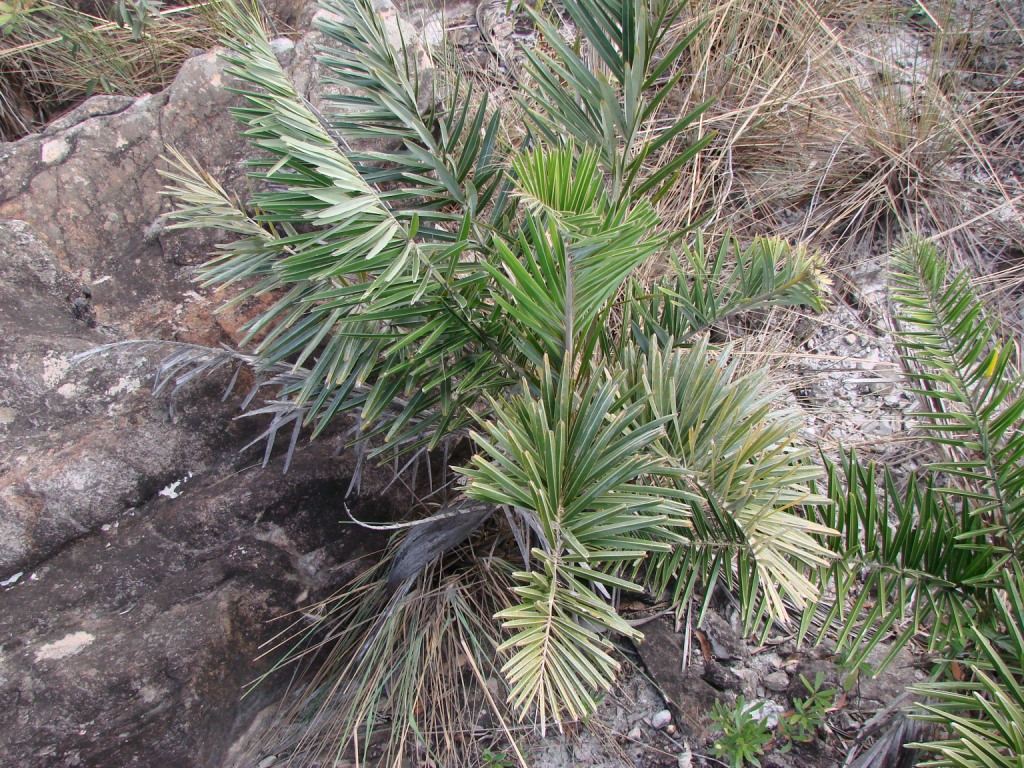
Image by João Medeiros (License: CC BY 2.0)


1. Introduction
Habitat and Distribution
Syagrus glaucescens is endemic to Brazil's cerrado (tropical savanna) regions, primarily found in the states of Minas Gerais, Goiás, and southern Bahia. This distinctive palm inhabits open grasslands, rocky outcrops, and transitional zones between cerrado and Atlantic Forest at elevations of 600-1,400 meters. It demonstrates remarkable adaptation to fire-prone ecosystems and seasonal drought, thriving in areas with distinct wet and dry seasons.
Native Continent
South America - specifically endemic to central and eastern Brazil, representing one of the cerrado biome's characteristic palm species.
📍 Endemic Distribution:
- Brazilian Cerrado: Primary habitat
- States: Minas Gerais, Goiás, Bahia
- Habitat: Open grasslands, rocky outcrops
- Elevation: 600-1,400m
- Ecosystem: Fire-prone savanna
Scientific Classification
Synonyms
- Syagrus glaucescens var. minor Becc.
- Cocos glaucescens (Becc.) Bondar
- Arecastrum glaucescens (Becc.) Becc.
Common Names
- English: Glaucous Syagrus palm, Blue-gray palm
- Portuguese: Palmeirinha-azul, Coco-azulado, Licuri-do-cerrado
- Local Brazilian: Palmeira-do-cerrado, Coquinho-azul
Global Expansion
Originally restricted to Brazilian cerrado, Syagrus glaucescens has gained recognition in specialized palm collections worldwide:
- United States: Cultivated in Florida, Southern California, Hawaii
- Mediterranean Region: Limited success in frost-free areas of Spain, Italy
- Australia: Growing popularity in Queensland and northern New South Wales
- South Africa: Experimental cultivation in subtropical regions
- Asia: Rare in collections in Thailand, Singapore
The species' expansion has been limited by its specific soil requirements and relatively recent introduction to horticulture, but its striking blue-gray foliage and compact size are increasing its popularity among collectors.
2. Biology and Physiology
Morphology
Trunk/Stem: Syagrus glaucescens typically develops a short, subterranean or partially emergent trunk, rarely exceeding 1-2 meters in height above ground. The visible portion measures 15-25 cm in diameter, covered with persistent leaf bases arranged in a spiral pattern. The underground portion can extend 1-3 meters deep, serving as a storage organ and fire-survival adaptation.
Leaves: The species exhibits distinctive blue-gray (glaucous) pinnate leaves, 1.5-2.5 meters long. Each leaf contains 60-100 leaflets arranged in groups along the rachis, creating a plumose appearance. Leaflets are linear-lanceolate, 25-40 cm long and 1.5-2.5 cm wide, covered with a waxy coating that provides the characteristic blue coloration. The petiole is 40-60 cm long, with fibrous margins.
Flower Systems: Monoecious with interfoliar inflorescences emerging between leaf bases. The branched spadix measures 60-100 cm, enclosed initially by a woody spathe. Male flowers occupy the distal portions of rachillae, with female flowers positioned basally. Flowering occurs primarily during the wet season (October-March in native habitat).
Life Cycle
- Germination phase (0-4 months): Remote germination with extended cotyledonary petiole
- Juvenile phase (4 months-5 years): Establishment of deep root system
- Sub-adult phase (5-10 years): Trunk development begins
- Adult phase (10+ years): Regular flowering and fruiting
- Longevity: Estimated 50-80 years in habitat
Climate Adaptations
- Drought tolerance: Deep taproot accessing water tables
- Fire adaptation: Subterranean trunk survives surface fires
- Temperature tolerance: Survives brief frosts to -3°C
- Seasonal dormancy: Reduced growth during dry season
- Waxy leaf coating: Reduces water loss and reflects excess light
3. Reproduction and Propagation
Seed Reproduction
Seed Morphology and Diversity: Seeds are ovoid to ellipsoid, 2-3 cm long and 1.5-2 cm diameter, enclosed in a fibrous endocarp. The seed coat is brown to dark brown, with three germination pores. Endosperm is homogeneous, white, and rich in oils. Fresh seed weight ranges from 3-6 grams. Significant variation exists between populations in seed size and germination rates.
Seed Collection and Viability Testing:
- Optimal harvest: When fruits turn orange-yellow, typically 6-8 months after pollination
- Processing: Remove pulp immediately to prevent fermentation
- Viability period: 3-6 months under ambient conditions, up to 12 months refrigerated
- Testing methods: Float test (sinkers viable), cut test for white endosperm
- Expected viability: 60-80% for fresh seeds
Pre-germination Treatments:
Scarification:
- Mechanical: File the endocarp near germination pores
- Water soak: 7-10 days in warm water, changing daily
- Natural weathering: 2-3 months outdoor exposure
Temperature Treatments:
- Warm stratification: 35-40°C for 30 days
- Fluctuating temperatures: Enhance germination rates
Step-by-step Germination Techniques:
- Seed preparation: Clean thoroughly, remove all fruit tissue
- Scarification: File or crack endocarp carefully
- Soaking: Warm water for 5-7 days
- Growing medium: 50% perlite, 30% vermiculite, 20% coarse sand
- Sowing: Plant 2-3 cm deep, pointed end down
- Temperature: Maintain 25-30°C consistently
- Moisture: Keep medium moist but not waterlogged
- Container: Deep pots (30+ cm) for taproot development
Germination Difficulty: Moderate
- Primary challenges: Hard endocarp, deep taproot requirement
- Success rate: 50-70% with proper treatment
Germination Time:
- Range: 2-8 months
- Average: 3-4 months at optimal temperatures
- Remote germination produces long cotyledonary petiole first
Seedling Care and Early Development:
- Months 1-3: Protect from direct sun, maintain consistent moisture
- Months 4-6: Gradually increase light exposure
- Months 7-12: Begin light fertilization, prepare for transplant
- Year 2+: Can tolerate full sun, establish in final position
Advanced Germination Techniques
Hormonal Treatments:
- GA3: 500 ppm for 24 hours improves germination speed
- Smoke water: Simulates natural fire conditions
- Ethylene: Brief exposure can break dormancy
4. Cultivation Requirements
Light Requirements
Species-specific Light Tolerance:
- Seedlings (0-1 year): 50% shade optimal
- Juveniles (1-3 years): 30% shade to full sun
- Adults (3+ years): Full sun preferred
- Minimum light: 6 hours direct sunlight daily
Seasonal Light Management:
- Increase shade during extreme summer heat
- Full exposure during growing season
- Protection from intense afternoon sun in desert climates
Artificial Lighting for Indoor Cultivation:
- Not recommended for long-term indoor growth
- Temporary: 400W metal halide or LED full spectrum
- Minimum 14 hours daily for growth
Temperature and Humidity Management
Optimal Temperature Ranges:
- Ideal: 20-35°C (68-95°F)
- Tolerance range: -3°C to 42°C (27-108°F)
- Growth cessation: Below 10°C (50°F)
Cold Tolerance and Hardiness:
- Hardiness Zone: USDA 9b-11
- Frost tolerance: Brief exposure to -3°C
- Young plants: Protect below 0°C
Humidity Requirements:
- Optimal: 40-70% relative humidity
- Drought adaptation: Tolerates 20% humidity
- High humidity tolerance: Up to 85% with good air circulation
Soil and Nutrition
Ideal Soil Composition:
Ideal Mix for Syagrus glaucescens
- Type: Well-draining, sandy loam
- pH range: 5.5-7.5 (slightly acidic to neutral)
- Organic matter: 2-5% adequate
- Special requirements: Deep soil for taproot
- Mix: 40% sand, 30% loam, 20% compost, 10% perlite
Nutrient Requirements:
- General fertilizer: 8-4-12 NPK with micronutrients
- Frequency: Quarterly during growing season
- Rate: 100-200g per plant per application
- Organic options: Composted manure, bone meal
Micronutrient Management:
- Manganese: Critical for cerrado species
- Magnesium: Prevent yellowing with Epsom salts
- Iron: Chelated iron for alkaline soils
- Boron: Small amounts prevent growth abnormalities
Water Management
Irrigation Requirements:
- Wet season: Natural rainfall usually sufficient
- Dry season: Deep watering weekly
- Established plants: Highly drought tolerant
- Container plants: More frequent watering needed
Drought Tolerance:
- Exceptional: Survives 4-6 months without water
- Adaptations: Deep taproot, waxy leaves
- Recovery: Rapid with rainfall resumption
Water Quality:
- Salinity tolerance: Moderate (up to 2,000 ppm)
- pH preference: 6.0-7.5
- Hard water: Generally tolerated
Drainage Requirements:
- Critical: Must have excellent drainage
- Waterlogging: Fatal within days
- Solutions: Raised beds, amended soil, slope planting
5. Diseases and Pests
Common Problems
- Overwatering: Most common cultivation error
- Nutrient deficiency: Especially in sandy soils
- Root confinement: In containers without deep taproot space
- Cold damage: In marginal climates
Disease Identification
Fungal Diseases:
- Leaf spot: Brown spots with yellow halos; improve air circulation
- Root rot: From overwatering; ensure drainage
- Bud rot: Rare in dry climates; remove affected tissue
Bacterial Diseases:
- Generally resistant due to dry habitat preference
Pest Identification
Insect Pests:
- Palm weevil: Trunk damage; systemic insecticides
- Scale insects: On leaves; horticultural oil
- Grasshoppers: Leaf damage in native habitat
Protection Methods
Environmental:
- Proper drainage essential
- Adequate spacing for air flow
- Mulching for temperature regulation
- Fire management in appropriate settings
Chemical:
- Minimal pesticide needs
- Preventive fungicides in humid climates
- Systemic insecticides if weevils present
6. Indoor Palm Growing
Specific Indoor Care
Container Requirements:
- Depth: Minimum 60 cm for taproot
- Width: 40-50 cm diameter
- Drainage: Multiple large holes
- Material: Terracotta preferred for breathability
Environmental Control:
- Requires very bright light or greenhouse conditions
- Difficult long-term houseplant
- Better suited for conservatories
- Need cool winter period for health
Replanting Procedures
- Frequency: Every 3-4 years when young
- Season: Early spring optimal
- Root care: Preserve taproot integrity
- Pot size: Increase gradually
- Aftercare: Shade for 2 weeks
Wintering Indoor Palms
- Temperature: Cool period beneficial (10-15°C)
- Watering: Reduce significantly
- Light: Maximum available
- Fertilization: Suspend until spring
7. Landscape and Outdoor Cultivation
Design Applications
- Xeriscaping: Excellent drought-tolerant choice
- Rock gardens: Natural appearance with boulders
- Specimen planting: Striking blue foliage accent
- Container gardens: Large pots for patios
- Native gardens: Brazilian cerrado themes
- Fire-resistant landscaping: Survives controlled burns
Site Selection
- Full sun exposure essential
- Well-draining location critical
- Protection from cold winds
- Allow space for deep root system
- Consider mature spread of 2-3 meters
8. Cold Climate Cultivation Strategies
Cold Hardiness Assessment
- Mature plants: Survive -3°C briefly
- Young plants: Damage below 0°C
- Optimal growth: Above 15°C
- Growth cessation: Below 10°C
Winter Protection Systems
Physical Protection:
- Mulching: Heavy layer around base
- Wrapping: Frost cloth for crown
- Windbreaks: Essential in exposed sites
Structural Protection:
- Cold frames: For smaller specimens
- Temporary covers: During cold snaps
- Microclimate creation: South-facing walls
Hardiness Zone Specifications
- Zone 9b-11: Outdoor cultivation possible
- Zone 9a: Protection required
- Zone 8 and below: Container cultivation only
Winter Protection Materials
- Mulch: Pine straw, wood chips
- Covers: Frost blankets, burlap
- Insulation: Straw bales around container
Establishment and Maintenance in Landscapes
Planting Techniques for Success
Site Preparation:
- Deep excavation: 1 meter minimum for taproot
- Soil amendment: Improve drainage if needed
- pH adjustment: If outside optimal range
- Drainage test: Critical before planting
Planting Process:
- Timing: Spring after frost danger
- Depth: Same as container level
- Backfill: Original soil preferred
- Watering: Deep initial irrigation
- Mulching: 10 cm layer
- Staking: Usually unnecessary
Long-term Maintenance Schedules
Monthly Tasks:
- Monitor for pests
- Check soil moisture
- Remove dead fronds
Quarterly Tasks:
- Fertilization during growing season
- Deep watering in dry periods
- General health assessment
Annual Tasks:
- Soil testing
- Major pruning of dead material
- Mulch renewal
- Cold protection preparation
Final Summary
Syagrus glaucescens represents a remarkable adaptation to Brazil's fire-prone cerrado ecosystem, combining exceptional drought tolerance with striking ornamental value. Its distinctive blue-gray foliage, compact size, and minimal maintenance requirements make it an excellent choice for water-wise landscaping in appropriate climates.
The species' key cultivation requirements center on excellent drainage and full sun exposure, reflecting its savanna origins. The deep taproot system, while challenging for container cultivation, provides exceptional drought tolerance once established. Success depends on mimicking its natural habitat: well-draining soils, seasonal moisture patterns, and protection from extreme cold.
Notable for its fire adaptation through subterranean trunk development, S. glaucescens can survive and regenerate from controlled burns, making it valuable for fire-resistant landscaping. Its moderate cold tolerance (to -3°C) extends its cultivation range beyond truly tropical zones, though protection is needed in marginal areas.
Propagation requires patience, with germination taking 2-8 months, but established plants are remarkably self-sufficient. The species' resistance to most pests and diseases, combined with minimal nutritional needs, makes it ideal for low-maintenance gardens. Its compact size and slow growth rate suit smaller landscapes where larger palms would be impractical.
For collectors and landscapers seeking a distinctive, drought-tolerant palm with unique coloration and minimal care requirements, Syagrus glaucescens offers an excellent choice, bringing the character of Brazilian cerrado to gardens worldwide.