Ravenea louvelii (Louvel's Palm): A comprehensive Growing Guide for Enthusiasts & Collectors.
Ravenea louvelii
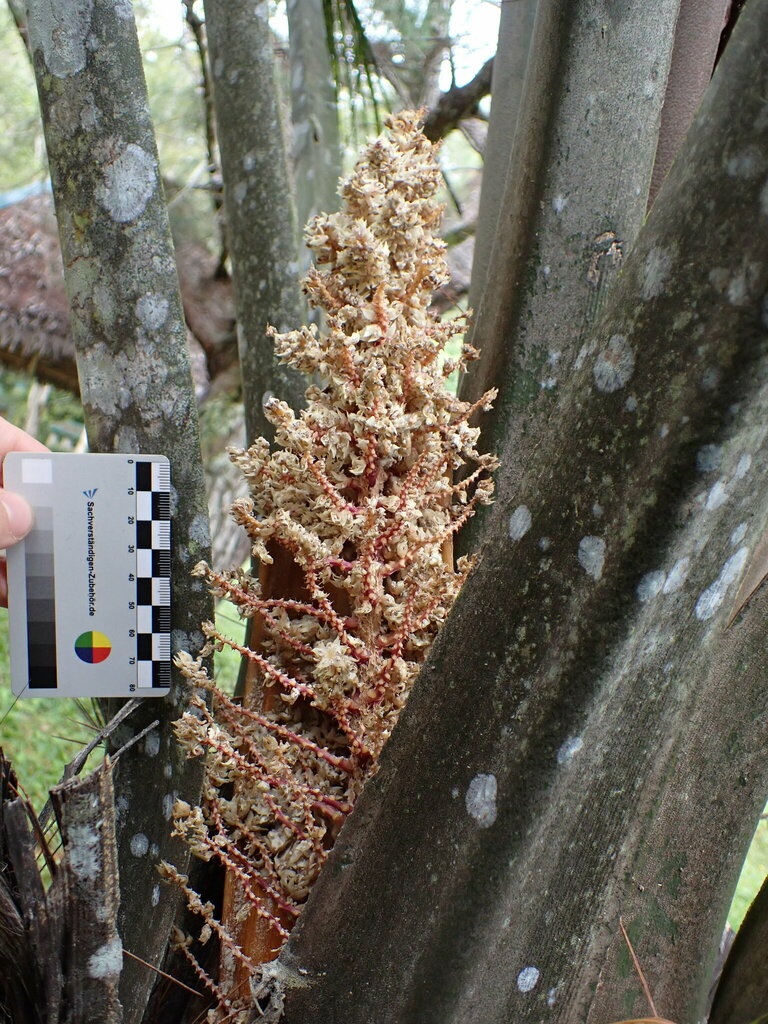
Image via iNaturalist (Research Grade). (c) Louis Aureglia, some rights reserved (CC BY)
🚨 CRITICALLY ENDANGERED SPECIES
Endemic to southeastern Madagascar with fewer than 50 mature individuals remaining in the wild. Every cultivated specimen contributes to species survival. Essential for botanical collections and conservation programs.


1. Introduction
Habitat and Distribution
Ravenea louvelii is an extremely rare palm endemic to Madagascar, specifically confined to the southeastern highlands of the island. This critically endangered species occupies a highly restricted range in the Anosy region, primarily in the remnant humid forests near Fort Dauphin (Tôlanaro) at elevations between 100-600 meters above sea level. The palm inhabits steep slopes and ridge tops in lowland to mid-elevation rainforest, typically growing in well-drained, humus-rich soils derived from lateritic substrates. Its habitat is characterized by high rainfall (1,500-2,500mm annually), persistent humidity, and protection from direct coastal influences.
Native Continent
Native range: Southeastern Madagascar highlands
Click markers for details • Use buttons to switch map types
Scientific Classification
Synonyms
- Ravenea louvelii var. louvelii (autonym)
- No other recognized synonyms (taxonomically stable species)
Common Names
- Louvel's Palm (English)
- Louvel's Majesty Palm (English)
- Palmier de Louvel (French)
- Lakamarefo (Malagasy)
- Hovomena (Malagasy local name)
- Rare Ravenea (Horticultural trade)
- Madagascar Highland Palm (Horticultural trade)
Global Expansion
Due to its extreme rarity and recent introduction to cultivation, Ravenea louvelii has limited global distribution:
Ex-situ Conservation Collections:
- Europe: Kew Gardens (UK), Palmengarten Frankfurt (Germany), Jardin du Val Rahmeh (France)
- United States: Montgomery Botanical Center (Florida), Hawaii Tropical Botanical Garden
- Australia: Brisbane Botanic Gardens, Sydney Royal Botanic Gardens
- Private Collections: Specialist palm collectors in California, Florida, Hawaii, Mediterranean Europe
- Commercial Cultivation: Very limited; specialty nurseries in Florida and California
- Conservation Programs: Madagascar seed banking initiatives, international palm conservation networks
The species' expansion is primarily driven by conservation efforts rather than commercial demand, with most cultivation occurring in botanical gardens and specialist collections dedicated to preserving endangered palm species.
2. Biology and Physiology
Morphology
Trunk/Stem
Ravenea louvelii develops a solitary, slender trunk reaching 8-15 meters in height (rarely to 20 meters in optimal habitat). The trunk diameter ranges from 15-25 cm, maintaining relatively uniform thickness throughout its length. The surface is gray to light brown, marked with prominent, closely spaced ring scars from fallen leaves. Unlike some Ravenea species, the trunk remains clean and smooth, rarely retaining persistent leaf bases. The crown shaft is absent or poorly developed, distinguishing it from related genera.
Leaves
The crown consists of 12-20 pinnate leaves forming an elegant, spreading canopy. Individual leaves measure 2.5-3.5 meters in length, gracefully arching. The petiole is 40-60 cm long, green to yellow-green, with a slight waxy coating. The rachis bears 80-100 pairs of regularly arranged leaflets (pinnae), each 40-60 cm long and 2-3 cm wide. Leaflets are dark green above, lighter beneath, with a distinctive drooping habit. The leaf base is covered with rusty-brown tomentum that extends partially up the petiole.
Flower Systems
Ravenea louvelii is dioecious, with separate male and female plants. Inflorescences emerge from below the crown (infrafoliar), branching to the third order. Male inflorescences are more extensively branched and longer (60-80 cm) than female ones (40-60 cm). The peduncle is covered with deciduous brown scales. Male flowers are cream to pale yellow, 3-4 mm, with 6 stamens. Female flowers are globose, 4-5 mm, green-yellow. Flowering occurs primarily during the warm season (October-February in Madagascar), with some variation based on rainfall patterns.
Life Cycle
The palm follows an indeterminate growth pattern:
- Germination phase (0-4 months): Slow initial establishment
- Seedling phase (4 months-2 years): Development of first pinnate leaves
- Juvenile phase (2-8 years): Rapid stem elongation begins
- Sub-adult phase (8-15 years): Trunk development, crown expansion
- Adult reproductive phase (15+ years): Annual flowering and fruiting cycles
- Mature phase (25+ years): Stable growth, consistent reproduction
- Senescent phase (80+ years estimated): Gradual decline in vigor
Climate Adaptations
- Temperature tolerance: Optimal growth at 20-28°C, survival range 5-35°C
- Humidity requirements: High humidity essential (70-90%)
- Rainfall adaptations: Adapted to 1,500-2,500mm annual rainfall with seasonal variation
- Wind resistance: Flexible leaves and strong trunk resist cyclonic winds
- Elevation adaptations: Tolerates temperature variations associated with 100-600m elevation
3. Reproduction and Propagation
Seed Reproduction
Seed Morphology and Diversity
Ravenea louvelii produces ellipsoid to ovoid fruits, 15-20 mm long and 10-12 mm in diameter. The exocarp is smooth, turning from green to deep purple-black at maturity. The mesocarp is thin and fibrous, while the endocarp is thin and papery. Seeds are ovoid, 12-15 mm long, 8-10 mm wide, with homogeneous endosperm. The embryo is basal and lateral. Fresh seed weight ranges from 0.8-1.2 grams. Significant variation exists between individual plants in seed size and viability, possibly due to limited genetic diversity in remaining populations.
Seed Collection and Viability Testing
Viability Assessment Methods:
- Float test: Viable seeds sink (80% correlation with germination)
- Visual inspection: Plump, firm seeds with no discoloration
- Cut test: White, solid endosperm indicates viability
- Viability window: Maximum 2-4 weeks under optimal storage
- Storage conditions: Never below 15°C, maintain 50% moisture content
Pre-germination Treatments
- Generally unnecessary for fresh seeds
- For older seeds: Light filing of seed coat
- Avoid aggressive scarification that damages embryo
- 24-48 hour soak in warm water (30°C)
- Change water every 12 hours
- Optional: Add fungicide to prevent pathogen development
Step-by-step Germination Techniques
- Seed preparation: Clean all fruit residue, rinse in fungicide solution
- Container selection: Deep pots (15cm minimum) with drainage
- Growing medium: 50% peat, 30% perlite, 20% vermiculite
- Sowing: Place seed horizontally, cover with 1-2 cm medium
- Initial watering: Thoroughly saturate medium
- Temperature: Maintain constant 25-30°C (bottom heat beneficial)
- Humidity: Cover with plastic, maintain 85-95% humidity
- Light: Place in bright, indirect light
- Ventilation: Brief daily airing to prevent fungal growth
- Monitoring: Check moisture every 2-3 days
Germination Difficulty: Moderate
Primary challenges: Rapid viability loss, specific temperature requirements, susceptibility to pathogens
Success rate: 60-80% with fresh seeds, dropping to 20-40% after 2 weeks
Germination Time
- Range: 4-12 weeks
- Average: 6-8 weeks under optimal conditions
- First sign: Radicle emergence followed by cotyledonary petiole
- Full emergence: Additional 2-4 weeks for first leaf
Seedling Care and Early Development
Weeks 1-8 post-emergence:
- Maintain high humidity, no fertilization
Months 2-6:
- Begin weekly dilute fertilization (1/4 strength balanced)
Months 6-12:
- Gradually increase light to 50% shade
Year 1-2:
- Transplant when 3-4 leaves developed
Year 2-3:
- Move to individual containers, increase fertilization
Advanced Germination Techniques
Hormonal Treatments:
- GA3 (Gibberellic acid): 250-500 ppm, 24-hour soak improves germination by 15-20%
- Smoke water: 10% solution stimulates germination in some trials
- Coconut water: Natural cytokinin source, 50% solution as soaking medium
- Combined treatments: GA3 + thiourea shows synergistic effects
Embryo Culture:
4. Cultivation Requirements
Light Requirements
Species-specific Light Tolerance
- Germination to 6 months: Deep shade (70-80% shade, 2,000-3,000 lux)
- Seedlings (6 months-2 years): Moderate shade (50-70% shade, 3,000-5,000 lux)
- Juveniles (2-5 years): Light shade (30-50% shade, 5,000-15,000 lux)
- Sub-adults (5-10 years): Partial shade to partial sun (15,000-40,000 lux)
- Adults (10+ years): Partial shade to full sun tolerant (up to 80,000 lux)
Seasonal Light Management
- Summer: Provide afternoon shade in hot climates
- Winter: Maximize light exposure in temperate zones
- Spring/Fall: Ideal periods for light adjustment
- Cloudy climates: Reduce shade requirements by 20-30%
Artificial Lighting for Indoor Cultivation
- Light type: Full spectrum LED or T5 fluorescent
- Intensity: 150-250 μmol/m²/s for adults
- Duration: 10-12 hours daily (tropical day length)
- Distance: 30-60 cm from growing point
- Supplementation: Not required if near bright window
Temperature and Humidity Management
Optimal Temperature Ranges
- Ideal daytime: 22-28°C (72-82°F)
- Ideal nighttime: 18-22°C (64-72°F)
- Absolute maximum: 35°C (95°F) with adequate moisture
- Absolute minimum: 5°C (41°F) for brief periods only
- Critical damage: Below 2°C (36°F)
Cold Tolerance and Hardiness
- Hardiness Zone: USDA Zones 9b-11 (minimum 25°F/-4°C briefly)
- Frost tolerance: Light frost tolerated when mature, young plants killed
- Cold acclimatization: Gradual exposure increases tolerance
Humidity Requirements
- Optimal range: 70-85% relative humidity
- Minimum tolerance: 50% with compensation through watering
- Maximum tolerance: 95% with good air circulation
Modification techniques:
- Grouping plants
- Pebble trays
- Misting systems (morning only)
- Humidifiers in dry climates
Soil and Nutrition
Ideal Soil Composition
Recommended mix:
- 30% quality topsoil
- 25% compost
- 20% peat or coir
- 15% perlite
- 10% coarse sand
Structure: Well-draining but moisture-retentive
pH range: 6.0-7.0 (slightly acidic to neutral)
Nutrient Requirements Through Growth Stages
Seedlings (0-1 year):
- No fertilization first 2 months, then 20-20-20 at 1/4 strength monthly
Juveniles (1-5 years):
- 15-5-15 palm special, 50g every 2 months
Sub-adults (5-10 years):
- 12-4-12 plus micronutrients, 100g every 2 months
Adults (10+ years):
- 8-2-12+4Mg, 200-300g every 2-3 months
Organic vs. Synthetic Fertilization
- Organic options: Composted manure, blood and bone meal, kelp extract
- Synthetic options: Controlled-release palm fertilizers, 6-9 month formulations
- Best practice: Combine organic base with synthetic supplementation
Micronutrient Deficiencies and Corrections
- Magnesium deficiency: Most common; yellow-orange older leaves; treat with Epsom salts (50g/month)
- Manganese deficiency: "Frizzletop" new growth; foliar spray manganese sulfate
- Iron deficiency: Interveinal chlorosis; chelated iron soil drench
- Boron deficiency: Distorted new leaves; borax application (use sparingly)
Water Management
Irrigation Requirements
- Growing season: Deep watering 2-3 times weekly
- Dormant season: Once weekly or when topsoil dries
- Volume: 10-20 liters per mature plant per irrigation
- Method: Slow, deep watering preferred over frequent light watering
Drought Tolerance
- Rating: Low to moderate once established
- Survival period: 1-2 weeks without water stress
- Symptoms: Leaf tip browning, reduced growth rate
- Recovery: Generally good if drought not prolonged
Water Quality
- Salinity tolerance: Low; <500 ppm total dissolved solids preferred
- pH preference: 6.5-7.0
- Chlorine sensitivity: Moderate; age tap water 24 hours
- Temperature: Room temperature water prevents root shock
Drainage Requirements
- Critical factor: Must have excellent drainage
- Percolation rate: Minimum 2.5 cm/hour
- Container drainage: Multiple large holes essential
- Landscape drainage: Raised beds in heavy soils
5. Diseases and Pests
Common Problems
- Nutritional disorders: Especially magnesium and potassium deficiency
- Water stress: Both over and under-watering common
- Cold damage: Prevalent in marginal climates
- Transplant shock: High sensitivity to root disturbance
- Light stress: Sunburn when moved too quickly to high light
Disease Identification
Fungal Diseases:
- Phytophthora bud rot: Crown collapse; preventive treatment crucial; systemic fungicides
- Leaf spot (Cylindrocladium): Dark spots with yellow halos; improve air circulation, fungicide spray
- Pink rot (Gliocladium): Pink spore masses on stems; prune affected areas, apply fungicide
- Root rot (Armillaria): Yellowing, decline; improve drainage, fungicide drench
- Anthracnose: Brown leaf lesions; remove affected leaves, copper fungicide
Bacterial Diseases:
- Bacterial bud rot: Foul-smelling crown decay; no cure, prevention essential
- Leaf streak: Linear yellow streaks; copper bactericides, remove affected leaves
Pest Identification
Insect Pests:
- Palm aphids: Yellowing, sooty mold; insecticidal soap spray
- Scale insects: Yellow spots, sticky honeydew; horticultural oil treatment
- Mealybugs: White cottony masses; alcohol swabs, systemic insecticide
- Spider mites: Fine webbing, stippled leaves; miticide application
- Palm leaf beetles: Notched leaf edges; hand removal, pyrethrin spray
Other Pests:
- Snails and slugs: Irregular holes in young leaves; iron phosphate baits
- Rodents: Seed predation; physical barriers, covered germination
Protection Methods
Environmental (Preventive):
- Ensure optimal growing conditions to maintain plant vigor
- Proper spacing for air circulation (minimum 3-meter spacing)
- Regular removal of dead leaves and debris
- Quarantine new plants for 30 days
- Avoid overhead watering to reduce fungal spread
Chemical (Curative):
- Fungicides: Rotate between contact and systemic types
- Insecticides: Use targeted products, avoid broad-spectrum when possible
- Application timing: Early morning or late evening
- IPM approach: Monitor, identify, treat only when necessary
6. Indoor Palm Growing
Specific Indoor Care
Container Requirements
- Size progression: Start 20cm, increase gradually to 60cm+ for adults
- Material: Heavy terracotta or ceramic for stability
- Drainage: Layer of gravel at bottom, multiple drainage holes
- Root space: Width more important than depth
Environmental Control
- Light: East or west window ideal, south with sheer curtains
- Temperature: Maintain 18-25°C year-round
- Humidity: Minimum 60%, ideal 70-80%
- Air circulation: Gentle fan on timer prevents fungal issues
Watering Indoor Specimens
- Check moisture at 5cm depth
- Water thoroughly until drainage occurs
- Never allow standing water in saucers
- Reduce frequency in winter by 30-40%
Replanting Procedures
Timing and Frequency
- Young plants: Annually in spring
- Mature plants: Every 2-3 years
- Root-bound indicators: Roots visible at drainage holes, slowed growth
Step-by-step Process
- Preparation: Water 24 hours before replanting
- Removal: Gently tap pot sides, slide out root ball
- Root inspection: Trim dead/circling roots, retain root ball integrity
- New container: 5-10cm larger diameter
- Drainage layer: 3-5cm gravel or broken pottery
- Positioning: Center plant at same depth as before
- Backfilling: Fresh palm mix, firm gently
- Watering: Thorough initial irrigation
- Recovery: Shade and high humidity for 2 weeks
Wintering Indoor Palms
Temperature Management
- Maintain minimum 15°C (60°F)
- Avoid cold drafts from windows and doors
- Position away from heating vents
Light Supplementation
- Move closer to windows
- Clean leaves monthly for maximum light absorption
- Consider grow lights for 4-6 hours daily
Watering Adjustments
- Reduce frequency by 40-50%
- Allow slight drying between waterings
- Monitor for overwatering symptoms
Fertilization
- Suspend November through February
- Resume at half strength in March
Pest Vigilance
- Check weekly for spider mites (common in dry indoor air)
- Increase humidity to deter pests
7. Landscape and Outdoor Cultivation
Design Applications
- Specimen planting: Outstanding focal point for tropical gardens
- Understory palm: Natural choice for shaded garden areas
- Group plantings: Stunning when planted in odd-numbered groups
- Container specimen: Excellent for large patio containers
- Conservation gardens: Important for ex-situ preservation
- Rainforest gardens: Perfect for recreating Madagascar habitat
- Mixed borders: Combines well with other tropical foliage
Site Selection Criteria
- Protection from hot afternoon sun in warm climates
- Shelter from strong winds
- Well-draining location, avoid low-lying areas
- Space for 4-5 meter crown spread
- Consider mature height for utility lines
- Morning sun exposure preferred
- Protection from foot traffic
Companion Planting
- Other palms: Dypsis species, Chamaedorea, small Ravenea
- Understory plants: Ferns, Begonias, Impatiens
- Tropical shrubs: Gardenia, Ixora, Crotons
- Ground covers: Selaginella, Fittonia, small ferns
8. Cold Climate Cultivation Strategies
Cold Hardiness Assessment
Temperature Tolerance Thresholds:
- Optimal range: 20-28°C (68-82°F)
- Growth slows: Below 18°C (64°F)
- Growth stops: Below 12°C (54°F)
- Stress begins: Below 8°C (46°F)
- Damage threshold: 2°C (36°F)
- Lethal temperature: -2°C (28°F) for any duration
Age-related Hardiness:
- Seedlings: Damaged below 10°C
- Juveniles: Tolerate brief 5°C
- Adults: Survive brief 2°C exposure
Winter Protection Systems
Passive Protection:
- Mulching: 20-30cm organic mulch around base
- Wrapping: Burlap or frost cloth around trunk
- Anti-desiccants: Spray application before cold periods
- Windbreaks: Temporary barriers on north/west sides
Active Protection:
- Christmas lights: Old-style incandescent provide gentle heat
- Frost cloth frames: Create air pocket around palm
- Portable heaters: For extreme cold events only
- Heat cables: Wrapped loosely around trunk
Hardiness Zone Specifications
- Zone 11 (Above 40°F/4.4°C): No protection needed, optimal outdoor cultivation
- Zone 10b (35-40°F/1.7-4.4°C): Occasional light protection, mulch for coldest nights
- Zone 10a (30-35°F/-1.1-1.7°C): Regular winter protection required, wrap trunk, protect growing point
- Zone 9b (25-30°F/-3.9--1.1°C): Intensive protection or container cultivation, move containers indoors below 35°F
- Zone 9a and below: Indoor/greenhouse cultivation only, cannot survive outdoors
Winter Protection Materials and Methods
Essential Materials:
- Frost blankets (multiple weights available)
- Burlap (natural, breathable)
- Pipe insulation (for trunk wrapping)
- Heat cables (thermostatically controlled)
- Mulch (pine straw, leaves, wood chips)
- Stakes and frames (PVC or bamboo)
Protection Schedule:
- Fall preparation: Apply anti-desiccant, deep watering
- First frost warning: Install basic protection
- Hard freeze warning: Add supplemental heat/covering
- Post-freeze: Maintain protection until temperatures stabilize
- Spring removal: Gradual removal over 2-3 weeks
Establishment and Maintenance in Landscapes
Planting Techniques for Success
Pre-planting Preparation:
- Site analysis: Test drainage, check for competing roots
- Soil preparation: Amend with organic matter 2 weeks prior
- Acclimatization: Gradually expose nursery plants to site conditions
- Timing: Plant in late spring/early summer for establishment
Planting Process:
- Hole preparation: 2-3x root ball width, same depth
- Root ball preparation: Score sides if pot-bound
- Base preparation: Create slight mound in hole center
- Placement: Position with best side forward
- Backfilling: Mix native soil with amendments 50:50
- Water basin: Create 10cm high ring around plant
- Initial irrigation: Slow, deep watering to settle soil
- Mulching: 10cm layer, keep 15cm from trunk
- Staking: If needed, use 3-point flexible system
- Establishment period: Daily monitoring first month
Critical Success Factors:
- Never plant too deep (causes rot)
- Avoid air pockets in backfill
- Maintain consistent moisture during establishment
- Protect from sun/wind first 2-4 weeks
Long-term Maintenance Schedules
Special Considerations for Ravenea louvelii:
- Conservation Status Management: Document all specimens for conservation records
- Seed/Pollen Exchange: Participate in seed/pollen exchange programs
- Flowering Documentation: Report flowering/fruiting to palm societies
- Controlled Pollination: Consider controlled pollination for seed production
Long-term Planning:
- Expected lifespan: 80-100+ years
- Mature size accommodation: Plan for full size
- Succession planting: For continuous display
- Heritage tree documentation: Record keeping essential
Final Summary
Ravenea louvelii represents one of Madagascar's rarest and most elegant palm species, combining ornamental beauty with critical conservation importance. As a critically endangered endemic with fewer than 50 mature individuals remaining in the wild, every cultivated specimen contributes to the species' survival. Its slender trunk, gracefully arching leaves, and moderate size make it an ideal specimen for tropical and subtropical gardens where its specific requirements can be met.
Successful cultivation hinges on understanding its rainforest origins: consistent moisture without waterlogging, high humidity, protection from extreme temperatures, and graduated light exposure from deep shade as seedlings to partial sun as adults. The species shows moderate cold tolerance for a Madagascar palm, surviving brief exposure to near-freezing temperatures when mature, extending its cultivation range to USDA zones 9b-11 with appropriate protection.
Key challenges include rapid seed viability loss (2-4 weeks maximum), specific germination requirements (constant 25-30°C with high humidity), and susceptibility to common palm diseases, particularly in humid environments. Success rates improve dramatically with fresh seeds and controlled germination conditions. The species' moderate growth rate requires patience, taking 15+ years to reach reproductive maturity.
For indoor cultivation, Ravenea louvelii adapts well to container culture, making it suitable for conservatories and large indoor spaces where humidity can be maintained above 60%. Its elegant form and manageable size distinguish it from the more common R. rivularis (Majesty Palm), though it requires more careful attention to humidity and temperature.
The species excels in landscape applications where its environmental needs align with local conditions. It serves as an excellent understory palm in tropical gardens, a specimen plant in protected locations, or a conservation showpiece in botanical collections. Its dioecious nature requires both male and female plants for seed production, important for conservation efforts.
Modern cultivation benefits from improved propagation techniques, including hormone treatments and controlled environment germination, though tissue culture remains challenging. Integrated pest management and preventive disease control are essential, particularly for Phytophthora prevention in humid climates.
Understanding Ravenea louvelii's specific requirements—from its high humidity needs to its graduated light tolerance through different life stages—enables successful cultivation of this rare treasure. Whether grown for conservation, as a collector's specimen, or for its undeniable ornamental value, R. louvelii rewards dedicated growers with one of the most elegant palm silhouettes available in cultivation. Every successfully grown specimen not only enhances gardens but contributes to preserving this critically endangered species for future generations, making its cultivation both a horticultural achievement and a conservation success.
- Critically endangered - fewer than 50 wild individuals
- Elegant solitary palm - 8-15m height
- Moderate germination time - 4-12 weeks
- High success rate with fresh seeds - 60-80%
- High humidity essential - 70-90%
- Narrow pH range - 6.0-7.0
- Zone 9b-11 cultivation possible
- Slow maturity - flowers at 15+ years
- Perfect for conservation collections
- Every specimen contributes to species survival