Nephrosperma van-houtteanum: A comprehensive Growing Guide for Enthusiasts & Collectors.
Nephrosperma van-houtteanum
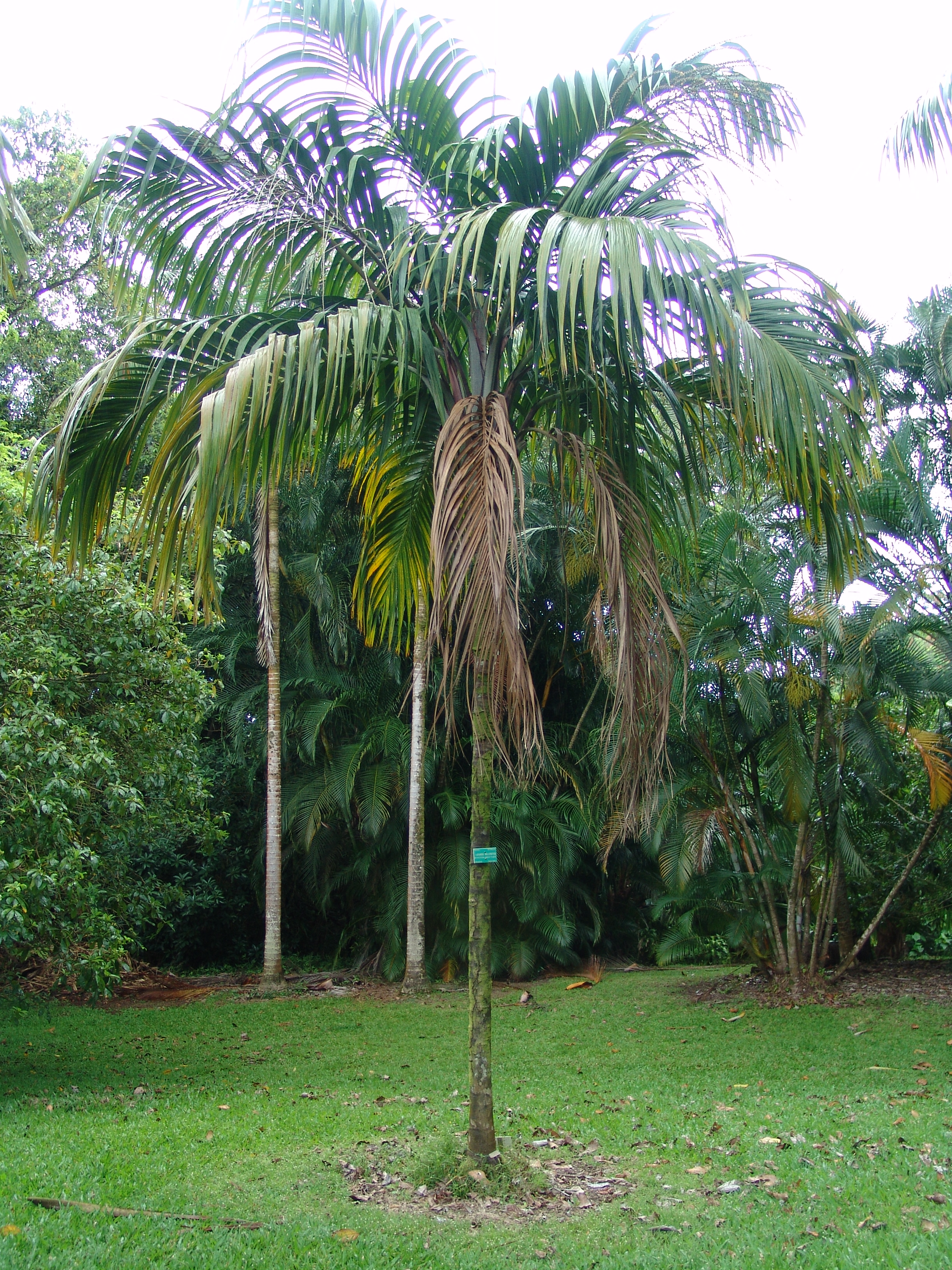
Image by Drew Avery (License: CC BY 2.0)
Image by Drew Avery (License: CC BY 2.0)


1. Introduction
Habitat and Distribution, Native Continent
Nephrosperma van-houtteanum is endemic to the Seychelles archipelago in the Indian Ocean, specifically found on the granitic islands of Mahé, Praslin, Silhouette, La Digue, and Curieuse. This remarkable palm inhabits steep, boulder-strewn valleys and ravines from near sea level to 600 meters elevation, with highest densities between 100-400 meters. It thrives in areas with permanent water flow, often growing directly in streams or on wet, rocky slopes where few other plants can establish. The species is particularly abundant in the palm forests of Vallée de Mai on Praslin, a UNESCO World Heritage Site. The climate is characterized by 2,000-3,500mm annual rainfall with high humidity year-round and temperatures rarely dropping below 24°C. As the only member of its genus, N. van-houtteanum represents a unique evolutionary lineage that has adapted to the Seychelles' ancient granitic terrain.
Native Continent
📍 Endemic Distribution:
- Islands: Mahé, Praslin, Silhouette, La Digue, Curieuse
- Elevation: Sea level to 600 meters
- Habitat: Steep valleys, stream banks, wet rocky slopes
- Climate: 2,000-3,500mm annual rainfall
- Protected Areas: Vallée de Mai UNESCO World Heritage Site
Native range: Seychelles Archipelago (Endemic)
Click on markers for details
Taxonomic Classification and Scientific Classification
Synonyms
- Oncosperma van-houtteanum H.Wendl. ex Van Houtte (basionym, 1862)
- Areca nobilis hort. ex H.Wendl. (nom. nud.)
- Oncosperma filamentosum H.Wendl. (1865)
- Regelia magnifica hort. ex H.Wendl.
- Deckenia nobilis H.Wendl. ex Seem. (misapplied)
Common Names
- Seychellois Creole: Latanier millepattes ("millipede palm")
- English: Millipede palm
- English: Seychelles stilt palm
- French: Palmiste millipede
- Chinese: 塞舌尔高跷棕
Expansion in the World
N. van-houtteanum has limited but growing presence in cultivation:
- Victoria Botanical Gardens, Seychelles (ex-situ conservation)
- Montgomery Botanical Center, Florida (multiple specimens)
- Singapore Botanic Gardens (established plants)
- Durban Botanic Gardens, South Africa
- Private collections in tropical regions worldwide
- Increasingly available from specialist nurseries
- Seeds regularly offered internationally
- IUCN Red List status: Vulnerable (due to limited range)
Growing cultivation interest reflects both its unique appearance and improving propagation success.
2. Biology and Physiology
Morphology
Trunk
N. van-houtteanum develops a solitary, slender trunk reaching 10-15 meters (rarely 20 meters) in height with a diameter of 10-15cm. The most distinctive feature is the dense cone of black, branching aerial roots (pneumatophores) emerging from the base and extending up to 2 meters up the trunk. These specialized roots, resembling millipede legs, give the palm its common name. The trunk above the root cone is smooth, gray-green, marked with closely spaced ring scars. Young palms begin producing aerial roots when only 1-2 meters tall.
Leaves
The crown consists of 8-16 pinnate leaves forming an elegant, arching canopy. Leaves measure 2-3 meters long with a distinctive twisted rachis that gives them a spiral appearance. Leaflets number 30-50 per side, irregularly arranged in groups, each 40-70cm long and 3-5cm wide. The leaflets are dark glossy green above and slightly paler below, with a prominent midrib. New leaves emerge bright green with a bronze tinge. The crownshaft is absent, with leaf bases forming a loose crown.
Root System
The aerial root system is unique among palms:
- Pneumatophores emerge from trunk base
- Branch dichotomously (fork repeatedly)
- Function in gas exchange in waterlogged soils
- Create stable support on rocky slopes
- Black color due to algae and mosses
- Continue growing throughout palm's life
Flower Systems
N. van-houtteanum is monoecious with infrafoliar inflorescences. The branched inflorescence is 60-100cm long, initially enclosed in a boat-shaped bract. Branches bear flowers in triads (two males, one female) throughout most of their length. Male flowers are small (3-4mm), white to cream with 6 stamens. Female flowers are larger (5-6mm), greenish-white. The inflorescence branches are distinctive in bearing long, thread-like appendages (ramenta), giving a fringed appearance. Flowering occurs throughout the year with peaks during rainy seasons.
Life Cycle
N. van-houtteanum has a life cycle adapted to stream environments:
- Germination to Seedling (0-3 years): Slow initial establishment
- Juvenile Phase (3-10 years): Aerial root development begins
- Sub-adult Phase (10-20 years): Rapid trunk growth
- Adult Phase (20-80 years): Full aerial root development, regular reproduction
- Senescent Phase (80-120+ years): Gradual decline
First flowering typically occurs at 15-20 years when palms reach 5-7 meters height.
Specific Adaptations to Climate Conditions
- Aerial Roots: Gas exchange in waterlogged conditions
- Stream Adaptation: Withstands flooding and fast water flow
- Rocky Substrate Anchorage: Roots penetrate granite crevices
- High Humidity Tolerance: Thrives in constantly wet conditions
- Cyclone Resistance: Flexible trunk and strong anchorage
- Shade Tolerance: Grows under forest canopy when young
3. Reproduction and Propagation
Seed Reproduction
Seed Morphology and Diversity
N. van-houtteanum produces distinctive kidney-shaped (reniform) fruits that give the genus its name (Nephrosperma = kidney seed). Fruits are 1.5-2.5cm long and 1-1.5cm wide, ripening from green through yellow-orange to bright red or purple-red. The epicarp is smooth and thin; mesocarp is fibrous and minimal; endocarp is thin and papery. Seeds conform to the kidney shape, with ruminate endosperm showing deep intrusions. Fresh seed weight is 1.5-3 grams. Genetic diversity is moderate despite the limited range, with distinct populations on different islands.
Detailed Seed Collection and Viability Testing
Collection Methods:
- Monitor fruiting palms year-round
- Collect when fruits turn orange-red
- Fruits often fall into streams
- Net placement in water helpful
Viability Testing:
- Visual inspection: Plump, heavy seeds
- Float test: Viable seeds sink
- Endosperm examination: White and firm
- Fresh viability: 85-95%
- One month: 70-80%
- Three months: 40-50%
- Six months: 10-20%
Pre-germination Treatments
Fruit Processing:
- Remove thin pericarp immediately
- Clean thoroughly
- No fermentation needed
- Keep constantly moist
Scarification:
- Light filing on convex edge
- Hot water soak: 50°C for 30 minutes
- Improves germination by 20-30%
- Natural stream abrasion mimicked
Hydration:
- Soak in flowing water 24-48 hours
- Simulates natural conditions
- Changes water every 12 hours
- Seeds swell slightly
Step-by-step Germination Techniques
- Medium: 40% river sand, 30% peat, 20% perlite, 10% granite chips
- Container: Deep pots with excellent drainage
- Planting: Place horizontally, barely covered
- Temperature: Constant 26-30°C (79-86°F)
- Humidity: 85-95% essential
- Light: Moderate shade (70%)
- Moisture: Keep constantly moist but not waterlogged
Germination Difficulty
- Temperature consistency critical
- High humidity requirement
- Drainage must be perfect
- Patience required
Germination Time
- First germination: 45-90 days
- Peak germination: 90-150 days
- Complete process: up to 250 days
- Success rate: 60-80% with fresh seeds
Seedling Care and Early Development
Year 1:
- Maintain high humidity
- Deep shade essential (80%)
- Begin light feeding at 6 months
- First aerial roots may appear
Years 2-3:
- Increase container size
- Regular feeding program
- Maintain moist conditions
- Aerial roots developing
Years 4-5:
- Can reduce shade to 60%
- Established root system
- Ready for planting out
- Growth rate increases
Advanced Germination Techniques
Hormonal Treatments for Germination Enhancement
Gibberellic Acid (GA3):
- Concentration: 500-750 ppm
- Soak time: 48 hours
- 25-35% improvement
- Reduces germination time
Running Water Treatment:
- Simulates stream conditions
- 48-72 hour treatment
- Natural method
- Excellent results
Combined Protocol:
- Scarification + GA3 + water flow
- Can achieve 85-90% germination
- Recommended for valuable seeds
4. Cultivation Requirements
Light Requirements
Species-specific Light Tolerance Ranges
- Seedlings (0-3 years): 200-600 μmol/m²/s (70-80% shade)
- Juveniles (3-10 years): 600-1200 μmol/m²/s (50-60% shade)
- Sub-adults (10-20 years): 1200-1800 μmol/m²/s (30-40% shade)
- Adults: Can tolerate full sun but prefer light shade
Remarkably shade-tolerant when young.
Seasonal Light Variations and Management
- Consistent conditions preferred
- Protect from intense afternoon sun
- Young plants very shade-demanding
- Adults adaptable to varying light
Artificial Lighting for Indoor Cultivation
- Low to moderate light sufficient
- Standard grow lights adequate
- 12-hour photoperiod
- 150-300 foot-candles
Temperature and Humidity Management
Optimal Temperature Ranges
- Ideal: 24-30°C (75-86°F)
- Acceptable: 20-35°C (68-95°F)
- Minimum survival: 15°C (59°F)
- Maximum tolerance: 38°C (100°F)
- Prefers stable temperatures
Cold Tolerance Thresholds
- Light damage: 18°C (64°F)
- Severe damage: 15°C (59°F)
- Fatal: 10°C (50°F)
- No frost tolerance
Hardiness Zone Maps
- USDA Zones: 10b-11
- Marginal in 10a
- Sunset Zones: 23-24
- European: H1a
Humidity Requirements and Modification
- Optimal: 75-90%
- Minimum: 60%
- Stream-side conditions ideal
- Regular misting beneficial
Soil and Nutrition
Ideal Soil Composition and pH
Stream-adapted Mix for Nephrosperma van-houtteanum
- pH preference: 5.5-7.0 (slightly acidic to neutral)
-
Stream-adapted mix:
- 30% river sand
- 25% quality compost
- 20% peat or coir
- 15% granite chips
- 10% perlite
- Must drain freely yet retain moisture
Nutrient Requirements Through Growth Stages
Seedlings (0-3 years):
- Light feeding after 6 months
- 1/4 strength monthly
- Balanced formulation
Juveniles (3-10 years):
- NPK ratio: 3-1-2
- Monthly during growing season
- Increase gradually
Adults (10+ years):
- NPK ratio: 8-3-10
- Bi-monthly application
- Heavy feeder once established
Organic vs. Synthetic Fertilization
Organic Program:
- Well-aged compost
- Fish emulsion monthly
- Seaweed extracts beneficial
- Mimics stream nutrition
Synthetic Approach:
- Controlled-release ideal
- Complete micronutrients
- Avoid salt buildup
- Regular leaching important
Micronutrient Deficiencies and Corrections
- Iron: Common in alkaline soils
- Magnesium: Epsom salts monthly
- Manganese: Foliar spray effective
- Trace elements: From granite dust
Water Management
Irrigation Frequency and Methodology
- High water requirement
- Never allow drying
- Prefers moving water
- Flood tolerance high
Drought Tolerance Assessment
- Rapid decline when dry
- Stream adaptation means constant moisture need
- Automated watering recommended
Water Quality Considerations
- Prefers soft, acidic water
- Rainwater ideal
- Tolerates flowing water
- Low salt tolerance
Drainage Requirements
- Paradoxical needs: wet but drained
- Cannot sit in stagnant water
- Needs oxygen at roots
- Stream-like conditions ideal
5. Diseases and Pests
Common Problems in Growing
- Root rot: In stagnant water
- Nutrient deficiencies: Common in cultivation
- Scale insects: Occasional
- Leaf spots: In poor air circulation
Identification of Diseases and Pests
Fungal Diseases:
- Phytophthora root rot: Despite water tolerance
- Pestalotiopsis leaf spots: Brown patches
- Cylindrocladium leaf blight: In high humidity
- Generally healthy in proper conditions
Insect Pests:
- Coconut scale: White encrustations
- Mealybugs: In crown
- Palm aphids: Distorted new growth
- Red palm mite: In dry conditions
Environmental and Chemical Protection Methods
Cultural Prevention:
- Ensure water movement, not stagnation
- Good air circulation essential
- Remove dead material promptly
- Maintain optimal nutrition
Chemical Controls:
- Systemic fungicides for root issues
- Horticultural oil for scales
- Neem oil preventatively
- Minimal pesticide use preferred
6. Indoor Palm Growing
Specific Care in Housing Conditions
Indoor Challenges:
- High humidity requirement
- Water needs difficult
- Aerial roots need space
- Better in conservatories
Success Factors:
- Humidity control essential
- Large water trays
- Regular misting
- Good air movement
Container Requirements:
- Deep pots for aerial roots
- Excellent drainage crucial
- Heavy containers for stability
- Room for root development
Replanting and Wintering
Replanting Considerations:
- Every 2-3 years when young
- Handle aerial roots carefully
- Spring timing optimal
- Disturb roots minimally
Replanting Process:
- Water thoroughly before
- Prepare larger container
- Maintain aerial roots intact
- Same planting depth
- High humidity after
Winter Care:
- Maintain minimum 18°C (64°F)
- Keep humidity high
- Reduce watering slightly
- No fertilization
- Monitor for pests
- Increase air circulation
7. Landscape and Outdoor Cultivation
Garden Applications
- Stream-side plantings ideal
- Tropical water features
- Rock garden specimen
- Conservation collections
Design Impact
- Unique aerial root display
- Elegant arching fronds
- Excellent near water
- Creates tropical atmosphere
8. Cold Climate Cultivation Strategies
Cold Hardiness
Minimal cold tolerance - truly tropical species.
Winter Protection
- Greenhouse only in temperate zones
- Minimum 15°C (59°F) essential
- High humidity critical year-round
Hardiness Zone
- USDA 10b-11 only
- Not viable below 10b
- Tropical conditions required
Winter Protection Systems and Materials
Greenhouse Requirements:
- Heated consistently
- Humidity systems essential
- Good ventilation
- Water features beneficial
Establishment and Maintenance in Landscapes
Planting Techniques for Success
Site Selection:
- Near water features ideal
- High humidity areas
- Protected from wind
- Partial shade preferred
Soil Preparation:
- Enhance drainage
- Add organic matter
- Create slight mound
- Consider irrigation
Planting Process:
- Spring planting best
- Handle aerial roots carefully
- Plant at same depth
- Immediate mulching
- Install irrigation
Long-term Maintenance Schedules
Weekly Tasks:
- Check moisture levels
- Inspect for problems
- Adjust irrigation
Monthly Tasks:
- Fertilization program
- Remove dead fronds
- Check aerial root health
- Pest monitoring
Annual Tasks:
- Comprehensive health assessment
- Soil improvement
- Mulch renewal
- Photo documentation
Special Considerations:
- Document aerial root development
- Protect unique root system
- Share propagation successes
- Conservation importance
Final Summary
Nephrosperma van-houtteanum stands as one of the palm world's most distinctive species, with its remarkable aerial root system creating a unique architectural presence. Endemic to the Seychelles islands, this vulnerable monotypic genus has evolved extraordinary adaptations to life in boulder-strewn streams and steep valleys, developing specialized pneumatophores that resemble millipede legs and enable gas exchange in waterlogged conditions.
Successful cultivation requires understanding and replicating its streamside habitat: constant moisture combined with excellent drainage, high humidity (75-90%), warm temperatures (24-30°C), and protection from intense sun when young. The paradoxical water requirements—needing constant moisture while avoiding stagnation—challenge growers but reflect the palm's adaptation to flowing water environments.
Propagation offers moderate success with fresh seeds, particularly when natural stream conditions are simulated through scarification and flowing water treatment. The unique kidney-shaped seeds germinate in 45-150 days, requiring patience but rewarding with good success rates when properly handled.
For tropical gardeners with appropriate water features or high-humidity environments, N. van-houtteanum provides unmatched ornamental value. The developing aerial root system creates living sculpture, while the elegant arching fronds and tolerance for shaded, moist conditions make it invaluable for difficult sites. Its vulnerability in the wild makes cultivation increasingly important for conservation.
Success ultimately depends on respecting its specialized requirements while appreciating that this palm offers something found nowhere else in the plant kingdom—a palm that has evolved to thrive where earth meets water, developing unique solutions to challenging environments. Each cultivated specimen serves dual purposes: preserving a vulnerable endemic species and showcasing one of nature's most innovative botanical architectures. For those able to provide appropriate conditions, N. van-houtteanum rewards with a display of evolutionary adaptation that transforms gardens into galleries of natural art.
- Seychelles endemic - monotypic genus
- Unique aerial root system - pneumatophores
- Solitary growth form - 10-15m height
- Kidney-shaped seeds (nephrosperma)
- High water and humidity requirements (75-90%)
- Stream-adapted - paradoxical water needs
- Moderate germination (60-80% with fresh seeds)
- Poor cold tolerance - minimum 15°C (59°F)
- USDA zones 10b-11 only
- Conservation priority - Vulnerable status
- Unique "millipede palm" appearance
- Vallée de Mai UNESCO site population