Marojejya insignis: A comprehensive Growing Guide for Enthusiasts & Collectors.
Marojejya insignis
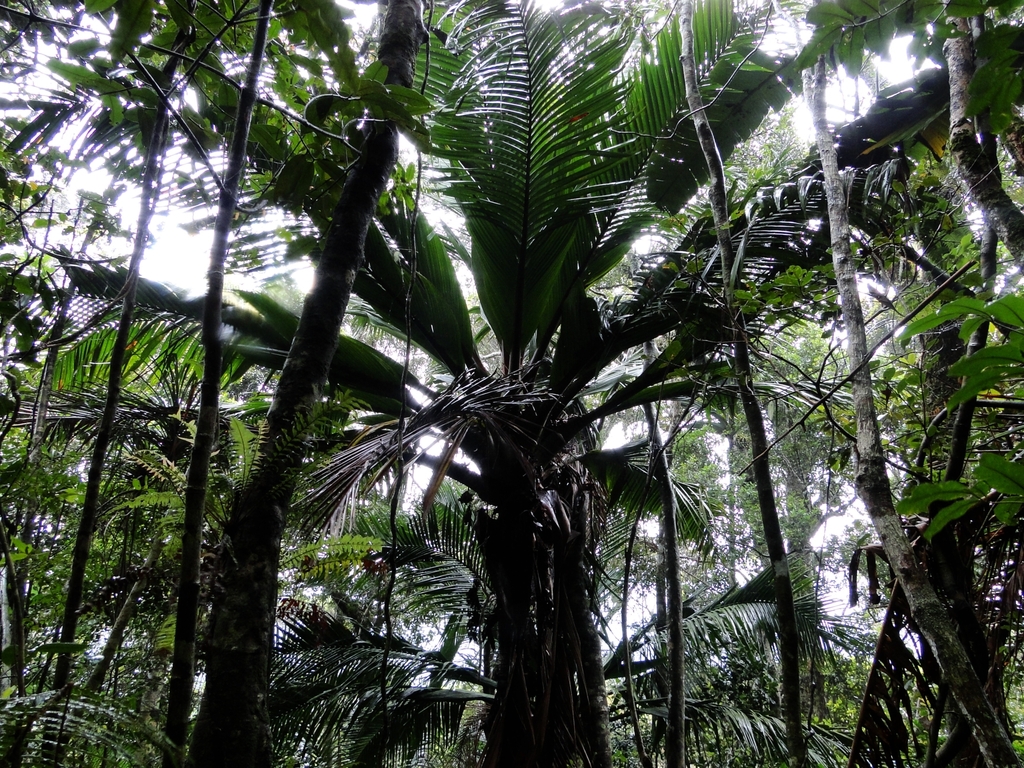
Image via iNaturalist (Research Grade). (c) globalherping, some rights reserved (CC BY-NC)
🚨 CRITICALLY ENDANGERED SPECIES
Madagascar's rarest palm, confined to cloud forests of the Marojejy Massif. This montane giant with massive black aerial roots represents one of cultivation's ultimate challenges - seed virtually unobtainable, growth measured in decades, but potential lifespan of two centuries.


1. Introduction
Habitat and Distribution
Marojejya insignis is endemic to northeastern Madagascar, with populations confined to the Marojejy Massif and adjacent mountains in the Sambava region. This critically endangered palm inhabits montane rainforest between 800-1,800 meters elevation, with the highest density between 1,200-1,500 meters. It grows on steep slopes, often above 45 degrees, in areas of persistent cloud cover and extreme rainfall exceeding 4,000mm annually. The species thrives in the transition zone between lowland and montane forest, where constant mist and lower temperatures create a unique microclimate. The total area of occupancy is estimated at less than 100 square kilometers, fragmented into several small subpopulations. The genus name honors the Marojejy Massif where it was first discovered.
Native Continent
Native range: Marojejy Massif, NE Madagascar
Click markers for details • Use buttons to switch map types
Taxonomic Classification and Scientific Classification
Synonyms
- Neophloga insignis (Humbert) Jum. & H.Perrier (not validly published)
- Sometimes confused with Dypsis species in older literature
Common Names
- Marojejy palm (English)
- Magnificent palm (English translation of Latin)
- Palmier de Marojejy (French)
- Dara (local Malagasy)
- Ravimbe mainty (Malagasy - "black palm")
Expansion in the World
M. insignis remains one of the rarest palms in cultivation worldwide. Cultivation is severely limited by habitat inaccessibility, extreme rarity, and specific montane requirements.
- Parc Botanique et Zoologique de Tsimbazaza, Madagascar (few plants)
- Kew Gardens, UK (single specimen in Palm House)
- Montgomery Botanical Center, Florida (conservation priority)
- Private collection in Réunion (unconfirmed)
- Never commercially available
- Seeds virtually unobtainable
- IUCN Red List status: Critically Endangered
2. Biology and Physiology
Morphology
Trunk
M. insignis develops a solitary, robust trunk reaching 10-20 meters in height with a diameter of 15-25cm. The trunk is dark brown to almost black (hence the Malagasy name), smooth in youth becoming rough and fissured with age. Ring scars are prominent but widely spaced (20-30cm apart). A distinctive feature is the massive cone of black aerial roots that can extend 1-2 meters up the trunk, providing stability on steep slopes. The trunk often leans following the slope.
Leaves
The crown is relatively small for the trunk size, consisting of 8-12 massive pinnate leaves. Leaves measure 3-5 meters long including the 1-1.5 meter petiole. Leaflets number 60-90 per side, regularly arranged but with a distinctive twist that creates a plumose appearance. Each leaflet is 60-80cm long and 5-7cm wide, dark green above with a bluish-white waxy coating below. New leaves emerge dark purple to black, gradually turning green. The leaf bases form a partial crownshaft covered in black, woolly tomentum.
Flower Systems
M. insignis is monoecious with massive infrafoliar inflorescences that are among the most spectacular in Madagascar palms. The branched inflorescence can reach 1.5-2 meters long, emerging from below the crownshaft. The peduncle is thick and curved, with 100-200 spreading to pendulous rachillae. Flowers are arranged in triads basally, with paired or solitary males distally. Male flowers are relatively large (6-8mm), cream to pale yellow with 12-20 stamens. Female flowers are 5-6mm, greenish-white. Flowering occurs mainly during the warm season (October-March) but requires several years between flowering events.
Life Cycle
M. insignis has an extended life cycle estimated at 100-200 years:
- Germination to Seedling (0-7 years): Extremely slow establishment
- Juvenile Phase (7-20 years): Trunk base development
- Sub-adult Phase (20-40 years): Aerial root development, trunk elongation
- Adult Phase (40-150 years): Irregular reproduction
- Senescent Phase (150-200 years): Slow decline
First flowering typically occurs at 35-50 years when palms reach 8-10 meters.
Specific Adaptations to Climate Conditions
- Aerial Root System: Anchoring on steep slopes
- Waxy Leaf Coating: Protection from constant moisture
- Black Pigmentation: UV protection at elevation
- Irregular Flowering: Masting behavior for pollination
- Cloud Forest Adaptation: Moisture extraction from fog
- Cold Tolerance: Survives near-freezing temperatures
3. Reproduction and Propagation
Seed Reproduction
Seed Morphology and Diversity
M. insignis produces the largest fruits in the genus, globose to ellipsoid, 3-4.5cm diameter. Immature fruits are dark green, ripening to purple-black with a glaucous bloom. The epicarp is thick and leathery; the mesocarp is fibrous and dry; the endocarp is thick and woody. Seeds are globose, 2.5-3.5cm diameter, with deeply ruminate endosperm creating an intricate pattern. Fresh seed weight is 10-20 grams. Limited genetic studies suggest moderate diversity between subpopulations.
Detailed Seed Collection and Viability Testing
- Remote mountain habitat
- Irregular fruiting (3-7 year intervals)
- Canopy height challenging
- Legal permits complex
- Weather conditions harsh
- Fresh viability: 70-85%
- Recalcitrant behavior
- Two weeks: 40-50%
- One month: 10-20%
- Storage impossible
Pre-germination Treatments
- Remove thick, fibrous mesocarp
- May require 5-7 days soaking
- Mechanical removal necessary
- Clean to bare endocarp
- Thick endocarp requires filing
- Focus on micropyle region
- Hot water ineffective
- Careful cracking alternative
- Cool treatment beneficial
- 18-20°C for 2 weeks
- Mimics montane conditions
- Then warm for germination
Step-by-step Germination Techniques
- Medium: 30% sand, 30% perlite, 30% peat, 10% charcoal
- Container: Very deep pots (30cm+)
- Planting: 5cm deep due to large size
- Temperature: 22-26°C (72-79°F) - cooler than lowland species
- Humidity: 80-90%
- Light: Moderate shade (70%)
- Special: Cool nights beneficial (5-8°C drop)
Germination Difficulty: Very Difficult
- Seed scarcity primary issue
- Thick endocarp challenging
- Specific temperature needs
- Slow, irregular process
Germination Time
- First germination: 120-240 days
- Peak germination: 240-365 days
- Complete process: up to 540 days
- Success rate: 40-60% at best
Seedling Care and Early Development
Year 1-2:
- Single grass-like leaf
- Extremely slow growth
- Cool nights important
- No fertilization
Years 3-5:
- First pinnate leaf
- Begin light feeding
- Maintain high humidity
- Watch for root rot
Years 6-10:
- Multiple leaves developing
- Can increase nutrition
- Still slow growth
- Aerial roots beginning
Advanced Germination Techniques
Hormonal Treatments for Germination Enhancement
- Higher concentration: 1000-1500 ppm
- Extended soak: 48-72 hours
- Through filed opening
- 30-40% improvement possible
- Alternating warm/cool
- 26°C day/18°C night
- Mimics natural conditions
- Breaks dormancy
- Last resort for rare seeds
- Technical expertise required
- Some success reported
- Conservation technique
4. Cultivation Requirements
Light Requirements
Species-specific Light Tolerance Ranges
- Seedlings (0-5 years): 200-600 μmol/m²/s (70-80% shade)
- Juveniles (5-15 years): 600-1200 μmol/m²/s (60-70% shade)
- Sub-adults (15-30 years): 1200-1800 μmol/m²/s (40-50% shade)
- Adults: Can tolerate up to 2000 μmol/m²/s (light shade)
More light-tolerant than M. darianii due to montane habitat.
Seasonal Light Variations and Management
- Can handle more light in cool seasons
- Protect from hot sun
- Cloud cover simulation beneficial
- Morning sun acceptable
Artificial Lighting for Indoor Cultivation
- Moderate light requirements
- Cool white LED preferred
- 12-14 hour photoperiod
- 200-400 foot-candles
Temperature and Humidity Management
Optimal Temperature Ranges
- Ideal: 18-24°C (64-75°F)
- Acceptable: 12-28°C (54-82°F)
- Minimum survival: 5°C (41°F)
- Maximum tolerance: 32°C (90°F)
- Cool nights essential (5-10°C drop)
Cold Tolerance Thresholds
- Light damage: 8°C (46°F)
- Severe damage: 5°C (41°F)
- Fatal: 0°C (32°F)
- Can survive near-freezing briefly
Hardiness Zone Maps
- USDA Zones: 10a-11
- Possible in 9b with protection
- Sunset Zones: 17, 20-24
- European: H2-H3
Humidity Requirements and Modification
- Optimal: 70-85%
- Minimum: 60%
- Cloud forest conditions ideal
- Misting beneficial but not critical
Soil and Nutrition
Ideal Soil Composition and pH
pH preference: 5.5-6.5 (slightly acidic)
Montane mix:
- 25% volcanic sand
- 25% leaf mold
- 20% tree fern fiber
- 20% perlite
- 10% aged bark
Excellent drainage critical
Nutrient Requirements Through Growth Stages
Seedlings (0-5 years):
- Minimal nutrition needed
- 1/8 strength quarterly
- Focus on establishment
Juveniles (5-15 years):
- NPK ratio: 3-1-3
- Monthly during warm season
- Half strength maximum
Adults (15+ years):
- NPK ratio: 8-3-10
- Bi-monthly application
- Can tolerate stronger feeding
Organic vs. Synthetic Fertilization
Organic Preferred:
- Decomposed leaf litter
- Volcanic rock dust
- Light compost tea
- Mimics montane soils
Synthetic Options:
- Low-salt formulations
- Controlled-release acceptable
- Avoid ammonium sources
- Monitor EC levels
Micronutrient Deficiencies and Corrections
- Iron: Despite acidic preference
- Magnesium: Common need
- Boron: In high rainfall
- Zinc: Occasional deficiency
Water Management
Irrigation Frequency and Methodology
- Consistent moisture important
- Well-drained but never dry
- Increase in warm weather
- Reduce in cool season
Drought Tolerance Assessment
- Low drought tolerance
- Montane species need moisture
- Shows stress quickly
- Slow recovery
Water Quality Considerations
- Soft water preferred
- Rain or fog water ideal
- TDS below 100 ppm
- pH 6.0-6.5 optimal
Drainage Requirements
No waterlogging tolerance
Steep slope planting ideal
Coarse amendments essential
5. Diseases and Pests
Common Problems in Growing
- Root rot: Primary issue
- Nutrient deficiencies: In cultivation
- Heat stress: In lowlands
- Scale insects: Occasional
Identification of Diseases and Pests
Disease Issues:
- Phytophthora root rot: Major threat
- Pythium: In seedlings
- Bacterial crown rot: If damaged
- Generally healthy in proper conditions
Pest Problems:
- Mountain scale insects: White encrustations
- Mealybugs: In tomentum
- Few pests at cool temperatures
- Slugs/snails on seedlings
Environmental and Chemical Protection Methods
Cultural Prevention:
- Perfect drainage prevents most issues
- Cool temperatures reduce problems
- Good air circulation
- Quarantine practices
Treatment Options:
- Copper fungicides for rot
- Systemic scale control
- Iron phosphate for mollusks
- Minimal intervention preferred
6. Indoor Palm Growing
Specific Care in Housing Conditions
Indoor Challenges:
- Cool temperature needs
- Large ultimate size
- High humidity requirements
- Best in conservatories
Success Factors:
- Cool room placement
- Humidity supplementation
- Good air circulation
- Gradual acclimation
Replanting and Wintering
Replanting Considerations:
- Deep containers needed
- Every 3-4 years
- Spring timing
- Minimal root disturbance
Winter Management:
- Can tolerate cool winters
- Maintain above 10°C (50°F)
- Reduce watering
- No fertilization
- Watch for scale
7. Landscape and Outdoor Cultivation
Garden Applications
- Montane garden specimen
- Conservation collections
- Cloud forest recreation
- Not for hot climates
Climate Requirements
- Cool, humid locations only
- Fog belt areas ideal
- Highland tropics
- Protected locations
8. Cold Climate Cultivation Strategies
Cold Hardiness
Best cold tolerance among Madagascar palms but still limited.
Winter Protection
- Hardy to brief 5°C (41°F)
- Protect below 10°C (50°F)
- Mulch heavily
- Overhead protection helpful
Hardiness Zone
- USDA 10a-11 standard
- Zone 9b possible with excellent care
- Cool greenhouse suitable
Winter Protection Systems and Materials
Marginal Areas:
- Microclimate selection
- Thermal mass nearby
- Overhead canopy
- Emergency heating
Greenhouse Culture:
- Cool tropical house
- Minimal heating needed
- Good ventilation essential
- Natural temperature drops
Establishment and Maintenance in Landscapes
Planting Techniques for Success
Site Requirements:
- Cool, humid location
- Protection from hot sun
- Excellent drainage
- Rich organic soil
Slope Advantage:
- Natural drainage
- Cool air drainage
- Fog collection
- Mimics habitat
Planting Method:
- Deep hole preparation
- Extensive amendments
- Elevated planting
- Immediate mulching
Long-term Maintenance Schedules
Regular Monitoring:
- Weekly moisture checks
- Monthly health assessment
- Seasonal fertilization
- Annual soil testing
Special Considerations:
- Document aerial root development
- Protect from physical damage
- Allow natural leaning
- Prepare for massive size
Conservation Priority:
- Record all observations
- Attempt propagation
- Share experiences
- Contribute to knowledge
Final Summary
Marojejya insignis stands as Madagascar's montane palm jewel, confined to the cloud-wrapped peaks of the northeast where it has evolved remarkable adaptations to steep slopes, cool temperatures, and constant moisture. This critically endangered giant represents one of palm cultivation's ultimate challenges, combining extreme rarity with specific montane requirements rarely replicated in cultivation.
The species' distinctive features—massive black aerial roots, dark trunk, purple-black new leaves, and spectacular inflorescences—create one of nature's most impressive palms. Its adaptation to elevations up to 1,800 meters provides better cold tolerance than most Madagascar palms, potentially expanding cultivation possibilities to subtropical highland areas.
Propagation faces severe constraints from seed unavailability, irregular fruiting cycles, and the challenges of accessing remote mountain populations. The thick, woody endocarp requires aggressive scarification, and germination can extend beyond a year. Seedlings grow extremely slowly, taking decades to develop the characteristic aerial roots and dark coloration.
For institutions attempting cultivation, M. insignis demands conditions mimicking its cloud forest home: cool temperatures (18-24°C), high humidity (70-85%), perfect drainage despite constant moisture, and protection from temperature extremes. The species' tolerance for cooler conditions offers advantages over lowland species but requires acceptance of extremely slow growth and massive ultimate size.
Conservation value rather than ornamental merit drives cultivation efforts. With wild populations fragmented and declining, each cultivated specimen provides crucial genetic preservation. Success requires institutional commitment, appropriate climate conditions, and patience measured in decades. The reward is growing one of Earth's rarest and most magnificent palms—a living reminder of Madagascar's extraordinary endemic flora and the urgent need for conservation. M. insignis challenges us to think beyond human timescales, planning for a palm that may take half a century to flower but could grace botanical collections for two centuries, inspiring future generations with its montane majesty.
- World's rarest palm in cultivation
- Seeds virtually unobtainable
- Germination: 120-540 days
- Success rate: 40-60% maximum
- Growth measured in decades
- Massive ultimate size: 10-20m
- Cool climate specialist: 18-24°C
- Lifespan: 100-200 years
- Institutional commitment essential
- Every specimen precious for conservation