Livistona saribus: A comprehensive Growing Guide for Enthusiasts & Collectors.
Livistona saribus
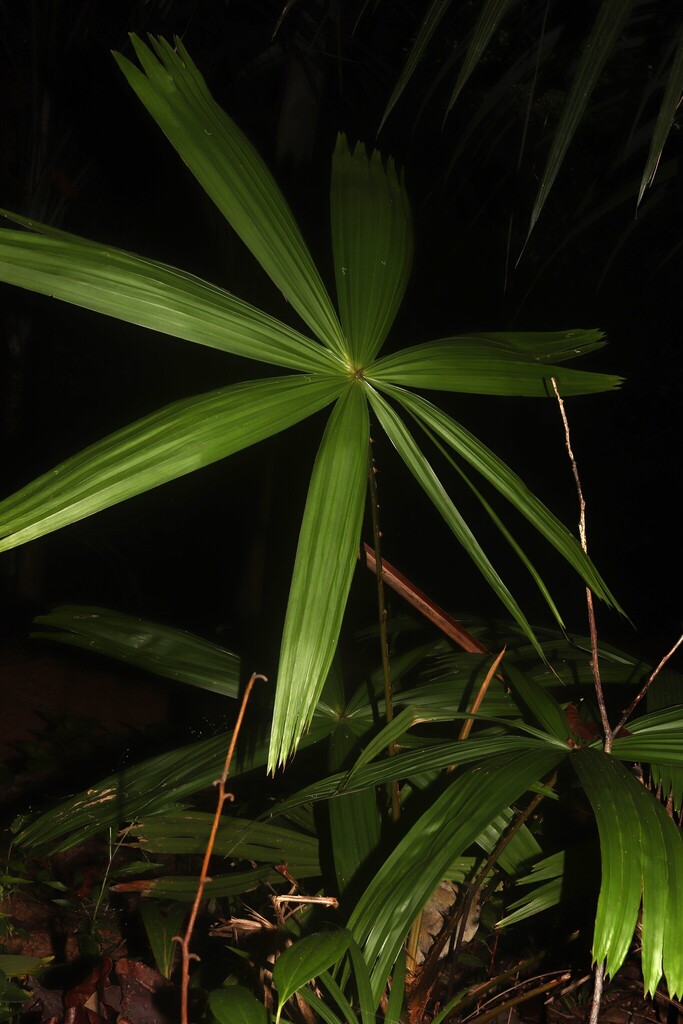
Image via iNaturalist (Research Grade). (c) Bridelia, all rights reserved

1. Introduction
Habitat and Distribution
Livistona saribus has one of the widest distributions in the genus, ranging from southern Thailand, Peninsular Malaysia, and southern Myanmar through Indonesia (Sumatra, Java, Borneo, Sulawesi), the Philippines, southern China (Guangxi, Hainan), Vietnam, Laos, and Cambodia. This adaptable species inhabits diverse environments from sea level to 1,000 meters elevation, including coastal areas, lowland rainforests, seasonal forests, and even cultivated landscapes. It thrives in areas with annual rainfall from 1,200-3,500mm, showing remarkable tolerance for both wet and seasonally dry conditions.
Native Continent
Scientific Classification
Synonyms
- Corypha saribus Lour. (basionym)
- Livistona cochinchinensis (Blume) Mart.
- Livistona hoogendorpii Teijsm. & Binn.
- Chamaerops cochinchinensis Blume
- Livistona spectabilis Griff.
Common Names
- English: Taraw palm, Serdang palm
- Malay: Saribus palm
- Indonesian: Sadang
- Thai: ตาลตาเหลา (tan-taa-lao)
- Vietnamese: Lắn
- Chinese: 蒲葵 (pú kuí)
Global Expansion
L. saribus is widely cultivated throughout the tropics:
- Common in Southeast Asian gardens
- Widely planted in tropical landscapes worldwide
- Popular in Florida, Hawaii, California
- Mediterranean gardens (protected locations)
- Commercially available globally
- Seeds readily available
- IUCN Red List status: Not assessed (widespread and common)
Its cultivation success reflects adaptability, fast growth, and ornamental value.
2. Biology and Physiology
Morphology
Trunk
L. saribus typically develops a solitary, robust trunk reaching 15-25 meters in height with a diameter of 20-40cm. The trunk is gray to brown, usually retaining leaf base fibers for several years before becoming clean and prominently ringed. The base may show slight buttressing in older specimens. Some populations exhibit clustering tendency, particularly when damaged.
Leaves
The crown contains 20-40 massive costapalmate leaves forming a dense, spherical to somewhat flat-topped canopy. Leaves are among the largest in the genus, with lamina 1.5-2.5 meters in diameter, divided to about half their length into 60-90 segments. Segments are stiff but with gracefully drooping tips, bright green to blue-green above, paler below. The petiole is 1-2 meters long, armed with robust, curved black to orange spines along the margins, particularly fierce in the lower half.
Inflorescences
Multiple branched inflorescences emerge among the leaves, extending 1-2 meters and branching to 4 orders. The inflorescences are often brightly colored—yellow, orange, or cream. Flowers are small (3-4mm), fragrant, cream to yellow, arranged in clusters of 2-5. The species is hermaphroditic with perfect flowers.
Fruits
Fruits are distinctive, globose to oval, 15-25mm diameter, ripening from green through orange to bright blue, blue-black, or purple. The color intensity varies with population. Fruits have a thin, fleshy mesocarp over a hard endocarp containing a single seed.
Life Cycle
L. saribus shows relatively fast growth for a fan palm:
- Germination to Seedling (0-3 years): Rapid early growth
- Juvenile Phase (3-10 years): Trunk development begins early
- Sub-adult Phase (10-20 years): Fast vertical growth
- Adult Phase (20-100+ years): Full size and regular fruiting
- Longevity: 150+ years estimated
First flowering at 15-20 years or when trunk reaches 3-5 meters.
Specific Adaptations to Climate Conditions
3. Reproduction and Propagation
Seed Reproduction
Seed Morphology and Diversity
L. saribus seeds are globose to slightly ellipsoid, 10-18mm diameter, varying considerably with origin. The endocarp is thick and woody, protecting the homogeneous endosperm. Seeds from blue-fruited forms tend to be larger than those from purple-fruited populations. Fresh seed weight ranges from 0.8-2.5 grams. High genetic diversity exists across the range.
Detailed Seed Collection and Viability Testing
- Monitor fruiting throughout the year
- Collect when fruits turn blue/purple
- Net placement helpful for tall palms
- Process promptly for best results
- Float test reliable after cleaning
- Heavy, solid seeds best
- White endosperm essential
- Fresh viability: 90-98%
- Storage: Orthodox behavior
- 6 months: 80-90%
- 1 year: 60-70% (cool, dry)
Pre-germination Treatments
- Remove blue/purple flesh
- Clean thoroughly
- Brief fungicide dip
- Can dry for storage
- Helpful but not essential
- Light filing sufficient
- Hot water: 70°C for 10 minutes
- 20-30% improvement
- 24-48 hours warm water
- Seeds may swell slightly
- Begin planting when radicle visible
Step-by-step Germination Techniques
- Medium: 50% peat, 30% sand, 20% perlite
- Container: Deep pots or beds
- Planting: 2-3cm deep
- Temperature: 25-35°C (77-95°F)
- Humidity: 70-80%
- Light: Bright shade
- Moisture: Consistent moisture