Livistona lanuginosa: A comprehensive Growing Guide for Enthusiasts & Collectors.
Livistona lanuginosa
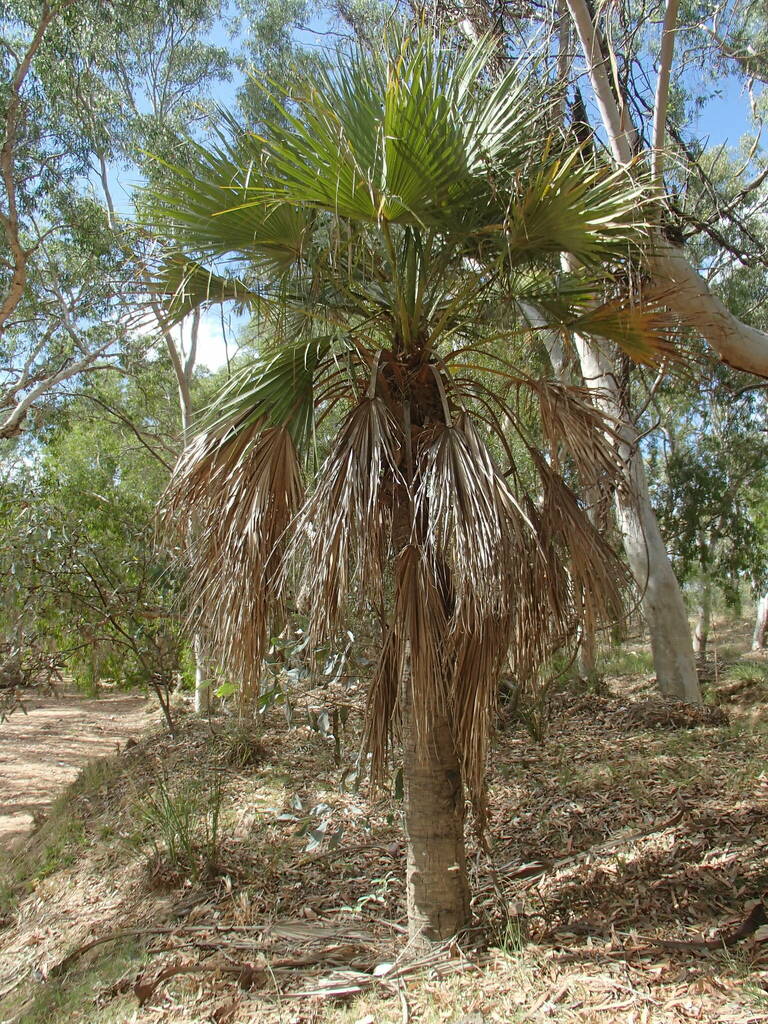
Image via iNaturalist (Research Grade). (c) Cameron de Jong, all rights reserved


1. Introduction
Habitat and Distribution, Native Continent
Livistona lanuginosa is endemic to the Cape York Peninsula in far northeastern Queensland, Australia, with an extremely restricted distribution. The entire wild population is confined to a small area around the headwaters of the Massey Creek and surrounding sandstone escarpments near Cape Melville. This remarkable palm grows exclusively on exposed sandstone pavements and in crevices of massive granite boulders at elevations between 100-500 meters. The habitat is characterized by extreme conditions: intense tropical sun, temperatures exceeding 40°C, minimal soil, and a harsh monsoonal climate with annual rainfall of 1,200-1,600mm concentrated in a short wet season. The species has evolved extraordinary adaptations to survive on bare rock with virtually no soil accumulation.
📍 Endemic Distribution:
- Location: Cape Melville region, Cape York Peninsula
- Elevation: 100-500 meters
- Habitat: Sandstone pavements, granite boulders
- Climate: Monsoonal, 1,200-1,600mm annual rainfall
- Soil: Virtually none - grows on bare rock
- Status: Vulnerable (IUCN Red List)
Native range: Cape Melville, Queensland, Australia (Endemic)
Click on markers for details
Taxonomic Classification and Scientific Classification
Synonyms
- No synonyms (recently described species)
- Previously included in L. drudei complex
- Misidentified as stunted L. muelleri in early collections
Common Names
- English: Woolly fan palm
- English: Cape Melville fan palm
- English: Sandstone fan palm
- Local usage: Waxy cabbage palm
- Chinese: 毛叶蒲葵 (Máoyè púkuí)
Expansion in the World
- Australian National Botanic Gardens (conservation collection)
- Townsville Palmetum (few specimens)
- Private collections in Queensland (very limited)
- Montgomery Botanical Center, Florida (single specimen)
- Not commercially available
- Seeds rarely collected due to habitat inaccessibility
- IUCN Red List status: Vulnerable
The extreme rarity in cultivation reflects both the tiny wild population and the challenging access to its remote habitat.
2. Biology and Physiology
Morphology
Trunk
L. lanuginosa develops a solitary trunk reaching 8-15 meters in height with a diameter of 15-25cm. The trunk is distinctive in being covered with a thick, woolly mass of persistent fiber and leaf bases that provides crucial insulation from temperature extremes. This fibrous covering can be 5-10cm thick and persists throughout the palm's life. The trunk often shows irregular swelling and constrictions reflecting growth responses to drought cycles.
Leaves
The costapalmate leaves are relatively small for the genus, with blades 60-90cm across, divided to about half their length into 30-45 rigid segments. The most distinctive feature is the dense covering of white to gray woolly tomentum on the underside of young leaves, which gives the species its name "lanuginosa" (woolly). This tomentum persists on the hastula, petiole, and leaf base. Petioles are 80-120cm long, armed along margins with small, curved thorns. Mature leaves develop a distinctive blue-gray waxy coating that provides additional protection from intense radiation.
Root System
Uniquely adapted for rock crevice growth:
- Extensive lateral roots follow rock fissures
- Specialized water-absorbing roots in crevices
- Root hairs adapted for minimal soil
- Can penetrate 10+ meters into rock cracks
Flower Systems
L. lanuginosa is hermaphroditic with cream to pale yellow flowers borne on branched inflorescences that emerge among the leaves. Inflorescences are 80-150cm long, branched to 4 orders, initially covered in woolly tomentum. Individual flowers are small (3-4mm), fragrant, with 6 tepals and 6 stamens. Peak flowering occurs at the end of the dry season (September-November), triggered by rising humidity. The species shows remarkable drought-induced flowering synchrony across populations.
Life Cycle
Adapted to extreme longevity in harsh conditions:
- Germination to Seedling (0-5 years): Extremely slow initial growth
- Juvenile Phase (5-25 years): Developing rock anchorage
- Sub-adult Phase (25-50 years): Trunk emergence
- Adult Phase (50-200+ years): Reproductive maturity
- Extreme Longevity: Estimated 300+ year lifespan
First flowering typically occurs at 40-60 years in habitat, earlier in cultivation.
Specific Adaptations to Climate Conditions
- Woolly Tomentum: Insulation and moisture capture
- Waxy Coating: Reflects radiation, reduces water loss
- Rock Crevice Roots: Maximizes limited water access
- Drought Deciduous: Can shed leaves in extreme drought
- Thick Trunk Fiber: Temperature insulation
- Synchronized Flowering: Maximizes pollination success
3. Reproduction and Propagation
Seed Reproduction
Seed Morphology and Diversity
L. lanuginosa produces globose to slightly ovoid fruits, 12-18mm diameter, ripening from green through orange to glossy black. The pericarp is thin with minimal flesh; the seed fills most of the fruit volume. Seeds are globose, 10-14mm diameter, with a hard, thick testa adapted to survive passage through rock wallabies and birds. The endosperm is homogeneous and rock-hard when dry. Fresh seed weight is 0.8-1.5 grams. Genetic diversity is limited due to small population size and geographic isolation.
Detailed Seed Collection and Viability Testing
- Remote, inaccessible habitat
- Rock climbing often required
- Limited fruiting in dry years
- Competition from wildlife
- Permits required for collection
- Fresh viability: 85-95%
- Orthodox storage behavior (unusual for palms)
- Properly dried: 70% viability after 1 year
- Room temperature storage: 50% after 2 years
- Refrigerated: 60-70% after 5 years
Pre-germination Treatments
Fruit Processing:
- Remove thin pericarp
- Clean and dry seeds
- Can store dried seeds
- Rehydrate before sowing
Scarification:
- File through hard testa
- Hot water soak: 80°C for 30 minutes
- Mechanical cracking effective
- Improves germination 50%
Rehydration:
- Soak scarified seeds 48-72 hours
- Change water daily
- Seeds swell noticeably
- Add fungicide to water
Step-by-step Germination Techniques
- Medium: 50% coarse sand, 30% perlite, 20% peat
- Container: Deep pots essential (taproot)
- Planting: 2-3cm deep
- Temperature: 30-35°C (86-95°F) optimal
- Humidity: 60-70% (lower than rainforest palms)
- Light: Full sun from emergence
- Special: Heat mat beneficial
Germination Difficulty
- High temperature requirement
- Long germination period
- Taproot needs space
- Vulnerable to overwatering
Germination Time
- First germination: 60-120 days
- Peak germination: 120-180 days
- Complete process: up to 365 days
- Success rate: 40-70% with treatment
Seedling Care and Early Development
Year 1:
- Full sun essential
- Minimal watering
- No fertilization
- Deep containers critical
Years 2-3:
- Begin dilute feeding
- Maintain dry side
- Woolly leaves appear
- Very slow growth
Years 4-5:
- Increase container size
- Regular but light feeding
- Waxy coating develops
- Still extremely slow
Advanced Germination Techniques
Hormonal Treatments for Germination Enhancement
Gibberellic Acid (GA3):
- High concentration: 1000-1500 ppm
- 48-hour soak after scarification
- 30-40% improvement
- Reduces germination time
Smoke Water Treatment:
- Very effective for this species
- 1:10 dilution (concentrated)
- Mimics bushfire conditions
- 40-50% improvement noted
Combined Protocol:
- Scarification + smoke + GA3
- Heat treatment addition
- Can achieve 80-90% germination
- Recommended for valuable seeds
4. Cultivation Requirements
Light Requirements
Species-specific Light Tolerance Ranges
- Seedlings (0-2 years): 1500-2000 μmol/m²/s minimum
- Juveniles (2-10 years): 2000+ μmol/m²/s (full sun)
- Adults: Maximum available sun exposure
Extreme high light requirement throughout life.
Seasonal Light Variations and Management
- Requires year-round full sun
- No shade tolerance at any stage
- Position for maximum exposure
- Artificial supplementation beneficial in cultivation
Artificial Lighting for Indoor Cultivation
- Extremely challenging indoors
- Metal halide essential
- 16+ hour photoperiod
- 1000+ foot-candles minimum
Temperature and Humidity Management
Optimal Temperature Ranges
- Ideal: 28-40°C (82-104°F)
- Acceptable: 20-45°C (68-113°F)
- Minimum survival: 10°C (50°F)
- Maximum tolerance: 50°C (122°F)
- Extreme heat tolerance
Cold Tolerance Thresholds
- Light damage: 10°C (50°F)
- Severe damage: 5°C (41°F)
- Fatal: 0°C (32°F)
- No frost tolerance
Hardiness Zone Maps
- USDA Zones: 10b-11
- Marginal in 10a
- Sunset Zones: 23-24
- European: H1a
Humidity Requirements and Modification
- Optimal: 40-60%
- Tolerates: 20-80%
- Low humidity tolerance excellent
- Avoid high humidity (fungal issues)
Soil and Nutrition
Ideal Soil Composition and pH
Sandstone Adaptation Mix for Livistona lanuginosa
- pH preference: 6.5-7.5 (neutral to slightly alkaline)
-
Sandstone adaptation mix:
- 40% coarse sand
- 30% granite chips/decomposed granite
- 20% perlite or pumice
- 10% minimal organic matter
- Critical: Perfect drainage
Nutrient Requirements Through Growth Stages
Seedlings (0-3 years):
- Minimal nutrition required
- 1/8 strength monthly after year 1
- Low nitrogen essential
Juveniles (3-10 years):
- NPK ratio: 3-1-4
- Quarterly application only
- Very light hand required
Adults (10+ years):
- NPK ratio: 8-3-12
- Bi-annual application sufficient
- Adapted to poor soils
Organic vs. Synthetic Fertilization
Minimal Approach Best:
- Tiny amounts of compost
- Crushed granite mulch
- Avoid rich amendments
- Mimics natural poverty
Synthetic Cautions:
- Ultra-low concentrations
- Slow-release essential
- High salts fatal
- Less is more
Micronutrient Deficiencies and Corrections
- Iron: Despite alkaline preference
- Manganese: Occasional need
- Generally undemanding
- Overfeeding more problematic
Water Management
Irrigation Frequency and Methodology
- Drought-adapted species
- Deep, infrequent watering
- Allow complete drying
- Monsoon-drought cycle beneficial
Drought Tolerance Assessment
- Can survive 6+ months dry
- Leaf shedding normal response
- Quick recovery with rain
Water Quality Considerations
- Tolerates poor quality water
- Moderate salt tolerance
- pH 6.5-8.0 acceptable
- Low water requirement
Drainage Requirements
- Perfect drainage absolutely critical
- Cannot tolerate any waterlogging
- Raised beds essential
- Rock mulch beneficial
5. Diseases and Pests
Common Problems in Growing
- Root rot: From overwatering
- Fungal issues: In high humidity
- Scale insects: Occasional
- Nutrient excess: Common mistake
Identification of Diseases and Pests
- Phytophthora: In wet conditions
- Pythium: Seedling loss
- Leaf spots: Various fungi in humidity
- Generally disease-free if dry
- Palm weevils: Rare
- Scale insects: On stressed plants
- Mealybugs: In crown
- Generally pest-free
Environmental and Chemical Protection Methods
Cultural Prevention:
- Perfect drainage prevents most issues
- Full sun reduces fungal problems
- Minimal water and fertilizer
- Air circulation critical
If Treatment Required:
- Systemic fungicides for root issues
- Minimal chemical use
- Focus on cultural conditions
- Prevention essential
6. Indoor Palm Growing
Specific Care in Housing Conditions
- Insufficient light main issue
- Low humidity beneficial
- Requires greenhouse conditions
- Not suitable for homes
- Brightest possible location
- Supplemental lighting essential
- Minimal watering
- Excellent ventilation
Replanting and Wintering
Replanting Minimally:
- Resents root disturbance
- Only when necessary
- Spring timing
- Minimal root pruning
Winter Care:
- Maintain above 15°C (59°F)
- Reduce watering drastically
- Maximum light exposure
- No fertilization
- Good air movement
7. Landscape and Outdoor Cultivation
Garden Applications
- Xeriscape specimen
- Rock garden feature
- Drought-tolerant landscapes
- Conservation collections
Design Features
- Unique woolly appearance
- Blue-gray foliage attractive
- Compact crown
- Conversation piece
8. Cold Climate Cultivation Strategies
Cold Hardiness
Winter Protection
- Cannot survive frost
- Minimum 10°C (50°F)
- Dry conditions improve hardiness
- Protection essential below 15°C
Hardiness Zone
- USDA 10b-11 only
- Not suitable for 10a
- Heated greenhouse in cooler zones
Winter Protection Systems and Materials
- Move containers indoors
- Provide maximum light
- Keep very dry
- Monitor temperatures closely
Establishment and Maintenance in Landscapes
Planting Techniques for Success
Site Selection Critical:
- Full sun exposure
- Perfect drainage
- Protected from cold
- Rock garden ideal
Soil Preparation:
- Create raised mounds
- Add coarse amendments
- Minimal organic matter
- Consider rock placement
Planting Process:
- Spring planting only
- Minimal root disturbance
- Plant high
- Immediate rock mulch
Long-term Maintenance Schedules
Monthly (Growing Season):
- Visual inspection only
- Water only if needed
Quarterly:
- Light fertilization
- Remove dead leaves
- Check drainage
Annually:
- Assess overall health
- Minimal pruning
- Photo documentation
- Adjust care if needed
Minimal Intervention Philosophy:
- Less is more
- Avoid overcare
- Natural growth best
- Document for conservation
Final Summary
Livistona lanuginosa represents one of Australia's most remarkable palm adaptations, surviving on sun-baked sandstone with virtually no soil or water for months. This vulnerable species, confined to the remote Cape Melville region, showcases extraordinary evolutionary solutions including woolly insulation, waxy coatings, and specialized rock-crevice roots.
The species' extreme habitat specialization makes it both fascinating and challenging to cultivate. Success requires abandoning typical palm care in favor of conditions that would kill most species: blazing full sun, perfect drainage, minimal water, and poor soil. The woolly tomentum and blue-gray waxy leaves that make this palm distinctive are direct adaptations to its harsh environment.
Propagation offers hope for conservation, with seeds showing unusual storage tolerance for a palm. The key is providing high temperatures and treating seeds to break dormancy. Seedlings grow painfully slowly but must receive full sun from emergence—a critical difference from most palms.
For growers in suitable climates (USDA 10b-11), L. lanuginosa offers unparalleled interest as a botanical extreme. Success requires patience, restraint in watering and feeding, and acceptance of slow growth. The reward is cultivating one of Earth's toughest palms—a species that thrives where others couldn't survive a day. Each cultivated specimen contributes to ex-situ conservation of this vulnerable species while demonstrating that palms have conquered even the most inhospitable environments. In the right setting, L. lanuginosa stands as living sculpture, its woolly trunk and waxy blue fans testament to evolution's power to find solutions in the most unlikely places.
- Vulnerable Australian endemic - Cape Melville only
- Grows on bare rock - virtually no soil
- Extreme heat tolerance - 40°C+
- Woolly leaves and waxy coating - unique adaptations
- Extreme drought tolerance - 6+ months without water
- Very slow growth - patience essential
- Full sun required from seedling stage
- Perfect drainage absolutely critical
- Orthodox seed storage - unusual for palms
- USDA zones 10b-11 only
- Conservation priority - extremely rare in cultivation