Livistona endauensis: A comprehensive Growing Guide for Enthusiasts & Collectors.
Livistona endauensis
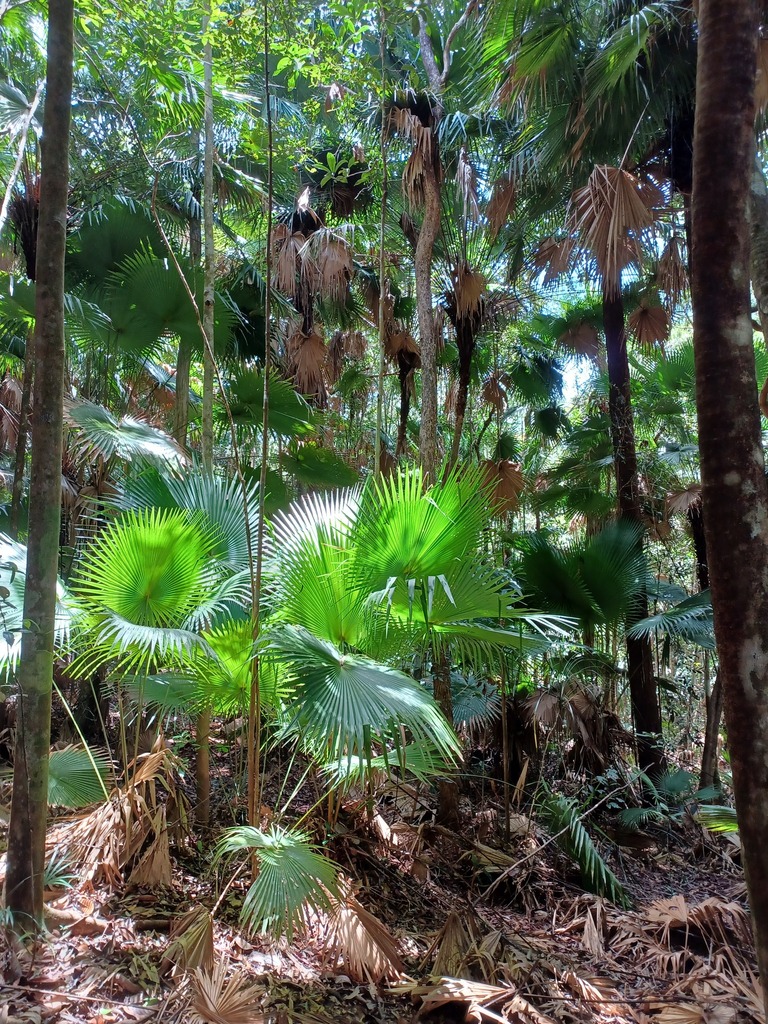
Image via iNaturalist (Research Grade). (c) lunarjade, some rights reserved (CC BY-NC)


1. Introduction
Habitat and Distribution, Native Continent
Livistona endauensis is endemic to Peninsular Malaysia, with an extremely restricted distribution centered on Gunung Benom and surrounding mountains in the Endau-Rompin area of Pahang and Johor states. This rare palm inhabits montane cloud forests between 900-1,500 meters elevation, growing on steep slopes and ridge tops where persistent mist and cloud cover maintain high humidity year-round. The species thrives in areas receiving 2,500-4,000mm annual rainfall with no distinct dry season. L. endauensis typically occurs in stunted mossy forest on ultramafic soils or in transitional zones between hill dipterocarp and montane forest. The total wild population is estimated at fewer than 5,000 individuals across fragmented mountain peaks.
Native Continent
📍 Endemic Distribution:
- Core Area: Gunung Benom, Endau-Rompin
- States: Pahang and Johor
- Elevation: 900-1,500 meters
- Habitat: Montane cloud forests, steep slopes
- Climate: 2,500-4,000mm annual rainfall
- Population: Fewer than 5,000 individuals
Native range: Peninsular Malaysia mountains (Endemic)
Click on markers for details
Taxonomic Classification and Scientific Classification
Synonyms
- No true synonyms (recently described species)
- Sometimes misidentified as L. speciosa
- Confused with high elevation forms of L. saribus
Common Names
- English: Endau fan palm
- English: Gunung Benom palm
- English: Mountain livistona
- Malay: Pinang gunung ("mountain palm")
- Chinese: 恩道扇椰子
Expansion in the World
- FRIM Kepong - ex-situ conservation
- Singapore Botanic Gardens (few specimens)
- Private collections in Malaysia
- Not commercially available
- Seeds rarely collected due to access difficulties
- No known cultivation outside Southeast Asia
- IUCN Red List status: Vulnerable
Extreme rarity reflects remote habitat and specific growing requirements.
2. Biology and Physiology
Morphology
Trunk
L. endauensis develops a solitary, slender trunk reaching 8-15 meters in height with a uniform diameter of 15-20cm. The trunk is dark gray to blackish, closely ringed with prominent leaf scars. Unlike lowland Livistona species, the trunk remains clean of persistent leaf bases, possibly due to the humid conditions promoting rapid decomposition. Young palms may take 15-20 years to begin trunk formation.
Leaves
The crown is open and sparse, consisting of 15-25 costapalmate leaves. This reduced leaf number is typical of montane palms. Petioles are 1-1.5 meters long, armed with small, recurved black spines that become sparse toward the blade. The blade is orbicular, 80-120cm in diameter, divided to about two-thirds into 45-60 segments. Segments are pendulous at tips, creating a graceful weeping appearance. Leaves are dark green above with a distinctive silvery-white indumentum below, an adaptation to the cloud forest environment.
Flower Systems
Hermaphroditic with relatively short inflorescences emerging among the leaves. Inflorescences are 60-100cm long, branched to 3 orders, much shorter than the leaves. Flowers are small (2-3mm), creamy-white, and fragrant, densely arranged on the rachillae. The reduced inflorescence size may be an adaptation to the windy montane environment. Flowering appears to be continuous throughout the year with no distinct season.
Life Cycle
L. endauensis has a life cycle adapted to slow montane growth:
- Germination to Seedling (0-5 years): Extremely slow initial phase
- Juvenile Phase (5-20 years): Extended pre-trunk stage
- Sub-adult Phase (20-35 years): Slow trunk development
- Adult Phase (35-100+ years): Reproductive maturity
- Longevity: Unknown but likely 150+ years
First flowering at 30-40 years, later than lowland species.
Specific Adaptations to Climate Conditions
- Cloud Forest Specialist: Requires high humidity
- Cool Temperature Tolerance: Adapted to montane climate
- Silvery Leaf Undersides: Moisture capture from fog
- Reduced Crown: Wind resistance
- Slow Growth: Low nutrient adaptation
- Persistent Moisture Needs: No drought tolerance
3. Reproduction and Propagation
Seed Reproduction
Seed Morphology and Diversity
L. endauensis produces globose to slightly ovoid fruits, 12-15mm diameter, smaller than most Livistona species. Fruits ripen from green to dark blue-black with a glaucous bloom. The pericarp is thin with minimal flesh. Seeds are spherical, 10-12mm diameter, with hard white endosperm. Fresh seed weight is 0.6-1.0 grams. Limited genetic studies suggest moderate diversity despite small populations.
Detailed Seed Collection and Viability Testing
- Remote mountain access difficult
- Permits required for protected areas
- Continuous fruiting = small crops
- Weather conditions challenging
- Fresh viability high (85-90%)
- Rapid deterioration in storage
- Cool storage beneficial (15°C)
- Float test reliable
- One month: 60-70%
- Two months: 30-40%
- Three months: <10%
Pre-germination Treatments
Fruit Processing:
- Clean immediately
- Remove all flesh
- Rinse in cool water
- Keep moist and cool
Scarification:
- Light filing beneficial
- Focus on micropyle
- Avoid overscarification
- Cool water soak better than hot
Temperature Conditioning:
- Cool stratification unique
- 18-20°C for 2 weeks
- Mimics montane conditions
- Improves synchronization
Step-by-step Germination Techniques
- Medium: 40% peat, 40% perlite, 20% bark fines
- Container: Deep individual pots
- Planting: 2cm deep
- Temperature: 22-26°C (72-79°F) - cooler than most
- Humidity: 85-95% critical
- Light: Deep shade (80-90%)
- Special: Cool nights beneficial
Germination Difficulty
- Specific temperature needs
- High humidity essential
- Slow, irregular germination
- Fungal issues common
Germination Time
- First germination: 60-120 days
- Peak germination: 120-240 days
- Complete process: up to 365 days
- Success rate: 40-60%
Seedling Care and Early Development
Years 1-2:
- Extremely slow growth
- Maintain high humidity
- Deep shade essential
- Cool temperatures
Years 3-5:
- First divided leaves
- Begin light feeding
- Still requires shade
- Susceptible to heat
Years 6-10:
- Gradually acclimate
- Increase nutrition
- Silver undersides develop
- Still slow growing
Advanced Germination Techniques
Hormonal Treatments for Germination Enhancement
Gibberellic Acid (GA3):
- Lower concentration: 100-200 ppm
- Extended soak: 48-72 hours
- Limited improvement
- May increase fungal issues
Cool Stratification:
- Most effective treatment
- 15-18°C for 2-4 weeks
- Improves germination 30%
- Mimics natural conditions
Mycorrhizal Inoculation:
- Mountain species beneficial
- Apply at sowing
- Improves survival
- Limited availability
4. Cultivation Requirements
Light Requirements
Species-specific Light Tolerance Ranges
- Seedlings (0-5 years): 50-300 μmol/m²/s (80-95% shade)
- Juveniles (5-15 years): 300-800 μmol/m²/s (60-80% shade)
- Sub-adults (15-30 years): 800-1200 μmol/m²/s (50-60% shade)
- Adults: 1000-1500 μmol/m²/s (40-50% shade preferred)
Never tolerates full sun well.
Seasonal Light Variations and Management
- Consistent shade required
- Protect from direct sun always
- Dappled light ideal
- Cloud cover simulation beneficial
Artificial Lighting for Indoor Cultivation
- Low to moderate light
- Cool spectrum preferred
- 10-12 hour photoperiod
- 100-200 foot-candles
Temperature and Humidity Management
Optimal Temperature Ranges
- Ideal: 18-25°C (64-77°F)
- Acceptable: 12-28°C (54-82°F)
- Minimum survival: 5°C (41°F)
- Maximum tolerance: 32°C (90°F)
- Cool preferences unusual
Cold Tolerance Thresholds
- Light damage: 8°C (46°F)
- Severe damage: 5°C (41°F)
- Fatal: 0°C (32°F)
- Heat more problematic than cold
Hardiness Zone Maps
- USDA Zones: 10a-11
- Marginal in 9b
- Sunset Zones: 17, 23-24
- European: H2-H3
Humidity Requirements and Modification
- Optimal: 80-95% critical
- Minimum: 70%
- Cloud forest conditions needed
- Multiple daily misting
Soil and Nutrition
Ideal Soil Composition and pH
Cloud Forest Mix for Livistona endauensis
- pH preference: 5.0-6.0 (acidic)
-
Montane adaptation:
- High organic matter
- Excellent drainage
- Cool root zone
- Moss growth beneficial
-
Mix recommendation:
- 40% peat moss
- 25% perlite
- 20% orchid bark
- 10% tree fern fiber
- 5% charcoal
Nutrient Requirements Through Growth Stages
Seedlings (0-5 years):
- Minimal nutrition
- 1/8 strength monthly
- Organic preferred
Juveniles (5-15 years):
- NPK ratio: 3-1-2
- Monthly in growing season
- Very light hand
Adults (15+ years):
- NPK ratio: 5-2-4
- Bi-monthly maximum
- Low fertility adapted
Organic vs. Synthetic Fertilization
Organic Strongly Preferred:
- Leaf mold ideal
- Aged bark compost
- Light applications only
- Mimics natural litter
Synthetic Risks:
- Salt damage likely
- Use extreme dilution
- Slow-release only
- Monitor constantly
Micronutrient Deficiencies and Corrections
- Iron: Despite acid soils
- Magnesium: Occasional
- Generally undemanding
- Avoid overfeeding
Water Management
Irrigation Frequency and Methodology
- Constant moisture essential
- Never allow drying
- Soft water only
- Misting critical
Drought Tolerance Assessment
- Rapid decline if dry
- No recovery ability
- Automated systems recommended
Water Quality Considerations
- Rainwater strongly preferred
- Very low mineral tolerance
- pH 5.5-6.5 ideal
- Avoid hard water
Drainage Requirements
- Excellent drainage paradoxically needed
- No waterlogging despite moisture needs
- Elevated planting
- Sphagnum top-dressing helpful
5. Diseases and Pests
Common Problems in Growing
- Fungal issues in high humidity
- Heat stress common problem
- Nutrient burn from overfeeding
- Root rot despite moisture needs
Identification of Diseases and Pests
- Cylindrocladium leaf spots
- Phytophthora in heat
- Various leaf fungi
- Crown rot risks
- Scale insects occasional
- Mealybugs in crown
- Generally pest-free
- Vigor prevents issues
Environmental and Chemical Protection Methods
Cultural Management:
- Air circulation critical
- Temperature control
- Proper moisture balance
- Minimal fertilization
Chemical Treatments:
- Systemic fungicides preventatively
- Copper sprays for leaf spots
- Avoid oil-based products
- Biological controls preferred
6. Indoor Palm Growing
Specific Care in Housing Conditions
Indoor Challenges:
- High humidity requirement
- Cool temperature needs
- Continuous moisture
- Special environment needed
Success Requirements:
- Cool greenhouse ideal
- Humidity chamber
- Automated misting
- Temperature control
Replanting and Wintering
Repotting Sensitivity:
- Minimal disturbance
- Only when essential
- Spring timing
- Same depth critical
Winter Care:
- Maintain 12-20°C (54-68°F)
- High humidity even more critical
- Reduce feeding
- Monitor fungal issues
- Increase air circulation
7. Landscape and Outdoor Cultivation
Limited Applications
- Cloud forest gardens only
- High elevation tropics
- Conservatory specimens
- Not for general cultivation
Specific Requirements
- Fog simulation
- Wind protection
- Cool root zones
- Associated plantings helpful
8. Cold Climate Cultivation Strategies
Cold Hardiness
Winter Protection
- Cool greenhouse only
- Cannot survive outdoors temperate zones
- High humidity essential
- Frost protection critical
Hardiness Zone
- USDA 10a-11 only
- Not suitable below Zone 10a
- Highland tropical areas only
Winter Protection Systems and Materials
- Full climate control needed
- Cool but frost-free
- High humidity systems
- Specialized facilities only
Establishment and Maintenance in Landscapes
Planting Techniques for Success
Site Selection Critical:
- Natural cloud cover
- Protected from sun
- Cool air drainage
- High humidity zones
Soil Preparation:
- Deep organic matter
- Perfect drainage
- Acidic pH essential
- Mulch heavily
Planting Method:
- Minimal root disturbance
- Same planting depth
- Immediate shade cloth
- Misting system ready
Long-term Maintenance Schedules
Daily Requirements:
- Humidity monitoring
- Misting as needed
- Temperature checks
Monthly Tasks:
- Light fertilization
- Health assessment
- pH monitoring
- Dead frond removal
Annual Needs:
- Soil testing
- Mulch renewal
- Shade adjustment
- Growth documentation
Conservation Priority:
- Document all aspects
- Share experiences
- Maintain genetic records
- Support research
Final Summary
Livistona endauensis represents one of Southeast Asia's most specialized palms, adapted to the perpetually cool, misty conditions of Malaysian mountain peaks. This vulnerable endemic faces threats from climate change and habitat disturbance, making ex-situ conservation increasingly important despite the significant cultivation challenges.
The species' requirements read like a cultivation nightmare: constant high humidity, cool temperatures, perfect drainage yet never dry, deep shade, and minimal nutrition. These exacting needs reflect its cloud forest origins where mist provides moisture, temperatures rarely exceed 25°C, and nutrients come slowly from decomposing leaf litter.
Successful propagation requires fresh seeds and patient attention to specific germination requirements, including cooler temperatures than typical for palms. Seedlings grow painfully slowly, taking decades to develop the characteristic silvery-backed leaves and begin trunk development. This slow growth, combined with specific environmental needs, makes L. endauensis suitable only for dedicated specialists with appropriate facilities.
For botanical gardens and serious conservationists with cloud forest simulations or cool tropical greenhouses, this species offers important conservation value and unique beauty. The silvery leaf undersides, graceful weeping segments, and open crown create an ethereal appearance that captures the mystery of misty mountain forests.
Success with L. endauensis requires abandoning standard palm cultivation practices and instead thinking like a cloud forest: cool, misty, shaded, and patient. In the right hands, with proper facilities, this rare endemic can thrive ex-situ, providing both conservation value and a living reminder of Southeast Asia's remarkable mountain flora. Its cultivation challenges are matched only by the satisfaction of successfully growing one of Malaysia's most specialized and beautiful palms.
- Malaysian endemic - extremely restricted range
- Cloud forest specialist - 900-1,500m elevation
- Distinctive silvery leaf undersides
- Cool temperature preference - 18-25°C ideal
- Extremely high humidity needs - 80-95%
- Very slow growth - decades to maturity
- Difficult germination - 40-60% success
- USDA zones 10a-11 only
- Vulnerable status - conservation priority
- Not for general cultivation - specialists only