Licuala thoana: A comprehensive Growing Guide for Enthusiasts & Collectors.
Licuala thoana
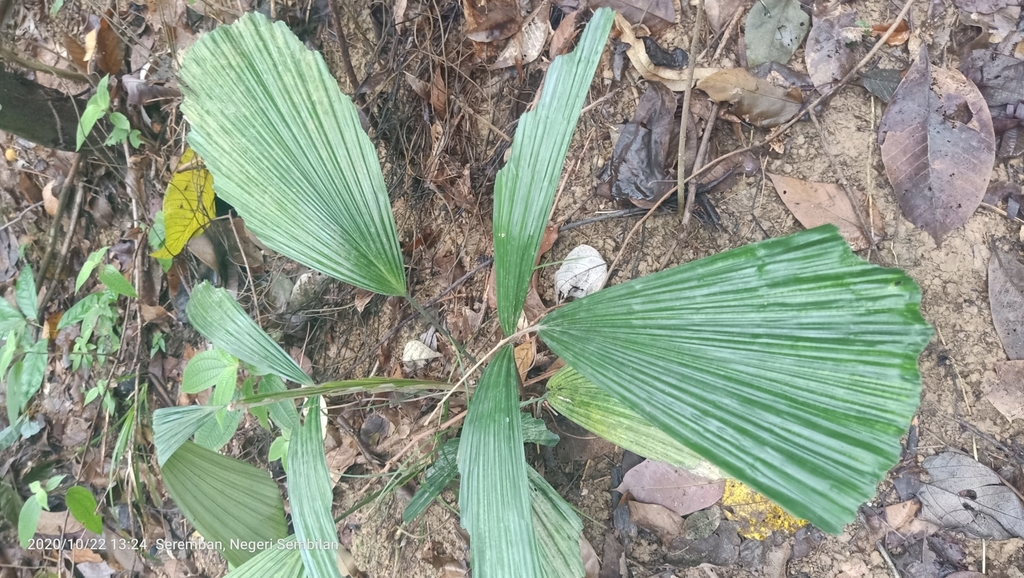
Image via iNaturalist (Research Grade). (c) Ong Jyh Seng, some rights reserved (CC BY-SA)
⚠️ ENDANGERED VIETNAMESE ENDEMIC
Endemic to southern Vietnam with populations under severe pressure from habitat loss near Ho Chi Minh City. Distinguished by spectacular circular leaf arrangement and distinctive warty fruits. Cultivation is crucial for conservation of this rare species.


1. Introduction
Habitat and Distribution, Native Continent
Licuala thoana is endemic to southern Vietnam, specifically known from the provinces of Dong Nai, Ba Ria-Vung Tau, and possibly Lam Dong. This rare palm inhabits lowland evergreen and semi-evergreen forests between 100-600 meters elevation, with most populations occurring below 400 meters. It grows in areas experiencing 1,800-2,500mm annual rainfall with a distinct dry season from December to April. The species shows a preference for well-drained slopes and low hills, often growing in association with bamboos and other palms in the understory. Named after Mount Tho (Nui Tho) where it was first discovered, L. thoana faces severe habitat pressure from agricultural expansion and urban development around Ho Chi Minh City.
Native range: Southern Vietnam lowland forests
Click markers for details • Use buttons to switch map types
Taxonomic Classification and Scientific Classification
Synonyms
- No synonyms (recently described)
- Previously confused with L. cochinchinensis
- Misidentified as L. spinosa in some collections
Common Names
- Tho mountain fan palm (English)
- Cọ núi Thọ (Vietnamese)
- 土山轴榈 (Chinese)
- No traditional names documented
Expansion in the World
L. thoana has minimal presence in cultivation:
- Saigon Botanical Garden (type locality nearby)
- A few Vietnamese private collections
- Not present in Western collections
- Never offered commercially
- Seeds rarely available even locally
- IUCN Red List status: Not assessed (likely Endangered)
Recent description and restricted range limit cultivation experience.
2. Biology and Physiology
Morphology
Growth Form
L. thoana is a solitary, moderate-sized palm reaching 4-8 meters in height. The trunk is 8-15cm in diameter, covered with persistent, fibrous leaf bases in the upper portion, becoming clean and gray-brown below. The trunk shows slight thickening at the base and distinctive, closely spaced ring scars. Unlike many Vietnamese Licuala species, it never produces suckers or forms clusters.
Leaves
The spectacular palmate leaves are divided into 16-24 segments arranged in a nearly complete circle. Each segment is 40-70cm long and 3-6cm wide at the broadest point, tapering to distinctive long, pendulous tips. The segments are pleated and held in different planes, creating a three-dimensional effect. Leaf color is deep green above with a satiny sheen, silvery-green below. The total leaf diameter reaches 120-150cm. Petioles are 100-180cm long, armed with robust, forward-pointing spines 5-15mm long along the lower two-thirds.
Inflorescence
The interfoliar inflorescence extends well beyond the leaves, reaching 150-250cm in length. It is branched to 3-4 orders with a distinctive zigzag rachis. The branches are covered in rust-colored tomentum when young. A unique feature is the partially persistent bracts that give the inflorescence a shaggy appearance. Flowers are arranged in small clusters along the ultimate branches.
Flowers and Fruits
Hermaphroditic flowers are 4-5mm across, cream to pale yellow, with a sweet fragrance. Fruits are globose to slightly pear-shaped, 12-18mm diameter, ripening from green through yellow-orange to deep red. The fruit surface has a distinctive warty texture unique among Vietnamese Licuala species.
Life Cycle
L. thoana follows a typical solitary palm life cycle:
- Germination to Seedling (0-3 years): Slow establishment
- Juvenile Phase (3-10 years): Trunk development begins
- Sub-adult Phase (10-20 years): Rapid height growth
- Adult Phase (20-80+ years): Regular reproduction
- Senescence: Gradual decline after 80-100 years
First flowering typically occurs at 15-20 years or when trunk reaches 2-3 meters.
Specific Adaptations to Climate Conditions
- Seasonal Drought Tolerance: Survives 4-5 month dry season
- Flexible Leaf Segments: Reduces wind damage
- Deep Root System: Accesses water in dry periods
- Thick Cuticle: Reduces water loss
- Pendulous Leaf Tips: Enhanced drip tips for rain shedding
- Warty Fruits: Possible dispersal adaptation
3. Reproduction and Propagation
Seed Reproduction
Seed Morphology and Diversity
L. thoana produces relatively large fruits for the genus, each containing a single globose seed 10-14mm diameter. The seed has a hard, smooth testa and homogeneous endosperm with a basal embryo. The distinctive warty fruit surface may aid in animal dispersal. Fresh seed weight is 0.8-1.5 grams. Genetic diversity is unknown but likely moderate given the scattered populations.
Detailed Seed Collection and Viability Testing
- Fruiting occurs mainly April-July
- Collect when fruits turn orange-red
- Local wildlife competition significant
- Access to populations restricted
- Fresh seeds show high viability (90%+)
- Rapid deterioration expected
- Storage behavior unknown
- Likely recalcitrant like congeners
Pre-germination Treatments
Based on related species and limited trials:
- Remove warty pericarp promptly
- Brief fermentation acceptable
- Clean seeds thoroughly
- Keep constantly moist
- File seed coat lightly
- Hot water treatment beneficial
- Soak 48-72 hours after scarification
- GA3 treatment untested
- Smoke water possibly helpful
- Maintain warm temperatures
Step-by-step Germination Techniques
Protocol based on limited experience:
- Medium: 40% coconut coir, 30% perlite, 20% rice hull, 10% charcoal
- Container: Individual deep pots
- Planting: 1.5cm deep
- Temperature: 28-32°C optimal
- Humidity: 80-90%
- Light: Bright filtered shade
- Local materials: Rice hull beneficial
Germination Difficulty
Moderate based on limited data:
- Fresh seeds germinate well
- Temperature important
- Consistent moisture critical
- Local materials helpful
Germination Time
Limited observations suggest:
- First germination: 45-90 days
- Peak germination: 90-150 days
- Complete: within 250 days
- Success rate: 60-80% if fresh
Seedling Care and Early Development
First year:
- Moderate shade required
- High humidity beneficial
- Slow initial growth
- Deep taproot develops
Years 2-3:
- Growth rate increases
- Begin light fertilization
- Maintain consistent moisture
- Trunk initiation by year 3
Years 4-5:
- Can tolerate more light
- Regular feeding program
- Characteristic leaves develop
Advanced Germination Techniques
Hormonal Treatments for Germination Enhancement
Limited testing suggests:
- 500-750 ppm may help
- Local growers report improvement
- Reduces germination time
- Rice water soaking used locally
- Banana leaf wrapping
- Cultural knowledge valuable
4. Cultivation Requirements
Light Requirements
Species-specific Light Tolerance Ranges
- Seedlings (0-3 years): 300-600 μmol/m²/s (70-80% shade)
- Juveniles (3-10 years): 600-1200 μmol/m²/s (50-60% shade)
- Sub-adults (10-20 years): 1200-1800 μmol/m²/s (30-40% shade)
- Adults: Can tolerate up to 2000 μmol/m²/s (morning sun acceptable)
More sun-tolerant than many Licuala species.
Seasonal Light Variations and Management
- Tolerates seasonal changes well
- More shade during hot dry season
- Can handle brighter conditions in cool season
- Gradual acclimation important
Artificial Lighting for Indoor Cultivation
- Moderate light requirements
- LED or fluorescent suitable
- 12-14 hour photoperiod
- 200-400 foot-candles
Temperature and Humidity Management
Optimal Temperature Ranges
- Ideal: 25-32°C (77-90°F)
- Acceptable: 18-38°C (64-100°F)
- Minimum survival: 10°C (50°F)
- Maximum tolerance: 42°C (108°F)
- Handles temperature extremes better than most Licuala
Cold Tolerance Thresholds
- Light damage: 12°C (54°F)
- Severe damage: 10°C (50°F)
- Fatal: 5°C (41°F)
- Brief cold tolerated if dry
Hardiness Zone Maps
- USDA Zones: 10a-11
- Marginal in 9b with protection
- Sunset Zones: 22-24
- European: H2
Humidity Requirements and Modification
- Optimal: 60-80%
- Minimum tolerable: 45%
- Drought adaptation helps
- Less humidity-demanding
Soil and Nutrition
Ideal Soil Composition and pH
pH preference: 6.0-7.0 (slightly acidic to neutral)
Well-draining mix:
- 30% loam
- 25% coconut coir
- 20% perlite
- 15% compost
- 10% sand
Tolerates various soil types
Nutrient Requirements Through Growth Stages
Seedlings (0-3 years):
- Light feeding after 6 months
- 1/4 strength monthly
- Balanced formulation
Juveniles (3-10 years):
- NPK ratio: 5-2-4
- Monthly during growing season
- Increase gradually
Adults (10+ years):
- NPK ratio: 12-4-10
- Heavy feeder when established
- Bi-weekly in growth season
Organic vs. Synthetic Fertilization
Organic Options:
- Composted manure effective
- Fish emulsion beneficial
- Rice hull ash (local practice)
- Palm-specific organics
Synthetic Program:
- Controlled-release ideal
- High nitrogen for growth
- Complete micronutrients
- Monitor salt levels
Micronutrient Deficiencies and Corrections
- Magnesium: Common in sandy soils
- Iron: In alkaline conditions
- Manganese: Occasional issue
- Boron: In high rainfall areas
Water Management
Irrigation Frequency and Methodology
- Moderate to high water needs
- Deep watering preferred
- Allow slight drying between
- Increase in dry season
Drought Tolerance Assessment
- Good for a Licuala
- Survives dry season naturally
- Established plants resilient
- Young plants vulnerable
Water Quality Considerations
- Tolerates moderate water quality
- Not highly salt sensitive
- pH 6.0-7.5 acceptable
- Rainwater ideal
Drainage Requirements
- Good drainage essential
- No waterlogging tolerance
- Raised planting in heavy soils
- Mulching beneficial
5. Diseases and Pests
Common Problems in Growing
Limited cultivation data suggests:
- Leaf spots in high humidity
- Scale insects occasional
- Root rot in poor drainage
- Generally healthy species
Identification of Diseases and Pests
Fungal Issues:
- Pestalotiopsis leaf spots
- Colletotrichum in wet season
- Crown rot if overwatered
Pest Problems:
- Red palm mite in dry conditions
- Scale on trunk and petioles
- Mealybugs occasional
Environmental and Chemical Protection Methods
Cultural Controls:
- Proper spacing for air flow
- Avoid overhead watering
- Remove infected material
- Maintain plant vigor
Chemical Options:
- Neem oil for most pests
- Copper fungicides if needed
- Systemic insecticides sparingly
- IPM approach preferred
6. Indoor Palm Growing
Specific Care in Housing Conditions
Indoor Potential:
- Size eventually challenging
- Moderate light needs helpful
- Lower humidity tolerance advantageous
- Attractive specimen potential
Requirements:
- Bright indirect light
- Good air circulation
- Regular fertilization
- Large containers eventually
Replanting and Wintering
Replanting Schedule:
- Every 2-3 years when young
- Every 3-5 years when mature
- Spring optimal
Winter Care:
- Maintain above 15°C (59°F)
- Reduce watering 30-40%
- Stop fertilization
- Maximum light exposure
- Monitor for pests
7. Landscape and Outdoor Cultivation
Garden Applications
- Specimen palm for tropical gardens
- Understory to partial sun locations
- Vietnamese native plant gardens
- Medium-scale landscapes
Design Features
- Spectacular circular leaf arrangement
- Moderate size useful
- Distinctive warty fruits
- Year-round interest
8. Cold Climate Cultivation Strategies
Cold Hardiness
Better than many Licuala but still limited.
Winter Protection
- Can handle brief 10°C (50°F)
- Protection below 15°C advisable
- Dry conditions improve hardiness
- Wind protection important
Hardiness Zone
- USDA 10a-11 reliable
- Zone 9b marginal with protection
- Mediterranean climates possible
Winter Protection Systems and Materials
Marginal Areas:
- Trunk wrapping helpful
- Overhead protection
- Wind barriers essential
- Mulch heavily
Establishment and Maintenance in Landscapes
Planting Techniques for Success
Site Selection:
- Partial shade to bright light
- Protection from afternoon sun
- Well-draining location
- Wind protection when young
Soil Preparation:
- Improve drainage if needed
- Enrich with organic matter
- Slightly acidic preferred
- Deep cultivation
Planting Process:
- Spring planting best
- Maintain nursery depth
- Stake if necessary
- Mulch immediately
Long-term Maintenance Schedules
Monthly (Growing Season):
- Deep watering as needed
- Fertilization program
- Pest monitoring
- Growth assessment
Quarterly:
- Comprehensive health check
- Pruning dead fronds only
- Soil testing
- Mulch renewal
Annual:
- Full nutrient analysis
- Support evaluation
- Photo documentation
- Propagation attempts
Special Considerations:
- Document for conservation
- Share cultivation data
- Attempt seed production
- Preserve genetics
Final Summary
Licuala thoana represents one of Vietnam's endemic palm treasures, combining moderate size with spectacular circular leaf arrangement and distinctive warty fruits. Discovered relatively recently (2008) near Ho Chi Minh City, this endangered species faces severe habitat pressure but shows promise for cultivation.
The species offers several advantages over other Licuala: better drought tolerance allowing survival through Vietnam's distinct dry season, moderate size suitable for smaller gardens, impressive architectural form with segments arranged in a complete circle, and relatively good sun tolerance once established. These traits, combined with its solitary habit, make it an excellent specimen palm for tropical and subtropical gardens.
Limited cultivation experience suggests moderate difficulty in propagation and care. Fresh seeds germinate reasonably well, and young plants show steady growth when provided with partial shade, good drainage, and regular moisture. The species' adaptation to seasonal drought makes it more forgiving than rainforest Licuala species.
For conservation-minded gardeners in suitable climates (USDA 10a-11), L. thoana offers an opportunity to preserve a rare endemic while enjoying a spectacular ornamental palm. Success requires understanding its monsoon forest origins—tolerating seasonal drought while providing adequate moisture during growth periods. With habitat rapidly disappearing around Vietnam's expanding cities, cultivation becomes increasingly important for preserving this distinctive species. Future availability depends on developing propagation protocols and establishing ex-situ populations before wild plants disappear entirely.
- Endemic to southern Vietnam
- Endangered by habitat loss
- Spectacular circular leaf arrangement
- Moderate size - 4-8m height
- Distinctive warty fruits
- Germination 45-90 days
- Success rate 60-80% if fresh
- Drought tolerant (4-5 month dry season)
- Zone 10a-11 cultivation
- Flowers at 15-20 years
- Conservation cultivation crucial