Coccothrinax rigida: A comprehensive Growing Guide for Enthusiasts & Collectors.
Coccothrinax rigida
This study provides a detailed guide to Coccothrinax rigida, covering its biology, cultivation, and care, intended for both novice and experienced palm enthusiasts.


1. Introduction
-
Habitat and Distribution, Native Continent:
-
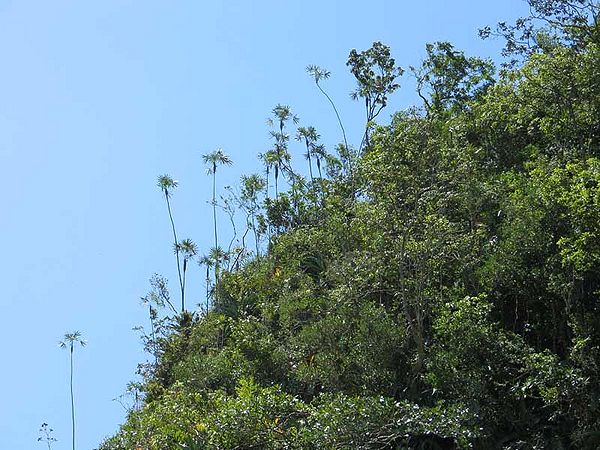
Coccothrinax rigida is native exclusively to Cuba, an island nation in the Caribbean, which is part of North America. Its natural habitat is highly specific: it primarily grows in the "serpentine barrens" or "cuabales" of eastern Cuba, particularly in the provinces of Holguín and Camagüey. These are areas with nutrient-poor, rocky, serpentine soils that are often toxic to other plant species, showcasing this palm's incredible resilience.
-
-
Taxonomic classification and species of this palm trees, Scientific Classification:
-
Kingdom: Plantae
-
Clade: Tracheophytes (Vascular plants)
-
Clade: Angiosperms (Flowering plants)
-
Clade: Monocots
-
Order: Arecales
-
Family: Arecaceae (Palm family)
-
Genus: Coccothrinax
-
Species: C. rigida
-
-
Synonyms:
-
Thrinax rigida Griseb. & H.Wendl.
-
-
Common names:
-
Guano de Cerra, Guano Prieto (in Cuba)
-
Rigid Thatch Palm, Silver Thatch Palm
-
-
Expansion of this palm trees in the world:
-
Coccothrinax rigida has not expanded naturally beyond its native Cuban habitat. Its distribution worldwide is entirely due to human cultivation. It is a highly sought-after collector's palm, valued for its unique appearance and slow growth. It can be found in botanical gardens and private collections in tropical and subtropical regions across the globe, including Florida, California, Southeast Asia, and Australia. It is not grown commercially for fruit or fiber and is not considered invasive.
-
2. Biology and physiology
-
Morphology (strain, leaves, flower systems):
-
Trunk: Solitary, slender, and grows very slowly, typically reaching heights of 3-6 meters (10-20 ft). The trunk is often covered in a dense, fibrous sheath woven from the old leaf bases, though it can become bare and ringed with age.
-
Leaves: The most defining feature of the species. The leaves are costapalmate (a fan leaf with a short midrib extending into the blade) but are exceptionally stiff and rigid. They are deeply divided into segments that are themselves V-shaped and stiff. The overall leaf often forms less than a full circle, appearing more like a wedge or a three-quarter fan. The color is typically a dull green to blue-green on the upper surface and a striking silvery-white on the underside. The petiole (leaf stalk) is short and stout.
-
Flower Systems: The inflorescence is short, branched, and typically does not extend beyond the leaves, remaining nestled within the crown. The flowers are small, bisexual (containing both male and female parts), and yellowish-white.
-
-
Life cycle of palm trees:
-
The life cycle follows the standard palm progression: seed, seedling, juvenile, and mature (reproductive) adult. However, the defining characteristic of C. rigida's life cycle is its extremely slow pace. A seed can take a year or more to germinate. It may take a decade or more for the plant to develop a noticeable trunk and several decades to reach maturity.
-
-
Specific adaptation to different climate conditions:
-
It is superbly adapted to its native environment: high heat, full sun exposure, nutrient-poor soil, and periods of drought. Its rigid leaves and thick cuticle minimize water loss (transpiration). The silvery underside of the leaves reflects intense sunlight. Its robust root system is adept at anchoring the palm in rocky substrate and seeking out scarce water and nutrients. It has very little adaptation to cold, which is its primary limiting factor in cultivation.
-
3. Reproduction and Propagation
Seed Reproduction
-
Seed morphology and diversity: Seeds are small, spherical, and about 5-7 mm in diameter. They are black when fully ripe. There is little morphological diversity within the species.
-
Detailed seed collection and viability testing: Collect seeds directly from the palm when the fruit has turned completely black and is slightly soft to the touch. The fleshy outer layer (pulp) contains germination inhibitors and must be removed completely. To test viability, clean the seeds and place them in water; viable, dense seeds will typically sink, while non-viable seeds may float.
-
Pre-germination treatments (scarification, heat treatments):
-
Cleaning the pulp off is the most critical pre-treatment. Macerate the fruit in water and rub the seeds against a screen to remove all residue.
-
Soaking the clean seeds in warm water for 24-48 hours is highly recommended to rehydrate the embryo.
-
Scarification (nicking the seed coat) is generally not necessary or recommended.
-
Heat is the most important factor. Consistent bottom heat is crucial for successful germination.
-
-
Step-by-step germination techniques with humidity and temperature controls:
-
Prepare a sterile, well-draining germination medium (e.g., 50% peat/coir and 50% perlite/sand).
-
Place the medium in a pot or a zip-top bag ("baggy method").
-
Plant the cleaned, soaked seeds about 1 cm (0.5 inch) deep.
-
Moisten the medium until it is damp but not waterlogged.
-
Place the container on a heat mat set to a constant 30-35°C (85-95°F). This high, consistent heat is non-negotiable for good results.
-
Ensure high humidity by covering the pot with plastic wrap or sealing the bag.
-
Check periodically for germination and to ensure the medium remains moist.
-
-
Germination difficult: High. Germination is notoriously slow, erratic, and has a low success rate even under ideal conditions. Patience is essential.
-
Germination Time: 3 months to over 1 year. It is not uncommon for seeds to take 6-12 months to sprout.
-
Seedling care and early development stages: After germination, a root (radicle) emerges first, followed by a single, grass-like first leaf. Keep seedlings in a warm, humid environment with bright, indirect light. Use a deep pot to accommodate their long initial taproot. The soil mix should be exceptionally well-draining. Be very careful not to overwater, as seedlings are prone to rot. Growth is extremely slow.
Advanced Germination Techniques
-
Hormonal treatments for germination enhancement: For advanced growers struggling with stubborn seeds, a 24-hour soak in a solution of Gibberellic Acid (GA3) may help break dormancy. This is an advanced technique and should be used with caution following product-specific instructions.
4. Cultivation Requirements
Light Requirements
-
Species-specific light tolerance ranges: Coccothrinax rigida thrives in full, direct sun. Mature plants require maximum sun exposure to develop their characteristic compact crown and rigid foliage.
-
Seasonal light variations and management: In outdoor cultivation, no management is needed.
-
Artificial lighting for indoor cultivation: If grown indoors, it requires the absolute brightest location possible, such as a south-facing window (in the Northern Hemisphere). High-output grow lights may be necessary to supplement natural light, especially in winter.
Temperature and Humidity Management
-
Optimal temperature ranges by species: It prefers hot conditions. Optimal growth occurs in temperatures between 25-35°C (77-95°F).
-
Cold tolerance thresholds with hardiness zone maps: This palm is not cold-hardy. It will show leaf damage at temperatures around -2°C (28°F) and can be killed by temperatures of -4°C (25°F) or below, especially if the freeze is prolonged. It is best suited for USDA Hardiness Zone 10a and warmer.
-
Humidity requirements and modification techniques: It tolerates a wide range of humidity but appreciates moderate to high levels. In dry indoor environments, occasional misting or a pebble tray can be beneficial. Good air circulation is important to prevent fungal issues in high humidity.
Soil and Nutrition
-
Ideal soil composition and pH values: Excellent drainage is the single most important soil requirement. A suitable mix would be a commercial cactus/succulent soil amended with 50% or more inorganic material like pumice, lava rock, perlite, or coarse gravel. It is adapted to nutrient-poor soils and prefers a slightly acidic to neutral pH.
-
Nutrient requirements through growth stages: It is a very light feeder. Over-fertilization can be harmful. A single application of a balanced, slow-release palm fertilizer in the spring is sufficient for outdoor specimens. For potted plants, a half-strength balanced liquid fertilizer can be applied 1-2 times during the growing season.
-
Organic vs. synthetic fertilization approaches: Both can be used, but due to its low nutrient needs, a slow-release synthetic or a light top-dressing of compost is often safest.
-
Micronutrient deficiencies and corrections: Like many palms, it can be susceptible to potassium (K) or magnesium (Mg) deficiencies if grown in poor soil, but its adaptation to serpentine soils makes it less prone than other species. A balanced palm-specific fertilizer usually prevents this.
Water Management
-
Irrigation frequency and methodology: Water thoroughly, allowing the soil to dry out significantly between waterings. For potted plants, water until it runs from the drainage holes, then wait until the top 2-3 inches of soil are completely dry.
-
Drought tolerance assessment by species: Highly drought-tolerant once established in the landscape.
-
Water quality considerations: Tolerant of various water types, but as with all potted plants, low-salt water (like rainwater) is ideal to prevent mineral buildup in the soil.
-
Drainage requirements: Critical. The soil must drain rapidly. It will not tolerate standing water or "wet feet," which will quickly lead to fatal root rot.
5. Diseases and pests
-
Common problems in growing: The most common problem is root rot from overwatering or poor drainage. The second is slow growth, which is natural for the species.
-
Identification of diseases and pests:
-
Pests: Generally pest-resistant. Indoors or on stressed plants, it may attract scale, mealybugs, and spider mites.
-
Diseases: Root rot is the primary disease concern. Fungal leaf spots can occur in conditions of high humidity and poor air circulation.
-
-
Environmental and chemical protection methods:
-
Environmental: The best protection is proper culture: full sun, excellent drainage, and appropriate watering. Good air circulation prevents fungal issues.
-
Chemical: For pests, treat with horticultural oil or insecticidal soap. For fungal issues, a copper-based fungicide can be used, but improving environmental conditions is more effective.
-
6. Indoor palm growing
-
Specific care in housing conditions: Requires the sunniest window available. Rotate the pot quarterly to ensure even growth. Do not overwater. Its slow growth makes it a manageable (though demanding) long-term indoor specimen.
-
Replanting and wintering: Re-pot only when it is severely root-bound (perhaps every 3-5 years), as it dislikes root disturbance. Use an extremely well-draining mix and a deep pot. Wintering simply involves ensuring it gets maximum light and reducing watering frequency as growth slows.
7. Landscape and Outdoor Cultivation
Establishment and Maintenance in Landscapes
-
Planting techniques for success: Choose a location in full sun with excellent drainage. If you have heavy soil, plant the palm on a mound or in a raised bed amended heavily with gravel and sand to ensure water drains away from the root ball. Do not plant the root crown deeper than it was in its container.
-
Long-term maintenance schedules: This is a very low-maintenance landscape palm. Once established, it requires little to no supplemental irrigation except in prolonged, severe droughts. Fertilize once a year in spring, if at all. Prune only leaves that are completely brown and dead; never cut green or partially yellowing fronds.
8. Cold Climate Cultivation Strategies
-
Cold Hardiness: Limited. Reliably hardy only to Zone 10a. It is a high-risk plant in Zone 9b.
-
Winter protection: In marginal zones like 9b, significant protection is required. This includes heavily mulching the root zone, wrapping the trunk with burlap or frost cloth, and covering the entire plant with a frost blanket during predicted freezes.
-
Hardiness Zone: USDA Zone 10a-11.
-
Winter protection systems and materials: For dedicated growers in marginal climates, a temporary frame can be built around the palm and covered with plastic or cloth. A small, safe heat source (like C9 Christmas lights or a specific heating cable) can be placed inside the enclosure during the coldest nights to keep the temperature above the critical damage point.
Final short summary
Coccothrinax rigida, the Rigid Thatch Palm, is a rare and highly prized collector's palm native to the serpentine barrens of Cuba. It is defined by its extremely slow growth and unique, stiff, wedge-shaped leaves with silvery undersides. Its cultivation demands full sun, exceptional soil drainage, and high heat. While highly drought-tolerant, it has very limited cold hardiness (Zone 10a+). Propagation from seed is notoriously difficult and slow, requiring patience and consistent high temperatures. Due to its specific needs and slow nature, it is a challenging but incredibly rewarding specimen for dedicated palm enthusiasts in appropriate climates.