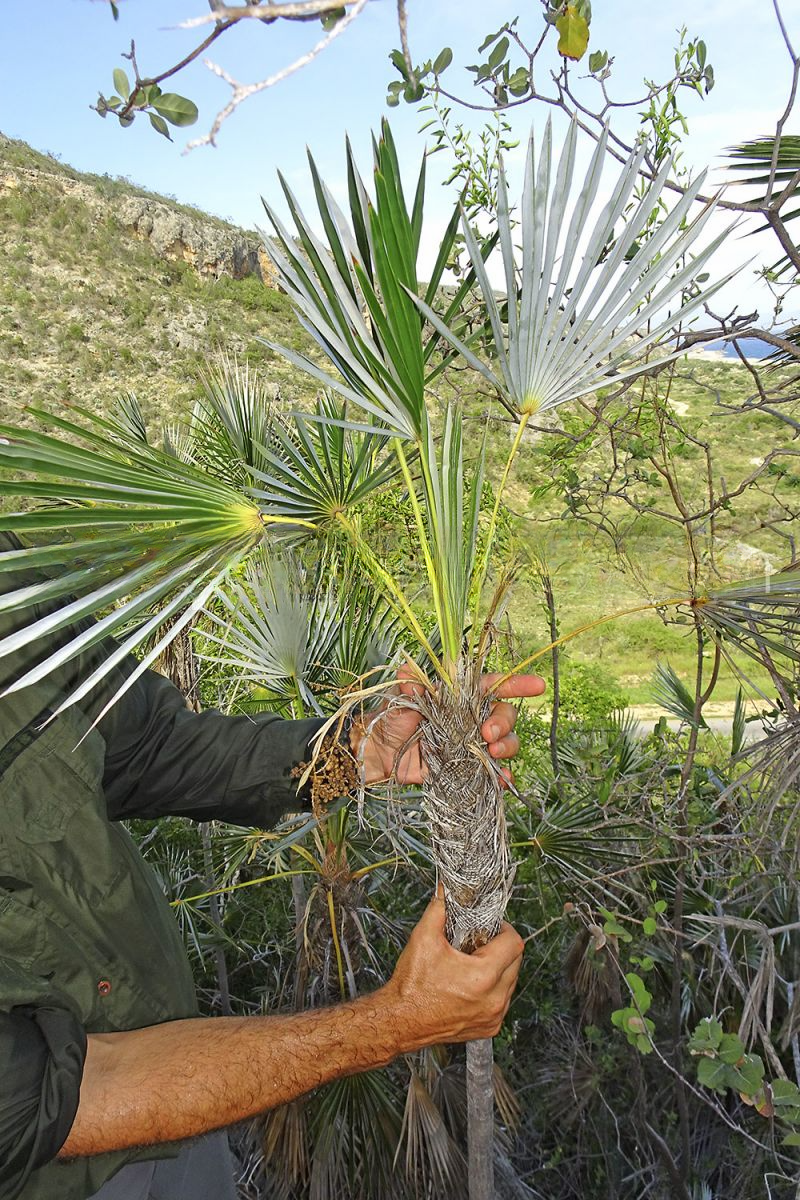
Coccothrinax munizii: A comprehensive Growing Guide for Enthusiasts & Collectors.
Coccothrinax munizii
This study provides a detailed guide to the palm Coccothrinax munizii, intended for a wide audience ranging from novice enthusiasts to experienced horticulturists. It covers the palm's origins, biology, propagation, cultivation, and care, emphasizing its unique characteristics and demanding requirements.
1. Introduction
-
Habitat and Distribution, Native Continent:
BESTSELLER High Quality Tropical PlantLeucocasia Gigantea 'Thailand Giant'€25.59Get 10% OFF with code BLOG10Start Growing NowCOLD HARDY
 Fresh Seeds & High GerminationRhapidophyllum hystrix (Needle Palm)€9.99Get 10% OFF with code BLOG10Start Growing NowEXOTIC
 Elite Palm SelectionHyophorbe lagenicaulis (Bottle Palm)€24.90Get 10% OFF with code BLOG10Start Growing Now
-
Coccothrinax munizii is a rare and highly localized palm native to the continent of North America, specifically to the island of Cuba. Its natural habitat is extremely restricted, found primarily in the Holguín Province of eastern Cuba. It thrives in harsh, coastal environments, often growing on exposed rocky cliffs, coastal plains, and serpentine savannas. This habitat is characterized by poor, thin, well-draining soil, high sun exposure, and salt spray.
-
-
Taxonomic classification and species of this palm trees, Scientific Classification:
-
Kingdom: Plantae
-
Clade: Tracheophytes
-
Clade: Angiosperms
-
Clade: Monocots
-
Clade: Commelinids
-
Order: Arecales
-
Family: Arecaceae (Palm Family)
-
Genus: Coccothrinax
-
Species: C. munizii
-
-
Synonyms:
-
This species is well-defined and does not have any widely accepted scientific synonyms. It was described by Brother León (Joseph Sylvestre Sauget) in 1939.
-
-
Common names:
-
Muniz's Palm, Guano de la Loma.
-
-
Expansion of this palm trees in the world:
-
Due to its rarity, slow growth, and specific cultivation needs, Coccothrinax munizii is not a common palm in global cultivation. Its expansion is almost exclusively limited to botanical gardens and the collections of dedicated palm enthusiasts and specialists who can replicate its native conditions. It is highly sought after by collectors for its beauty and rarity but is not a commercially significant landscape palm.
-
2. Biology and physiology
-
Morphology (strain, leaves, flower systems):
-
Trunk/Stem: C. munizii is a small to medium-sized fan palm. It can be solitary but often grows in caespitose (clustering) clumps. The trunks are slender, typically 2-4 inches (5-10 cm) in diameter, and grow to heights of 6-15 feet (2-5 meters). The trunk is densely covered in a thick, woven mat of brown fibers from the old leaf bases, giving it a rustic, textured appearance.
-
Leaves: The leaves are palmate (fan-shaped), very stiff, and robust. They are nearly circular and are divided into rigid segments. A key identifying feature is the leaf coloration: the upper surface is a dull green, while the underside is a striking, bright silvery-white, creating a beautiful contrast, especially in the wind.
-
Flower Systems/Inflorescence: The inflorescence is an branched stalk that emerges from amongst the leaf bases. It is typically shorter than or equal to the length of the leaves. It bears small, inconspicuous, yellowish flowers. Following pollination, these develop into small, spherical fruits that turn from green to purplish-black when ripe.
-
-
Life cycle of palm trees:
-
The life cycle follows the standard palm pattern: seed germination, a very slow seedling stage, a prolonged juvenile period, and finally, reproductive maturity. C. munizii is exceptionally slow-growing. It can take many years for a seedling to develop a noticeable trunk and decades to reach its full mature height and begin flowering.
-
-
Specific adaptation to different climate conditions:
-
Its biology is a direct reflection of its harsh native habitat. The stiff, leathery leaves minimize water loss (transpiration) and resist wind damage. The silvery undersides of the leaves may help reflect intense solar radiation. Its deep root system is adapted to seek water and anchor itself in rocky, nutrient-poor serpentine soils. It is highly drought-tolerant and adapted to high heat and full sun exposure.
-
3. Reproduction and Propagation
Seed Reproduction
-
Seed morphology and diversity:
-
The seeds are small, spherical, and about 5-7 mm in diameter. When the fruit is ripe (black), the seed inside is hard and dark. There is little diversity within the species.
-
-
Detailed seed collection and viability testing:
-
Collect seeds only from fully ripe, black fruits. The pulp contains germination inhibitors and must be cleaned off immediately. This can be done by mashing the fruits in water and rubbing them against a screen. For viability testing, a simple float test can be used after cleaning: viable, dense seeds will typically sink in water, while non-viable or empty seeds will float.
-
-
Pre-germination treatments (scarification, heat treatments):
-
Scarification: Mechanical scarification (nicking the seed coat) is generally not recommended or necessary for Coccothrinax seeds.
-
Soaking: The most effective pre-treatment is to soak the cleaned seeds in warm water for 24-48 hours, changing the water daily. This helps to hydrate the seed embryo.
-
-
Step-by-step germination techniques with humidity and temperature controls:
-
Medium: Use a sterile, well-draining germination mix, such as a 50/50 blend of peat moss and perlite, or pure vermiculite.
-
Sowing: Sow seeds about 0.5 inches (1 cm) deep in community pots or individual tall, narrow pots ("cone-tainers").
-
Temperature: This is the most critical factor. Coccothrinax munizii requires high and consistent heat to germinate. The ideal temperature range is 85-95°F (29-35°C). Bottom heat from a germination mat is highly recommended.
-
Humidity: Maintain high humidity. The "baggie method" (sealing the pot in a zip-lock bag) or placing the pots in a sealed germination chamber is effective.
-
Patience: Be prepared to wait. Germination is notoriously slow and erratic.
-
-
Germination difficult:
-
Germination is considered very difficult. The combination of slow speed, erratic timing, and the absolute requirement for high, sustained heat makes it a challenge even for experienced growers.
-
-
Germination Time:
-
The germination period can range from 3 months to well over a year. It is not uncommon for seeds to take 12-18 months to sprout.
-
-
Seedling care and early development stages:
-
Once a seed sprouts, it first sends down a long radicle (root). The first leaf appears later. Keep seedlings in a warm, humid environment with bright, indirect light. Do not expose them to full sun immediately. The soil must be kept moist but never waterlogged; seedlings are very susceptible to rot. Growth is extremely slow.
-
Advanced Germination Techniques
-
Hormonal treatments for germination enhancement:
-
Some advanced growers experiment with a soak in a dilute solution of Gibberellic Acid (GA3) to help break dormancy. However, this is an advanced technique, and results can be inconsistent. For most growers, consistent high heat is the most reliable factor.
-
4. Cultivation Requirements
-
Light Requirements:
-
Once established, Coccothrinax munizii thrives in full, direct sun. This promotes the most compact growth and best leaf color. Seedlings and juvenile palms, however, benefit from some protection or partial shade to prevent scorching. For indoor cultivation, it requires the brightest possible location, such as a south-facing window.
-
-
Temperature and Humidity Management:
-
Optimal Temperature: This is a true tropical palm. It prefers temperatures between 75-95°F (24-35°C). Growth will slow significantly below 65°F (18°C).
-
Cold Tolerance: It has very low cold tolerance. It is suitable for USDA Hardiness Zone 10b-11. A mature, well-established palm might survive a very brief, light frost down to 30°F (-1°C) with some foliage damage, but it will not tolerate freezing temperatures.
-
-
Soil and Nutrition:
-
Ideal Soil: This is the second most critical factor after temperature. The soil must have perfect drainage. It thrives in poor, rocky, sandy, or gritty soils. It has a preference for alkaline (high pH) soils, reflecting its native limestone and serpentine habitats. For potting, a mix of cactus soil, sand, perlite, and/or pumice is ideal.
-
Nutrition: It has very low nutrient requirements. In the ground, it often requires no fertilization. In pots, a light feeding once or twice during the growing season with a slow-release palm fertilizer is sufficient. Ensure the fertilizer contains micronutrients like magnesium and manganese, especially if not grown in alkaline soil.
-
-
Water Management:
-
Irrigation: Once established in the landscape, it is extremely drought-tolerant. Water deeply but infrequently, allowing the soil to dry out completely between waterings.
-
In Pots: Be extremely careful not to overwater. Root rot is the most common cause of death. Water thoroughly until it drains from the bottom, then wait until the top few inches of soil are dry before watering again. Reduce watering significantly in winter.
-
5. Diseases and pests
-
Common problems in growing:
-
The primary problem is root rot caused by poor drainage and overwatering. Another common issue is slow or stalled growth due to insufficient heat or light.
-
-
Identification of diseases and pests:
-
Diseases: Fungal spots on leaves can occur in overly humid, stagnant conditions. Root rot will manifest as a general decline, yellowing leaves, and a soft trunk base.
-
Pests: It is relatively pest-resistant but can be susceptible to spider mites and mealybugs, especially when grown indoors or in stressed conditions.
-
-
Environmental and chemical protection methods:
-
The best protection is environmental: provide excellent air circulation, full sun, and proper watering/drainage. For pests, use insecticidal soap or neem oil. Avoid harsh chemical pesticides unless an infestation is severe.
-
6. Indoor palm growing
-
Specific care in housing conditions:
-
Indoor cultivation is very challenging. It requires the highest light levels possible, such as directly in an unshaded south-facing window. Use a deep pot with a very porous, fast-draining soil mix. Maintain warm temperatures and be vigilant against overwatering.
-
-
Replanting and wintering:
-
Replanting: Repot only when absolutely necessary (e.g., the palm is severely root-bound), as it resents root disturbance. Choose a pot that is only slightly larger than the previous one.
-
Wintering: For those in colder climates, this palm must be grown in a container and brought indoors for the winter. Place it in the sunniest, warmest spot available and drastically reduce watering.
-
7. Landscape and Outdoor Cultivation & 8. Cold Climate Cultivation Strategies
-
Cold Hardiness & Hardiness Zone:
-
This is not a cold-hardy palm. Its use is restricted to tropical and sub-tropical climates within USDA Zone 10b-11. It is not a candidate for cultivation in areas with regular frost or freezes.
-
-
Establishment and Maintenance in Landscapes:
-
Planting techniques for success: Select a site in full sun with excellent drainage. If you have heavy clay soil, it is best to plant the palm on a raised mound or berm amended with sand and gravel to ensure water drains away from the roots.
-
Long-term maintenance schedules: This is a very low-maintenance palm. Once established, it requires little more than the removal of dead leaves for aesthetic reasons. It is highly self-sufficient if sited correctly.
-
-
Winter protection systems and materials (For Marginal Zones like 10a):
-
In a marginal zone like 10a, survival is possible but risky. Protection is mandatory during cold snaps.
-
Methods: Wrap the trunk with blankets or burlap. Use a frost cloth to cover the entire crown before a predicted frost. Planting in a microclimate, such as on the south side of a building or near a body of water, can provide a few degrees of protection. For anything colder than Zone 10a, this palm must be a container specimen.
-
Final Short Summary
Coccothrinax munizii is a rare and beautiful fan palm native to coastal eastern Cuba. It is defined by its slender, fibrous trunk, stiff green leaves with striking silvery undersides, and extremely slow growth rate. Its cultivation is challenging and best suited for experienced growers in tropical climates (USDA Zone 10b-11). The keys to success are providing full sun, extremely well-drained alkaline soil, and high heat. Propagation from seed is notoriously difficult and slow, requiring consistent high temperatures over many months. Due to its intolerance for cold and wet soil, it is a specialist's palm, prized in collections for its unique beauty and rarity rather than for widespread landscape use.