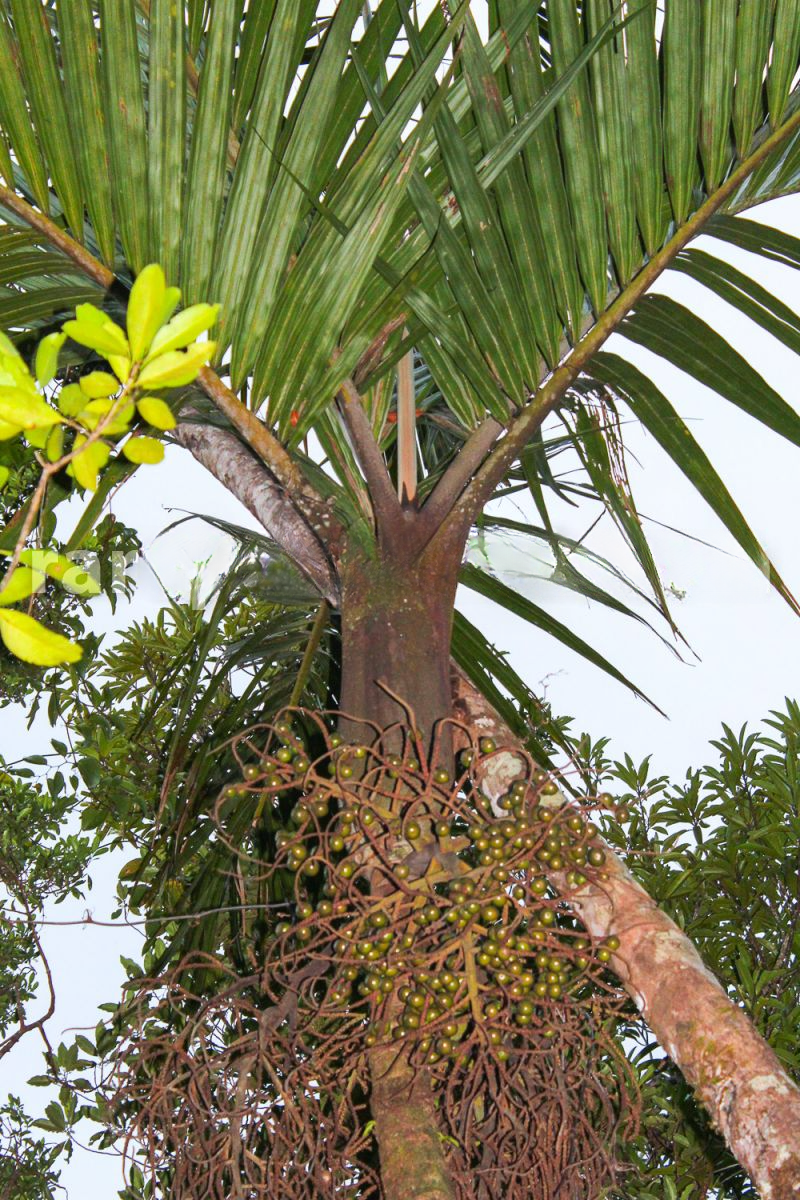
Clinosperma macrocarpa: A comprehensive Growing Guide for Enthusiasts & Collectors.
Clinosperma macrocarpa Palm


1. Introduction
Clinosperma macrocarpa represents one of the world's rarest palms, endemic to a single population on the eastern slopes of Mont Panié in northeastern New Caledonia. This critically endangered species grows exclusively in dense, humid rainforest understory at approximately 500 meters elevation on deep sedimentary substrate composed of mica schist.
Native Continent and Distribution: This palm is native to Melanesia in the Southwestern Pacific Ocean, specifically the French territory of New Caledonia. Its entire wild population exists only on northeast Grande Terre, confined to the eastern slopes of Mont Panié with an Area of Occupancy and Extent of Occurrence both equal to just 8 km².
Taxonomic Classification:
- Kingdom: Plantae
- Phylum: Streptophyta
- Class: Equisetopsida (Liliopsida)
- Subclass: Magnoliidae
- Order: Arecales
- Family: Arecaceae
- Subfamily: Arecoideae
- Tribe: Areceae
- Subtribe: Clinospermatinae
- Genus: Clinosperma Becc.
- Species: Clinosperma macrocarpa (H.E.Moore) Pintaud & W.J.Baker
Scientific Synonyms: Originally described as Lavoixia macrocarpa H.E.Moore in 1978, it was transferred to genus Clinosperma by Pintaud and Baker in 2008 based on DNA molecular evidence. The basionym Lavoixia macrocarpa remains its primary synonym.
Common Names: Due to its extreme rarity, no established common names exist. It's sometimes referred to descriptively as "Mont Panié palm" or "Lavoix palm" in English, with no recorded indigenous names.
Conservation Status: Listed as Critically Endangered (CR) on the IUCN Red List with only 30 adult individuals remaining in the wild. Primary threats include invasive species (rats, pigs, deer), seed collection pressure, habitat degradation, and genetic bottleneck from the extremely small population size.
2. Biology and Physiology
Morphology: This robust palm reaches 15 meters (49 feet) at maturity with a solitary trunk 10-15 cm (4-6 inches) in diameter. The trunk displays a distinctive flared and expanded base covered by prominent leaf scars - a unique characteristic among New Caledonian palms.
Leaves: The crown maintains 6-7 regularly pinnate leaves exceeding 2 meters in length. The 26 cm olive green petiole supports a 70 cm leaf sheath with distinctive black scaly indument creating a "bearded" appearance. The sheath exterior is dark green while the interior shows orange coloration.
Flower System: The monoecious palm produces 1-2 yellowish-green branched inflorescences measuring 80 cm long. These compact, horizontal inflorescences emerge inter- or infrafoliar with 22-37 slender rachillae bearing both staminate and pistillate flowers.
Life Cycle: Germination represents the most challenging phase, historically considered "impossible" until the development of specialized de-lidding techniques. Seeds require years rather than months to germinate under natural conditions. The critical "seed to soil" transition shows high mortality from fungal diseases. Maturation to reproductive age likely takes several decades based on related species.
Climate Adaptations: Adapted to very wet tropical conditions with 3000-4000mm annual rainfall, the species requires consistently high atmospheric humidity (>80%) and moderate temperatures. It tolerates deep shade as an understory palm and shows specialization for well-drained but moisture-retentive mica schist soils.
3. Reproduction and Propagation
Seed Reproduction
Seed Morphology: Seeds measure 3.5-4 x 3.0-3.5 cm, somewhat spherical with lateral compression. The complex structure includes a thick shell-like pericarp, fibrous purple mesocarp with strong plum scent, very hard ridged endocarp resembling a peach kernel, and nearly smooth inner seed with translucent endosperm.
Collection and Viability: Harvest only fully ripe purplish-black fruits, processing within days to maintain viability. Remove fibrous mesocarp completely before processing. Seeds historically cost $50+ each due to extreme rarity. Test viability by inspecting endosperm and embryo - both should appear fresh and firm without discoloration.
Pre-germination Treatments: The critical "de-lidding" technique involves carefully removing the thick woody layer (1/8 inch) covering the embryo using a razor knife. Locate the embryo at the flat area at base of the horn-like protrusion and gradually remove material. After de-lidding, sterilize with 10% bleach solution and rinse thoroughly.
Germination Technique: Use sterile glass canning jars with vermiculite or agar-based medium for de-lidded seeds. Maintain constant 26-35°C (79-95°F) temperature using thermostatically controlled heating. Critical humidity of 70%+ must be maintained consistently in sealed containers. Germination occurs in darkness or low light.
Difficulty Level: Extremely difficult - among the most challenging palm species. Success rate with de-lidding reaches 50% versus near 0% with traditional methods.
Germination Time: De-lidded seeds show spear emergence in 2-3 months, while traditional methods take years if successful at all. Full shoot development requires 6+ months with first true leaf at 8-12 months.
Seedling Care: Transfer to sterile potting mix immediately upon spear emergence using preventative fungicide drench. Maintain 70%+ humidity in controlled environment at 24-30°C. Use neutral pH, well-draining mix of equal parts quality topsoil, vermiculite, and sterile compost.
Advanced Germination Techniques
Hormonal Treatments: Gibberellic acid (GA3) at 250-1000 ppm can be applied as 24-48 hour soak, though the de-lidding technique proves more effective. GA3 may cause excessive elongation and weak seedlings, making it less recommended for this species.
4. Cultivation Requirements
Light Requirements
Outdoor: Bright, filtered light to partial shade mimicking natural dappled sunlight through rainforest canopy. Avoid direct harsh afternoon sun which causes leaf burn.
Growth Stages: Seedlings require bright indirect light only. Juveniles tolerate some morning or late afternoon direct sun. Mature palms handle more direct light but still prefer partial shade conditions.
Seasonal Variations: Provide 5-6 hours bright filtered light daily during growing season, reducing to minimum 4 hours bright indirect light in dormant season.
Indoor Artificial Lighting: Use full spectrum LED grow lights providing 1000-2000 foot-candles positioned 12-24 inches from foliage for 12-14 hours daily.
Temperature and Humidity Management
Optimal Ranges: Maintain daytime temperatures of 70-85°F (21-29°C) and nighttime 65-75°F (18-24°C), never dropping below 60°F (15°C). The species shows minimal cold tolerance with damage below 45°F (7°C) and likely death below 35°F (2°C).
Hardiness Zones: USDA Zones 10b-11b, marginal in Zone 10a with protection.
Humidity Requirements: Critical 60-80% relative humidity with 50% minimum acceptable. Below 40% causes stress and leaf tip browning. Use warm mist humidifiers, pebble trays, plant grouping, and light misting 2-3 times weekly to maintain levels.
Soil and Nutrition
Ideal Composition: Mix 40% peat moss, 30% high-quality potting soil, 20% coarse sand, 10% perlite. Maintain pH 5.5-6.8 (slightly acidic to neutral).
Growth Stage Nutrition:
- Seedlings (0-2 years): 6-2-6 NPK every 2 months, diluted
- Juveniles (2-5 years): 8-2-12+4Mg every 3 months growing season
- Mature (5+ years): 8-2-12+4Mg or 12-4-12+4Mg, 3-4 times annually at 1.5 lbs per 100 sq ft canopy
Micronutrients: Essential magnesium (4% minimum), manganese, iron (2-4%), boron (0.02-0.05%), and zinc (0.05-0.1%).
Fertilization Approach: Combine organic amendments twice yearly with synthetic palm fertilizer 3-4 times annually for optimal results.
Water Management
Irrigation Frequency: Newly planted palms need daily watering first week, then 3-4 times weekly. Established plants require 2-3 times weekly in growing season, 1-2 times weekly when dormant.
Quantity: Container palms need water volume equal to container size. In-ground palms require deep watering to 2-3 feet depth, approximately 2 gallons per inch trunk diameter.
Drought Tolerance: Moderate once established, though native habitat receives 31-177 inches rainfall annually.
Water Quality: Prefer pH 6.0-7.0 with low salinity. Use reverse osmosis if tap water TDS exceeds 150 ppm.
Drainage: Critical to prevent root rot. Ensure multiple drainage holes in containers and plant in-ground specimens with root ball 1-2 inches above soil level.
5. Diseases and Pests
Common Diseases:
- Fusarium Wilt causes progressive yellowing and wilting with no cure
- Ganoderma Butt Rot attacks lower trunk creating shelf-like growths
- Bud Rot from Phytophthora creates black lesions on young growth
- Diamond Scale and False Smut cause leaf spotting
Insect Pests:
- Palm weevils (Red/Asian, South American, Palmetto) create damaging tunnels
- Scale insects appear as brown bumps producing honeydew
- Palm aphids, mealybugs, and spider mites affect foliage health
Environmental Protection: Ensure proper spacing (6-8 feet minimum), excellent drainage, prompt removal of infected material, and minimal pruning to reduce wound sites.
Chemical Controls: Thiophanate-methyl and copper-based fungicides for diseases. Imidacloprid trunk injections for weevils, horticultural oils for scale and aphids.
6. Indoor Palm Growing
Specific Care: Position 3-4 feet from east or west windows in bright indirect light. Maintain 65-80°F (18-27°C) with 40-60% humidity using humidifiers or pebble trays.
Container Requirements: Use pots 1-2 inches larger than root ball with multiple drainage holes. Terracotta preferred for moisture wicking.
Soil Mix: Combine 50% quality potting soil, 25% peat moss or coco coir, 25% coarse sand or perlite.
Repotting: Every 2-3 years in early spring when pot-bound. Handle roots gently, maintaining same planting depth.
Winter Adjustments: Reduce watering frequency, compensate for lower light with grow lights or window proximity. Monitor humidity closely as indoor heating reduces levels significantly.
7. Landscape and Outdoor Cultivation
Design Applications: Use as single specimen focal points, in groups of 3+ for dramatic effect, or paired to frame architectural features. Combine different sized palms for layered canopies.
Companion Plants: Tropical understory plants like crotons, bromeliads, ferns, heliconias, and caladiums. Ground covers include elephant ears, bird of paradise, jasmine, and bougainvillea.
Site Selection: Choose locations with appropriate sun exposure, wind protection, excellent drainage, and adequate space for mature size. Check for utility lines and maintain proper foundation clearance.
Soil Preparation: Dig holes 2-3 times wider than root ball at same depth. Mix native soil 50:50 with quality topsoil, adding 10-15 kg compost per hole.
Spacing: Small palms 6-8 feet apart, medium 10-15 feet, large 15-25 feet. Cluster at 5-8 feet for group effects.
8. Cold Climate Cultivation Strategies
Cold Hardiness: Given its New Caledonian highland origin, estimated minimum survival at -5°C to -2°C (23°F to 28°F) without protection. Likely requires USDA Zones 9b-10a minimum.
Winter Protection Systems:
- Wrap trunk and lower fronds with burlap or frost cloth
- Install thermostat-controlled heat tape from base to crown
- Apply 10-15cm mulch extending 60cm beyond drip line
- Use anti-desiccant sprays on fronds before cold events
- Construct temporary structures like chicken wire cages filled with leaves
Cold Damage Signs: Watch for brown/black leaf spots, wilting, and soft trunk areas. Leaf damage alone allows good recovery if growing tip remains intact.
Site Selection: Choose south-facing walls, areas near thermal mass, protected valleys avoiding frost pockets, and slopes for cold air drainage.
Spring Recovery: Wait 4-6 weeks after last frost before assessment. Delay pruning until new growth appears. Remove protection gradually and apply diluted fertilizer when growth resumes.
9. Establishment and Maintenance in Landscapes
Planting Techniques
Hole Preparation: Dig 2x wider than root ball at same depth, ensuring drainage within 12-24 hours. Mix 50/50 native soil and compost.
Root Handling: Minimize disturbance to sensitive roots. Water thoroughly before planting and apply mycorrhizal inoculant.
Planting: Position root ball slightly above surrounding soil to account for settling. Backfill with excavated soil while watering.
Staking: Support for 6-12 months using soft ties with cushioning in 3-4 stake square pattern allowing slight movement.
Post-Planting: Deep water immediately, then daily first week. Apply 5-8cm mulch to drip line.
Long-term Maintenance
Annual Calendar:
- Spring: Fertilize, assess winter damage, resume growth
- Summer: Regular watering, pest monitoring, peak growth
- Fall: Winter preparation, reduce fertilization
- Winter: Maintain protection systems, minimal intervention
Fertilization: Primary feeding early spring as growth resumes, secondary early summer if vigorous. Use palm-specific high potassium formulations.
Pruning: Remove only completely brown fronds anytime. Never remove green or yellowing fronds as they translocate nutrients.
Monitoring: Monthly pest inspections, annual soil testing for pH and nutrients. Watch for potassium deficiency (orange/brown tips), most common palm problem.
Summary
Clinosperma macrocarpa represents both an extreme conservation challenge and cultivation opportunity. With only 30 individuals remaining in its Mont Panié habitat, this critically endangered palm requires specialized care mimicking its cool, humid mountain rainforest environment. The breakthrough de-lidding germination technique offers hope for ex-situ conservation, though seedlings demand meticulous attention to humidity, temperature, and sterile conditions.
For growers, success requires replicating its native conditions: high humidity (70%+), excellent drainage with moisture retention, bright filtered light, and protection from temperature extremes. While extremely challenging, successful cultivation contributes directly to species preservation. Beginners should gain experience with less demanding species first, while experienced growers can apply these detailed protocols to attempt cultivation of one of the world's rarest palms. Partnership with botanical institutions for conservation efforts is strongly encouraged given the species' critical status.