Senna velutina: Complete Shrub Growing Guide
Senna velutina
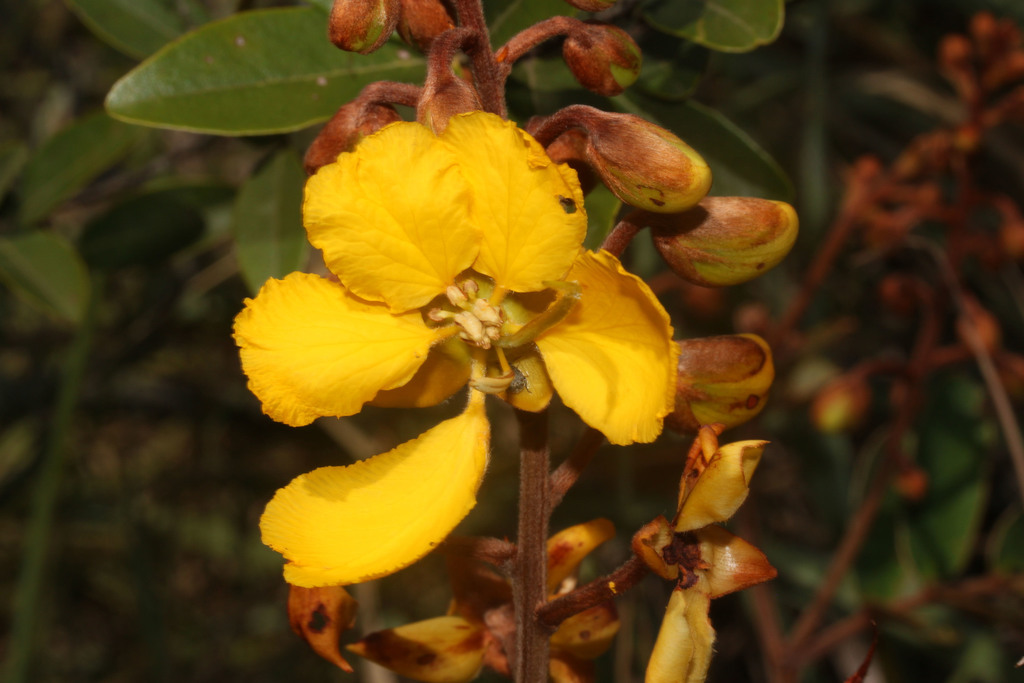
Senna velutina
1. Introduction & Taxonomy
While perhaps less well-known than some of its relatives, Senna velutina possesses qualities that reward the attentive gardener with year-round interest and genuine botanical distinction.
(Description coming soon) Appearance Growth Form Shrub
Taxonomic Classification
Habitat and Distribution
Senna velutina is native to tropical and subtropical regions. This species inhabits environments typical of the Fabaceae.
Botanical Note: The third-largest family of flowering plants, characterized by nitrogen-fixing root nodules and typically bearing fruit in pods. Includes ornamental shrubs, climbers, and trees with diverse flower forms.
Native Range & Distribution Map
The map below shows the native range and notable cultivation regions for Senna velutina.
2. Biology & Morphology
Growth Form & Architecture
Senna velutina is a tropical flowering shrub prized for its showy, often colourful blooms. The lush foliage and abundant flowers make it a centrepiece in warm-climate gardens.
Flowers & Reproductive Structures
Shrub flowers vary enormously across families, from tiny wind-pollinated catkins to large, showy insect-pollinated blooms.
Key Characteristics
- Height: 1-3m
- Growth Habit: Erect Shrub
- Growth Rate: Moderate under optimal conditions
- Life Cycle: Perennial
Notable Adaptations
Like all members of the Fabaceae, Senna velutina exhibits the family's characteristic features while expressing its own unique combination of traits that distinguish it from related species.
3. Reproduction & Propagation
Primary propagation methods for Senna velutina: Cuttings, seed, or layering (varies by species).
Propagating Senna velutina
Semi-hardwood cuttings taken during the active growing season are the most reliable propagation method for Senna velutina. Select healthy, non-flowering shoots, apply rooting hormone, and place in a humid propagation environment.
Semi-hardwood cuttings in summer, or softwood cuttings in spring. Air layering is effective for larger specimens. Seeds germinate readily in warmth.
Propagation Tip: Take cuttings from healthy, non-flowering shoots for best rooting success.
4. Cultivation Requirements
Cultivation of Senna velutina follows good general shrub practice: prepare the planting site with compost, ensure adequate drainage, water deeply but infrequently, and mulch to conserve moisture and suppress weeds.
Soil / Substrate
Rich, well-draining soil with organic matter. A mix of garden loam, compost, and perlite. Slightly acidic to neutral pH preferred.
Watering
Regular watering during active growth and flowering. Reduce in winter. Do not let soil dry completely.
Light Requirements
Full sun to partial shade. Most ornamental shrubs perform best with at least 4-6 hours of direct light daily.
Temperature
- Optimal Growth: 18-30°C (65-86°F)
- Minimum Tolerance: -12°C (10°F)
- USDA Hardiness: Zones 8-11
Pruning
Prune after flowering to maintain shape and encourage branching. Remove spent flowers to prolong blooming.
Fertilization
Apply a balanced slow-release fertilizer in spring. Most shrubs are moderate feeders.
Common Cultivation Mistake: Over-watering is the most common cause of shrub failure. Ensure good drainage and match watering to the species' natural habitat.
Seasonal Care Calendar
Follow this season-by-season guide for optimal care timing throughout the year.
🌱 Spring (March–May)
The main growth push begins. Feed with balanced fertilizer, water consistently, and prune any winter damage. Take softwood cuttings for propagation.
☀️ Summer (June–August)
Peak season for flowering and growth. Maintain regular watering schedule, feed every 2-3 weeks, and take semi-hardwood cuttings for propagation.
🍂 Fall (September–November)
Reduce watering and cease fertilizing. Apply mulch over root zone for winter protection. Plant new shrubs while soil is still warm. Collect seeds if desired.
❄️ Winter (December–February)
Winter rest period. Ensure good drainage to prevent root rot. Protect from severe frost where needed. Enjoy winter bark, berries, or evergreen foliage.
5. Diseases & Pests
Senna velutina is generally robust and pest-resistant when cultural conditions are optimal.
Major Diseases
Root Rot (Phytophthora, Pythium)
Caused by overwatering or poor drainage. Ensure good drainage and avoid waterlogging. Improve soil aeration.
Powdery Mildew
White powdery coating on leaves. Improve air circulation, avoid overhead watering, and apply fungicide if severe.
Leaf Spot (various fungi)
Brown or black spots on foliage. Remove affected leaves, improve airflow, and avoid wetting foliage.
Common Pests
- Scale Insects — Hard or soft scales on stems and leaves; treat with horticultural oil
- Spider Mites — Fine webbing on undersides of leaves in dry conditions; increase humidity
- Mealybugs — White cottony masses at leaf axils; spray with soapy water or neem oil
- Aphids — Cluster on new growth; spray with soapy water or introduce ladybirds
- Whiteflies — Tiny white insects on leaf undersides; use yellow sticky traps
IPM: (1) Choose the right species for your conditions. (2) Maintain good air circulation and hygiene. (3) Monitor regularly and act early. (4) Use chemical controls only as a last resort.
Additional Considerations
In indoor or greenhouse cultivation, spider mites and scale insects are the most persistent pests. Dry air and poor ventilation create ideal conditions for infestations. Regular inspection, maintaining humidity above 50%, and prompt treatment prevent serious damage.
6. Indoor & Container Growing
Senna velutina can be grown indoors in very bright conditions. Flowering may be reduced without adequate light.
Container Selection
Use containers with adequate drainage holes. Choose pots at least 5 cm larger than the root ball. Plastic retains moisture longer; terra cotta dries faster.
Indoor Light
Place in the brightest available location. Most shrubs need at least 4-6 hours of direct or bright indirect light.
Container Success Key: Match your container medium to the species needs: free-draining for xerophytes, moisture-retentive for tropical species.
Species-Specific Indoor Tips
Indoor cultivation of Senna velutina is feasible with adequate light and ventilation. Group with other plants to create a beneficial humidity microclimate. Feed every two weeks during active growth with diluted liquid fertilizer.
7. Landscape Use & Design
Senna velutina is a versatile landscape plant offering structure, colour, and seasonal interest.
Design Applications
- Hedging & Screening: Dense shrubs for privacy, windbreaks, and boundary definition
- Foundation Planting: Soften building lines and define entrances
- Specimen / Accent: Showcase plants as focal points in the garden
- Mixed Border: Combine with perennials, grasses, and bulbs for year-round interest
- Topiary & Formal: Shape dense evergreens into geometric or sculptural forms
Companion Planting
- Perennials — Echinacea, Salvia, Lavandula for mixed borders
- Other Shrubs — Layer heights and textures for depth
- Grasses — Ornamental grasses add movement and contrast
- Ground Covers — Underplant with low-growing species for a finished look
Design Principle: Plant shrubs in groups of odd numbers (3, 5, 7) for natural-looking compositions. Repeat key species throughout the garden for cohesion.
Species-Specific Design Ideas
For maximum landscape impact, create layered plantings with Senna velutina as a structural element surrounded by lower-growing perennials, ground covers, and ornamental grasses for textural contrast.
8. Cold Climate Strategies
Senna velutina tolerates cold to USDA Zone 8. Winter protection or container culture may be needed in colder areas.
Hardiness Thresholds
- USDA Zones: 8-11
- Minimum Survival Temperature: -12°C (10°F)
Overwintering Options
- In-Ground Protection: Apply 10-15 cm of mulch over the root zone before first frost. Wrap trunks of borderline-hardy species with fleece.
- Container Culture: Move potted plants to a frost-free garage, conservatory, or cold greenhouse for winter.
- Microclimate Selection: Plant against south-facing walls or in sheltered spots to gain 1-2 zones of extra warmth.
Winter Survival Rule: Most shrub losses occur from late frost after spring growth has started. Avoid premature uncovering.
Additional Winter Protection
In borderline zones, maximize winter survival by siting Senna velutina in the warmest microclimate available: against south-facing walls, in raised beds (better drainage), and surrounded by thermal mass (stone, brick). Apply 15–30 cm of dry mulch over the root zone before the first hard frost.
9. Ethnobotany & Cultural Significance
The cultural significance of ornamental shrubs extends far beyond aesthetics. Species like Senna velutina contribute to traditional gardens, provide habitat for wildlife, and may hold undocumented uses in local pharmacopoeias and craft traditions. Responsible cultivation of Senna velutina from ethically sourced material contributes to conservation awareness and maintains living populations of this species outside its natural habitat.
Conservation Note: Many ornamental shrub species have significant ecological value as habitat providers, pollinator attractors, and soil stabilizers. By growing Senna velutina, you contribute to maintaining biodiversity awareness and conservation of these remarkable plants.
Frequently Asked Questions
How big does Senna velutina get?
Specific height data for Senna velutina varies. As a member of the Fabaceae, expect growth patterns typical of the genus Senna. Provide good soil, adequate light, and regular care for best development.
How cold-hardy is Senna velutina?
Senna velutina is estimated to be hardy in USDA zones 9-11, tolerating minimum temperatures of approximately -7°C. In colder zones, grow in containers and overwinter indoors, or apply heavy mulch for root protection.
When should I prune Senna velutina?
The best time to prune Senna velutina depends on its flowering habit. Spring-flowering shrubs should be pruned immediately after bloom; summer-flowering shrubs can be pruned in late winter or early spring.
What soil does Senna velutina need?
Senna velutina performs best in well-draining soil enriched with organic matter. Match your soil preparation to the species' natural habitat — lean and sandy for xerophytes, rich and humus-laden for woodland species.
Can Senna velutina be grown indoors?
Indoor cultivation of Senna velutina is feasible in bright, well-ventilated spaces. A south-facing conservatory or sunroom is ideal. Monitor for pests (especially spider mites in dry indoor air) and feed regularly during the growing season.
How do I propagate Senna velutina?
The most common propagation method for Senna velutina is by cuttings. Take 10–15 cm lengths of healthy, current season's growth, remove lower leaves, apply rooting hormone, and insert in a free-draining propagation mix. Maintain warmth and humidity until rooted.
What pests affect Senna velutina?
Monitor Senna velutina regularly for aphids (clustered on new growth), spider mites (fine webbing on leaf undersides), and scale insects (hard bumps on stems). Early detection and treatment with organic controls prevents serious infestations.
How often should I water Senna velutina?
Established Senna velutina typically needs deep watering once or twice weekly during the growing season, less in winter. New plantings require more frequent watering until roots establish. Always check soil moisture before watering.
Summary & Key Takeaways
Senna velutina is a distinctive member of the genus Senna (Fabaceae). Best suited to USDA zones 9-11 (minimum -7°C), it may require container culture with indoor overwintering in colder regions.
Key Points to Remember:
- Propagation: Cuttings or seed
- Light: Full sun to partial shade for most species
- Substrate: Well-draining, moderately fertile
- Watering: Moderate — match to species needs
- Hardiness: USDA Zones 8-11, minimum -12°C (10°F)