× Citrofortunella 'Lakeland' Limequat' (Lakeland Limequat)
× Citrofortunella 'Lakeland' Limequat'
Contents
Introduction & History
Born from the same visionary programme that gave the world the Eustis limequat, the Lakeland limequat was Walter Swingle's second intergeneric experiment — a cross of Key lime with the round Marumi kumquat rather than the oval Nagami. Released in 1909 from the Bureau of Plant Industry's field station in Lakeland, Florida, it was immediately distinguishable from its Eustis sibling: rounder fruit, thicker rind, and a perfume that leaned more towards lime blossom than kumquat musk. While Eustis went on to capture most of the niche limequat market, Lakeland quietly earned a following among craft cocktail gardeners and subtropical patio growers who prize its sweeter, less acerbic peel. In dooryard plantings across the Gulf Coast, a single Lakeland limequat in a half-barrel can supply a season's worth of garnishes, marmalades, and the most aromatic gin and tonics a home bartender could wish for.
History & Origin
Walter T. Swingle created the Lakeland limequat in 1909 at the USDA station in Lakeland, Florida, by crossing Citrus × aurantiifolia (Key lime) with Fortunella japonica (Marumi kumquat). It was one of three limequat selections — alongside Eustis and Tavares — released from Swingle's programme aimed at producing cold-hardy lime substitutes. Lakeland was distinguished by its Marumi parentage (the others used Nagami kumquat), giving it rounder fruit with a sweeter, thicker rind. Though it gained less commercial traction than Eustis, it has persisted in the nursery trade for over a century as an ornamental-edible, valued for container culture and dooryard planting in USDA zones 8b-11.
Botanical Description
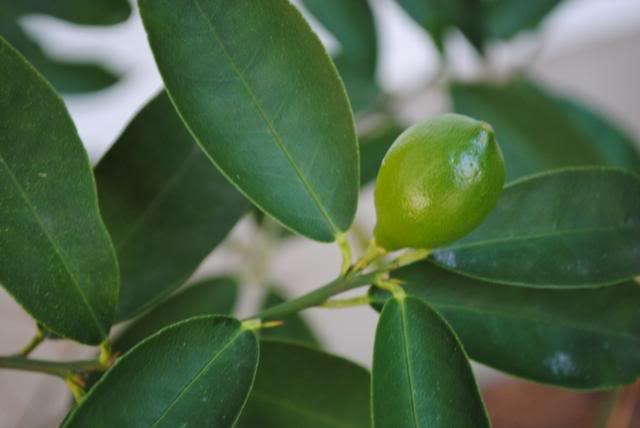
Compact evergreen shrub reaching 2.5-3 m. Leaves are intermediate between lime and kumquat — small, dark glossy green, ovate-lanceolate, 4-7 cm long with narrowly winged petioles. White flowers appear in flushes, intensely fragrant, about 2 cm across, with 5 petals. Fruit is round to slightly oblate, 3-4 cm diameter, larger and rounder than Eustis. Rind is bright yellow when ripe, moderately thick, sweet-edible like kumquat. Flesh is pale greenish-yellow, juicy, very acidic. Usually contains 3-8 small seeds. Branching is dense with small, sharp thorns particularly on juvenile growth.
Planting & Cultivation
Choose a location with at least 6 hours of direct sunlight. In zones 8b-9a, plant against a south-facing wall for reflected heat. Space 2-3 m apart or use a container of at least 45 cm diameter. Dig a hole twice the root ball width; set the graft union 5-8 cm above soil level. Backfill with native soil — avoid excessive amendment. Water deeply at planting and mulch with 5-8 cm of pine bark, keeping it 15 cm from the trunk. Stake young trees loosely for the first year in windy areas. Spring planting (after last frost) is ideal in zone 8b; in zones 10-11, plant any time except peak summer heat.
Cultivation
Lakeland limequat inherits moderate cold tolerance from its kumquat parent, surviving brief dips to -7 °C once established, but prefers consistently warm conditions for best fruiting. Water deeply every 7-10 days during active growth; reduce in winter. Feed with a balanced citrus fertiliser (2:1:1 NPK) every 6-8 weeks from February through October. The tree naturally forms a dense, bushy habit — light tip-pruning after harvest shapes it nicely without sacrificing next season's bloom. Watch for sooty mould on the dense canopy; good air circulation and occasional hosing prevent it. On own roots, the tree is slightly more vigorous than grafted specimens but may take an extra year to fruit.
Climate & Cold Protection
Hardy to -7 °C (20 °F) for brief periods, making it one of the most cold-tolerant lime-flavoured citrus. Performs best in USDA zones 9a-11 but survivable in sheltered 8b locations. Optimal fruiting occurs with average temperatures of 20-30 °C. Tolerates heat and humidity well across the Gulf Coast and Florida. In cooler zones, the tree may hold fruit longer on the branch (sometimes 3+ months), intensifying sweetness. Protect from sustained freezes below -5 °C with frost cloth. Container trees should be moved indoors when temperatures drop below -3 °C.
Seasonal Care
Spring: Flush new fertiliser applications; thin weak interior shoots. Summer: Maintain consistent watering; monitor for citrus leaf miner on tender new growth. Autumn: Final fertiliser application by October; begin reducing water. Winter: Harvest fruit as it turns fully yellow; protect from frost events with covers or by moving containers indoors. Year-round: Monitor for scale insects on the dense foliage; treat with horticultural oil if detected.
Cold Protection
At -5 °C to -7 °C, protect with frost cloth draped over the canopy, securing at the base to trap ground heat. For potted trees, move to an unheated garage or covered porch when sustained freezes threaten. String incandescent Christmas lights through the canopy as supplemental heat during frost events — LED bulbs don't produce enough warmth. Mulch heavily (10-15 cm) around the root zone before winter. If freeze damage occurs, wait until spring growth resumes before pruning dead wood — seemingly dead branches often re-sprout from dormant buds.
Seasonal Care Calendar
🌱 Spring (Mar–May)
Water: Regular
Feeding: Heavy feeding
Resume regular fertilising; inspect for citrus leaf miner on new flushes
☀️ Summer (Jun–Aug)
Water: Very Heavy
Feeding: Heavy feeding
Maintain deep watering; monitor for scale and sooty mould
🍂 Autumn (Sep–Nov)
Water: Regular
Feeding: Light feeding
Final feed in October; fruit begins colouring — taste-test before picking
❄️ Winter (Dec–Feb)
Water: Moderate
Feeding: Light feeding
Peak harvest; protect from hard freezes; reduce watering
Propagation
Cuttings: Semi-hardwood cuttings (10-15 cm) taken in late summer root reliably under mist with bottom heat of 25 °C and 0.3% IBA treatment; expect roots in 6-8 weeks. Air layering: Works well on 1-2 year wood; girdle a pencil-thick branch, wrap with damp sphagnum and plastic, and roots develop in 8-12 weeks. Grafting: T-bud or chip-bud onto trifoliate orange or Swingle citrumelo rootstock in spring for cold-hardy combinations. Seed: Seeds are polyembryonic; nucellar seedlings will be true to type, but juvenile period is 4-6 years to first fruit.
Diseases & Pests
Most susceptible to citrus canker (Xanthomonas citri) in humid climates — apply copper sprays preventively during wet seasons. Citrus leaf miner tunnels are cosmetic on mature trees but can stunt young ones; spinosad sprays control severe infestations. Scale insects (brown soft scale, snow scale) favour the dense canopy — horticultural oil in late winter targets crawlers. Greening (HLB) is a threat in Florida; maintain psyllid control with systemic treatments. Root rot (Phytophthora) is rare on well-drained soil but can occur in waterlogged containers — ensure drainage holes are clear.
Harvesting & Culinary Uses
Fruit ripens from late autumn through winter, turning from green to bright yellow. Taste-test for readiness — the rind should be sweet and the juice sharply acidic but aromatic. Clip fruit with secateurs rather than pulling to avoid tearing branch tips. Fruit holds on the tree for 2-3 months after colouring, becoming sweeter as the rind sugars concentrate. Harvested fruit stores at room temperature for 1-2 weeks or refrigerated for 4-6 weeks. Yield is typically 4-8 kg per mature tree; container specimens produce 2-4 kg.
Culinary Uses
The sweet-edible rind makes Lakeland ideal for slicing whole into salads, floating in cocktails, or preserving as candied peel. Juice replaces lime in ceviche, dressings, and marinades with a rounder, less harsh acidity. Zest adds complex citrus aroma to baked goods, especially shortbread and citrus curd. The fruit makes an exceptional marmalade — cook rind and flesh together for a balanced sweet-tart preserve. Muddled in a mojito or caipirinha, the whole fruit (rind and all) delivers both sweetness and punch. Dehydrated slices become a decorative, fragrant garnish for cocktails.
Rootstock Guide
Most commonly grown on own roots from cuttings, which produces a true-to-type compact plant. For enhanced cold tolerance, graft onto Flying Dragon (Poncirus trifoliata 'Flying Dragon'), which also dwarfs the tree further — ideal for small spaces. Swingle citrumelo provides good drainage tolerance and CTV resistance for in-ground plantings. Avoid sour orange rootstock in HLB-prone areas. Cleopatra mandarin rootstock suits alkaline soils but produces a slightly larger tree.
Container & Companion Growing
Container Growing
Exceptionally well-suited to container culture. Use a 45-60 cm pot with excellent drainage; a mix of 60% pine bark, 30% peat or coir, and 10% perlite works well. Water when the top 3-4 cm of soil feels dry — typically every 3-5 days in summer, 7-10 days in winter. Apply slow-release citrus fertiliser in spring and supplement with liquid feeds every 2-3 weeks during active growth. Repot every 3-4 years, root-pruning by 20% if upgrading pot size is impractical. In cold climates, overwinter in a bright room at 10-15 °C; the tree tolerates brief drops in light but may shed some leaves.
Companion Planting
Underplant with dwarf marigolds or nasturtiums to repel whiteflies and aphids. Lemongrass planted nearby shares similar watering needs and creates a fragrant border. Rosemary and lavender planted at the drip line attract pollinators and repel some pest insects. Avoid planting near large shade trees that would compete for light. In a container grouping, pair with Thai basil for a complementary tropical kitchen garden.
Common Mistakes to Avoid
Overwatering in winter leads to root rot — reduce frequency significantly when growth slows. Pruning too aggressively removes next season's fruiting wood; limit pruning to 15-20% of canopy per year. Planting too deep (burying the graft union) invites collar rot and scion rooting. Using high-nitrogen lawn fertiliser causes lush foliage at the expense of fruit. Harvesting too early (while still green) misses the rind sweetness that develops as fruit colours fully yellow. Neglecting to thin dense interior growth promotes sooty mould in humid climates.
Frequently Asked Questions
What is the difference between Lakeland and Eustis limequats?
Lakeland has Marumi kumquat parentage (rounder fruit, sweeter thicker rind), while Eustis has Nagami kumquat parentage (oval fruit, thinner rind, more acidic). Both share Key lime as the other parent.
Can I eat Lakeland limequat rind?
Yes — the sweet, edible rind is one of its best features. Eat the whole fruit like a kumquat or slice it, rind and all, into salads and cocktails.
How cold-hardy is the Lakeland limequat?
It tolerates brief dips to -7 °C (20 °F) once established, making it hardier than true limes. Protect from sustained freezes below -5 °C with frost cloth or by moving containers indoors.
Does Lakeland limequat need a pollinator?
No — it is self-fertile and will produce fruit without a pollinator. However, nearby citrus trees can increase fruit set through cross-pollination.
How long until a Lakeland limequat bears fruit?
Grafted trees typically fruit in 2-3 years. Cutting-grown trees may take 3-4 years, while seedlings require 4-6 years to reach maturity.
The Lakeland limequat is a compact, cold-hardy intergeneric hybrid ideal for container culture and small gardens. Its round, sweet-rinded fruit serves as an excellent lime substitute in cocktails, marmalades, and cooking. Hardy to -7 °C and productive in a pot, it combines ornamental beauty with genuine culinary utility.
Quick Reference: × Citrofortunella 'Lakeland' Limequat'
Key Principles: Full sun, excellent drainage, regular feeding during growth, frost protection in marginal zones, and proper rootstock selection for your climate.