Sarracenia x moorei
Sarracenia x moorei

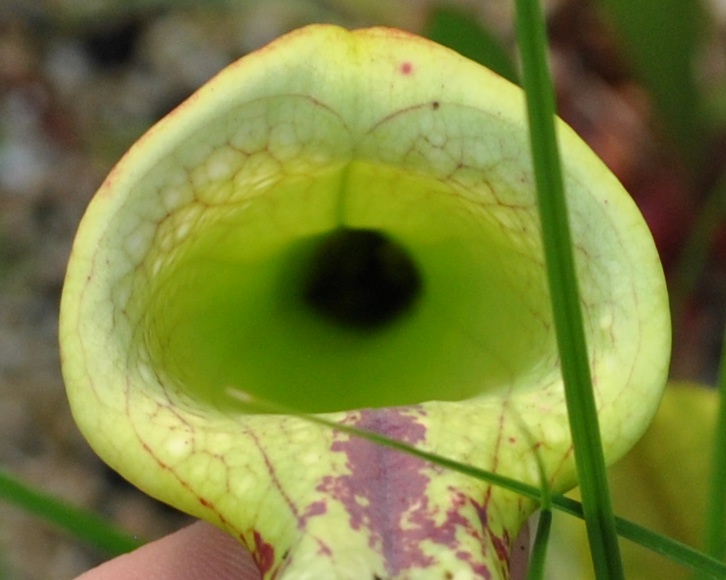
Table of Contents
Use only distilled water, reverse osmosis (RO), or rainwater — ideally under 50 ppm TDS. Tap water, bottled mineral water, and softened water contain calcium, magnesium, and sodium that accumulate in the substrate and kill carnivorous plants within weeks. This is the #1 cause of cultivation failure.
Sarracenia x moorei is a temperate species that must experience winter dormancy to survive long-term. Without a cold rest period (3–4 months at 2–10°C (35–50°F), typically November through February), the plant will weaken progressively and die within 1–2 years. An unheated garage, cold frame, or protected outdoor location is essential. Do not grow year-round on a warm windowsill.
Introduction & Discovery
Sarracenia × moorei is arguably the most celebrated natural hybrid in the entire genus—a cross between Sarracenia flava (the yellow trumpet pitcher) and Sarracenia leucophylla (the white-topped pitcher) that has produced some of the most beautiful cultivated carnivorous plants ever grown, including the legendary 'Adrian Slack' cultivar that many collectors consider the single most aesthetically perfect Sarracenia in existence. The hybrid occurs naturally wherever the two parent species grow together along the Gulf Coast—which is a substantial area including southern Alabama, the Florida panhandle, and parts of southern Georgia and Mississippi—and has been recognised by Sarracenia enthusiasts since the mid-nineteenth century. Like many Sarracenia hybrids, it displays 'hybrid vigour': plants grow larger, produce more pitchers, and often survive marginal conditions better than either parent. But S. × moorei is not merely a botanical curiosity—it is one of the defining classical cultivated Sarracenia, the subject of intensive breeding programmes since the 1970s, and the genetic foundation of many modern Sarracenia cultivars. The hybrid was first formally named by James Britten in 1881, commemorating Charles Moore (1820-1905), the Scottish-born Australian horticulturist who served as the second Director of the Royal Botanic Garden, Sydney, and who successfully cultivated and popularised the hybrid in British horticulture during its late-Victorian heyday. Moore's name was attached to the hybrid because he was one of the most influential promoters of Sarracenia cultivation during a period when carnivorous plants were all the rage among wealthy European collectors, and his garden at the Veitch nursery famously produced spectacular flowering clumps of what we now call S. × moorei. The interspecific origin of the hybrid means every individual is genetically distinct—the cross produces variable seedlings with a wide range of intermediate characteristics between the yellow trumpet elegance of S. flava and the white-and-green fenestration drama of S. leucophylla—making selective breeding particularly rewarding. Over 140 years of deliberate and accidental crossing has produced dozens of named clones and cultivars, with new selections still appearing from specialist breeders in Europe, North America, and Japan.
Discovery & Naming
The botanical history of S. × moorei is intertwined with the late-Victorian explosion of interest in Sarracenia cultivation. Natural hybrids between S. flava and S. leucophylla had been noted in Gulf Coast herbarium collections from the mid-nineteenth century, but the hybrid was not formally named until 1881 when James Britten (1846-1924), a botanist at the British Museum and editor of the Journal of Botany, formalised the name S. × moorei in honour of Charles Moore (1820-1905). Moore was a Scottish horticulturist who served for 48 years (1848-1896) as Director of the Royal Botanic Garden, Sydney, Australia, and who maintained extensive correspondence with British horticulturists including those at the Veitch nursery in Exeter—then the most prestigious commercial horticultural firm in Britain. Moore was noted for his successful cultivation of many exotic plants including Sarracenia hybrids, and his specimens at the Sydney botanic garden represented some of the finest carnivorous plant culture of the era. The Veitch nursery played a central role in popularising S. × moorei in European horticulture. Veitch grew both parent species and produced deliberate crosses from the 1870s onward, selling the resulting hybrids to wealthy British collectors at prices that would today seem extraordinary for a plant. The Victorian Sarracenia craze peaked in the 1880s-1890s with specialist growers, nursery catalogues, and elaborate glasshouse displays featuring entire collections of Sarracenia hybrids. After the First World War, interest in carnivorous plants declined sharply and the Victorian breeding programmes were largely lost. The revival came in the 1960s-1970s with a new generation of American and European growers including Adrian Slack (whose 1979 book 'Carnivorous Plants' introduced a new generation to the hobby and whose name is now attached to the most famous S. × moorei cultivar), Peter D'Amato (California Carnivores nursery), Phil Sheridan (Meadowview Biological Research Station), and various European breeders. The modern era of S. × moorei breeding has produced dozens of named cultivars including the 'Adrian Slack' selection by Phil Sheridan in the 1980s—regarded by many as the single most beautiful Sarracenia cultivar ever produced, characterised by spectacular red venation, elegant pitcher form, and vigorous growth.
Trapping Mechanism
As an interspecific hybrid between two of the most productive Sarracenia species, S. × moorei combines trap features from both parents to produce pitchers that are often larger, more robust, and more effective prey captors than either parent alone. The pitchers typically reach 60-100 cm tall in well-grown plants, occasionally to 120 cm under ideal conditions, making this one of the tallest cultivated Sarracenia. Morphologically the hybrid sits roughly midway between its parents, with a tall trumpet form inherited from S. flava combined with variable white-and-green fenestration patterns inherited from S. leucophylla. The upper third of the pitcher wall often shows the leucophylla-style translucent fenestrations—irregular white areoles that let light through the pitcher wall and serve as a light-trap deception for flying prey. The lower two-thirds of the pitcher are typically coloured in the flava manner with strong red venation on yellow-green ground. The lid is usually held nearly vertical (intermediate between flava's upright lid and leucophylla's flared position), bearing extrafloral nectaries on the underside and a fringe of downward hairs. The peristome is broad, glossy, and heavily secreting nectar that lures prey to the opening. Below the peristome the slippery waxy zone extends 10-15 cm, followed by the retentive hair zone and the digestive pool at the base holding 30-80 ml of fluid. The digestive fluid contains the typical Sarracenia enzyme suite—aspartic proteases, chitinases, phosphatases, ribonucleases—produced by the plant itself. Like S. flava, many S. × moorei clones produce coniine in the pitcher fluid, the same toxic alkaloid found in poison hemlock, which contributes to stunning prey and reducing escape attempts. The scent of S. × moorei pitchers is intermediate between the strong 'cat urine' fragrance of S. flava spring pitchers and the milder scent of S. leucophylla; hybrid pitchers are often more strongly fragrant than leucophylla but less pungent than pure flava. The combination of size, coloration, fragrance, and fenestration makes S. × moorei one of the most effective insect capture systems in the genus—field observations of cultivated clumps regularly show pitchers containing hundreds of flies, wasps, beetles, and bees over the course of a single season.
Native Range & Distribution Map
Distribution map showing the native range of Sarracenia x moorei.
Biology & Trapping Mechanism
As an F1 or later-generation hybrid between two diploid Sarracenia species, S. × moorei is typically fertile, vigorous, and morphologically variable. Each individual plant is genetically unique (unless propagated clonally), and the morphological range within S. × moorei spans from 'mostly flava-like' to 'mostly leucophylla-like' depending on the specific parent plants and the generation of crossing. Typical hybrid features include: tall upright pitchers 60-100 cm (intermediate between flava's 50-120 cm and leucophylla's 40-100 cm), yellow-green to green ground colour with red venation, variable upper-pitcher fenestration ranging from minimal (flava-dominant clones) to extensive (leucophylla-dominant clones), broad nearly vertical lid with red venation on yellow ground, and long flowering scapes with yellow-to-yellowish flowers (rarely with pink or orange tints in advanced hybrids). The rhizome is similar to other Sarracenia—thick, fleshy, growing horizontally with annual increments marked by leaf-scar rings, producing multiple growing points that create expanding clumps over years. In cultivation, S. × moorei clumps grow faster and produce more pitchers per growing point than either parent species—a classic expression of hybrid vigour (heterosis). Mature clumps 10-15 years old can occupy 50-100 cm of bog space and contain 30-80 active growing points, each producing 4-8 large pitchers per season. The flowering is also impressive: a well-grown hybrid clump produces dozens of simultaneous flowers in spring, each on a 40-70 cm leafless scape, resembling a bouquet of pale yellow nodding blooms. Unlike many interspecific plant hybrids that are sterile or semi-sterile, S. × moorei is fully fertile and produces viable seed from self-pollination or cross-pollination with either parent or with other hybrid clones. This fertility has enabled extensive breeding programmes: each generation of crossing produces new variation, and skilled breeders can select for specific desirable traits (large pitcher size, strong fenestration, deep red coloration, exceptional flower presentation) over multiple generations. The most famous example is the 'Adrian Slack' cultivar, selected by Phil Sheridan in the 1980s and described below, which represents a peak of hybrid breeding achievement.
Prey & Feeding Ecology
Sarracenia × moorei inherits its prey spectrum from both parents and captures a broad range of flying and crawling insects. Wild hybrid populations in the Gulf Coast region (where the two parent species grow together and produce natural crosses) and cultivated clumps in bog gardens both show similar prey distributions. Flies (Diptera) are the largest prey category, typically 35-55% of captured individuals, drawn by the nectar fragrance and by the slightly fermented scent of older pitcher contents. Wasps (Vespidae, particularly Polistes, Vespula, and various solitary wasps) form a substantial second category (15-25%), attracted to the same nectar and to the visual cues of the yellow-green pitcher walls. Ants (Formicidae) account for 15-30% of prey, with Formica, Camponotus, and Crematogaster species most common. Bees (Apidae, Halictidae, Andrenidae) contribute 5-15%, including queen bumblebees in spring and honeybees throughout the season. Beetles (Coleoptera) make up 5-10%, typically ground beetles and rove beetles captured by the lower pitcher sections. Occasional larger prey include moths, butterflies, grasshoppers, and spiders. The fenestration trap strategy inherited from S. leucophylla makes S. × moorei particularly effective at capturing fast-flying insects (flies, small wasps) that would escape non-fenestrated pitchers. The large pitcher size inherited from both parents gives the hybrid the digestive capacity to process substantial prey biomass—a single well-grown hybrid clump captures hundreds or thousands of insects per season, contributing significantly to local insect population dynamics in the bog habitat. Pitcher fluid in S. × moorei is productive habitat for the usual Sarracenia inquilines: pitcher plant midge (Metriocnemus knabi) larvae, pitcher plant mosquito (Wyeomyia smithii) larvae, flesh flies (Sarcophagidae), mites, rotifers, and various protozoa—all benefiting from the food web built on captured prey. In cultivation, S. × moorei rarely needs supplemental feeding; outdoor plants in a sunny bog garden capture abundant natural prey. If feeding is desired (for a greenhouse plant or to enhance a show specimen), drop 2-3 small freeze-dried insects per pitcher during the peak growth period.
Comparison with Similar Species
How does S. × moorei compare to related species and hybrids? Versus S. flava (parent): flava is pure yellow with minimal fenestration, while × moorei combines flava's trumpet form with leucophylla's fenestration—more visually complex. Versus S. leucophylla (parent): leucophylla has spectacular white fenestrations but shorter pitchers (40-100 cm) than the hybrid. × moorei is taller, more robust, and often more vigorous. Versus S. × excellens (S. leucophylla × S. minor): similar fenestration inheritance but smaller overall due to S. minor parentage. Less tall than × moorei. Versus S. × catesbaei (S. flava × S. purpurea): shorter and squatter due to S. purpurea parentage, with different colour scheme (more red, less yellow). Versus S. × formosa (S. leucophylla × S. minor): smallest of the named hybrid group, with hooded pitcher shape from minor parent. Versus modern advanced-generation hybrids: many contemporary Sarracenia cultivars are descendants of × moorei lines, containing flava + leucophylla genes plus additional parent contributions. Practical take: for first Sarracenia hybrid purchase, S. × moorei typical form or 'Judith Hindle' offers reliable vigour and beauty. For the peak of Sarracenia cultivar aesthetics and willingness to pay for it, 'Adrian Slack' is the benchmark. For breeding projects, the × moorei lineage provides the richest genetic foundation.
Reproduction & Propagation
Sarracenia × moorei propagates readily by rhizome division and from seed. Division: in early spring as dormancy ends, lift the rhizome, wash off old media, and identify natural branching points. Cut cleanly with a sterile knife between branches, ensuring each division has at least one growing point and a section of active root. Larger divisions (5-10 cm) establish quickly and produce normal pitchers within the same season. Dust cut surfaces with cinnamon or sulphur powder and repot in fresh peat-perlite mix. Water thoroughly and place in bright light. Divisions establish rapidly—this is the standard method for maintaining specific named cultivars (Adrian Slack, for example, is only available as vegetatively propagated material, never as seed). Seed propagation: because S. × moorei is fully fertile, seeds are abundant. Collect ripe capsules in autumn (September-November), clean seeds by breaking open capsules, and store in dry cool conditions. Cold stratify in damp sphagnum peat at 4-6 °C for 6-10 weeks. After stratification, sow on the surface of peat-perlite mix (do not cover) at 20-25 °C in bright light. Germination occurs in 4-8 weeks. Seedlings are genetically variable—each individual represents a unique combination of parental genes—so seed propagation produces a range of morphologies rather than identical copies. This is ideal for breeding programmes but not for producing specific named cultivars. Seedlings reach flowering maturity in 4-6 years. Breeding programmes: serious breeders working with S. × moorei typically cross selected cultivars back to parent species (backcrossing to flava or leucophylla) or cross two different cultivars to produce F2 and later-generation hybrids with new combinations of features. The resulting variation is the raw material for selecting new cultivars. Some of the most famous modern Sarracenia cultivars are advanced-generation hybrids descended from S. × moorei lineages. Tissue culture is used commercially to mass-propagate exceptional cultivars like 'Adrian Slack', ensuring uniform clonal material for the specialist market.
Cultivation & Substrate
Sarracenia × moorei is one of the most rewarding Sarracenia for cultivation: it combines the best qualities of both parents (hybrid vigour, adaptability, disease resistance, productive pitcher production) with a reasonable tolerance for cultural variations. Temperature: cold-hardy to approximately -15 °C (USDA zones 7-9), with winter dormancy of 8-12 weeks at 0-10 °C required for long-term health. Summer temperatures 25-32 °C are tolerated well; hot climates should provide afternoon shade. Light: full sun (6-8 hours direct) is essential for strong pitcher production and vivid colouration. The fenestrations and red venation both develop maximum intensity in bright light. Substrate: standard Sarracenia mix—50% sphagnum peat + 50% perlite/silica sand. Bog garden planting works exceptionally well. pH 3.5-5.0. Water: RO, distilled, or rainwater only. The tray method during growing season, drained for dormancy. Pot size: 25-35 cm deep plastic pots accommodate the substantial root system; the hybrid appreciates generous pot space and can rapidly outgrow small containers. Repot every 2-3 years in early spring. Bog garden: S. × moorei is one of the finest Sarracenia hybrids for outdoor bog gardens in temperate climates. Plant alongside S. flava, S. leucophylla, S. purpurea, S. minor, Dionaea muscipula, and Drosera filiformis for a spectacular display. The hybrid's vigour means it quickly dominates a bog if not managed—thin divisions every 3-5 years to maintain clump size. Feeding: optional. Outdoor plants capture abundant natural prey. If supplemental feeding is desired, drop 1-2 dried insects in mature pitchers during spring and autumn, never more than a couple of times per month. Key cultural advantage: because the hybrid combines resistance traits from both parents, it tends to be more tolerant of occasional cultural mistakes (brief tap water exposure, imperfect dormancy, partial shade) than either pure species. This forgiving nature makes it an excellent 'starter Sarracenia' for growers new to carnivorous plants, as well as a rewarding challenge for experienced breeders seeking the next outstanding cultivar.
Substrate: Peat + perlite (1:1)
Water: Distilled / Rainwater only — NEVER tap water
Light: Full sun (6+ hours)
Humidity: 40-70%
Common Mistakes to Avoid
Top five cultivation errors with S. × moorei: (1) Underestimating vigour. Unlike some rare Sarracenia that grow slowly, S. × moorei is a vigorous grower and quickly outgrows small containers or crowded bog spaces. Plan for 30-50 cm clump diameter within 5 years and 60-100 cm within 10 years. Regular division every 3-5 years maintains healthy clump size and produces propagation material. (2) Mistaking seed-grown hybrids for specific cultivars. Seed-grown S. × moorei plants vary substantially in appearance—only vegetatively propagated (division) material retains the specific features of named cultivars. If you want 'Adrian Slack' or another specific cultivar, buy a division from a reputable nursery; do not expect seed-grown 'moorei' to match the famous clones. (3) Inadequate winter dormancy. Like all Sarracenia, S. × moorei requires cold winter dormancy for long-term health. 8-12 weeks at 0-10 °C is sufficient. Indoor plants skipping dormancy decline over 1-3 years. (4) Tap water. Never use tap water; it kills Sarracenia through mineral accumulation. Always RO, distilled, or rainwater. (5) Insufficient pot depth or bog depth. The hybrid produces substantial root systems (25-40 cm deep) and grows poorly in shallow pots or shallow bogs. Use deep containers (25-35 cm) and construct bog gardens with 40-50 cm of peat-sand substrate to accommodate the root system. Shallow culture produces stunted plants and reduced pitcher production.
Seasonal Considerations
Sarracenia × moorei follows the classic Sarracenia seasonal calendar with especially vigorous expression: Spring (March-May): dormancy breaks. Flower scapes emerge first (late March-April), followed by the main pitcher flush. Spring pitchers are often the most spectacular—tall, well-coloured, and numerous. Begin tray watering, repot if needed, and fertilise with captured prey (optional). By late May the plant is in full growth with 4-8 mature pitchers per growing point on established clumps. Summer (June-August): peak pitcher production continues. Maintain tray water at 2-5 cm. The hybrid may produce slightly smaller pitchers in mid-summer heat but continues growing actively. In hot climates (>32 °C days), provide afternoon shade. Watch for Exyra moth caterpillars (tunnels in pitcher walls), aphids on scapes, and fungal issues in stagnant air. Autumn (September-November): second pitcher flush with enhanced coloration. Cooler nights intensify the red venation—autumn pitchers of S. × moorei are among the most visually striking of any Sarracenia. Seed capsules mature. Begin preparing for dormancy. Winter (December-February): dormancy. Reduce temperatures to 0-10 °C for 8-12 weeks. Complete above-ground dieback expected. Trim dead pitchers. Drain tray water. Cold hardy to -15 °C with rhizome protection. Indoor overwintering (in cold frame, unheated porch, garage, or refrigerator) works well if outdoor climate is too severe.
Seasonal Care Calendar
🌱 Spring (Mar-May)
Water: Heavy
Feeding: Light feeding
March-May: emergence from dormancy with flower scapes first, followed by main pitcher production. Move to full sun, begin tray watering with 3-5 cm of pure water. Repot or divide now if needed (early spring is the optimal time for division). First pitchers reach full size by late May—often the most spectacular pitchers of the year. Optional feeding.
☀️ Summer (Jun-Aug)
Water: Heavy
Feeding: No feeding
June-August: peak growth with continuous pitcher production. Maintain tray water 2-5 cm. Expect 4-8 pitchers per growing point on established clumps. Watch for Exyra moths and aphids. In hot climates, provide afternoon shade. Hybrid vigour means strong growth even in suboptimal conditions.
🍂 Autumn (Sep-Nov)
Water: Heavy
Feeding: No feeding
September-November: second pitcher flush with enhanced coloration. Cool nights intensify red venation—autumn pitchers can be especially striking. Seed capsules mature and release. Prepare for dormancy as days shorten and temperatures drop.
❄️ Winter (Dec-Feb)
Water: Regular
Feeding: No feeding
December-February: dormancy at 0-10 °C for 8-12 weeks. Complete above-ground dieback. Trim dead pitchers. Drain tray water. Cold hardy to -15 °C with rhizome protection. Cold frame, unheated greenhouse, or sheltered outdoor position all work for overwintering.
Diseases & Pests
S. × moorei shares the common Sarracenia pest and disease profile, generally with slightly better resistance than either parent (hybrid vigour extending to disease tolerance). Common problems: Rhizome rot (Pythium, Fusarium, Rhizoctonia) from winter waterlogging or mechanical damage—prevention through good drainage and sterile tools is essential. Symptoms: yellowing pitchers, crown collapse, soft brown rhizome. Treatment: cut affected tissue, dust with cinnamon, repot in fresh sterile media. Exyra moths (Exyra semicrocea, E. fax, E. ridingsii) tunnel into pitcher walls and cut off pitcher tips. Hand-remove caterpillars or spray interior with BT. Papaipema borers rare but serious. Aphids on spring flower scapes—water spray or insecticidal soap. Spider mites in dry indoor conditions. Root mealybugs in container culture—invisible until repotting. Fungal leaf spots in stagnant humid conditions—improve air circulation. Botrytis in cool damp springs—airflow and affected tissue removal. Bacterial soft rot occasionally in damaged pitchers. Overall, S. × moorei is among the more resilient Sarracenia and rarely suffers serious disease in good cultural conditions.
Indoor Growing & Terrariums
Sarracenia × moorei is not suited to indoor cultivation except under professional grow-light setups with cold winter dormancy arrangements. For those with dedicated carnivorous plant grow rooms: high-output LED lights (300+ μmol/m²/s), 14-16 hour photoperiod in growing season, 2-5 cm tray water, winter dormancy in cold frame/unheated space for 8-12 weeks at 0-10 °C. For typical home growers without these facilities, S. × moorei is not a suitable indoor plant—outdoor bog garden culture is essential for long-term success. If you lack outdoor space, choose tropical carnivorous plants (Nepenthes, Heliamphora, tropical Drosera) instead.
Terrarium Setup
Sarracenia × moorei is primarily an outdoor bog garden plant, not a terrarium species. Three recommended approaches: Setup A: Outdoor bog garden (strongly recommended). A traditional pond-lined bog with 40-50 cm of peat-perlite-sand substrate, rainwater supply, and full sun exposure provides the ideal long-term home. Plant S. × moorei as a centrepiece species—its large upright pitchers create dramatic vertical structure in the bog composition. Companions: S. flava, S. leucophylla (both parents), S. purpurea, S. minor, Dionaea muscipula, Drosera filiformis, Drosera intermedia, and sphagnum moss. The hybrid's vigour means it will dominate a bog quickly; divide every 3-5 years to maintain balance. Expected lifespan: decades. Setup B: Large show pot. A 30-40 cm diameter, 30 cm deep plastic pot or glazed ceramic container filled with peat-perlite mix, standing in a saucer of rainwater during growing season, in full sun. Ideal for patio and balcony gardeners. Overwinter in a cold frame, unheated greenhouse, or protected outdoor position with mulch. Rename every 2-3 years to maintain vigour. Expected lifespan 10-20 years. Setup C: Cool greenhouse. Under unheated glass with natural winter cold, this approach extends the growing season at both ends and provides wind protection. Excellent for show specimens and competitive exhibition plants. Indoor terrarium culture is not recommended—the hybrid needs full outdoor sun and cold dormancy that enclosed terrariums cannot provide. If you lack outdoor space, choose tropical carnivorous plants (Nepenthes, Heliamphora, tropical Drosera) rather than Sarracenia hybrids.
Landscape & Bog Garden Use
Sarracenia x moorei is an excellent candidate for bog garden cultivation in suitable climates. A bog garden provides the consistently wet, acidic, nutrient-poor conditions that these plants require.
Creating a Bog Garden
- Container: Line a container or trench with pond liner (no drainage holes)
- Substrate: Fill with 50:50 peat:perlite or pure peat moss
- Water level: Maintain 1–3 cm of standing water. Use only rain/distilled water.
- Sun: Full sun position (minimum 6 hours direct sun)
- Companions: Mix with other hardy carnivorous plants — Sarracenia, Drosera filiformis, Pinguicula
Conservation & Collector Notes
Sarracenia × moorei as a hybrid is not listed under the US Endangered Species Act because it is not a distinct species—it represents natural hybridisation between two parent species, both of which face various threats. The parent species S. flava and S. leucophylla are both listed as 'Vulnerable' or 'Near Threatened' in conservation assessments depending on region, with substantial habitat loss across the Gulf Coast longleaf pine savanna ecosystem (reduced by approximately 97% since European settlement). Wild natural hybrid populations decline along with parent populations and face the same threats: drainage, fire suppression, logging, conversion to plantation forestry, urban development, and climate change. CITES Appendix II listing applies to all Sarracenia species and hybrids—international commercial trade requires CITES permits, though nursery-propagated plants from registered sources are exempt under CITES Article VII. Ex-situ conservation: unlike some rare parent species (S. oreophila, S. rubra ssp. jonesii, S. rubra ssp. alabamensis), S. × moorei is extensively cultivated worldwide with thousands of plants in collections, botanic gardens, and commercial nurseries. This widespread cultivation preserves the genetic combinations of the hybrid even as wild parent populations decline. For collectors, the conservation message is: purchase only from reputable nurseries that propagate their own stock; support in-situ conservation of parent species through donations to The Nature Conservancy, the Longleaf Alliance, the Atlanta Botanical Garden's conservation programmes, and similar organisations; never accept wild-collected material; maintain accurate provenance records for the plants in your collection; and consider participating in cultivar registration and breeding programmes that contribute to the horticultural lineage. The ongoing breeding of × moorei cultivars represents both an art form and a form of conservation horticulture, preserving and enhancing the genetic diversity of Sarracenia for future generations.
Collector Notes
Sarracenia × moorei and its cultivars are among the most prized plants in the Sarracenia collector world. Standard hybrid plants cost €15-40 at specialist nurseries; named cultivars command €30-200 depending on rarity and demand. The most famous and expensive cultivar is 'Adrian Slack'—a clone selected by Phil Sheridan of Meadowview Biological Research Station in the 1980s from a cross between specific S. leucophylla and S. flava parents, registered in the International Carnivorous Plant Society cultivar registry, and characterised by exceptionally elegant pitcher form with strong red venation on yellow-green ground, prominent white fenestrations, and outstanding vigour. A mature 'Adrian Slack' division may cost €80-200 from specialist suppliers; very large show specimens occasionally exceed €400. Other notable cultivars in the S. × moorei lineage include 'Bigmouth' (very broad mouth), 'Cauldron' (unusual form), 'Godzuki' and 'Godzilla' (giant forms), 'Judith Hindle' (selected by Marston Exotics UK), 'Leah Wilkerson' (American breeder cultivar), 'Scarlet Belle' (red-and-white), 'Tarnok' (unusual lid), and many others. The ICPS maintains the authoritative cultivar registry; newly registered cultivars are published in the Carnivorous Plant Newsletter. Reputable sources for verified cultivar material include: Meadowview Biological Research Station (Virginia USA), Triffid Nurseries (UK), Christian Dietz/Darwiniana (Germany), California Carnivores (USA), Native Exotics (USA), and various specialist breeders in Europe, Japan, and Australia. Buyers should beware of seed-grown 'Sarracenia × moorei' being sold as specific cultivars—only clonal (division or tissue culture) material carries the cultivar identity. Hybridisation with other Sarracenia continues actively, with modern breeders producing advanced-generation hybrids that combine S. × moorei features with traits from S. purpurea (cold tolerance), S. rubra (fragrance), and S. alata (colour variability). For collectors wanting to enter the cultivar collecting hobby, S. × moorei provides the broadest range of spectacular options and represents the mainstream of serious Sarracenia collecting.
Ethnobotany & Cultural Significance
Sarracenia × moorei has no significant traditional ethnobotanical history of its own—it is a named horticultural hybrid from the late nineteenth century, postdating most indigenous and colonial uses of Sarracenia. The parent species (S. flava and S. leucophylla) have limited ethnobotanical records in Gulf Coast Native American cultures, primarily as components of general wetland ecosystems rather than as specifically recognised medicinal plants. The significance of S. × moorei in contemporary culture is entirely horticultural: it represents the pinnacle of ornamental carnivorous plant breeding, features in botanical garden displays worldwide, appears in carnivorous plant society exhibitions, and has been the subject of hundreds of cultivation articles and horticultural monographs. The 'Adrian Slack' cultivar in particular has become iconic in the carnivorous plant hobby, representing both the aesthetic peak of Sarracenia breeding and the dedicated breeding effort of Phil Sheridan and Meadowview Biological Research Station. Sarracenia cultivars including × moorei lineage are featured in major botanical gardens including Kew (UK), Atlanta Botanical Garden (USA), Royal Botanic Gardens Sydney (Australia—where the hybrid's namesake Charles Moore served as Director), and numerous regional botanic gardens in Europe and Asia. The International Carnivorous Plant Society maintains cultivar registration standards, and new × moorei cultivars are regularly registered and published. In horticultural trade, the lineage represents the commercial backbone of premium Sarracenia sales—the most expensive, most sought-after, and most beautifully presented plants at flower shows, plant society meetings, and specialist nurseries are typically × moorei descendants. For collectors interested in the history of carnivorous plant horticulture, the S. × moorei story spans 140 years of breeding effort, from Victorian Veitch nurseries to contemporary tissue-culture laboratories, representing one of the longest continuous horticultural breeding lineages in the world of ornamental plants.
Frequently Asked Questions
Is Sarracenia × moorei a species or a hybrid?
A named natural and cultivated hybrid, with the '×' symbol indicating its interspecific hybrid status. The name S. × moorei refers to any hybrid with S. flava and S. leucophylla parentage; individual plants vary in appearance depending on the specific parents and generation of crossing.
Is it fertile or sterile?
Fully fertile. Unlike many plant hybrids, S. × moorei produces viable seeds and can be backcrossed to either parent or crossed with other Sarracenia species. This fertility has enabled generations of selective breeding.
What makes 'Adrian Slack' so special?
The 'Adrian Slack' cultivar, selected by Phil Sheridan of Meadowview Biological Research Station and named for the British carnivorous plant author Adrian Slack, combines exceptionally elegant pitcher proportions, strong red venation, prominent white fenestrations, and outstanding vigour. Many collectors consider it the single most beautiful Sarracenia cultivar ever selected. It is only available as clonal (division or tissue culture) material.
Can I make my own Sarracenia × moorei?
Yes, if you have both S. flava and S. leucophylla flowering simultaneously. Transfer pollen between flowers with a soft brush. The resulting seed will be true S. × moorei, though the individual plants will vary in appearance. Flowering from seed takes 4-6 years.
Why is the hybrid often more vigorous than the parents?
This is 'hybrid vigour' or heterosis—a common biological phenomenon in which the cross between two related species produces offspring that are larger, more productive, and more tolerant than either parent. The genetic basis involves complementation of recessive alleles and the combining of adaptive traits from both parents.
How do I tell a hybrid from a pure parent species?
Examine the pitcher features: pure flava has yellow pitchers with minimal fenestration and strong red venation; pure leucophylla has shorter pitchers with extensive white fenestration and less red on the tube; × moorei combines features in intermediate proportions. Multiple characters must be examined because individual features can vary within each parent species.
Is the hybrid considered invasive where the parents overlap?
No. Natural hybridisation in overlapping ranges is a normal part of Sarracenia biology; the hybrids are typically less numerous than the parent species and do not displace them. Both parents and hybrids share the same habitat requirements and the same threats from habitat loss.
Are there any cultural or care differences from the parent species?
S. × moorei requires essentially identical culture to S. flava and S. leucophylla: full sun, pure water, peat-perlite substrate, tray watering in summer, cold winter dormancy. The hybrid is somewhat more tolerant of minor cultural lapses due to hybrid vigour but should be treated the same as the parents for best results.
Explore Our Other Encyclopedias
12,000+ expert articles on tropical & exotic plants
Quick Reference Summary: Sarracenia x moorei
Golden Rule: Pure water, poor soil, maximum light. If you remember nothing else, remember this.
Complete cultivation guide for Sarracenia × moorei, the celebrated natural and cultivated hybrid between Sarracenia flava and S. leucophylla. Covers Britten 1881 description, Charles Moore dedication, Victorian Veitch nursery breeding programmes, the legendary 'Adrian Slack' cultivar selected by Phil Sheridan at Meadowview Biological Research Station, outdoor bog garden culture, rhizome division and seed propagation, and the hybrid's central role in contemporary Sarracenia cultivar breeding. Ideal vigorous Sarracenia for temperate bog gardens USDA zones 7-9.