Acer ginnala (Amur Maple)
Acer ginnala (Amur Maple)



Introduction
Acer ginnala, the Amur maple, is one of the hardiest maples available for bonsai, surviving winter temperatures to -40 C in the ground. Native to northeast Asia from Siberia through Manchuria to Japan, it is a small tree or large shrub with three-lobed leaves that turn brilliant scarlet in autumn. The species is vigorous, forgiving of beginner mistakes, and develops attractive flaking bark on mature specimens.
Leaves are three-lobed with a dominant central lobe, 4-8 cm across, reducible to 2-3 cm with defoliation. Spring foliage is bright green, sometimes with reddish tones. Autumn colour is the species' greatest asset — reliably brilliant scarlet-red, among the most vivid of any maple. Bark becomes grey and develops fine flaking texture on trunks over 30 mm diameter. Growth is vigorous, with 20-40 cm of annual extension. The species naturally forms a multi-stemmed shrub.
| Common Name | Amur Maple | Family | Sapindaceae |
| Origin | Northeast Asia | Indoor/Outdoor | Outdoor |
| Bonsai Tradition | Modern | Japanese Name | — |
| Difficulty | Beginner | Group | Maple |
| Recommended Styles | Moyogi (Informal Upright), Hokidachi (Broom), Sokan (Twin Trunk), Yose-ue (Forest Planting) | ||
| Size Categories | Shohin (15–20 cm), Chuhin (25–46 cm), Omono (46–76 cm) | ||
History & Tradition
Amur maple is widely used in bonsai across northern China, Korea, and Russia where palmatum cannot survive the winters. In North America and northern Europe, it serves as the cold-climate alternative to palmatum. The species became popular with bonsai growers in USDA zones 3-5 where no other maple is reliably hardy in containers.
About Maple Bonsai
Japanese maples are among the most popular deciduous bonsai, prized for their spectacular seasonal color changes and delicate leaf structure. From the fresh chartreuse of spring emergence through deep summer green to the fiery reds and golds of autumn, maples offer a living calendar. Leaf reduction through defoliation techniques can produce miniature leaves barely a centimeter across on well-developed trees. The fine ramification achievable on mature maple bonsai creates winter silhouettes rivaling the best deciduous trees in nature. Acer palmatum cultivars number in the hundreds, giving artists choices ranging from threadleaf dissectums to bold-lobed varieties. Maples prefer morning sun with afternoon shade protection and consistent moisture.
Botanical Profile
| Family | Sapindaceae | Genus | Acer |
| Species | ginnala | Plant Type | deciduous |
| Origin | Northeast Asia | Growth Rate | fast |
| Foliage Type | deciduous | Bark Character | grey-brown, smooth |
| Autumn Color | bright red | Height Range | 15-80 |
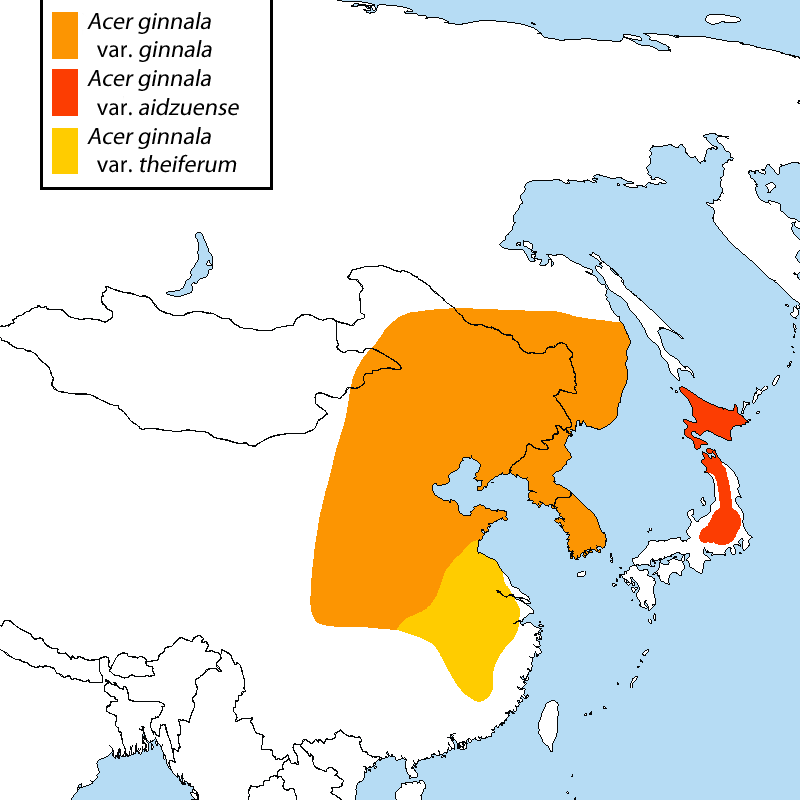
Sometimes classified as A. tataricum subsp. ginnala by some authorities. Native range extends from the Amur River region of far eastern Russia through northern China to Korea and Japan. Extremely cold-hardy (USDA zones 2-8) — the hardiest maple for bonsai. Thrives in continental climates with harsh winters. Often naturalised and considered invasive in parts of North America.
Bonsai Styles
| Style | Japanese Name |
|---|---|
| Moyogi | Informal Upright |
| Hokidachi | Broom |
| Sokan | Twin Trunk |
| Yose-ue | Forest Planting |
| Multi Trunk |
Informal upright and multi-trunk styles are natural for the species' shrubby growth habit. Broom style works well. Group plantings create convincing autumn-colour groves. Root-over-rock is effective. The vigorous growth suits larger styles that showcase the autumn colour. Avoid delicate styles — ginnala has a robust, vigorous character.
Group Style Guide
Informal upright (moyogi) is the dominant style for Japanese maples, showcasing their natural graceful form. Broom style (hokidachi) is classical for maples, creating a rounded canopy on a straight trunk that displays autumn color spectacularly. Root over rock (sekijoju) exploits the maple's ability to develop dramatic surface roots gripping stone. Twin trunk (sokan) and clump (kabudachi) styles emphasize the forest-like quality of maple groves. Forest plantings (yose-ue) of maples are among the most popular group compositions. Cascade styles are rare for maples, as the species naturally grows upright.
Trunk & Nebari
| Nebari Development | easy | Deadwood Suitability | not_suitable |
| Bark Scarring Risk | moderate | Bark Character | grey-brown, smooth |
Develops good surface roots with radial pruning at repotting. Trunk builds caliper rapidly — 8-12 mm per year in grow-out. The species responds well to trunk-chop technique with 2-3 year cycles. Air-layering is reliable. The bark develops attractive flaking texture at moderate trunk diameters. Nebari quality is good but not as dramatic as buergerianum.
Deadwood Techniques
Maple wood rots quickly — deadwood is not a design feature. Carve dead stubs concave for healing. Focus on autumn colour and bark texture.
Wiring & Shaping
Aluminium wire in 1-3 mm gauges. Wire after leaf drop. Remove within 4-5 months as the vigorous growth causes rapid thickening. Clip-and-grow is highly effective given the strong bud response. The flexible young wood bends well but older branches become brittle.
| Wire Type | Bark Scarring Risk | Best Season |
|---|---|---|
| Aluminum | Lower (softer wire) | Late autumn / early spring |
| Annealed copper | Higher (holds shape better) | Late autumn / early spring |
🌍 Distribution Map
Native origin: Northeast Asia
Pruning & Pinching
| Ramification Quality | fine | Leaf/Needle Reduction | excellent |
Defoliate in June for leaf reduction. The species responds vigorously to defoliation — leaves reduce to 50-60% of original size. Cut extending shoots to 1-2 nodes. Manage opposite buds by removing one of each pair. Structural pruning in winter. The vigorous growth means frequent pruning is needed to maintain shape.
Watering
Standard maple watering — consistent moisture, daily in summer. Tolerates brief drought better than palmatum. The vigorous growth demands adequate water during the growing season. Reduce in winter. Extremely cold-hardy roots tolerate frozen soil.
Soil & Repotting
| Substrate Type | Standard Akadama Mix |
| Repotting Frequency | Every 2 years |
| Root Pruning Tolerance | aggressive |
Standard maple mix. Repot every 2-3 years — the vigorous root system fills pots quickly. Tolerates aggressive root pruning (up to 40-50%). Late February to March timing in temperate zones; may be later in very cold climates where spring comes late.
Group Soil Recipes
Deciduous maple substrate should retain more moisture than conifer mixes: 60% akadama, 20% pumice, 20% lava rock or perlite. The higher akadama ratio supports the moisture needs of large-leafed deciduous trees. Particle size of 2–5 mm works well for most sizes. Repot every 2–3 years in early spring before bud break. Root pruning can be aggressive on healthy maples, removing up to 50% of the root mass. A thin layer of sphagnum moss on the soil surface helps maintain even moisture during hot summers.
Fertilizing
| Season | NPK Ratio | Frequency | Notes |
|---|---|---|---|
| Spring | 10-10-10 | Every 2 weeks | Support new growth |
| Summer | 10-10-10 | Every 2 weeks | Sustain vigor |
| Autumn | 0-10-10 | Every 3–4 weeks | Harden off for winter |
| Winter | None | — | No feeding during dormancy |
Strong feeding supports the vigorous growth — balanced organic every 4-5 weeks from April through September. Reduce nitrogen from August for autumn colour. The species is not fussy about fertilizer type or concentration.
Light & Placement
Full sun for compact growth and best autumn colour. Tolerates partial shade but autumn colour intensity diminishes. The species handles extreme cold and moderate heat. No shade cloth needed in most climates.
Seasonal Placement Guide
Spring: Watch for bud break; protect emerging leaves from late frost; apply dilute fertilizer after leaves harden off. Summer: Partial defoliation in early summer for leaf reduction on strong trees; protect from scorching afternoon sun; maintain consistent moisture. Autumn: Enjoy the color display; reduce fertilizer; leaves drop naturally — remove fallen leaves from soil surface. Winter: Protect roots from hard freezes below -5°C; prune heavy branches during dormancy when sap is down; seal large cuts with wound paste.
Seasonal Care
| Season | Watering | Feeding | Key Tasks |
|---|---|---|---|
| Spring | Increasing | Resume / increase | Repotting, structural pruning, wiring |
| Summer | Maximum | Regular biweekly | Maintenance pruning, pinching, pest watch |
| Autumn | Decreasing | Reduce / stop | Wiring, structural work, winter preparation |
| Winter | Minimal | None (dormancy) | Protect roots, plan next season |
Spring: Late to start — often 2-3 weeks behind palmatum. Summer: Vigorous growth needs regular pinching. Autumn: Spectacular scarlet colour — the best season for ginnala bonsai. Winter: Extremely cold-hardy; container-grown trees tolerate temperatures that would kill other maples, though protection below -15 C is prudent for exposed pots.
Group Seasonal Guide
Spring: Watch for bud break; protect emerging leaves from late frost; apply dilute fertilizer after leaves harden off. Summer: Partial defoliation in early summer for leaf reduction on strong trees; protect from scorching afternoon sun; maintain consistent moisture. Autumn: Enjoy the color display; reduce fertilizer; leaves drop naturally — remove fallen leaves from soil surface. Winter: Protect roots from hard freezes below -5°C; prune heavy branches during dormancy when sap is down; seal large cuts with wound paste.
Pests & Diseases
Generally robust against pests and diseases. Aphids on new growth, occasional scale. Verticillium wilt can occur but the species' vigour often allows recovery. Powdery mildew in humid conditions. Overall, ginnala is one of the healthiest maple species for bonsai.
Group Pest Guide
Aphids frequently colonize new growth in spring, causing leaf curl and sooty mold; treat with insecticidal soap or systemic insecticide. Powdery mildew appears as white patches on leaves in humid conditions; improve air circulation. Verticillium wilt is a serious fungal disease causing branch dieback; no cure exists, but affected branches can be removed. Scale insects occasionally appear on branches; treat with horticultural oil. Leaf scorch from hot sun or wind is cosmetic but stressful; provide afternoon shade protection.
| Pest/Disease | Identification | Treatment |
|---|---|---|
| Aphids | Clusters on new growth, sticky honeydew | Insecticidal soap, water spray, ladybugs |
| Scale Insects | Brown or white bumps on stems/branches | Horticultural oil, systemic insecticide, manual removal |
| Leaf Hoppers | Check foliage and stems | Consult specialist resources |
Propagation
Seeds germinate readily after 90-120 days stratification (70-80% success). Cuttings root at 30-40% success in June. Air-layering is reliable with fast root development (6-8 weeks). The species self-seeds prolifically — volunteer seedlings can be collected for bonsai stock.
Group Propagation Guide
Japanese maples propagate readily from seed collected in autumn. Fresh seed requires 90–120 days cold stratification. Named cultivars must be propagated by grafting or air layering, as seedlings vary. Air layering in spring produces rooted sections within one growing season. Softwood cuttings taken in early summer can root under mist propagation. Approach grafting in spring is used for specialized cultivars. Ground layering of low branches produces new plants while maintaining the mother tree. Seedlings take 3–5 years to reach initial training size.
| Method | Timeline | Notes |
|---|---|---|
| Seeds | Variable | Consult species-specific guides |
| Air Layering | 8–12 weeks | Instant thick trunk; advanced |
| Cuttings | Variable | Consult species-specific guides |
Size Classification
Suits chuhin to large bonsai sizes. Shohin is achievable with defoliation but the naturally large leaves make it less ideal than palmatum dwarfs for very small sizes. The vigorous growth builds impressive larger specimens quickly. A shohin ginnala requires more leaf reduction work than a shohin Kashima or Kiyohime.
| Keshitsubo (3–8 cm) |
| Shito (5–10 cm) |
| Mame (5–15 cm) |
| Shohin (15–20 cm) ✅ |
| Komono (15–25 cm) |
| Chuhin (25–46 cm) ✅ |
| Omono (46–76 cm) ✅ |
| Dai (76–122 cm) |
| Imperial (122+ cm) |
Varieties & Cultivars
Flame is a popular cultivar selected for intense autumn colour. Compact is a slower-growing selection suited to smaller bonsai. The species shows natural variation in autumn colour intensity — select seedlings with the best colour for bonsai development.
Group Varieties
Acer palmatum is the primary bonsai maple with hundreds of cultivars. Deshojo has brilliant red spring growth. Kiyohime is naturally compact with fine ramification. Seigen offers red spring and autumn color. Acer buergerianum (trident maple) has superior trunk development and tolerates more sun. Acer ginnala (Amur maple) is extremely cold-hardy. Mountain maple (A. campestre) suits European collections. Dissectum cultivars with thread-like leaves create weeping bonsai forms. Coral bark maple (Sango-kaku) offers year-round red branch color.
Buying Guide & Display
Inexpensive and widely available as landscape material ($10-30 for nursery stock). Select for strong autumn colour — there is significant variation among seedlings. Garden centre specimens make excellent trunk-chop material. The low cost makes ginnala ideal for practising trunk-chop and development techniques.
| Check | What to Look For |
|---|---|
| Trunk | Good taper, interesting movement, no reverse taper at graft union |
| Nebari | Even radial root spread, no circling or crossing roots |
| Roots | Healthy white root tips visible, no root rot smell |
| Branches | Well-placed primary branches, no large scars or stubs |
| Health | Vibrant foliage color, no pests, firm bark, strong buds |
Troubleshooting
Vigorous growth can outpace pinching — stay on top of shoot extension or the silhouette is lost within weeks. Invasive tendencies mean fallen seeds sprout everywhere — remove samaras before they mature if this is a concern. Bar branches from opposite buds must be managed early.
Common Problems
Display & Exhibition
Unglazed or glazed pots in earth tones or blue-green complement the autumn scarlet. Display for peak autumn colour. The reliable red makes it a strong autumn exhibition entry. Deeper pots suit the vigorous trunk character.
Group Display Guide
Autumn is the prime season for maple bonsai display, when foliage color creates maximum visual impact. A light-colored oval or rectangular pot in unglazed or subtle grey-blue glaze complements autumn colors. The display stand can be lighter in style than conifer stands, reflecting the tree's delicate character. Spring display showcases fresh green leaves; winter display reveals the branch structure and ramification. A water stone or autumn-themed scroll enhances the seasonal composition. Avoid display in direct sunlight, which fades autumn colors prematurely.
Frequently Asked Questions
How often should I water my Amur Maple bonsai?
Water your Amur Maple bonsai when the top layer of soil begins to dry. During summer this may be daily or even twice daily for outdoor trees; in winter, reduce frequency significantly. Always water thoroughly until water runs from the drainage holes, then allow the soil to partially dry before the next watering.
Can I keep Amur Maple bonsai indoors?
No. Amur Maple is an outdoor species that requires natural sunlight, air circulation, and seasonal temperature changes including winter dormancy. Growing it permanently indoors will weaken and eventually kill the tree.
What bonsai styles suit Amur Maple?
Amur Maple is particularly well-suited to Moyogi, Hokidachi, Sokan. Choose a style that complements the existing trunk movement and natural growth habit of your individual tree.
When should I repot my Amur Maple bonsai?
Repot Amur Maple every 2 years in early spring, just before the buds begin to swell. Signs that repotting is needed include water sitting on the surface without soaking in, roots circling inside the pot, or reduced vigor despite proper care.
How do I wire Amur Maple bonsai?
Use aluminum wire for Amur Maple. Apply wire at a 45-degree angle, with wire thickness approximately one-third of the branch diameter. Wire during the dormant season when possible, and check wires every 2–4 weeks during the growing season to prevent them cutting into the bark.
Is Amur Maple good for beginners?
Yes, Amur Maple is an excellent choice for beginners. It is forgiving of occasional care mistakes and responds well to basic bonsai techniques.
What soil mix should I use for Amur Maple?
Use a well-draining bonsai mix for Amur Maple. The key principle is excellent drainage combined with adequate moisture retention. Never use standard garden soil or purely organic potting mix for bonsai, as these compact over time and suffocate roots.
How do I promote ramification on Amur Maple?
Ramification on Amur Maple is rated as fine. Promote finer branching through repeated cycles of growing and cutting back. Allow shoots to extend 4–6 nodes, then prune back to 1–2 nodes. Over multiple growing seasons, this creates increasingly dense and refined branch structure.
When is the best time to prune Amur Maple?
Perform structural pruning on Amur Maple during the dormant season (late autumn to late winter) when the tree's energy reserves are in the roots. Maintenance pruning and pinching of new growth can be done throughout the growing season to maintain shape and promote density.
How cold-hardy is Amur Maple?
Amur Maple requires winter dormancy and tolerates cold well, but container-grown bonsai need root protection from sustained hard freezes below -5°C. Hardy in USDA zones 3-8. Protect container roots by placing in an unheated garage, cold frame, or burying the pot in ground soil during extreme cold.
Quick Reference Summary
| Scientific Name | Acer ginnala |
|---|---|
| Common Name | Amur Maple |
| Family | Sapindaceae |
| Origin | Northeast Asia |
| Group | Maple |
| Indoor/Outdoor | Outdoor |
| Difficulty | Beginner |
| Bonsai Tradition | Modern |
| Wiring Suitability | good |
| Wire Type | aluminum |
| Ramification | fine |
| Leaf/Needle Reduction | excellent |
| Nebari Development | easy |
| Deadwood Suitability | not_suitable |
| Substrate | — |
| Repotting Frequency | Every 2 years |
| USDA Zones | 3-8 |

