Ensete homblei (Congo Dwarf Banana): Complete Care & Growing Guide for Banana Enthusiasts & Collectors.
Ensete homblei
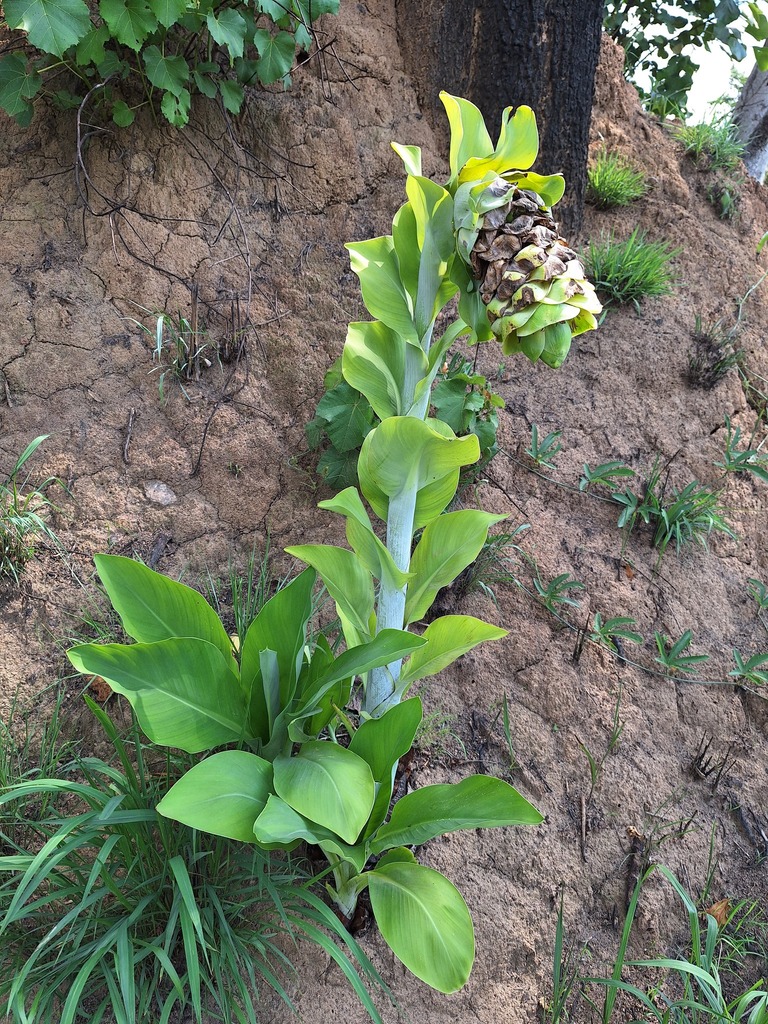
Ensete homblei (Congo Dwarf Banana) (Source: inaturalist)
1. Introduction & Taxonomy
An ideal choice for growers with limited space who refuse to compromise on exotic appeal, Ensete homblei is a member of the family Musaceae (the banana family), belonging to the order Zingiberales.Ensete homblei is notable for growing to just 1.1 m tall, producing edible fruit, exhibiting a deciduous habit during the dry season.
The smallest and the rarest of the Ensete, this enigmatic, deciduous dwarf banana grows to a mere 1.1 m tall, just over 3 ft. It is found exclusively in a small region in southeastern Democratic Republic of Congo and northern Zambia that is wet, hot and humid in the rainy season and experiences and extensive dry season. The corm and swollen, water storing leafbases of Ensete homblei make it possible for this banana to last throught the dry months. When the rains arrive, the plant grows quickly and forms several broad, grayish green leaves and an upright stalk with a nodding inflorescence. The inconspicuous flowers produce a dense cluster of yellowish fruits with sweet, edible flesh, studded with numerous black, shiny seeds. Our introduction is the first time this plant has ever been available for cultivation. Its requirements are likely similar to other tropical Ensete, such as Ensete lecongkietii or Ensete glaucum for instance. Seeds will perform best under hot, humid conditions and with strong light.
Described by Belgian botanist Emile De Wildeman in 1927 from specimens collected in the Katanga region of the Belgian Congo, Ensete homblei remained one of botany's most obscure bananas for nearly a century. At just 1.1 m tall, it is the smallest of all Ensete species — a miniature in a genus of giants. Its extreme rarity, restricted range, and cryptic deciduous habit (the entire above-ground plant vanishes during the dry season) meant that it was virtually unknown in cultivation until VIRIAR's introduction, which represents the first time this species has ever been available to growers.
Taxonomic Classification
Habitat and Distribution
Ensete homblei is native to southeastern Democratic Republic of Congo and northern Zambia. in habitats characterized by tropical to subtropical forest environments.
Botanical Note: The genus Ensete belongs to the order Zingiberales, which also includes gingers (Zingiberaceae), heliconias (Heliconiaceae), and birds of paradise (Strelitziaceae). Despite their tree-like appearance, all bananas are giant herbaceous plants — the largest herbs on Earth. What appears to be a “trunk” is actually a pseudostem formed by tightly packed, overlapping leaf sheaths.
Native Range & Distribution Map
The map below shows the native range (red markers) and notable cultivation regions (green markers) for Ensete homblei.
2. Biology & Physiology
Pseudostem Architecture
Ensete homblei develops a massive, solitary pseudostem formed by tightly overlapping leaf sheaths. The pseudostem grows to impressive proportions, making it one of the most imposing herbaceous plants in cultivation. The leaf sheaths are tightly compressed and may exhibit distinctive coloration depending on the variety.
Leaf Morphology
The leaves of Ensete homblei are large, oblong leaves. New leaves push upward through the center of the pseudostem, unfurling from their protective cigar-leaf stage into broad, photosynthetic blades.
Growth Pattern & Life Cycle
- Mature Height: 0.5-1 m
- Growth Habit: Clustering / Suckering
- Life Cycle: Monocarpic — the entire plant flowers once after variable of vegetative growth, sets seed, and dies. No suckers or offsets are produced, making seed the only means of reproduction.
- Growth Rate: Fast under optimal conditions, with new leaves unfurling at regular intervals throughout the growing season
Anatomical Insight: The true stem of a banana plant remains underground as a corm (rhizome) during the vegetative phase. Only when the plant transitions to its reproductive phase does the true stem elongate, pushing the inflorescence up through the center of the pseudostem. This transition is irreversible and, in monocarpic species like Ensete, signals the beginning of the plant’s terminal phase.
Notable Adaptations
The diminutive stature of Ensete homblei belies sophisticated survival adaptations. The swollen corm and water-storing leaf bases function as a biological reservoir, allowing the plant to endure months of complete drought during the extensive dry season of southeastern Congo and northern Zambia. When the rains arrive, growth is explosive — the plant rapidly produces several broad, grayish-green leaves and an upright flowering stalk within weeks. The inflorescence is nodding, producing a dense cluster of yellowish fruits with sweet, edible flesh studded with numerous shiny black seeds. This entire life cycle — from emergence to fruiting — may compress into the 5–6 month wet season.
3. Reproduction & Propagation
The primary propagation method for Ensete homblei is: Seeds and/or suckers.
Seed Morphology
- Seed Size: variable
- Shape: rounded
- Color: dark brown to black
Seed Pre-Treatment
Scarification
Mechanical scarification recommended.
Soaking
24-48 hours in warm water. This softens the seed coat and promotes imbibition (water uptake), a critical step for initiating the germination process.
Germination Protocol
Substrate
Well-draining seed compost. The substrate must retain moisture while providing excellent drainage — waterlogged conditions rapidly cause seed rot.
Temperature
Optimal: 25-30°C. Bottom heat from a propagation mat significantly improves results. Alternating day/night temperatures can mimic natural conditions and enhance germination.
Expected Timeline
4-12 weeks. Germination in Musaceae is notoriously erratic — seeds from the same batch may germinate weeks or months apart. Do not discard pots prematurely.
Success Rate
Variable. Seed freshness is the single most important factor — always source the freshest seed available. Viability declines significantly with storage time.
Light During Germination
Not critical. After emergence, provide bright indirect light, gradually acclimatizing seedlings to stronger conditions over 2-3 weeks.
Expert Germination Tips: (1) Always use fresh seed — this matters more than any other factor. (2) Scarify mechanically or chemically as appropriate for your species. (3) Maintain constant warmth at 25-30°C with bottom heat. (4) Keep substrate moist but never waterlogged. (5) Be patient — banana germination is erratic by nature. (6) Use a fungicide drench or sterile substrate to prevent damping off during the long germination period.
Species-Specific Propagation Notes
Seeds of Ensete homblei are shiny and black, typical of the genus but notably smaller than those of larger Ensete species. Given the species' novelty in cultivation, germination protocols are not yet scientifically established. Based on its ecology, seeds likely benefit from warm, humid conditions mimicking the onset of the rainy season. Sow at 25–30°C in consistently moist substrate after mechanical scarification. A warm, humid propagation chamber simulating the transition from dry to wet season may trigger germination. Expect the process to be slower and less predictable than for well-established species like E. ventricosum.
4. Cultivation Requirements
Climate Considerations
This tropical species performs optimally in consistently warm, humid conditions typical of its native lowland habitat.
Soil
Rich, fertile, well-draining soil with abundant organic matter is essential. Ensete species are heavy feeders that deplete soil nutrients rapidly during their vigorous growth phase. A slightly acidic to neutral pH (5.5–7.0) is ideal.
Watering
Consistent, abundant moisture is critical during the active growing season. Banana pseudostems are approximately 93% water, and the large leaf surface area results in significant transpiration losses. Water deeply and regularly, aiming for consistently moist (but never waterlogged) soil. Reduce watering significantly during winter dormancy or cool periods when growth slows.
Light Requirements
Full sun to light shade — a minimum of 6–8 hours of direct sunlight daily produces optimal growth. Young seedlings benefit from some protection from intense midday sun. In extremely hot climates (above 35°C), afternoon shade prevents leaf scorch and excessive water loss.
Temperature
- Optimal Growth: 20–30°C (68–86°F)
- Minimum Tolerance: 0°C
- USDA Hardiness: Zones 10-11
Fertilization
Feed heavily during the growing season with a balanced fertilizer (NPK 10-10-10 or 8-10-8). Potassium is particularly important for strong pseudostem development and flowering — supplement with potassium sulphate (K₂SO₄) or banana-specific fertilizer. Apply every 2–4 weeks during active growth, or use slow-release granules. Mulch generously with organic matter to provide steady nutrient release and moisture retention.
Nutrient Deficiency Alert: Yellowing between leaf veins (interveinal chlorosis) indicates magnesium deficiency — common in bananas. Apply Epsom salts (MgSO₄) at 30 g per plant monthly. Distorted or misshapen new leaves may indicate boron deficiency — apply borax at very low rates (1 g per plant per year).
Species-Specific Growing Conditions
The key to growing Ensete homblei successfully lies in understanding its pronounced seasonal rhythm. During the growing season, provide hot, humid conditions with abundant water and strong light — this species must complete its entire growth cycle in a compressed timeframe. As the plant naturally senesces (leaves yellowing and drying), gradually reduce watering to near-zero. During dormancy, keep the corm in warm (18–25°C), dry conditions. Never allow the dormant corm to become cold and wet simultaneously, which causes rot. A well-drained, humus-rich substrate with added coarse sand or perlite is ideal.
Monthly Care Calendar
Use this visual guide for seasonal care timing. Intensity levels indicate how much attention each task requires throughout the year.
5. Diseases & Pests
As one of the rarest bananas in cultivation, the specific disease profile of Ensete homblei is essentially undocumented. Its deciduous habit and dry-season dormancy likely reduce exposure to persistent foliar pathogens. The primary cultivation risk is corm rot during dormancy, caused by excess moisture in combination with cool temperatures. Fungal damping-off may threaten seedlings if substrates are not well-drained.
Major Diseases
Panama Disease (Fusarium Wilt)
Caused by the soil-borne fungus Fusarium oxysporum f. sp. cubense (Foc), this is the most devastating banana disease globally. The pathogen enters through the roots and colonizes the vascular system, causing progressive yellowing and wilting of older leaves, followed by collapse of the pseudostem. Internal cross-sections reveal characteristic brown to reddish-brown discoloration of the vascular bundles. There is no chemical cure — infected soil remains contaminated for decades. The Tropical Race 4 (TR4) strain is currently spreading worldwide and threatens all susceptible cultivars.
Sigatoka Leaf Spot Complex
Black Sigatoka (Mycosphaerella fijiensis) and Yellow Sigatoka (M. musicola) cause progressive leaf necrosis, dramatically reducing photosynthetic capacity and fruit quality. Symptoms begin as small yellowish-green streaks on the lower leaf surface, progressing to dark brown or black lesions with grey centers. Remove and destroy affected leaves promptly to reduce inoculum.
Banana Bunchy Top Virus (BBTV)
Vectored by the banana aphid (Pentalonia nigronervosa), BBTV causes stunted, bunched leaves with characteristic dark green “dot-dash” streaks along the leaf veins and midrib margins. Infected plants never recover and must be destroyed to prevent spread. Control aphid populations proactively.
Common Pests
- Banana Weevil (Cosmopolites sordidus) — Adults are nocturnal; larvae bore extensive tunnels through the corm, severely weakening the plant. Use pseudostem traps for monitoring and mass trapping.
- Nematodes — Root-lesion nematode (Pratylenchus coffeae) and burrowing nematode (Radopholus similis) damage root systems, reducing nutrient and water uptake.
- Spider Mites — Particularly problematic in dry conditions and on indoor plants. Fine webbing on leaf undersides is diagnostic. Increase humidity and apply miticides if severe.
- Thrips & Aphids — Can damage emerging leaves and vector viral diseases. Monitor regularly and treat with insecticidal soap or neem oil.
Integrated Pest Management: (1) Always use disease-free planting material from reputable sources. (2) Practice strict sanitation — sterilize tools between plants. (3) Maintain good drainage to prevent root rot. (4) Remove and destroy infected plant material immediately. (5) Quarantine new acquisitions for 2–4 weeks before introducing to your collection. (6) Encourage biological control agents (predatory mites, parasitic wasps).
Additional Disease & Pest Considerations
Given the irreplaceable value of this species in cultivation, a conservative approach to disease management is essential. Use sterile substrates, maintain strict quarantine from other banana collections, and monitor the dormant corm carefully for signs of softening or fungal growth. If rot is detected, excise affected tissue immediately with a sterilized blade and dust with fungicide powder. Dry the wound thoroughly before returning to storage.
6. Indoor Growing Guide
At just 1.1 m tall, Ensete homblei is one of very few Ensete species genuinely suited to indoor container culture. Its compact size and dramatic deciduous habit make it a conversation piece for the collector's windowsill or conservatory. Use a 10–15 L pot with excellent drainage. Provide strong light and warm temperatures (25–30°C) during the active growing season.
Container Selection
Choose a heavy, stable container with multiple drainage holes. Plastic pots retain moisture better; terracotta provides superior aeration. Ensure the pot is large enough to accommodate the vigorous root system — root-bound bananas grow slowly and may fail to flower.
Indoor Light
Bananas demand intense light. Place near the brightest window available — south-facing (Northern Hemisphere) or north-facing (Southern Hemisphere) is ideal. During winter months when natural light is insufficient, supplement with full-spectrum LED grow lights for a minimum of 12–14 hours total daily light. Rotate the pot quarterly for even growth development.
Humidity & Air Circulation
Maintain humidity above 60% (ideally 70–80%). Indoor environments with central heating or air conditioning are often critically dry (20–30% RH). Use humidifiers, large pebble trays, or regular misting. Grouping tropical plants together creates a beneficial microclimate. Ensure adequate air circulation to prevent fungal issues — avoid stagnant air.
Indoor Care Calendar
- Spring: Resume regular feeding and increase watering as growth accelerates. Repot if root-bound.
- Summer: Peak growth period — water abundantly, feed every 2 weeks, provide maximum light. Move outdoors if possible.
- Autumn: Gradually reduce feeding and watering. Bring outdoor specimens inside before first frost.
- Winter: Minimal growth — water sparingly (keep barely moist), stop fertilizing. Supplement light. Watch for spider mites and scale.
Indoor Success Key: The number one reason indoor bananas fail is insufficient light. A bright conservatory or sunroom is ideal. In standard rooms, invest in quality grow lights — the difference is dramatic. The second most common failure is low humidity, which causes brown leaf margins and invites spider mites.
Species-Specific Indoor Tips
During the dormant phase, the potted corm can be stored in any warm, dry location — even a cupboard, as the plant requires no light during dormancy. Resume watering gradually when new growth appears, signalling the start of the next cycle. The dramatic emergence from apparent death to lush tropical foliage within weeks is one of the most rewarding spectacles in indoor banana growing.
7. Landscape Use & Design
The diminutive scale of Ensete homblei limits its landscape impact compared to its larger relatives, but its extreme rarity and botanical curiosity value make it a prized specimen for collectors' gardens and botanical displays. Best used in raised beds, rock gardens with tropical themes, or container groupings where its compact form and seasonal drama can be observed at close range.
Design Applications
- Statement Specimen: Plant as a standalone centerpiece in beds, lawns, or courtyards for maximum architectural impact
- Tropical Border: Combine with cannas, heliconias, gingers, and elephant ears (Colocasia/Alocasia) for layered jungle texture
- Poolside & Patio: Creates an instant resort atmosphere; the large leaves provide light, dappled shade
- Container Feature: Large decorative pots on terraces allow flexible placement and easy overwintering
- Screening: Not suitable for screening due to solitary habit
Companion Planting
Create stunning tropical compositions by pairing with:
- Tree Ferns (Dicksonia, Cyathea) — structural understory contrast
- Cannas — complementary bold foliage with vibrant flowers
- Elephant Ears (Colocasia, Alocasia) — bold foliage contrast at ground level
- Strelitzia (Bird of Paradise) — exotic flower accents
- Hardy Gingers (Hedychium) — fragrant flowers and lush foliage
- Bamboo (clumping types) — vertical screening and wind protection
Design Principle: Use bananas to create layered depth in planting schemes. Place the tallest specimens at the back or center, medium plants in the middle, and low-growing tropicals at the front. This stratification mimics the natural architecture of tropical forests and maximizes visual impact.
Species-Specific Design Ideas
In tropical climates with distinct wet and dry seasons (mimicking its native habitat), Ensete homblei can be planted in the ground in well-drained, raised beds. In temperate regions, container culture is strongly recommended to allow control of the dormancy cycle. Pair with other geophytes and deciduous tropicals that share a similar seasonal rhythm for a thematic planting.
8. Cold Climate Strategies
As a tropical species from the lowlands of southeastern Congo and northern Zambia, Ensete homblei has essentially no frost tolerance. The corm should never be exposed to temperatures below 10°C. In temperate climates, grow exclusively in containers that can be moved indoors for winter. During dormancy, store the dry corm at 18–25°C in a frost-free location. The deciduous habit makes overwintering straightforward — the corm takes up minimal space when dormant.
Hardiness Thresholds
- USDA Zones: 10-11
- Minimum Survival Temperature: 0°C (rhizome/corm)
- Foliage Damage Begins: 0°C (32°F) for most species
In-Ground Protection (Zones 7b–9)
- After the first frost blackens the foliage, cut the pseudostem to 60–90 cm (2–3 ft)
- Create a wire mesh cage around the remaining stump, 60 cm wider than the plant on all sides
- Fill the cage with dry straw, shredded leaves, or hay
- Cap with a waterproof cover (tarp, inverted pot, or plastic sheet) to prevent moisture saturation
- Remove protection gradually in spring once consistent night temperatures exceed 5°C (41°F)
Overwintering Options
- Heavy Mulch + Wrap: For established in-ground plants in borderline zones. Apply 30–60 cm of mulch over the crown.
- Lift & Store: Dig up the corm, trim all roots and foliage, store in a cool, dark, frost-free location (5–10°C / 41–50°F) with minimal moisture for 4–5 months.
- Container Culture: Move potted plants to a bright, cool indoor location (10–15°C). Reduce watering to near-minimum.
- Greenhouse: Unheated or minimally heated polytunnel/glasshouse provides ideal winter protection.
Winter Survival Rule: Cold + wet = death. The greatest winter threat to bananas is not temperature alone, but the combination of cold and waterlogged conditions. Ensure excellent drainage around the root zone and keep the crown as dry as possible. A frozen, wet corm has virtually no chance of survival. A dry, moderately frozen corm may recover.
Additional Winter Protection
Unlike the hardier Ensete species from East African highlands, E. homblei has no evolutionary exposure to cold. Do not attempt in-ground overwintering even in USDA zone 10. The dormant corm is small enough to store in a cardboard box with dry peat in any warm room. Resume growing in spring when ambient temperatures consistently exceed 20°C.
9. Ethnobotany & Cultural Significance
The ethnobotanical record for Ensete homblei is sparse, reflecting its extremely restricted range and the limited documentation of traditional plant use in the remote miombo woodlands of southeastern Congo and northern Zambia where it occurs. The sweet, edible flesh of the yellowish fruits suggests that it may have served as an opportunistic food source for indigenous communities during the wet season, when the plant is above ground and fruiting. The starchy corm, analogous to the far more extensively used corms of Ensete ventricosum in Ethiopia, may also have been consumed during times of scarcity. However, no documented ethnographic accounts specifically referencing E. homblei appear to exist. Its extreme rarity in the wild — restricted to a small region straddling the DR Congo–Zambia border — raises conservation concerns, as habitat degradation from charcoal production, mining, and agricultural expansion threatens the miombo woodland ecosystems that support it. VIRIAR's introduction of this species into cultivation represents a significant contribution to ex-situ conservation, preserving genetic material that might otherwise be lost.
Conservation Note: Wild populations of many banana species face increasing pressure from habitat destruction, climate change, and the spread of diseases like Fusarium TR4. Cultivating diverse banana species in botanical gardens and private collections plays a meaningful role in ex-situ conservation. By growing Ensete homblei from seed, you contribute to maintaining the genetic diversity of this notable plant family for future generations.
Frequently Asked Questions
How small is Ensete homblei really?
At a maximum height of just 1.1 m (about 3.5 ft), Ensete homblei is the smallest of all Ensete species. For context, its close relative Ensete ventricosum can reach 12 m — more than ten times taller. This makes E. homblei uniquely suitable for container culture among the Ensete.
Is Ensete homblei deciduous?
Yes, completely. During the dry season in its native habitat, the entire above-ground plant dies back to the underground corm and swollen leaf bases, which serve as water and nutrient storage organs. When the rains return, it rapidly re-emerges. In cultivation, this seasonal dormancy must be respected.
Are the fruits edible?
Yes. The yellowish fruits contain sweet, edible flesh, although they are also densely packed with numerous shiny black seeds. In its native range, the fruits may have been consumed opportunistically, though no formal ethnographic documentation exists for this extremely rare species.
How do you grow Ensete homblei?
Mimic its natural seasonal cycle: hot, humid, well-watered conditions during the growing season with strong light and heavy feeding, followed by warm, dry dormancy when the plant naturally senesces. Use well-drained substrate. Never allow the dormant corm to become cold and wet. Container culture is recommended outside the tropics.
Is this the first time Ensete homblei has been cultivated?
Yes. VIRIAR's introduction represents the first time this species has ever been available for cultivation. Previously, it was known only from a handful of herbarium specimens and field observations in southeastern DR Congo and northern Zambia.
Can Ensete homblei survive cold weather?
No. This is a tropical species with zero frost tolerance. The corm should never be exposed to temperatures below 10°C. In temperate climates, grow in containers and store the dormant corm indoors over winter at 18–25°C in dry conditions.
How fast does Ensete homblei grow?
Remarkably fast during its compressed growing season. The plant must emerge from dormancy, produce foliage, flower, and fruit all within the 5–6 month wet season. In cultivation with consistent warmth and moisture, expect rapid above-ground development once growth resumes.
Why is Ensete homblei so rare?
Its extremely restricted natural range (a small region in southeastern Congo and northern Zambia), cryptic deciduous habit that makes field observation difficult, and the remoteness of its habitat all contribute to its rarity. Very few botanists have ever encountered it in the wild.
Summary & Key Takeaways
Ensete homblei is the smallest and rarest of all Ensete species, a botanical enigma from southeastern Congo and northern Zambia that grows to a mere 1.1 m tall. Its deciduous habit, compressed growth cycle, and extreme geographic restriction make it one of the most unusual bananas in existence. Never before available in cultivation until VIRIAR's introduction, this species offers collectors a genuine botanical first. Grow in containers with strict seasonal management: hot, humid, and well-watered during active growth; warm and dry during dormancy. The sweet, edible fruits and dramatic emergence from dormancy each season make it a rewarding, if demanding, species for the dedicated grower.
Key Points to Remember:
- Propagation: Seeds and/or suckers
- Germination: Scarify seeds, maintain 25–30°C, be patient (weeks to months)
- Growing: Full sun, rich moist soil, heavy feeding, high humidity
- Hardiness: USDA Zones 10-11, minimum 0°C
- Key Threat: Cold + wet conditions; ensure winter drainage above all else