Starina
Starina


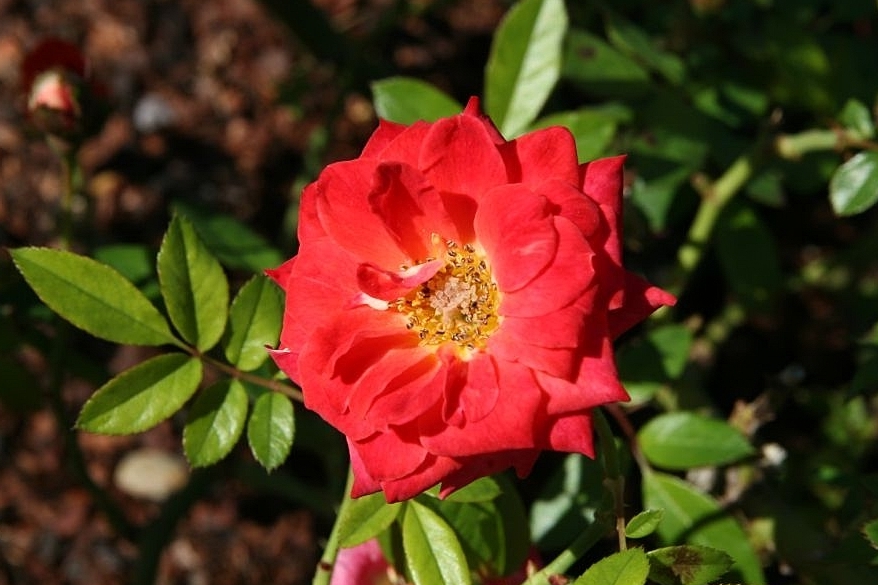
Table of Contents
Introduction & History
Starina is the miniature rose that proved tiny roses could rival the largest hybrid teas in sheer perfection of form. Bred by Meilland in France and introduced in 1965, this dazzling orange-red miniature was one of the earliest to gain international recognition as a serious exhibition flower. Its petite buds unfurl with textbook high-centered form into vivid, glowing blooms that seem lit from within. Starina set the standard for miniature rose excellence throughout the late twentieth century, winning countless awards on both sides of the Atlantic. Its enduring popularity nearly sixty years after introduction speaks to the timeless appeal of a perfectly bred miniature rose.
Breeding History
Starina was created by the House of Meilland in France and introduced in 1965. It was bred by Marie-Louise (Louisette) Meilland and registered under the cultivar name 'MEIgabi.' The parentage involves a cross of ('Dany Robin' x 'Fire King') x 'Perla de Montserrat,' combining vibrant color with refined miniature form. Starina was among the first miniature roses to receive the prestigious ADR (Allgemeine Deutsche Rosenneuheitenprufung) award in Germany. It also earned the ARS Award of Excellence and numerous gold medals at international rose trials, establishing Meilland as a serious player in miniature rose breeding.
Flower Form & Fragrance
Starina produces remarkably well-formed buds that open into 3-4 cm (1.25-1.5 inch) blooms with 35-40 petals. The color is a vivid orange-red to vermilion that holds well without bluing. The form is a near-perfect miniature hybrid tea shape, making it exceptional for exhibition. Blooms appear singly and in small clusters of 2-3, repeating reliably. The color is most intense in cooler weather and may take on slightly more orange tones in heat. Fragrance is mild but present, with subtle sweet notes. Each bloom maintains its form for 5-7 days.
Garden Design & Uses
Starina creates fiery focal points in miniature rose gardens, rock gardens, and at the front of mixed borders. Its vivid orange-red color provides warm accent notes when planted among cooler-toned perennials. Pair with silver-foliaged plants like lamb's ear, artemisia, or dusty miller to intensify the color effect. Groups of three or five produce maximum visual impact. Excellent in terracotta containers on sunny patios, in window boxes, and alongside walkways where the perfectly formed blooms can be appreciated at close range.
Growth Habit & Hardiness
Starina grows 25-40 cm (10-16 inches) tall with a compact, bushy spread of 25-35 cm (10-14 inches). The plant is compact even among miniatures, forming a dense, rounded mound. Foliage is glossy, dark green, and attractively proportioned to the small blooms. Thorns are small and moderately present. Vigor is moderate but consistent, with steady production of flowering shoots throughout the season. The compact growth habit makes it one of the neatest miniature roses for formal plantings and containers.
Climate & Hardiness
Hardy in USDA zones 6-10. Starina performs best in temperate to warm climates with good sun exposure. In zones 6-7, winter protection is advisable with mulching. The orange-red color is most vivid in regions with moderate temperatures (18-28C). Extreme heat above 35C may cause blooms to open too quickly. Cold tolerance is moderate; hard freezes below -15C can damage unprotected plants. Rain tolerance is moderate. Starina handles dry heat better than prolonged wet conditions.
Seasonal Care Calendar
🌱 Spring (Mar–May)
Water: Regular
Feeding: Regular feeding
Spray: Preventive spray
Prune to 8-12 cm. Start feeding as new growth emerges. Begin preventive fungicide if history of disease.
☀️ Summer (Jun–Aug)
Water: Very Heavy
Feeding: Heavy feeding
Spray: Intensive spray program
Deadhead regularly. Water consistently. Monitor for spider mites. Feed biweekly with balanced fertilizer.
🍂 Autumn (Sep–Nov)
Water: Regular
Feeding: Light feeding
Spray: Preventive spray
Reduce feeding from September. Enjoy autumn bloom flush. Clean up debris. Begin winter preparation in late autumn.
❄️ Winter (Dec–Feb)
Water: Light
Feeding: No feeding
Spray: No spraying
Apply winter mulch in cold zones. Protect containers from hard freezes. Do not prune until late winter.
Planting & Container Growing
Plant in well-drained, fertile soil with pH 6.0-6.5. Space 25-30 cm (10-12 inches) apart. Prepare planting holes with compost and a balanced slow-release fertilizer. Set the bud union at or slightly below soil level. Starina demands excellent drainage; raised beds or amended clay soils work well. Full sun for at least 6 hours daily is essential for the brightest color and best form. A thin layer of organic mulch conserves moisture and moderates soil temperature.
Container Growing
Starina is ideal for containers. Use a 20-25 cm (8-10 inch) pot with drainage holes. Fill with a well-draining mix of 60% potting soil, 20% perlite, and 20% compost. Water when the top 2 cm of soil is dry. Feed biweekly with half-strength liquid rose fertilizer. The compact size makes it perfect for windowsills, balconies, and tabletop displays. Feasibility rating: Excellent (10/10). Starina is one of the best miniature roses for container culture due to its compact, self-contained habit.
Seasonal Care & Pruning
Spring: Prune to 8-12 cm in late winter. Remove dead canes and open the center. Begin feeding as growth starts. Start preventive fungicide if needed. Summer: Deadhead every 5-7 days. Water at soil level in the morning. Apply miticide if spider mites appear. Continue regular feeding. Autumn: Reduce watering and feeding. Enjoy strong autumn bloom. Remove fallen leaves. Apply winter mulch in late autumn. Winter: Protect with 10-15 cm of mulch in cold zones. Move containers indoors to a cool, bright location.
Common Mistakes to Avoid
1) Insufficient sunlight: The vivid orange-red color fades significantly in shade; full sun is non-negotiable. 2) Overwatering: Starina's compact root system is susceptible to root rot in saturated soil. 3) Neglecting spider mite prevention: Weekly inspection and periodic hosing of foliage are essential. 4) Using oversized pots: Pots too large for miniatures stay wet too long; match pot size to plant size. 5) Failure to deadhead: Regular removal of spent blooms is critical for continuous flowering.
Propagation
Starina propagates well from softwood cuttings taken in late spring to early summer. Take 6-8 cm cuttings with 3 leaf nodes, remove lower leaves, dip in rooting hormone, and insert into moist perlite/peat. Maintain humidity under a plastic cover. Rooting takes 3-5 weeks. Own-root plants perform excellently. Commercial propagation is primarily by cuttings and tissue culture. Grafting is unnecessary. Seed propagation is not viable for maintaining the cultivar's characteristics. Difficulty rating: Easy (2/10).
Diseases & Pests
Starina has generally good disease resistance for a miniature rose. Black spot resistance is moderate to good. Powdery mildew can occur but is not a major problem with adequate air circulation. The glossy foliage has some natural resistance to fungal infection. Spider mites are the primary pest concern. Aphids may colonize new shoots in spring. Thrips can sometimes enter partially open buds. In humid climates, botrytis may affect spent blooms if not deadheaded promptly. Overall, Starina is considered a relatively trouble-free miniature with good inherent vigor.
Cut Flowers & Exhibition
Cut Starina when the bud is just beginning to show color but is still fairly tight for longest vase life. The buds will continue to open beautifully in the vase. Cut in early morning, place in cool water with floral preservative immediately. The vivid orange-red color makes a striking accent in miniature arrangements. Vase life is 5-7 days, among the longer-lasting miniatures. The perfectly formed individual blooms are especially attractive in bud vases.
Collector & Exhibition Notes
Starina is a must-have for serious miniature rose exhibitors. Its near-perfect hybrid tea form makes it a consistent winner at shows. For exhibition, select stems with tight buds showing color and time the opening for show day. Protect from rain and sun to preserve form. Disbud clusters to single blooms for exhibition entries. Despite being introduced in 1965, it remains competitive against modern cultivars, evidence of its exceptional breeding. Historical significance as one of the first internationally awarded miniatures adds collector value.
Comparison with Similar Roses
Compared to 'Rise 'n' Shine' (Moore, 1977), Starina offers a completely different color palette but matches it in exhibition form quality. 'Beauty Secret' (Moore, 1965) is another red miniature from the same era but lacks Starina's orange overtones and refined petal arrangement. 'Red Cascade' provides red color in a trailing habit but cannot match Starina's form. For sheer perfection of miniature hybrid tea form in a warm color, Starina remains hard to beat.
Heritage & Conservation
Starina is an important part of the Meilland family's rose breeding legacy, which spans over a century and includes iconic varieties across all rose classes. The variety is preserved in Meilland's heritage collection and in rose gardens worldwide. Its genetic influence on subsequent miniature rose breeding, particularly in Europe, is significant. As a commercially viable variety for nearly sixty years, it represents one of the longest production runs in miniature rose history.
Cultural Significance
Starina represents a milestone in the history of miniature rose breeding, being among the first European-bred miniatures to achieve worldwide acclaim. It demonstrated that the House of Meilland's expertise with hybrid teas could translate perfectly to the miniature scale. The name suggests a little star, fitting for a rose that has shone brightly in gardens and exhibitions for decades. Orange-red roses symbolize enthusiasm, desire, and excitement. Starina's enduring success helped establish miniature roses as a global phenomenon.
Frequently Asked Questions
Is Starina still competitive on the show bench?
Absolutely. Despite being introduced in 1965, Starina continues to win at local, regional, and national rose shows. Its form is so consistently perfect that many newer cultivars still fail to surpass it. Judges appreciate its classic high-centered exhibition form.
Does the orange-red color fade?
The color is remarkably stable compared to many red roses, which tend to blue with age. Starina maintains its vivid orange-red tone throughout the bloom cycle, with only slight softening as petals mature. It does not take on undesirable purple or blue tones.
Why is my Starina not blooming much?
Insufficient sunlight is the most common cause. Starina needs at least 6 hours of direct sun. Other factors include over-fertilizing with nitrogen (promotes leaves over flowers), failure to deadhead, and potassium deficiency. Ensure balanced nutrition.
How does Starina handle humidity?
It handles moderate humidity well thanks to its glossy foliage. In very high humidity, ensure excellent air circulation by spacing plants adequately and avoiding overcrowded planting. Morning sun helps dry dew quickly, reducing disease risk.
Can Starina be grown as a houseplant?
It can survive indoors temporarily in a very bright, sunny window (south-facing minimum). However, long-term indoor culture usually leads to spider mite problems and reduced flowering. It is best grown outdoors or moved outdoors for the growing season.
Explore Our Other Encyclopedias
15,000+ expert articles on tropical & exotic plants
Starina is a legendary orange-red miniature rose from Meilland, introduced in 1965, renowned for its near-perfect exhibition form and vivid, non-fading color. This compact 25-40 cm plant thrives in containers and sunny borders, remaining one of the most awarded and enduringly popular miniature roses worldwide.
Quick Reference: Starina
Key Principles: Full sun (6+ hours), good air circulation, deep watering at the base, and regular feeding during the growing season.