Ptychosperma propinquum: A comprehensive Growing Guide for Enthusiasts & Collectors.
Ptychosperma propinquum
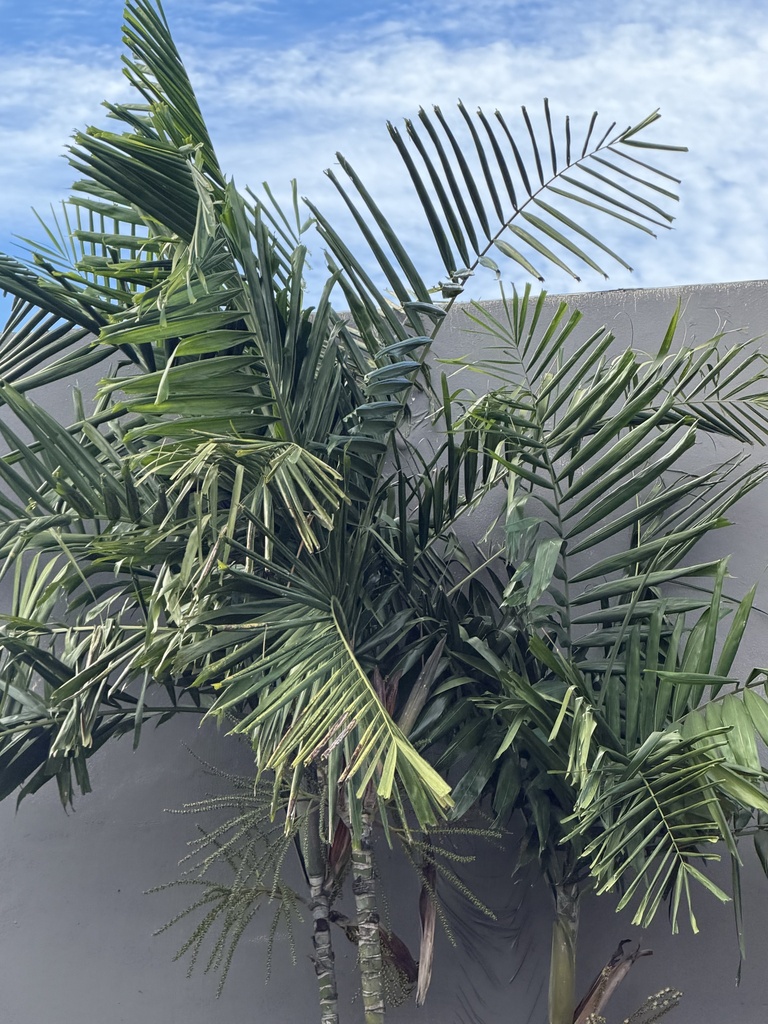
Image via iNaturalist (Research Grade). no rights reserved


1. Introduction
Habitat and Distribution
Ptychosperma propinquum is endemic to the Aru Islands of Indonesia and southern Papua New Guinea, with populations extending into the Trans-Fly region. This palm inhabits coastal and lowland forests from sea level to 300 meters elevation, showing strong preference for sandy or limestone-derived soils. It thrives in areas with distinct wet and dry seasons, unusual for Ptychosperma species. Often found in beach forest transitions, monsoon forests, and savanna margins. The species frequently colonizes disturbed areas and secondary growth, demonstrating pioneer characteristics.
Native Continent
📍 Native Distribution:
- Aru Islands: Primary habitat (Indonesia)
- Trans-Fly Region: Southern Papua New Guinea
- Habitat: Coastal and lowland forests
- Elevation: Sea level to 300m
- Ecology: Pioneer species in disturbed areas
Native range: Aru Islands (Indonesia) and Trans-Fly region (Papua New Guinea)
Click on markers for details
Scientific Classification
Synonyms
- Actinophloeus propinquus (Becc.) Becc.
- Ptychosperma gracile var. propinquum (regional variant)
- Seaforthia propinqua (obsolete combination)
Common Names
- English: Aru Palm, Beach Ptychosperma, Coastal Feather Palm
- Indonesian: Palem Aru
- Australian: Trans-Fly Palm
- Regional: Savanna Palm, Island Ptychosperma
Global Expansion
Ptychosperma propinquum entered cultivation relatively recently, first collected for cultivation in the 1960s. Initial establishment in Java and Australian botanical gardens in the 1970s. Reached international cultivation in the 1980s. Current distribution:
- Northern Australia: Well-established
- Indonesia: Common in cultivation
- Thailand: Increasing popularity
- Florida: Rare but successful
- Hawaii: Limited cultivation
- India: Experimental
- Southern China: Trials
Gaining recognition for drought tolerance unusual in genus.
2. Biology and Physiology
Morphology
Trunk/Stem
Usually solitary, occasionally clustering with 2-4 stems. Reaches 10-15 meters tall, 10-14 cm diameter. Trunk gray to brown, often with persistent leaf base fibers on younger portions. Ring scars moderately spaced (4-6 cm). Base sometimes enlarged, especially in sandy soils. Crownshaft well-developed, 80-110 cm long, green to bronze-green, often with reddish or purple tinge, covered with deciduous brown scales.
Leaves
Pinnate leaves 2-2.8 meters long, forming semi-compact crown of 6-10 leaves. Contains 35-45 pairs of leaflets, irregularly arranged and held at different angles, creating a plumose appearance. Leaflets 40-55 cm long, 3.5-5 cm wide, slightly curved, leathery texture, dark green above, paler beneath with brown scales along midrib. Petiole 20-30 cm, robust, channeled above. New leaves emerge bronze to reddish.
Flower Systems
Inflorescences infrafoliar, 50-70 cm long, branching to three orders with 30-45 spreading rachillae. Robust peduncle 15-20 cm. Flowers in triads throughout most of rachillae length. Male flowers cream to yellowish, 7-9 mm with 12-18 stamens. Female flowers 4-5 mm, greenish. Flowering occurs in distinct seasons, primarily at dry season onset.
Life Cycle
Germination in 6-12 weeks depending on temperature. Seedling establishment rapid compared to other Ptychosperma. Juvenile phase 4-5 years. Trunk development begins year 3. First flowering at 6-8 years in cultivation. Peak productivity years 8-25. Lifespan 50-70 years. Shows distinct growth spurts during wet season.
Climate Adaptations
Unique among Ptychosperma for drought adaptation. Develops deep taproot system. Leaves have thicker cuticle and sunken stomata. Can undergo partial dormancy during extreme dry periods. Tolerates salt spray and sandy soils. Wind resistance excellent due to flexible trunk and tough leaves. Recovers rapidly from storm damage. Unusual ability to tolerate full sun from young age.
3. Reproduction and Propagation
Seed Reproduction
Seed Morphology and Diversity
Seeds ovoid to ellipsoid, 14-16 mm long, 9-11 mm diameter. Seed coat moderately thick, fibrous, tan to brown. Endosperm homogeneous, hard, white. Embryo lateral, 2.5-3 mm. Fresh weight 1.0-1.4 grams. Shows considerable variation in seed size between populations. Coastal populations produce slightly larger seeds.
Detailed Seed Collection and Viability Testing
Fruits ripen from green to orange or red-orange over 4-5 months. Can remain viable on tree for several weeks after ripening. Seeds maintain viability for 8-10 weeks if stored properly. Fresh seeds show 80-85% viability, declining gradually.
Pre-germination Treatments
- Fruit removal important but not critical immediately
- Scarification improves speed
- Dry heat treatment (40°C for 24 hours) beneficial
- Salt water soak (24 hours) improves germination
- Smoke treatment shows positive results
Step-by-step Germination Techniques
- Clean seeds of fruit pulp
- Soak in seawater or salt solution 24 hours
- Rinse and soak in fresh water 24 hours
- Scarify lightly
- Prepare well-draining medium
- Plant seeds 1.5 cm deep
- Maintain 25-35°C (tolerates heat)
- Keep moderately moist, not wet
- Provide bright light or 50% shade
- Germination begins in 6 weeks
Germination Difficulty: Easy
One of the easier Ptychosperma to germinate.
Germination Time
6-8 weeks initial, 50% by 10 weeks, complete by 14 weeks.
Seedling Care and Early Development
- Drought tolerant even as seedlings
- Fast growth in warm conditions
- Can tolerate more sun than other species
- Begin fertilization early
- Transplant at 15 cm without difficulty
- Establish quickly
Advanced Germination Techniques
Hormonal Treatments:
- Generally unnecessary due to good germination
- Smoke water improves rate by 15%
- GA3 marginally beneficial
- Heat stratification most effective
4. Cultivation Requirements
Light Requirements
Species-specific Light Tolerance Ranges
Remarkably sun-tolerant, thriving in 50-100% sunlight. Young plants tolerate full sun after initial establishment. Optimal at 70-90% full sun (35,000-45,000 lux). Also grows in shade but best color and form in bright light.
Seasonal Light Variations and Management
Tolerates seasonal variations well. No adjustment needed. Maintains appearance year-round.
Artificial Lighting for Indoor Cultivation
Requires bright light, 12,000-15,000 lux minimum. Higher light than most Ptychosperma.
Temperature and Humidity Management
Optimal Temperature Ranges
- Ideal range: 22-35°C (72-95°F)
- Heat tolerant to: 42°C (108°F)
- Minimum: 8°C (46°F)
- Growth continues above: 15°C
Cold Tolerance Thresholds
- Survives 5°C (41°F) briefly
- Light frost causes leaf damage only
- Recovery rapid
Humidity Requirements
- Adaptable to 40-80% humidity
- Optimal 50-70%
- Tolerates dry air better than all other Ptychosperma
Soil and Nutrition
Ideal Soil Composition and pH
Ideal Mix for Aru Palm
- pH 6.5-8.0 (tolerates alkaline)
- Adapts to various soils
- Sandy soils acceptable
- Good drainage important
- Tolerates poor soils
Nutrient Requirements Through Growth Stages
- Moderate feeder
- Seedlings: 15-5-10 monthly
- Juveniles: 15-5-15 bi-monthly
- Mature: 8-4-12 quarterly
- Responds well to organic matter
Micronutrient Deficiencies and Corrections
- Generally problem-free
- Occasional manganese deficiency in alkaline soils
- Iron supplementation beneficial
Water Management
Irrigation Frequency
Moderate water needs. Water when topsoil dries. Established plants drought tolerant. Deep, infrequent watering preferred.
Drought Tolerance
Good for a Ptychosperma. Survives several weeks without water when established.
Water Quality
Tolerates poor quality water. Salt tolerance moderate.
Drainage Requirements
Good drainage important. Tolerates brief flooding.
5. Diseases and Pests
Common Problems in Growing
Generally trouble-free. Occasional nutrient deficiencies. Scale insects rare. Over-watering more problematic than drought.
Identification of Diseases and Pests
Diseases:
- Root rot if overwatered
- Leaf spots rare
- Generally disease-resistant
Pests:
- Palm weevil in some regions
- Scale insects occasional
- Generally pest-free
Environmental and Chemical Protection Methods
Environmental Controls:
- Avoid overwatering
- Ensure drainage
- Minimal intervention needed
Chemical Controls:
- Rarely necessary
- Preventive treatments optional
- Organic approaches usually sufficient
6. Indoor Palm Growing
Specific Care in Housing Conditions
Good indoor palm if bright light provided. Tolerates lower humidity than other Ptychosperma. Needs bright location or supplemental light. Water moderately. Standard potting mix acceptable. Easier than most Ptychosperma indoors.
Replanting and Wintering
Replanting:
Tolerates root disturbance well. Spring or summer best. Standard procedures apply.
Wintering:
- Reduce watering
- Maintain above 10°C
- Tolerates dry indoor air
- Provide maximum light
7. Landscape and Outdoor Cultivation
Excellent for coastal gardens. Tolerates beach conditions. Good for xerophytic landscapes. Works in mixed plantings. Fast-growing for quick effect. Wind-resistant for exposed sites. Suitable for median strips. Low maintenance once established.
8. Cold Climate Cultivation Strategies
Cold Hardiness Assessment
USDA Zones 9b-11. One of the hardier Ptychosperma. Survives in protected 9a locations.
Winter Protection Systems
- Mulch heavily in marginal zones
- Wrap trunk if freeze expected
- Recovers from minor cold damage
- Container cultivation for colder areas
Establishment and Maintenance in Landscapes
Planting Techniques:
- Full sun to partial shade acceptable
- Any well-draining soil
- Dig hole twice root ball width
- No special soil preparation needed
- Water thoroughly after planting
- Mulch beneficial but not critical
- Stake only if necessary
Long-term Maintenance:
- Minimal maintenance required
- Deep watering during drought
- Fertilize 2-4 times yearly
- Remove old fronds as needed
- Monitor for pests (rare)
- Generally trouble-free
Final Summary
Ptychosperma propinquum emerges as one of the most adaptable and cultivation-friendly species in the genus, distinguished by its unusual drought tolerance and sun tolerance. Native to the seasonally dry regions of the Aru Islands and southern New Guinea, it has evolved characteristics atypical for Ptychosperma, including deep rooting, thick-textured leaves, and dormancy capabilities. These adaptations make it valuable for landscapes where other Ptychosperma species fail, particularly in coastal, sandy, or seasonally dry locations.
The species' tolerance for varied conditions, from full sun to partial shade, from moist to dry soils, and from humid to arid air, combined with its moderate cold tolerance, positions it as an excellent choice for beginning palm enthusiasts and for regions with challenging climates. Its relatively fast growth, easy propagation, and freedom from major pests and diseases further enhance its cultivation appeal. As awareness of its adaptability grows, P. propinquum is likely to become more widely cultivated, especially in areas previously considered unsuitable for Ptychosperma cultivation.
- Exceptional drought tolerance for genus
- Tolerates full sun from young age
- Sandy and alkaline soils acceptable
- Fast germination and establishment
- USDA Zones 9b-11
- Coastal specialist
- Minimal maintenance required
- Generally pest and disease free
- Pioneer species characteristics