Pinanga batanensis: A comprehensive Growing Guide for Enthusiasts & Collectors.
Pinanga batanensis
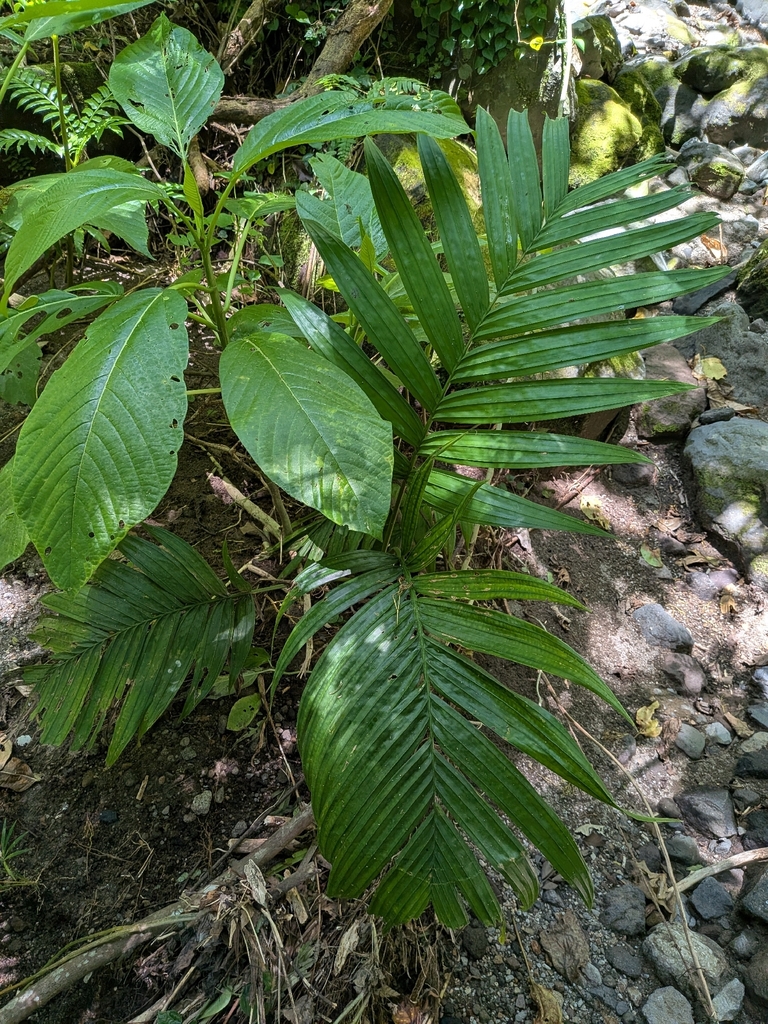
Image via iNaturalist (Research Grade). (c) galanhsnu, some rights reserved (CC BY-NC)


1. Introduction
Habitat and Distribution, Native Continent
Pinanga batanensis is endemic to the Batanes Islands, the northernmost province of the Philippines, specifically found on the islands of Batan, Sabtang, and Itbayat. This rare palm inhabits wind-swept coastal forests and ravines from near sea level to 500 meters elevation, with most populations concentrated between 50-300 meters. The species has adapted to one of the most challenging environments for palms—an area subjected to frequent typhoons, strong salt-laden winds, and dramatic seasonal weather changes. It grows in pockets of vegetation protected by volcanic rock formations, in deep ravines, and on slopes where some shelter from the constant wind is available. The climate is characterized by 2,000-2,800mm annual rainfall with a distinct wet season from May to October, regular typhoons, and cooler temperatures than typical for tropical palms due to the northern latitude and oceanic influence.
📍 Endemic Distribution:
- Batanes Islands: Only natural habitat
- Islands: Batan, Sabtang, Itbayat
- Habitat: Coastal forests and ravines
- Elevation: Sea level to 500m
- Discovery: Described by Beccari 1909
Native range: Batanes Islands, Northern Philippines
Click on markers for details
Taxonomic Classification and Scientific Classification
Synonyms
- Pinanga philippinensis var. batanensis (Becc.) Becc.
- Sometimes confused with P. maculata in older literature
- Listed as P. insignis var. batanensis in some references
Common Names
- English: Batanes pinanga, Batanes palm
- Ivatan (local): Vuyu, Payvuchan
- Trade name: Island pinanga
- Chinese: 巴丹山槟榔
Expansion in the World
P. batanensis is virtually unknown in cultivation:
- No documented botanical garden specimens outside Philippines
- Rare even in Philippine collections
- Not commercially available
- No international seed distribution
- A few plants in private Batanes collections
- Conservation status uncertain
- IUCN Red List status: Not evaluated but likely Endangered
The absence from cultivation reflects its remote island habitat, collection difficulties, and lack of awareness about this species.
2. Biology and Physiology
Morphology
Trunk
P. batanensis develops solitary or occasionally few-stemmed trunks, reaching 4-8 meters in height with a diameter of 5-10cm. The trunk shows remarkable flexibility, often growing at angles or curves in response to wind pressure. The internodes are compressed (5-8cm), giving a stocky appearance compared to other Pinanga species. Bark is gray-green when young, aging to brown-gray with prominent, closely spaced ring scars. The base may be slightly swollen and well-anchored to resist typhoon winds.
Leaves
The crown is compact and wind-resistant, consisting of 8-14 pinnate leaves forming a dense, rounded canopy. Leaves are shorter and more robust than most Pinanga species, measuring 1.2-2 meters long including the thick, strong petiole (25-40cm). Leaflets number 15-25 per side, regularly arranged, each 20-35cm long and 3-5cm wide, notably thick and leathery. The key adaptation is the reduced leaf size and increased thickness to withstand constant wind. Leaves are deep green above with a waxy coating, paler below, with prominent veins.
Flower Systems
Monoecious with infrafoliar inflorescences that are notably short and compact. The inflorescence is simple or with 2-3 short branches, 15-25cm long, held close to the trunk to avoid wind damage. The peduncle is thick and strong. Flowers are arranged in compact spirals, more densely packed than typical Pinanga species. Male flowers are 3-4mm, cream to pale yellow with 6 stamens. Female flowers are small, greenish. Flowering is concentrated in the calmer months between typhoon seasons.
Life Cycle
P. batanensis has adapted its life cycle to typhoon-prone conditions:
- Germination to Seedling (0-3 years): Slow, sturdy growth
- Juvenile Phase (3-8 years): Deep anchoring roots develop
- Sub-adult Phase (8-15 years): Wind resistance develops
- Adult Phase (15-50 years): Regular reproduction between storms
- Senescent Phase (50-70 years): Gradual decline
First flowering at 10-15 years when sufficient size for wind resistance is achieved.
Specific Adaptations to Climate Conditions
- Typhoon Resistance: Flexible trunk, compact crown
- Salt Tolerance: Waxy leaf coating
- Wind Adaptation: Reduced leaf size, thick leaflets
- Strong Anchorage: Deep, extensive root system
- Quick Recovery: Rapid new leaf production after storms
- Seasonal Flowering: Timed to avoid typhoon season
3. Reproduction and Propagation
Seed Reproduction
Seed morphology and diversity
P. batanensis produces ovoid to ellipsoid fruits adapted for local dispersal, measuring 1.5-2.2cm long and 1-1.5cm diameter. Immature fruits are green, ripening to bright orange or red-orange. The epicarp is notably thicker than other Pinanga species; mesocarp is fibrous and limited; endocarp is thick and protective. Seeds are ovoid, 12-16mm long, with shallowly ruminate endosperm. Fresh seed weight is 1-2 grams. Limited genetic diversity expected due to island isolation.
Detailed seed collection and viability testing
Collection Challenges:
- Remote island location
- Typhoon season dangers
- Limited fruiting after storms
- No established collection protocols
Viability Expectations (theoretical):
- Fresh viability: 85-95%
- Rapid viability loss likely
- Salt exposure may affect storage
- Cool, moist storage needed
Pre-germination treatments
Based on related species:
- Cleaning: Remove all fruit material
- Scarification: May be beneficial due to thick endocarp
- Soaking: 24-48 hours warm water
- Fungicide: Important in humid conditions
Step-by-step germination techniques
Theoretical protocol:
- Medium: Well-draining but moisture-retentive
- Temperature: 24-28°C estimated
- Humidity: 75-85%
- Light: Moderate shade
- Special considerations: Wind protection essential
Germination difficulty
Unknown but presumed moderate to difficult due to:
- No cultivation experience
- Thick seed coat adaptation
- Specific temperature needs likely
- Fungal issues in humid climate
Germination Time
Estimated 60-150 days based on related species
Seedling care and early development stages
All theoretical:
- Wind protection critical
- Moderate shade needed
- Salt spray protection
- Slow initial growth expected
Advanced Germination Techniques
No data available but GA3 and mechanical scarification likely beneficial.
4. Cultivation Requirements
IMPORTANT: All cultivation information is theoretical as this species is NOT currently in cultivation. These recommendations are based on habitat conditions and related species.
Light Requirements
Species-specific light tolerance ranges
Estimated based on habitat:
- Seedlings: 300-600 μmol/m²/s (heavy shade initially)
- Juveniles: 600-1200 μmol/m²/s (moderate shade)
- Adults: 1200-1800 μmol/m²/s (can tolerate more exposure)
Wind protection more critical than shade levels.
Seasonal light variations and management
- Can handle seasonal changes
- Protection from intense summer sun
- Wind protection always priority
- Natural coastal light patterns ideal
Artificial lighting for indoor cultivation
- Moderate to bright light likely needed
- Standard grow lights should suffice
- 12-hour photoperiod
- Avoid excessive heat
Temperature and Humidity Management
Optimal temperature ranges
- Ideal: 20-28°C (68-82°F) estimated
- Acceptable: 15-32°C (59-90°F)
- Minimum: 12°C (54°F)?
- Maximum: 35°C (95°F)?
- Cooler tolerance likely due to latitude
Cold tolerance thresholds
Better than most Philippine palms:
- Damage possible: 12°C (54°F)
- Severe damage: 8°C (46°F)
- Fatal: 5°C (41°F) estimated
Hardiness Zone Maps
- USDA Zones: 10a-11 (theoretical)
- Possibly 9b with protection
- Wind more limiting than cold
Humidity requirements and modification techniques
- Optimal: 60-80%
- Tolerates lower humidity with ocean influence
- Salt spray tolerance important
- Good air circulation critical
Soil and Nutrition
Ideal soil composition and pH values
pH preference: 6.0-7.5 (slightly acidic to neutral)
Island soil adaptation:
- Volcanic soil components
- Good drainage essential
- Salt tolerance needed
- Organic matter beneficial
- Wind erosion resistance
Nutrient requirements through growth stages
All theoretical:
- Seedlings: Light feeding
- Juveniles: Regular but dilute
- Adults: Moderate fertility needs
Special consideration for salt accumulation in soil.
Organic vs. synthetic fertilization approaches
- Organic matter important for soil stability
- Slow-release preferred
- Avoid salt buildup
- Micronutrients likely important
Micronutrient deficiencies and corrections
Unknown but volcanic soils typically rich in micronutrients.
Water Management
Irrigation frequency and methodology
- Regular moisture needed
- Good drainage critical
- Salt leaching important
- Deep watering beneficial
Drought tolerance assessment
- Moderate drought tolerance expected
- Wind desiccation more problematic
- Deep roots help survival
- Recovery ability unknown
Water quality considerations
- Salt tolerance higher than most Pinanga
- Regular leaching needed
- Rain water ideal
- Monitor salt accumulation
Drainage requirements
- Excellent drainage essential
- No waterlogging tolerance
- Raised planting in heavy soils
- Volcanic rock amendments helpful
5. Diseases and Pests
Common problems in growing
No cultivation data but expect:
- Wind damage: Primary concern
- Salt burn: In exposed locations
- Fungal issues: In humid conditions
- Slow growth: Natural adaptation
Identification of diseases and pests
Unknown but likely similar to other Philippine Pinanga species.
Environmental and chemical protection methods
Focus on environmental protection:
- Windbreaks essential
- Salt spray barriers
- Good air circulation
- Minimal chemical needs expected
6. Indoor Palm Growing
Specific care in housing conditions
Theoretical advantages:
- Compact size suitable
- Wind protection provided
- Interesting specimen
- Rarity value high
Challenges:
- Unknown specific needs
- Humidity requirements
- No cultivation precedent
Replanting and wintering
All speculative:
- Standard palm procedures likely
- Well-draining mix essential
- Cool winter tolerance beneficial
- Avoid overwatering
7. Landscape and Outdoor Cultivation
Potential Applications
- Coastal gardens with protection
- Typhoon-resistant plantings
- Conservation collections
- Island-themed gardens
Design Value
- Compact wind-resistant form
- Rare species interest
- Cultural significance
- Storm garden specimen
8. Cold Climate Cultivation Strategies
Cold Hardiness
Potentially better than typical Philippine palms due to northern origin.
Winter protection
- May handle cool winters
- Wind protection crucial
- Overhead protection beneficial
- Well-draining winter position
Hardiness Zone
- USDA 10a-11 likely
- Possibly 9b in protected sites
- Testing needed
Winter protection systems and materials
- Windbreak paramount
- Standard cold protection
- Salt spray protection
- Good drainage maintained
Establishment and Maintenance in Landscapes
Planting techniques for success
If cultivation attempted:
Critical Site Factors:
- Wind protection essential
- Well-draining location
- Some salt tolerance
- Gradual establishment
Planting Method:
- Deep, stable planting
- Immediate staking
- Windbreak installation
- Mulch for stability
Long-term maintenance schedules
- Monitor wind damage
- Regular feeding program
- Salt leaching schedule
- Minimal pruning needed
Final Summary
Pinanga batanensis represents one of the most remarkable adaptations in the genus—a palm evolved to survive in one of the most typhoon-battered locations on Earth. Endemic to the remote Batanes Islands of the northern Philippines, this species has developed a suite of characteristics for surviving constant wind, salt spray, and regular catastrophic storms: compact stature, flexible trunk, reduced leaf size, and exceptional anchorage.
The complete absence of this species from cultivation represents both a conservation concern and a missed opportunity. Its adaptations to extreme weather could make it valuable for coastal gardens in storm-prone areas, while its compact size and unique provenance would interest collectors. However, with no cultivation experience, all growing recommendations remain theoretical.
The primary challenges for cultivation would likely center on replicating its need for constant air movement while providing protection from extreme wind, managing salt exposure, and understanding its specific temperature requirements from its unusual subtropical island habitat. The species likely has better cold tolerance than typical Philippine palms due to its northern location.
Conservation of P. batanensis should be a priority, as its limited island distribution makes it vulnerable to habitat loss and climate change. Any future cultivation attempts should be documented carefully, as this species could offer valuable lessons about palm adaptation to extreme conditions. Its survival through countless typhoons over millennia demonstrates the remarkable resilience possible in palms—a testament to adaptation that deserves recognition, study, and preservation. For now, this remarkable species remains known only from its wind-swept island home, awaiting its introduction to cultivation and the conservation benefits that would bring.
- 4-8 meters tall - compact form
- Flexible trunk for wind resistance
- Thick, leathery leaflets
- Deep, extensive root system
- Better cold tolerance than typical Philippine palms
- Typhoon-adapted reproduction cycle
- Endemic to Batanes Islands only
- NOT currently in cultivation
- Conservation priority species