Polianthes tuberosa (Tuberose)
Polianthes tuberosa


Obsah
Úvod a história
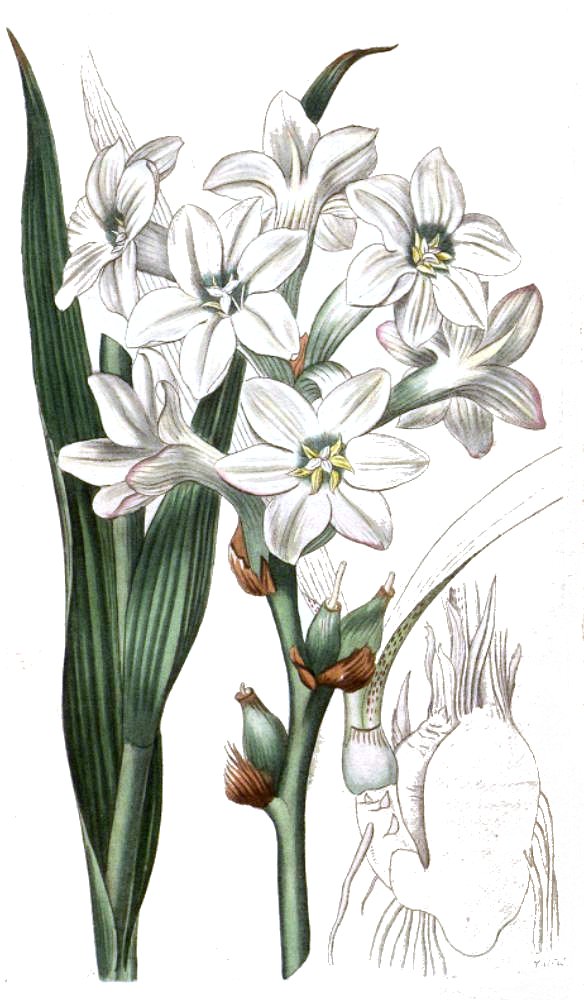
Polianthes tuberosa, bežne známa ako Tuberóza, je letná hľuzka patriaca do čeľade Asparagaceae. Tento druh Polianthes si získal cenné miesto v okrasnom záhradníctve pre svoje biele kvety, ktoré sa objavujú počas leta, od júna do augusta vo väčšine pestovateľských zón. Rastúc približne 90 cm vysoká, vytvára charakteristické kvety, ktoré dodávajú farbu a dekoratívnosť záhrade. Kvety produkujú silnú vôňu, ktorá zlepšuje zážitok zo záhrady.
História a pôvod
Polianthes tuberosa, bežne známa ako Tuberóza, je druh v rámci rodu Polianthes, čeľaď Asparagaceae. Je pôvodom z Mexika, kde rastie vo svojom prirodzenom prostredí ako divá rastlina.
Botanický opis
Polianthes tuberosa vzniká z hľuzy, ktorá je zhrubnutý, mäsitý podzemný hľuzovitý orgán vyvíjajúci sa z kmeňa alebo koreňového tkaniva a s viacerými rastovými bodmi (pukancami). Rastlina dosahuje zrelú výšku približne 90 cm za optimálnych podmienok rastu.
Príručka na sadenie
Sadzajte Polianthes tuberosa na jar (marec – máj) po posledných mrazoch v hĺbke 5 cm, merané od základu hľuzy po povrch pôdy. Umiestnite jednotlivé hľuzy do vzdialenosti 15 cm, aby ste zabezpečili dostatočný priestor na rast a cirkuláciu vzduchu.
Pestovanie kontajnerov
Polianthes tuberosa dobre rastie v nádobách, čo ju robí vhodnou pre terasy, balkóny a malé záhrady. Použite kvetináč s priemerom aspoň 30–45 cm s odvodňovacími otvormi. Naplňte ho drenážnou substrátovou zmesou: rovnakými časťami univerzálnej zeminy, hrubého piesku a perlitu.
Pestovanie a starostlivosť
Počas vegetačného obdobia pravidelne zavlažujte Polianthes tuberosa, aby ste udržali stálu vlhkosť pôdy. Zavlažujte hlbšie raz alebo dvakrát týždenne, namiesto menej častého a povrchového zalievania. Počas sucha znížte frekvenciu zavlažovania, keď listy začnú žltnúť a odumierať, čo signalizuje nástup vegetačného klidu.
Podnebie a tvrdosť
Polianthes tuberosa je mrazuvzdorná v zónach USDA 7–10. V chladnejších zónach je potrebné hľuzu vybrať pred prvým silným mrazom a prezimovať ju v interiéri.
Sezónna starostlivosť
Jar: Objavuje sa nový rast. Začnite pravidelné zavlažovanie a aplikujte prvú dávku hnojiva. Sledujte výskyt škodcov.
Časté chyby, ktorým sa treba vyhnúť
Medzi bežné chyby pri pestovaní Polianthes tuberosa patrí:
Kalendár sezónnej starostlivosti
Voda: Svetlo
Kŕmenie: Ľahké kŕmenie
Rastlinu vysaďte po poslednom mraze, keď sa pôda zohreje na 15° C. Začnite zavlažovať a prihnojovať s nástupom vegetácie.
Voda: Pravidelné
Kŕmenie: Pravidelné kŕmenie
Dôkladne a pravidelne vlievajte vodu počas aktívneho rastu a kvitnutia. Hnojte každé 2-3 týždne vyváženým hnojivom.
Voda: Svetlo
Kŕmenie: Bez kŕmenia
Po prvom mraze vykopajte citlivé žiarovky alebo hlúzky. Odrežte stonky na 10 cm, nechajte zaschnúť na týždeň a potom ukladajte na chladné, bezmrazové miesto.
Zima (Dec
Voda: Minimálna
Kŕmenie: Bez kŕmenia
Mesačne kontrolujte skladované žiarovky, či nie sú napadnuté hnilobou. Skladujte ich v chladnom (5-10 °C), suchom a tmavom mieste.
Propagácia
Hlavnou metódou rozmnožovania Polianthes tuberosa je delenie hlúz počas vegetačného klidu. Uistite sa, že každá časť má aspoň jeden zdravý výhon (puk). Prach na odrezaných miestach posypte fungicídom a nechajte ich zakaliť 24-48 hodín predtým, ako zasadíte.
Distribučná mapa
Genus Politézy pôvod: Mexiko
Choroby a prekážky
Viničové svilušky a ich larvy sú najvážnejšími škodcami, ktoré poškodzujú korene a hlúzky. Použite biologickú ochranu (nematódy) koncom leta. Slimáky a nebezpečné slimáky poškodzujú mladé výhonky a kvety. Múčnatka a sivá plesňovka môžu napadnúť listy za vlhkých podmienok. Bakteriálna mäkká hniloba sa môže objaviť v skladovaných hlúzach, ak sú poškodené alebo príliš vlhké. Skladujte hlúzky vo vlhkej rašeline alebo vermikulite pri teplote 5-10°C. Mesačne kontrolujte uložené hlúzky a odstraňte tie s prejavmi hniloby.
Garden používa & spoločníkov
Polianthes tuberosa dobre rastie vysadená v skupinách po 5-9, čím sa dosiahne vyvážený vzhľad. S výškou 90 cm vytvára vertikálny efekt a najlepšie sa hodí do zadnej časti záhrajok.
Pestovanie spoločníkov
Kombinujte s okrasnými trávami ako Pennisetum a Miscanthus pre textúrový kontrast. Spárujte s letnými trvalkami vrátane Echinacei, Rudbeckie, Salvie a Agastache. Nízkorastúce jednorôčky ako lobelia, alysum a petúnie môžu vyplniť medzery pri základe. Rastliny so striebornými listami, ako Artemisia a Stachys byzantina vytvárajú pozoruhodné farebné kontrasty. Skupinovo s inými letnými žiarovkami pre tropický efekt.
Vystrihnúť sprievodcu kvetmi
Rezajte kvety Polianthes tuberosa, keď sa začína otvárať prvý púčik v kvetnom paketi, alebo keď púčiky vykazujú plnú farbu, ale ešte nie sú úplne rozkvitnuté. Stonky režete skoro ráno alebo neskoro večer, keď sú teploty chladné.
Často kladené otázky
Kedy je najvhodnejší čas na výsadbu Polianthes tuberosa?
Vysaďte Polianthes tuberosa na jar (marec-máj) po poslednom mraze. Uistite sa, že pôda je pripravená a nie je premočená. Zasaďte hľuzy do hĺbky 5 cm s odstupom 15 cm.
Ako hlboko by som mal zasadiť hľuzy Polianthes tuberosa?
Rastlinu zasaďte do hĺbky 5 cm, merané od základu hľuzy po povrch pôdy. Všeobecne platí zasadiť hľuzu v dvoch až troch násobkoch jej výšky.
Prečo moja Polianthes tuberosa nekvitne?
Medzi bežné príčiny patrí: príliš plytká výsadba, nedostatočné slnečné svetlo, preplnené zhluky vyžadujúce rozdelenie, predčasné odstraňovanie listov v minulom roku alebo nedostatok živín. Po kvitnutí aplikujte hnojivo bohaté na draslík.
Môžem pestovať Polianthes tuberosa v nádobách?
Áno. Použite hrniec so šírkou aspoň 30 cm s odvodňovacími otvormi. Rastlinu zasaďte do rovnakej hĺbky ako v otvorenej pôde a používajte dobre priepustný kompostový substrát.
Je Polianthes tuberosa odolná voči jeleňom?
Nie, Polianthes tuberosa nie je spoľahlivo odolná voči jeleňom. Používajte fyzické bariéry alebo repelenty v oblastiach s tlakom jeleňov.
Preskúmajte ďalšie rastlinné encyklopédie.
Polianthes tuberosa (tuberóza) je letná bylina s hľuzami z čeľade Asparagaceae, ktorá produkuje biele kvety na stopkách vysokých 90 cm. Je odolná v zónach USDA 7-10 a dobre sa jej darí v priepustnej pôde na slnečnom mieste, ak je zasadená do hĺbky 5 cm. Spoľahlivo kvitne v záhradách aj v nádobách.
Rýchly odkaz: Polianthes tuberosa
Kľúčové zásady: Rastlinu umiestnite do správnej hĺbky, zabezpečte dobrú priepustnosť pôdy, povoľte prirodzené odumieranie listov a skladujte citlivé hľuznice počas zimy v chladnom prostredí.