Pinanga philippinensis: A comprehensive Growing Guide for Enthusiasts & Collectors.
Pinanga philippinensis
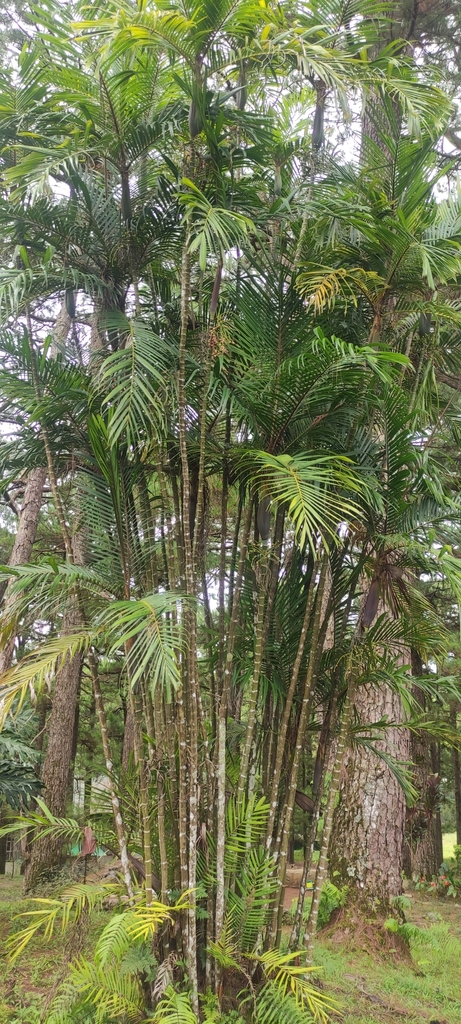
Image via iNaturalist (Research Grade). (c) astronorm, some rights reserved (CC BY-NC)
⚠️ VULNERABLE SPECIES
Philippine endemic palm from rainforest understories. Shows remarkable adaptability for cultivation with moderate size, elegant plumose leaves, and tolerance of various forest types from coastal to montane.


1. Introduction
Habitat and Distribution
Pinanga philippinensis is endemic to the Philippines, with populations scattered across several islands including Luzon, Mindoro, Samar, Leyte, and Mindanao. This understory palm inhabits primary and old secondary lowland to montane rainforests from near sea level to 1,500 meters elevation, with highest densities between 300-900 meters. It thrives in areas with year-round high humidity and rainfall exceeding 2,500mm annually, with no pronounced dry season. The species shows remarkable adaptability to different forest types, from coastal forests on ultrabasic soils to mountain forests on volcanic substrates. It typically grows on slopes and ridges with good drainage, always in the shade of the forest canopy.
Native Continent
Native range: Philippine rainforests
Click markers for details • Use buttons to switch map types
Taxonomic Classification and Scientific Classification
Synonyms
- Pinanga elmeri Becc.
- Pinanga woodiana Becc.
- Pinanga negrosensis Becc.
- Pinanga sibuyanensis Becc.
- (all now considered synonyms)
Common Names
- Philippine pinanga (English)
- Sarawag (Tagalog)
- Bayas (Visayan)
- Anibong (Ilokano)
- Lukong (Ifugao)
- Pinanga des Philippines (French)
- 菲律宾山槟榔 (Chinese)
Expansion in the World
P. philippinensis has moderate presence in cultivation:
- Philippine botanical gardens (Makiling, Manila)
- Singapore Botanic Gardens
- Bogor Botanical Gardens, Indonesia
- Hawaiian private collections
- Limited availability from specialists
- Seeds occasionally exported
- IUCN Red List status: Vulnerable
Growing interest reflects its ornamental value and relative ease compared to rarer Philippine palms.
2. Biology and Physiology
Morphology
Trunk
P. philippinensis typically develops solitary trunks, though clustering occurs in about 20% of populations. The trunk reaches 4-8 meters in height with a diameter of 4-7cm. The trunk is green when young, aging to gray-brown, with moderately spaced ring scars every 4-6cm. A distinctive feature is the slight swelling at nodes, giving a subtle bamboo-like appearance. In clustering forms, 3-6 stems usually develop from basal shoots, creating attractive multi-stemmed specimens.
Leaves
The crown consists of 6-12 pinnate leaves forming an elegant, open canopy. Leaves measure 1.2-2 meters long including the 25-40cm petiole. Leaflets number 12-20 per side, arranged in groups of 2-4, creating the characteristic plumose Pinanga appearance. Each leaflet group is 25-40cm long and 3-5cm wide at the widest point, bright green above, paler below with sparse scales. New leaves emerge bronze to reddish. A partial crownshaft of 30-50cm is formed by the leaf bases, green with brown scales.
Flower Systems
Monoecious with pendulous infrafoliar inflorescences. The inflorescence is 25-45cm long, simply branched with 5-12 spreading to pendulous rachillae. The peduncle and rachillae are distinctive pale yellow to orange. Flowers are in typical triads proximally. Male flowers are 4-5mm, white to cream with 6-9 stamens. Female flowers are 2-3mm, globose, greenish-white. Flowering occurs throughout the year with peaks during the rainy season (June-November).
Life Cycle
P. philippinensis has a moderate life cycle of 50-70 years:
- Germination to Seedling (0-2 years): Steady early growth
- Juvenile Phase (2-6 years): Trunk initiation
- Sub-adult Phase (6-12 years): Rapid vertical growth
- Adult Phase (12-50 years): Reproductive maturity
- Senescent Phase (50-70 years): Gradual decline
First flowering occurs at 8-10 years or when trunk reaches 2-3 meters.
Specific Adaptations to Climate Conditions
- Typhoon Resistance: Flexible trunk survives storms
- Broad Elevation Range: Temperature adaptability
- Substrate Flexibility: Grows on various soil types
- High Humidity Requirement: Constant moisture needs
- Understory Specialist: Permanent shade adaptation
- Island Adaptability: Genetic variation between populations
3. Reproduction and Propagation
Seed Reproduction
Seed Morphology and Diversity
P. philippinensis produces ovoid to ellipsoid fruits, 1.2-1.6cm long and 0.8-1.1cm diameter. Immature fruits are green, ripening to bright red, orange-red, or occasionally black in some populations. The epicarp is thin and smooth; mesocarp is thin but fleshy; endocarp is papery. Seeds are ovoid, 10-12mm long, with homogeneous endosperm and a lateral embryo. Fresh seed weight is 0.3-0.6 grams. Considerable variation exists between island populations in fruit size and color.
Detailed Seed Collection and Viability Testing
- Monitor for color change (varies by population)
- Collect at first sign of ripening
- Best collection varies by location
- Process within one week
Viability Testing:
- Float test generally reliable
- Visual inspection for plumpness
- Cut test shows white endosperm
- Germination test most accurate
- Fresh viability: 80-95%
- One month: 60-75%
- Three months: 30-40%
- Six months: <10%
Pre-germination Treatments
- Remove pericarp completely
- Clean under running water
- Remove all flesh traces
- Keep seeds moist
- No scarification required
- 24-hour water soak beneficial
- Room temperature adequate
- Fungicide optional
- Warm water soak (35°C)
- Change water twice daily
- 48-hour maximum
Step-by-step Germination Techniques
- Medium: 40% coir, 30% perlite, 20% rice hull, 10% compost
- Container: Community flats or individual pots
- Sowing: 1.5cm deep, horizontal
- Temperature: 25-30°C (77-86°F)
- Humidity: 75-85%
- Light: Immediate shade (85%)
- Moisture: Evenly moist throughout
Germination Difficulty: Easy to Moderate
Success factors:
- Fresh seeds crucial
- Stable temperatures
- Consistent moisture
- Immediate shade
Germination Time
- First emergence: 25-45 days
- Peak germination: 45-75 days
- Complete: within 100 days
- Success rate: 75-90% fresh seeds
Seedling Care and Early Development
Months 0-6:
- Maintain germination environment
- Begin feeding at 3 months
- 85% shade essential
- Watch for damping off
Months 6-12:
- Transplant to individual pots
- Regular dilute feeding
- Can reduce to 80% shade
- Growth accelerates
Year 2:
- Established feeding program
- 75% shade acceptable
- Rapid growth phase
- Trunk initiation begins
Advanced Germination Techniques
Hormonal Treatments for Germination Enhancement
- Concentration: 150-300 ppm
- 24-hour soak
- 15-20% improvement
- Speeds emergence
- Natural growth promoter
- 50% solution effective
- 24-hour soak
- Improves vigor
- Post-germination application
- Enhances root development
- Weekly application
- Improves survival
4. Cultivation Requirements
Light Requirements
Species-specific Light Tolerance Ranges
- Seedlings (0-2 years): 100-300 μmol/m²/s (85-90% shade)
- Juveniles (2-5 years): 300-600 μmol/m²/s (75-80% shade)
- Sub-adults (5-10 years): 500-1000 μmol/m²/s (65-70% shade)
- Adults: 800-1400 μmol/m²/s (60% shade minimum)
Permanent shade requirement throughout life.
Seasonal Light Variations and Management
- Increase shade during dry season
- Protect from intense summer sun
- Consistent shade preferred
- Morning sun tolerable for adults
Artificial Lighting for Indoor Cultivation
- Low to moderate light needs
- Standard grow lights work
- 12-hour photoperiod
- 150-250 foot-candles
Temperature and Humidity Management
Optimal Temperature Ranges
- Ideal: 24-30°C (75-86°F)
- Acceptable: 18-35°C (64-95°F)
- Minimum survival: 12°C (54°F)
- Maximum tolerance: 38°C (100°F)
- Elevation adaptability provides flexibility
Cold Tolerance Thresholds
- Light damage: 15°C (59°F)
- Severe damage: 10°C (50°F)
- Death likely: 5°C (41°F)
- Mountain populations hardier
Hardiness Zone Maps
- USDA Zones: 10b-11
- Possible in 10a protected
- Sunset Zones: 23-24
- European: H1b-H2
Humidity Requirements and Modification
- Optimal: 70-85%
- Minimum: 55%
- Constant humidity important
- Benefits from air movement
Soil and Nutrition
Ideal Soil Composition and pH
pH preference: 5.5-7.0 (slightly acidic to neutral)
Versatile mix:
- 35% coir or peat
- 25% composted bark
- 20% perlite
- 10% rice hull
- 10% aged compost
Well-draining but moisture-retentive
Nutrient Requirements Through Growth Stages
Seedlings (0-2 years):
- Start feeding at 3 months
- 1/4 strength bi-weekly
- Balanced formulation
Juveniles (2-5 years):
- NPK ratio: 10-5-10
- Bi-weekly in growing season
- Monthly in cooler months
- Micronutrients important
Adults (5+ years):
- NPK ratio: 12-4-12
- Higher nitrogen maintains lush growth
- Bi-weekly year-round
- Organic supplements beneficial
Organic vs. Synthetic Fertilization
Organic Program:
- Fish emulsion excellent
- Composted chicken manure tea
- Seaweed supplements
- Beneficial microorganisms
Synthetic Approach:
- Liquid feeds preferred
- Controlled-release works
- Avoid salt buildup
- pH monitoring important
Micronutrient Deficiencies and Corrections
- Iron: Yellowing in high pH
- Magnesium: Common deficiency
- Manganese: Frizzle leaf
- Boron: Growing point problems
Water Management
Irrigation Frequency and Methodology
- Consistent moisture essential
- Daily in hot weather
- Reduce in cool seasons
- Morning watering best
Drought Tolerance Assessment
- Low drought tolerance
- Rapid stress response
- Leaf margins brown first
- Recovery if not prolonged
Water Quality Considerations
- Tolerates various water types
- Rainwater ideal
- Moderate salt tolerance
- pH 6.0-7.5 acceptable
Drainage Requirements
- Good drainage important
- Tolerates brief waterlogging
- Organic mulch beneficial
- Raised beds in heavy soil
5. Diseases and Pests
Common Problems in Growing
- Leaf spots: Various fungi
- Scale insects: Common
- Root rot: In poor drainage
- Nutrient deficiencies: Regular issue
Identification of Diseases and Pests
Fungal Diseases:
- Pestalotiopsis: Brown spots
- Colletotrichum: Anthracnose
- Helminthosporium: Leaf blight
- Phytophthora: Root rot
Common Pests:
- Coconut scale: White masses
- Red palm mite: Bronzing
- Mealybugs: Crown infestations
- Rhinoceros beetle: Trunk damage
Environmental and Chemical Protection Methods
Cultural Prevention:
- Proper spacing critical
- Good air circulation
- Remove infected material
- Maintain plant vigor
Treatment Options:
- Neem oil first choice
- Copper fungicides if needed
- Systemic insecticides sparingly
- IPM approach best
6. Indoor Palm Growing
Specific Care in Housing Conditions
Indoor Advantages:
- Moderate size suitable
- Low light tolerance
- Attractive year-round
- Clean growth habit
Requirements:
- Humidity above 60%
- Consistent temperatures
- Regular fertilization
- Good air circulation
Best Locations:
- Bright bathrooms
- North/east windows
- Humid conservatories
- Grouped with other plants
Replanting and Wintering
Replanting Schedule:
- Annually when young
- Every 2-3 years mature
- Spring optimal
Process:
- Pre-water plant
- Fresh medium essential
- Slightly larger container
- Maintain planting depth
- Keep humid after
Winter Care:
- Minimum 15°C (59°F)
- Reduce watering 30%
- Maintain humidity 65%+
- No fertilizer Dec-Feb
- Watch for pests
- Clean leaves monthly
7. Landscape and Outdoor Cultivation
Garden Uses
- Understory groupings
- Rainforest gardens
- Shaded borders
- Container culture
Design Impact
- Tropical authenticity
- Multi-stem forms attractive
- Year-round green
- Combines with ferns/gingers
8. Cold Climate Cultivation Strategies
Cold Hardiness
Limited but better than lowland species due to mountain populations.
Winter Protection
- Hardy to 12°C (54°F) briefly
- Protection below 15°C advised
- Mulch heavily
- Wrap if needed
Hardiness Zone
- USDA 10b-11 standard
- Zone 10a possible protected
- Warm microclimate helps
Winter Protection Systems and Materials
Marginal Areas:
- Deep mulch layer
- Trunk wrapping
- Overhead protection
- Wind barriers
Container Culture:
- Move indoors <15°C
- Bright, humid location
- Reduce water/fertilizer
- Monitor closely
Establishment and Maintenance in Landscapes
Planting Techniques for Success
Site Selection:
- Permanent shade
- Wind protection
- Good drainage
- Rich soil preferred
Soil Preparation:
- Dig large hole
- Amend with compost
- Ensure drainage
- Add mulch layer
Planting:
- Same depth as container
- Water thoroughly
- Stake if needed
- Shade cloth temporary
Long-term Maintenance Schedules
Weekly:
- Moisture monitoring
- Pest inspection
Monthly:
- Fertilization
- Dead frond removal
- Health assessment
Annually:
- Soil testing
- Mulch renewal
- Evaluate shade
- Adjust nutrition
Special Notes:
- Protect from strong wind
- Maintain forest conditions
- Allow natural appearance
- Document island forms
Final Summary
Pinanga philippinensis represents one of the most successfully cultivated Philippine endemic palms, combining ornamental value with relative adaptability. This vulnerable species brings the essence of Philippine rainforests to suitable gardens with its elegant form, attractive clustering habit in some populations, and year-round ornamental appeal.
The key to success lies in understanding its rainforest understory origins across the Philippine archipelago. Requirements include consistent warmth (24-30°C), high humidity (70-85%), permanent shade, and rich, well-draining soil that never dries completely. Its broad elevation range in nature translates to better temperature tolerance than many lowland species, while genetic variation between island populations offers interesting possibilities for selection.
Propagation is straightforward with fresh seeds, which germinate readily in 25-75 days with 75-90% success rates. The main constraint is seed viability loss, making fresh seeds essential. Growth is moderately fast, with plants reaching flowering size in 8-10 years under optimal conditions.
For growers in USDA Zones 10b-11, P. philippinensis offers an elegant small to medium palm perfect for shaded gardens. Its moderate size, attractive foliage, and potential for multi-stemmed growth create year-round interest while contributing to ex-situ conservation of Philippine flora. Success comes from never forgetting this palm's identity as a rainforest understory dweller—it thrives in the same conditions that would suit ferns and gingers, making it an excellent companion plant for tropical shade gardens. As Philippine forests face continued pressure, cultivation of this vulnerable species helps preserve genetic diversity while bringing the beauty of Philippine rainforests to gardens worldwide.
- Most successfully cultivated Philippine endemic palm
- Moderate size - 4-8m height
- Fast germination - 25-75 days
- High success rate - 75-90%
- Permanent shade requirement
- High humidity needs - 70-85%
- Zone 10b-11 cultivation
- Early maturity - flowers at 8-10 years
- Elegant plumose foliage
- Excellent for shade gardens