Clavariadelphus truncatus (Truncated Club Fungus)
Clavariadelphus truncatus (Truncated Club Fungus)


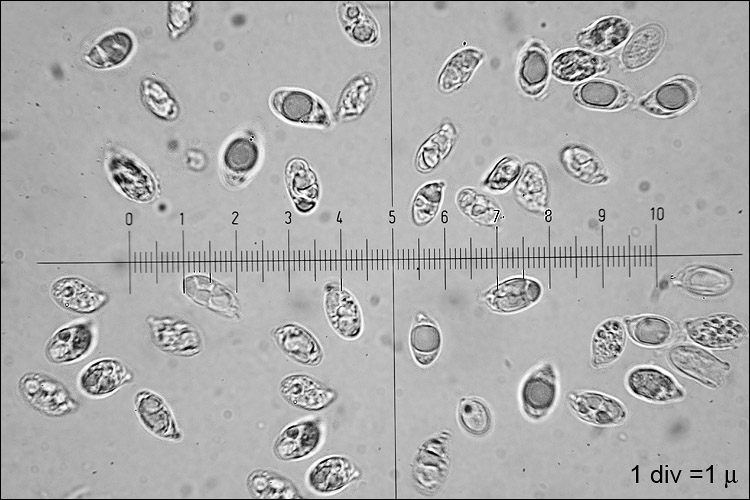


Table of Contents
- Introduction
- Identification Guide
- Taxonomy & Classification
- Edibility & Safety
- Look-Alikes & Confusions
- Habitat & Ecology
- Foraging Guide
- Cultivation
- Culinary Uses
- Preservation & Storage
- Medicinal Properties
- Seasonal Fruiting
- Spore Print & Microscopy
- Varieties & Forms
- History & Ethnomycology
- Beginner's Guide
- FAQ
🍄 Introduction
Clavariadelphus truncatus, the flat-topped club or truncate club coral, is a distinctive large club fungus characterised by its uniquely flattened, table-top apex and bright orange-yellow coloration. Found under conifers, particularly spruce and fir, in montane forests across North America and Europe, it is one of the most prized edible coral fungi due to its sweet flavour and meaty texture. The species is a member of order Gomphales, placing it closer to chanterelles than to typical coral fungi.
The fruitbody forms a stout club 7-15 cm tall and 3-7 cm wide at the summit, with a distinctly flattened to shallowly depressed apex that appears as though the top has been cleanly sliced off. The surface colour is bright golden-yellow to orange-ochre, often with pinkish-lilac tones on the flattened top surface, darkening to ochre-brown with age. The lower stipe is paler, often whitish to pale yellow, and may be longitudinally wrinkled. The flesh is solid, white to pale cream, firm when young, and has a characteristically sweet taste often compared to sweet potatoes or mild chanterelles.
Quick Facts
| Common Names | Truncated Club Fungus |
| Family | Clavariadelphaceae |
| Order | Cantharellales |
| Origin | Coniferous forests of North America and Europe |
| Edibility | Edible |
| Ecology | Ectomycorrhizal |
| Spore Print | Pale Ochre |
🔍 Identification Guide
Search under spruce and fir trees in autumn for stout, bright golden-orange clubs with a distinctly flat or slightly concave top surface. The truncated apex is the single most diagnostic feature, immediately distinguishing this species from the rounded C. pistillaris. Confirm by tasting a small piece of the flesh, which should be distinctly sweet rather than bitter. The lilac-pink tones on the flat top, coniferous habitat, and sweet flavour together make identification straightforward for careful observers.
Morphological Features
| Feature | Description |
|---|---|
| Cap Shape | Stout club with flattened to truncated apex |
| Cap Diameter | 4–12 |
| Cap Color | Tan to ochre-brown, pinkish-buff |
| Cap Surface | Smooth to wrinkled, dry, often slightly pitted at apex |
| Gill/Pore Type | smooth |
| Gill/Pore Color | N/A |
| Stipe Height | 8–20 |
| Stipe Diameter | 2–5 |
| Stipe Features | Solid, thick, tapering slightly toward base |
| Flesh Color | White to pale cream |
| Bruising | Slight vinaceous tinge when cut |
| Odor | Pleasant, faintly sweet |
| Taste | Mild, sweet |
| Spore Print | Pale ochre |
Field Identification Checklist
- Cap shape: Stout club with flattened to truncated apex
- Cap color: Tan to ochre-brown, pinkish-buff
- Gill/pore type: smooth
- Gill/pore color: N/A
- Spore print: Pale ochre
- Odor: Pleasant, faintly sweet
- Bruising: Slight vinaceous tinge when cut
- Stipe: Solid, thick, tapering slightly toward base
Detailed Morphology
The flat truncate apex is the defining morphological feature, bearing the fertile hymenium as a smooth to slightly wrinkled surface that may develop shallow radial folds. The transition from the flat top to the tapering stipe is often abrupt, creating a distinctive anvil or table shape. Basidia are clavate, four-spored, 50-70 x 8-11 micrometres. The hyphal system is monomitic with inflated generative hyphae and scattered clamp connections. The trama is composed of loosely interwoven hyphae with both thin-walled and thick-walled elements.
🧬 Taxonomy & Classification
Clavariadelphus truncatus Donk was described in 1933 when the genus was separated from Clavaria. Molecular phylogenetic studies confirm placement in order Gomphales, family Clavariadelphaceae, closely allied to Gomphus and distantly related to cantharelloid fungi. The genus Clavariadelphus contains approximately 15 species worldwide, with C. truncatus being the most readily distinguished by its flat-topped morphology. Some North American collections may harbour cryptic diversity, as genetic variation across the species' vast range has not been thoroughly sampled.
⚕️ Edibility & Safety
Clavariadelphus truncatus is considered one of the finest edible club fungi, prized in the Pacific Northwest and parts of central Europe for its sweet flavour and firm, meaty texture. The sweetness comes from sugar alcohols in the flesh and is most pronounced in young, fresh specimens. There are no known toxic compounds, and the species has a long history of safe consumption. Some individuals may experience mild gastrointestinal upset if consuming large quantities raw, so light cooking is recommended.
⚠️ Look-Alikes & Confusions
Clavariadelphus pistillaris is the primary look-alike but has a rounded, not flat, apex, grows under beech rather than conifers, and has a bitter taste in mature specimens. Clavariadelphus ligula is much smaller and more slender, with a pointed to rounded tip. Gomphus clavatus (pig's ear) shares the Gomphales affinity and conifer habitat but is distinctly vase-shaped with a lilac hymenium. Cantharellus species are superficially similar in colour but always have a clearly differentiated cap and stem.
Known Look-Alikes
| Species | Edibility | Key Difference |
|---|---|---|
| Clavariadelphus pistillaris | Edible with Caution | Cap: Ochre to pale brown, darkening with age; Spore print: White to pale cream; Odor: Mild to pleasant; Habitat: Beech-dominated deciduous forest floor |
| Clavariadelphus sachalinensis | Unknown | Check all identifying features carefully |
🌲 Habitat & Ecology
This species is associated with coniferous forests, particularly Picea (spruce) and Abies (fir) at higher elevations, suggesting an ectomycorrhizal relationship with these trees. It favours montane and subalpine forests with deep needle litter and acidic to neutral soils, contrasting with the calcareous preference of C. pistillaris. In North America, it is most common in Pacific Northwest old-growth forests and Rocky Mountain spruce-fir stands. European populations are concentrated in Scandinavian and Alpine coniferous forests.
| Habitat | Coniferous and mixed mountain forests |
| Substrate | Soil, needle litter |
| Ecology | Ectomycorrhizal |
| Host Trees | Abies, Picea, Pinus |
| Altitude | 500–2500 m |
| Climate Zones | Temperate, montane, boreal |
| Distribution | North America, Europe, eastern Asia |
Ecological Role
As a probable ectomycorrhizal associate of spruce and fir, Clavariadelphus truncatus likely plays an important role in coniferous forest nutrient cycling and tree health. The large fruitbodies contribute organic matter to the forest floor and support invertebrate communities including fungus flies, beetles, and slugs. The species may facilitate phosphorus uptake by conifer roots in exchange for photosynthetic carbon, a standard mycorrhizal partnership. Its preference for old-growth conditions makes it a potential bioindicator for intact montane forest ecosystems.
🗺 Distribution Map
Known distribution of Truncated Club Fungus: North America, Europe, eastern Asia. This species is mycorrhizal (Ectomycorrhizal).
🧺 Foraging Guide
Clavariadelphus truncatus is a rewarding foraging target in Pacific Northwest and Rocky Mountain conifer forests from August through October. Search under spruce and fir at elevations between 1000 and 2000 metres, particularly in areas with thick needle duff and dappled shade. The bright orange-yellow clubs are conspicuous against dark needle litter and can be spotted from several metres away. Harvest by cutting at the base with a knife, leaving the mycelium undisturbed, and verify the sweet taste in the field.
🌱 Cultivation
Clavariadelphus truncatus has not been commercially cultivated due to its apparent ectomycorrhizal dependence on living conifer roots. Experimental cultivation would require inoculation of conifer seedlings in controlled forest-soil conditions, a process that is technically challenging and economically unviable. Mycelium can be maintained on specialised agar media but does not produce fruitbodies in vitro. Sustainable wild harvesting from productive forest sites remains the only practical source.
🍳 Culinary Uses
The sweet, nutty flavour of Clavariadelphus truncatus makes it versatile in the kitchen. Slice young clubs lengthwise into 5 mm steaks and sautee in butter until golden, serving as a side dish or atop risotto. The natural sweetness pairs well with savoury dishes, creating an appealing contrast with game meats and earthy grains. Some chefs candy thin slices for dessert garnishes, exploiting the inherent sugar content. Older specimens lose sweetness and develop a fibrous texture, so prioritise young, firm clubs.
| Culinary Uses | Sautéed, Soups |
| Preservation | Drying, Pickling |
📦 Preservation & Storage
Fresh Clavariadelphus truncatus stores well for three to five days refrigerated in a paper bag, retaining its sweet flavour better than most wild mushrooms. Sliced thinly and dried at 45 degrees Celsius, it produces pleasantly sweet dried chips that rehydrate well for winter soups and stews. Freezing sauteed slices is another excellent option, preserving both flavour and texture for several months. The natural sweetness actually concentrates during drying, making dried slices a uniquely flavoured pantry ingredient.
Preservation Methods
- Drying
- Pickling
🩹 Medicinal Properties
Limited pharmacological research has been conducted on Clavariadelphus truncatus, though structurally related compounds to pistillarin have been detected in the fruitbodies. Some Gomphales fungi produce bioactive sesquiterpenoids, and preliminary screening suggests potential antimicrobial activity in crude extracts. Traditional indigenous peoples of the Pacific Northwest did not apparently use this species medicinally, though it was valued as a sweet trail snack. More research is needed to characterise the bioactive potential of this species.
🍂 Seasonal Fruiting
Fruiting occurs from late August through November in most temperate regions, with peak abundance in September and October at higher elevations. In the Pacific Northwest, the season begins in August at higher elevations and extends into November at lower sites as cold weather pushes down the mountain. Adequate autumn rainfall is essential, and drought years can produce dramatically reduced fruitings. The species often fruits in the same locations year after year when conditions are favourable.
🔬 Spore Print & Microscopy
Spores are ellipsoid, 9-13 x 5-7 micrometres, smooth, hyaline to pale yellow in mass, thin-walled, and inamyloid. The spore print is pale ochre to yellow-ochre. Basidia are clavate, four-spored, with sterigmata 5-7 micrometres long. The subhymenial layer is well-developed with pseudoparenchymatous elements. Clamp connections are present but not abundant, requiring careful examination of multiple hyphal preparations to locate.
🌀 Varieties & Forms
No formal varieties are widely accepted, but significant morphological variation exists across the species' range. Pacific Northwest specimens tend to be larger and more vividly coloured than European counterparts, and some authors have suggested these may warrant varietal separation. Occasional specimens develop a slightly concave or cup-like depression in the flat top, particularly in wet conditions. The degree of lilac-pink coloration on the apex varies from absent to prominent and appears to be environmentally influenced rather than genetically fixed.
📜 History & Ethnomycology
Clavariadelphus truncatus has been collected and consumed by indigenous peoples of the Pacific Northwest for centuries, valued as a naturally sweet forest food. European mycological literature first clearly distinguished this species from C. pistillaris in the 20th century, with Donk's 1933 monograph establishing the genus. In the Pacific Northwest mushroom foraging community, it is affectionately known as the sweet coral and is considered a highlight of the autumn foray season. The species featured prominently in David Arora's influential Mushrooms Demystified, introducing it to a generation of American foragers.
🎓 Beginner's Guide
Clavariadelphus truncatus is beginner-friendly because the flat-topped shape is genuinely unique among common forest fungi and virtually impossible to confuse once learned. Visit spruce or fir forests in autumn and look for bright golden-orange clubs with flat tops standing among needle litter. The sweet taste test is safe and instantly confirms your identification. Remember the simple mnemonic: truncatus means truncated, meaning cut short, describing the flat-topped appearance perfectly.
Photography Tips
The flat truncated top is the signature feature and should be prominently displayed in photographs. Shoot from slightly above to show the distinctive plateau, then from eye level to convey the club's impressive stature. Side lighting emphasises the wrinkled stipe texture and the colour gradient from pale base to golden apex. Including the conifer needle litter substrate and surrounding forest context helps communicate the habitat association. A cross-section photograph showing the solid white flesh and sweet-tasting quality makes an informative supplementary image.
Common Mistakes
Many Ramaria species are difficult to distinguish, and R. formosa causes GI poisoning
Color and substrate matter: Tremella is often mycoparasitic, Exidia is saprobic
Troubleshooting
If you find clubs under conifers but they have rounded rather than flat tops, you may have Clavariadelphus ligula (smaller, pointed) or a young C. truncatus whose apex has not yet fully expanded. Wait a few days and revisit. Bitter taste indicates you may have C. pistillaris in a mixed beech-conifer zone, so always verify conifer-dominant habitat. In drought years, reduced or absent fruiting is normal; productive sites will resume in wetter seasons.
❓ Frequently Asked Questions
Can you eat Truncated Club Fungus?
Yes, Clavariadelphus truncatus is edible but requires proper identification and thorough cooking. Some individuals may have sensitivities, so try a small amount first.
What mushrooms look similar to Truncated Club Fungus?
Known look-alikes include Clavariadelphus pistillaris, Clavariadelphus sachalinensis. Careful identification using multiple features (cap, gills/pores, stipe, spore print, habitat) is essential to avoid confusion.
Where does Truncated Club Fungus grow?
Clavariadelphus truncatus is found North America, Europe, eastern Asia. It typically grows in Coniferous and mixed mountain forests during Summer to autumn.
What color is the spore print of Truncated Club Fungus?
The spore print of Clavariadelphus truncatus is Pale ochre. Taking a spore print is an important step in mushroom identification.
When is the best time to find Truncated Club Fungus?
Clavariadelphus truncatus typically fruits during Summer to autumn. Fruiting is often triggered by rainfall followed by appropriate temperatures for the species.
📋 Summary — Clavariadelphus truncatus (Truncated Club Fungus)
Clavariadelphus truncatus, the flat-topped club or truncate club coral, is a distinctive large club fungus characterised by its uniquely flattened, table-top apex and bright orange-yellow coloration. Found under conifers, particularly spruce and fir, in montane forests across North America and Europe, it is one of the most prized edible coral fungi due to its sweet flavour and meaty texture. The species is a member of order Gomphales, placing it closer to chanterelles than to typical coral fungi.
Related Species
Clavariadelphus pistillaris has a rounded apex and grows under beech on calcareous soil. Clavariadelphus ligula is slender and pointed, found under spruce. Clavariadelphus borealis is a smaller boreal species with an intermediate apex shape. Gomphus clavatus shares conifer habitat but is distinctly vase-shaped with violet tones. Turbinellus floccosus is a hollow, scaly trumpet in the same order but completely different in form.