Cyperus tibialis (Dwarf Papyrus): Complete Grass Growing Guide
Cyperus tibialis
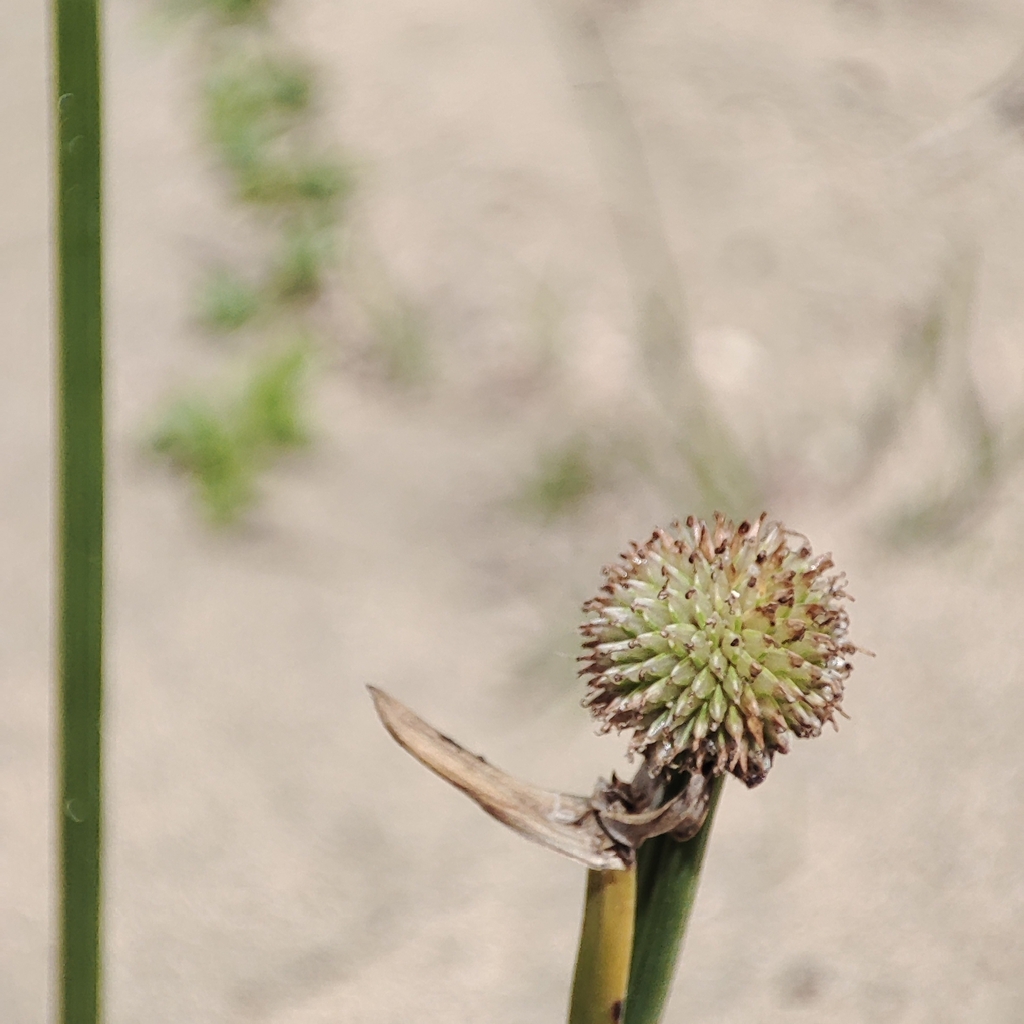
Cyperus tibialis (Dwarf Papyrus) (Source: inaturalist)
1. Introduction & Taxonomy
Cyperus tibialis is a charming dwarf sedge that brings the essence of papyrus to small gardens and containers with its compact stature and distinctive button-shaped inflorescences. Native to the wetlands of eastern and southern Africa, this diminutive relative of the giant papyrus rarely exceeds knee height yet produces the same architectural drama in miniature. Its rounded, dense flower clusters on slender stems create an enchanting effect reminiscent of miniature green pompoms floating above grassy foliage.
Cyperus tibialis is a compact, clump-forming perennial sedge growing 30-60 cm tall from a creeping rhizome. The stems are slender, erect, smooth, and triangular, arising in dense tufts. The leaves are narrow, grass-like, 2-4 mm wide, mostly basal, and about half the height of the flowering stems. The inflorescence is a dense, rounded, button-shaped head or compact umbel, 1.5-3 cm in diameter, consisting of numerous short-rayed clusters of spikelets packed tightly together. The spikelets are small, 3-6 mm long, and vary from greenish-yellow to golden-brown at maturity. Several leaf-like bracts subtend the inflorescence and radiate outward, framing the rounded cluster. The overall effect is of a small, tidy pompom perched atop each stem.
Taxonomic Classification
Habitat and Distribution
Cyperus tibialis is native to eastern and southern Africa, where it grows in seasonal marshes, along stream margins, and in vleis (shallow seasonal wetlands). It is typically found at elevations between 500-1,800 meters in grassland and savanna biomes.
Botanical Note: Cyperaceae (the sedge family) comprises about 5,600 species often found in wetland habitats. Sedges are distinguished from true grasses by their typically triangular (three-sided) stems, three-ranked leaves, and solid (not hollow) culms. The mnemonic 'sedges have edges' helps distinguish them from grasses. Many sedges such as Cyperus papyrus and Carex species are valued as ornamentals for water gardens, rain gardens, and naturalistic plantings.
Native Range & Distribution Map
The map below shows the native range and notable cultivation regions for Cyperus tibialis.
2. Biology & Morphology
<\!-- SIZE_COMPARISON_SVG -->Growth Form & Architecture
Cyperus tibialis is a member of the sedge family (Cyperaceae), characterized by typically triangular stems (the mnemonic 'sedges have edges'), solid culms, and three-ranked leaves.
Species-Specific Morphology
Cyperus tibialis is a compact, clump-forming perennial sedge growing 30-60 cm tall from a creeping rhizome. The stems are slender, erect, smooth, and triangular, arising in dense tufts. The leaves are narrow, grass-like, 2-4 mm wide, mostly basal, and about half the height of the flowering stems. The inflorescence is a dense, rounded, button-shaped head or compact umbel, 1.5-3 cm in diameter, consisting of numerous short-rayed clusters of spikelets packed tightly together. The spikelets are small, 3-6 mm long, and vary from greenish-yellow to golden-brown at maturity. Several leaf-like bracts subtend the inflorescence and radiate outward, framing the rounded cluster. The overall effect is of a small, tidy pompom perched atop each stem.
Inflorescence & Flower Structure
The inflorescence structure varies across grass-related families.
Key Characteristics
- Height: 0.5-2m
- Growth Habit: Clumping / Caespitose
- Growth Rate: Moderate under optimal conditions
- Life Cycle: Perennial
- Toxicity: Not known to be toxic. No reported adverse effects on humans, pets, or livestock.
- Conservation Status: Least Concern. Relatively widespread in suitable habitats across eastern and southern Africa. Not currently threatened, though local populations may decline with wetland drainage.
3. Reproduction & Propagation
<\!-- PROPAGATION_METHODS_SVG -->Primary propagation methods for Cyperus tibialis: Seed or vegetative division.
Propagating Cyperus tibialis
The most reliable propagation method is division of the rhizome in spring. Separate established clumps into sections with 3-5 stems each and replant in rich, wet soil. Divisions establish quickly if kept saturated. Seed propagation is possible but less common; sow fresh seed on the surface of moist seed-starting mix at 25C and keep humid. Germination can be slow and irregular, taking 2-6 weeks.
Vegetative Propagation
Propagated by clump division in spring or early summer.
Propagation Tip: Division of established clumps in spring gives the fastest results.
4. Cultivation Requirements
<\!-- CULTIVATION_SVG -->Soil / Substrate
Well-draining, moderately fertile soil. A mix of garden loam, compost, and coarse sand.
Watering
High. Requires consistently moist to waterlogged soil. Best grown with the pot standing in 2-5 cm of water. Cannot tolerate drought.
Light Requirements
Full sun to partial shade. Most ornamental grasses perform best in full sun with at least 6 hours of direct light daily.
Temperature
- Optimal Growth: 18-30°C (65-86°F)
- Minimum Tolerance: -12°C (10°F)
- USDA Hardiness: Zones 8-11
Fertilization
Apply a balanced slow-release fertilizer in spring. Most grasses are light feeders.
Common Cultivation Mistake: Over-watering and over-fertilizing promote weak, floppy growth. These plants prefer lean conditions.
Seasonal Care Calendar
Follow this season-by-season guide for optimal care timing throughout the year.
🌱 Spring (March–May)
Divide and repot rhizomes as new growth begins. Use rich, moisture-retentive compost in containers. Place in full sun to partial shade with the pot base in a saucer of water.
☀️ Summer (June–August)
Active growth and flowering. The button-shaped inflorescences appear from mid-summer onward. Keep soil saturated or maintain 2-5 cm of standing water. Feed monthly with dilute liquid fertilizer.
🍂 Fall (September–November)
Flowering continues in warm climates. Growth slows as light decreases. Reduce feeding. In cold climates, prepare to bring container plants indoors before frost.
❄️ Winter (December–February)
Not frost-hardy. Overwinter indoors in bright, warm conditions with constantly moist soil. Reduce watering slightly but never allow the rootstock to dry out completely.
5. Diseases & Pests
Below are the most common pests and diseases affecting Cyperus tibialis and how to manage them.
Spider mites
Tiny arachnids that infest the inflorescences in dry conditions, causing bronzing and webbing. Most problematic on indoor or greenhouse-grown plants.
Fungal leaf spot (Septoria spp.)
Small, dark spots with lighter centers appearing on leaves during prolonged wet weather, usually cosmetic rather than fatal.
Slugs and snails
Mollusks that feed on young shoots and leaves, leaving irregular holes and slime trails, especially in shaded, humid garden settings.
IPM: (1) Choose the right species for your conditions. (2) Maintain good air circulation. (3) Cut back dead foliage in late winter. (4) Most ornamental grasses are remarkably pest-free when well-sited.
6. Indoor Growing Guide
Cyperus tibialis makes an excellent indoor plant, especially in self-watering containers.
Container Selection
Use containers with adequate drainage holes. Self-watering pots work well for moisture-loving sedges and rushes.
Indoor Light
Place in the brightest available location. Most grasses need at least 4-6 hours of direct or bright indirect light.
Indoor Success Key: Bright direct light is the single most important factor for growing grasses indoors.
7. Landscape Use & Design
Cyperus tibialis is ideal for water gardens, rain gardens, and pond margins.
Design Applications
- Container water garden feature
- Tabletop or patio bog planter
- Indoor water feature accent
- Small-scale wetland garden
- Tropical terrarium specimen
- Conservatory collection plant
Companion Planting
These species pair well with Cyperus tibialis in garden settings:
- Juncus effusus 'Spiralis'
- Acorus gramineus
- Cyperus papyrus 'Nanus'
- Equisetum hyemale
- Zantedeschia rehmannii
Design Principle: Ornamental grasses are at their most magical when backlit by low sun. Position where morning or evening light illuminates inflorescences from behind.
8. Cold Climate Strategies
Cyperus tibialis tolerates cold to USDA Zone 8. Winter protection or container culture may be needed in colder areas.
Hardiness Thresholds
- USDA Zones: 8-11
- Minimum Survival Temperature: -12°C (10°F)
Overwintering Options
- Leave in Place (hardy species): Cut back dead foliage in late winter. Apply 5-10 cm of mulch around the crown.
- Container Culture: Move potted plants to a frost-free location for winter.
- Mulching: Apply thick straw or bark mulch over the crown after the first hard frost.
Winter Survival Rule: Most grass losses occur from wet cold. Ensure excellent drainage through winter.
Winter Care Tip: Not frost-hardy. Overwinter indoors in bright, warm conditions with constantly moist soil. Reduce watering slightly but never allow the rootstock to dry out completely.
9. Ethnobotany & Cultural Significance
While lacking the world-famous historical significance of its larger relative Cyperus papyrus, C. tibialis has gained horticultural recognition as an accessible alternative for gardeners who admire the papyrus form but lack the space for a 4-meter giant. In its native Africa, it grows alongside more prominent wetland species and contributes to the ecological fabric of seasonal marshes. It has been increasingly adopted in modern water garden design, especially in container and balcony plantings, bringing a touch of African wetland character to small urban spaces.
Conservation Note: Many grass, sedge, and rush species play critical ecological roles as habitat providers, soil stabilizers, and water filtration agents. By growing Cyperus tibialis, you contribute to maintaining awareness of these often-overlooked botanical workhorses.
Did You Know?
- The species name 'tibialis' comes from the Latin for 'of the shin,' possibly referring to the plant's typical height being about shin-high.
- Its button-shaped inflorescences are unique among the commonly cultivated papyrus relatives, making it instantly recognizable.
- It is often confused with Cyperus prolifer (another dwarf papyrus), but C. tibialis has denser, more compact flower heads.
- Despite its small size, it shares the same ecological role as giant papyrus, providing shelter for aquatic invertebrates and small fish in shallow African marshes.
Frequently Asked Questions
Is Cyperus tibialis the same as dwarf papyrus?
It is one of several species sometimes called 'dwarf papyrus.' It differs from Cyperus papyrus 'Nanus' (a dwarf cultivar of true papyrus) in its button-shaped inflorescences rather than the thread-like ray umbels of true papyrus.
How big does it get?
Typically 30-60 cm tall and forming clumps 20-30 cm wide. It is significantly smaller than true papyrus and well-suited to container culture.
Can it be grown indoors?
Yes, it makes an excellent houseplant or conservatory specimen when placed in bright light with its pot standing in a tray of water. It is much more manageable indoors than full-sized papyrus.
What temperature does it need?
Minimum about 5-10C. It is tropical in origin and should not be exposed to frost. Ideal growing temperatures are 20-30C.
Summary & Key Takeaways
Cyperus tibialis, is a clumping member of the genus Cyperus (Cyperaceae), native to eastern and southern Africa.
Key Points to Remember:
- Propagation: Seed or clump division
- Light: Full sun for most species
- Substrate: Well-draining, moderately fertile
- Watering: Keep consistently moist to wet
- Hardiness: USDA Zones 8-11, minimum -12°C (10°F)