Eccremocarpus scaber "Tresco Mix" (Tresco Mix Glory Flower)
Eccremocarpus scaber "Tresco Mix" (Tresco Mix Glory Flower)




Contents
Introduction
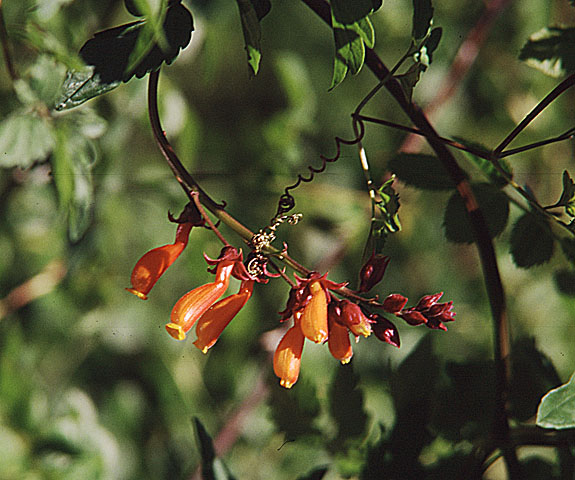
Eccremocarpus scaber "Tresco Mix" (Tresco Mix Glory Flower) is a annual climber in the Bignoniaceae family, reaching 3 metres with red, orange, yellow mix flowers in summer. Hardy in USDA zones 8-10.
Eccremocarpus scaber "Tresco Mix", commonly known as Tresco Mix Glory Flower, is a annual annual climber in the Bignoniaceae family. The plant reaches 3 metres in height with a spread of approximately 1.5 metres, climbing by means of specialized tendrils that grip onto supports. The red, orange, yellow mix flowers appear in summer, providing seasonal colour. The foliage is green, turning colour or dropping in autumn. Growth rate is fast-growing, capable of adding 1-2 metres of new growth per season. This garden hybrid has become a valued ornamental plant in temperate and subtropical gardens worldwide.
Height: 3 m • Flowers: red, orange, yellow mix (summer) • USDA zones: 8-10 • Growth: fast
Botanical Description
Classification: Bignoniaceae > Eccremocarpus > scaber. The Bignoniaceae (trumpet vine family) is primarily tropical, with many species producing spectacular tubular flowers attractive to hummingbirds. This garden hybrid was developed through deliberate hybridization. The genus Eccremocarpus contains several species, many of which are valued in horticulture for their climbing habit and ornamental qualities.
| Height | 3 m |
| Spread | 1.5 m |
| Foliage | Annual — green |
| Flowers | red, orange, yellow mix |
Climbing Mechanism
Eccremocarpus scaber "Tresco Mix" climbs using specialized tendrils that grip onto supports. The tendrils are modified stems or leaves that actively seek out supports, coiling tightly once contact is made. This spring-like coiling action provides flexibility in wind while maintaining a secure hold. The tendrils work best with thin supports such as wires, netting, and narrow trellis bars. The plant is capable of reaching 3 metres when provided with adequate vertical support.
Group Climbing Guide — Annual Vine
Fast twining or tendrils. Lightweight supports — string, netting, bamboo canes sufficient.
Planting Guide
Step 1 — Timing: Sow seeds indoors 4-6 weeks before the last frost date, or direct sow after all danger of frost has passed. Step 2 — Support Installation: Install a sturdy trellis with thin horizontal and vertical members before planting. Annual vines grow quickly and need immediate access to support. Step 3 — Soil Preparation: Prepare the soil by incorporating compost and a balanced slow-release fertilizer. Target pH 6.0-7.0. Step 4 — Planting: Space plants appropriately and plant at the same depth as the container. Water in thoroughly. Position at the base of the support. Step 5 — Aftercare: Mulch lightly, water regularly during establishment, and guide young stems toward the support. Feed fortnightly with a high-potash liquid fertilizer once flowering begins.
Climate & Hardiness
Spring: Start seeds indoors or prepare to direct sow after the last frost. Prepare the soil with compost and install supports. Harden off seedlings gradually before planting out. Summer: Water regularly, especially during hot, dry spells. Feed fortnightly with a high-potash liquid fertilizer to promote flowering. Deadhead spent blooms to prolong flowering. Guide stems onto supports and tie in as needed. Autumn: Flowering will slow as temperatures drop. Collect seed for next year if desired. After the first killing frost, remove dead plant material and compost (unless diseased). Winter: Plan next year's planting. Order seeds. Clean and store supports if temporary. Prepare soil for the following season.
Zones 8–10
Overwintering Guide
Remove dead growth after first frost. Collect seed for next year. Add organic matter to soil.
Propagation
Seed (primary method): Sow seeds indoors 4-6 weeks before the last frost, or direct sow after all danger of frost has passed. Sow at a depth of 1-2 cm in moist seed compost. Maintain a temperature of 18-24°C. Germination typically occurs within 7-21 days. Pot on seedlings when large enough to handle. Success rate: 70-90% for fresh seed. Seed viability decreases with storage. Note: Annual vines are almost exclusively propagated from seed each year.
Pests & Diseases
Common Problems
1. Powdery Mildew: White, powdery fungal growth on leaves and stems. Most common in warm, dry weather with cool nights. Improve air circulation, avoid overhead watering, and treat with a suitable fungicide. 2. Aphids: Dense colonies of small insects on new growth, causing distortion and sticky honeydew. Spray with insecticidal soap or encourage natural predators (ladybirds, lacewings, hoverflies). 3. Root Rot (Phytophthora/Pythium): Wilting despite moist soil, yellowing leaves, soft brown roots. Caused by waterlogged conditions. Improve drainage and avoid overwatering. Remove severely affected plants. 4. Leaf Spot: Brown or black spots on foliage caused by various fungal pathogens. Remove affected leaves, improve air circulation, and apply a fungicide if widespread. 5. Slugs and Snails: Particularly damaging to young plants. Use organic slug pellets, copper barriers, or biological controls (nematodes).Group Disease & Pest Reference (Annual Vine)
- Aphids — cluster on soft growth; wash off with water; usually manageable
- Spider mites — in hot dry conditions; mist foliage, increase humidity
- Powdery mildew — late-season issue; cosmetic in annuals; good spacing prevents it
- Damping off — seedlings collapse at soil level; use clean compost, avoid overwatering
- Slugs and snails — eat young seedlings; use barriers, traps, or biological controls
1. Air circulation — good spacing and pruning prevents fungal diseases
2. Clean tools — sterilise secateurs between plants to avoid spreading disease
3. Correct pruning — removing dead/diseased wood promptly limits spread
4. Good hygiene — clear fallen leaves and debris from around the base
5. Resistant cultivars — choose disease-resistant varieties where available
Training & Pruning
Training: Guide young stems toward the support immediately after planting. Most annual vines will find and grip their support naturally once contact is made. Gently redirect wayward stems as needed. Pinching: Pinch out the growing tip when the plant reaches 15-20 cm to encourage branching and denser coverage. Some gardeners repeat this on side shoots. Deadheading: Remove spent flowers regularly to prolong the flowering season and prevent the plant from setting seed prematurely. End of season: Annual vines die with the first frost. Remove all plant material and compost (unless diseased).
Pruning Guide — Annual Vine
Pinch growing tips when 15cm to encourage branching. Deadhead for continuous flowering. No winter pruning needed.
Support Structures
Best support types for Eccremocarpus scaber "Tresco Mix": Primary recommendation: A sturdy trellis with thin horizontal and vertical members, sized to accommodate the mature height of 3m and spread of 1.5m. Wire systems: Horizontal galvanized wires at 30-45 cm intervals, tensioned between vine eyes or posts. Ideal for walls and fences. Trellis panels: Choose panels with openings suited to the climbing method — thin supports for tendrils or stems to wrap around. Installation tips: Mount supports at least 5 cm from the wall for air circulation. Use stainless steel or galvanized fittings to prevent rust. Ensure all fixings are rated for the mature weight of the plant, especially in exposed positions.
Support Guide — Annual Vine
Bamboo canes, string, netting, lightweight trellis, wigwam structures. Temporary supports OK.
Wildlife Value
Eccremocarpus scaber "Tresco Mix" is a valuable pollinator plant, attracting bees, butterflies, and hover flies to the garden. The open flowers provide easy access to nectar and pollen. Ecosystem services: The climbing habit creates valuable vertical habitat, providing shelter and nesting opportunities for birds and invertebrates. Dense foliage offers roosting sites for birds and overwintering habitat for beneficial insects.
Landscape Design
Walls and fences: Eccremocarpus scaber "Tresco Mix" is well-suited to covering walls and fences when provided with suitable support structures. Pergolas and arbors: Suitable for smaller structures, arches, and obelisks. Screening: Creates seasonal screening (summer privacy) when grown on appropriate support. Effective for disguising unsightly structures, dividing garden rooms, or creating private spaces. Ground cover: Can also be allowed to scramble as ground cover on banks or over low walls. Combine with other climbers for a layered, naturalistic effect.
History & Culture
Eccremocarpus scaber "Tresco Mix" has been cultivated in gardens as an ornamental climber. It has become valued in horticulture for its ornamental qualities. The genus Eccremocarpus has contributed significantly to the diversity of climbing plants available to gardeners, with species found across multiple continents and climate zones.
Container Growing
Container size: Minimum 45 cm diameter and depth for mature plants. Clematis and smaller climbers can start in 30 cm pots. Use the largest container practical for the space. Growing medium: John Innes No. 3 mixed with 20% perlite provides weight (stability) and good drainage. Add a slow-release fertilizer at planting. Support: Install an obelisk, trellis, or wire frame within or behind the container. Ensure the support is anchored securely. Watering: Container plants dry out much faster than those in the ground. Water daily in summer, checking moisture levels carefully. Mulch the surface to conserve moisture. Overwintering: In cold climates (below USDA zone 8), wrap the container with bubble wrap or hessian to protect roots from freezing. Move to a sheltered position against a warm wall.
Frequently Asked Questions
How tall does Tresco Mix Glory Flower grow?
Tresco Mix Glory Flower typically reaches 3 metres in height under good growing conditions. Actual size depends on support structure, pruning regime, and local climate.
What support does Tresco Mix Glory Flower need?
Tresco Mix Glory Flower performs best on trellis. Choose a support appropriate to the climbing method and mature weight of the plant.
When should I prune Tresco Mix Glory Flower?
Pinch growing tips when 15cm to encourage branching. Deadhead for continuous flowering. No winter pruning needed.
Is Tresco Mix Glory Flower suitable for containers?
Yes, Tresco Mix Glory Flower can be grown in a large container (45cm+ diameter) with regular watering and feeding.
Does Tresco Mix Glory Flower damage walls?
Tresco Mix Glory Flower requires a support structure and does not attach directly to walls, so wall damage is not a concern.
How fast does Tresco Mix Glory Flower grow?
Tresco Mix Glory Flower has a fast growth rate. Newly planted climbers may take 1–2 years to establish before vigorous growth begins.
Is Tresco Mix Glory Flower invasive?
The invasive risk for Tresco Mix Glory Flower is rated as none. This species is generally well-behaved when properly managed.
What diseases affect Tresco Mix Glory Flower?
Short season limits disease buildup. Good spacing for air flow, start clean, healthy transplants, rotate planting positions
What are expert tips for growing Tresco Mix Glory Flower?
Install supports before planting: Trying to fit supports after the plant is established risks root damage and is far more difficult. Water deeply and less frequently: Deep watering encourages deep root growth, making the plant more drought-resilient than frequent shallow watering. Check ties regularly: Ties that are too tight can girdle stems as they thicken. Use soft, stretchy materials and check at least twice a year. Mulch annually: A 5-8 cm layer of organic mulch suppresses weeds, conserves moisture, moderates soil temperature, and improves soil structure as it decomposes. Right plant, right place: Match the plant's needs (sun, soil, hardiness) to your site conditions. A plant in its ideal conditions will always outperform one that is struggling.
What cultivars of Tresco Mix Glory Flower are available?
Eccremocarpus scaber "Tresco Mix" is distinguished from other Eccremocarpus cultivars by its red, orange, yellow mix flowers, which are a defining feature of this selection. It reaches 3 metres at maturity, making it one of the more compact selections, suitable for small gardens and containers. The growth rate is fast. Key distinguishing features include its annual habit, non-fragrant flowers, and suitability for container culture.
Seasonal Care Calendar
🌱 Spring (Mar–May)
Water: As soil dries out
Feed: General fertiliser at base
Prune: Light trim if needed
Train: Tie in new shoots to supports
☀️ Summer (Jun–Aug)
Water: Regular in dry spells
Feed: Liquid feed fortnightly
Prune: Deadhead spent flowers
Train: Direct new growth, fill gaps
🍂 Autumn (Sep–Nov)
Water: Reduce as growth slows
Feed: Final potash feed
Prune: Remove dead/diseased wood
Train: Collect seed, tie in growth
❄️ Winter (Dec–Feb)
Water: Only in dry frost-free spells
Feed: None until spring
Prune: Dormant pruning (roses, grape)
Train: Check and repair supports
Quick Reference: Eccremocarpus scaber "Tresco Mix"
Explore More Plant Encyclopedias
Roses Herbs Citrus Bulbs Ferns Vegetables Aquatic Plants Climbing Plants